Month: December 2024

A Complete Manual for Effective Collaborations in Social Media Partnerships

Have you ever stumbled upon a funny exchange between two brands on social media? Or seen an entertaining video showcasing two of your beloved content creators? You find the content so amusing that you share it with your peers. Before you know it, it skyrockets in popularity. That’s the beauty of a thriving social media collaboration.

Partnering with other brands or creators unleashes twice the creativity and a significant shared audience. This increases the potential to elevate your social media marketing strategy to new heights.

This article acts as an all-encompassing manual for social media collaborations. We guide you through potential missteps to avoid and offer advice and best practices for success. Let’s get started.

What does social media collaboration mean?

A social media collaboration occurs when two or more entities join forces to produce content on social media. It represents a strategic alliance among brands and/or creators aiming for a shared objective.

For instance, a brand might collaborate with others to jointly host a giveaway campaign. Alternatively, an influencer could create sponsored posts for a brand. Similarly, creators may work together to co-create content.

This enables them to leverage each other’s audiences, optimizing both reach and engagement. Ultimately, this form of social media partnership enhances the effect of a campaign.

One example is the partnership between Summer Fridays and influencer Alexis Conway. The brand uploads a Reel displaying the influencer’s beauty regimen featuring the brand’s products.

Instagram post from Summer Fridays featuring a person holding up a white bottle of the brand's product against the camera

Common pitfalls in social media collaborations to steer clear of

Despite the numerous advantages of partnering in social media, there are some risks involved. Here are a few potential hurdles you may encounter during the collaboration process.

Misalignment of partnership

The primary risk is collaborating with a partner that is not suitable for your brand.

Worst-case scenario, your collaboratively created content fails to garner sufficient engagement. At best, you could face a backlash.

Select a social media partner whose values resonate with yours. Do thorough research on their background to ensure they haven’t been embroiled in controversy.

Issues with communication

Even with a perfectly matched partner, your collaboration won’t guarantee success without effective communication.

Failure to communicate clearly with your partner regarding expectations may lead to misunderstandings. The consequences? Missed deadlines, subpar content, lackluster results—among other issues.

Clearly outline expectations from the beginning regarding your partnership goals and communication methods. Specify all details regarding content creation and assign responsibilities. Set timelines to keep your project on course.

Conflicting objectives

A common challenge in social media collaborations is when partners pursue different goals. Each partner might seek distinct outcomes, resulting in poor-quality content and an inadequately executed collaboration.

This emphasizes the importance of clear communication.

Clearly articulate the purpose of your partnership from the outset to ensure everyone is aligned. Address any discrepancies at the start to establish a unified social media goal.

Utilize our resource, the Influencer Marketing brief template, to help lay the groundwork for a partnership with creators. This can assist you in circumventing some of the initial pitfalls mentioned.

Legal and contractual issues

There’s also the risk of legal complications arising from your partnership.

Who owns the co-created content? Do you have permission to reuse it? Are there any payments involved, and if so, who is compensated and how much?

Even if the collaboration seems casual, it’s wise to formalize your agreement in a contract to avoid disputes.

Assessment and evaluation

Many social media collaborators struggle to gauge the effectiveness of their partnership. Some even overlook the need for performance measurement.

Given the resources and time spent on your collaboration, failing to evaluate its impact would be a wasted effort.

Establish specific key performance indicators (KPIs) to help measure your collaboration’s performance. Then utilize your social media analytics tools to monitor these metrics. Use the insights gained to understand what works and how to optimize future collaborations.

Best practices for a fruitful social media collaboration

Once you’re prepared to partner with a social media ally, a strategic approach is crucial for success. The following best practices will enable a smooth collaboration that produces results.

Clarify your purpose

What are your goals for this collaboration? What motivates you to seek out a social media partner?

Begin by identifying the why behind your collaboration. This clarification will facilitate the planning of your partnership, covering aspects like collaboration type and KPIs.

Common motivations for social media collaborations include:

  • Promoting an event
  • Driving sales
  • Launching a new product
  • Enhancing brand recognition
  • Boosting engagement
  • Attracting more followers

For instance, Black Moon Cosmetics utilized social media collaborations to showcase the launch of a newly introduced makeup collection.

Source

Identify your ideal social media partner(s)

The crucial initial step is to find the right partner for your collaboration. This means selecting a partner who can significantly enhance your partnership. Evaluate your perfect partner based on the following key factors:

  • Audience: Seek a partner who helps target the right audience. Their audience should complement or overlap with yours, for example, a beauty brand collaborating with a makeup artist.
  • Skills/strengths: Your partner should offer valuable contributions in terms of unique skills or strengths that enhance your existing capabilities. For instance, a skincare brand collaborating with a dermatologist for informative content.
  • Values: Partner with entities whose values resonate with yours to ensure an authentic and relevant collaboration. For example, two sustainable brands crafting an eco-friendly gifting guide.
  • Content style: Your partner’s content style should reflect your brand’s image and persona. For example, two comedic creators collaborating on a new skit.
  • Reputation: Finally, ensure to work with a partner who possesses a commendable reputation within their niche, known for their expertise or creativity.

Develop a comprehensive project plan

A thorough plan for your collaboration is vital to maintain focus. It allows setting clear expectations and averting misunderstandings.

Create a project plan detailing:

  • Roles and responsibilities: Who does what? Who develops the content, and who reviews it?
  • Deliverables: What type of content will you produce? What formats will be used? How many pieces are needed?
  • Timelines: How much time is allocated for each content piece? By when must you approve the content? What is the publishing schedule?

Formulate a content strategy

Create a detailed content strategy to guide your posting approach. This is particularly important for long-term collaborations.

Account for relevant events and occasions throughout your partnership. Investigate your audience’s active times to identify the best posting times. Use this information to devise a posting timetable that aligns with your goals.

For instance, you might wish to capitalize on seasonal promotions prior to holiday events. Or run a collaboration leading up to significant days such as Mother’s Day or Valentine’s Day.

Instagram Collab post by Shameless Pets and Springer Pets announcing a holiday giveaway for pets

Source

Utilize a social media calendar to plan which content to create and when. This facilitates organization for both parties during your collaboration efforts and helps track deliverables.

Synchronize your social media style guides

Social media collaborations often involve multiple entities, each with distinct identities. This can complicate the consistent portrayal of all parties in content and messaging.

This is where a social media style guide comes into play.

While your style guide will differ from your partner’s, exchanging them can provide insights into accurately representing each other. Based on this, come to an agreement on the messaging and identity that honestly reflect your partnership. Use this as a tool to ensure consistency in branding and visual representation.

Cross-promote your content

Collaborating with a social media partner enables you to engage their audience and maximize your reach. Each partner must actively participate in cross-promoting the content across various social platforms to amplify audience engagement and significantly enhance campaign impact.

Tag each other’s profiles for easy access, and include relevant details and links to encourage desired actions.

4 additional tips for social media collaboration

The best practices outlined above should pave the way for success in your social media partnership. To further smoothen the collaboration, consider these extra tips.

1. Collaborate on creative ideation

Two minds work better than one, especially in the creative brainstorming aspect. Collaborate closely with your social media partner to generate ideas for your joint effort. Decide on specifics like approach, narrative, style, and format.

This is particularly important to brainstorm together if content co-creation is involved.

Even if one partner generates the initial ideas, all should agree on the final concept.

2. Generate excitement for your collaboration

The greater the hype surrounding your collaboration, the better the engagement will be. Strategically announce your partnership to create anticipation.

Produce teasers and countdowns as the “big” announcement approaches. Ensure both partners share these on their respective social media profiles, allowing your followers to piece together the exciting news. This serves as a fantastic way to engage them and build eagerness for what lies ahead.

3. Draw inspiration from social media trends

Unsure how to execute your collaboration? Explore current social media trends.

Check out the latest trending topics, memes, and videos to gauge user interests. Observe how other brands and creators are collaborating. Utilize these insights to inspire your partnership.

4. Take advantage of social media collaboration tools

Simplify the collaboration process using social media tools.

  • Collaboration software: Platforms like Slack, Microsoft Teams, or Asana enable teams to share information and collaborate in real-time.
  • Project management tools: Airtable, ClickUp, Notion, and Trello help teams organize work, track progress, and share updates.
  • Cloud storage solutions: Google Drive and Dropbox provide shared access to documents, content, style guides, and more.

Sprout Social also offers a shared content calendar for collaborative social media publishing. Visualize your content strategy and allow partners to add notes or modify the calendar in real time. Set up approval workflows to facilitate content approval from both internal teams and external stakeholders.

3 examples of effective social media collaborations

To gain further insight into potential collaboration types, let’s explore some real-world examples.

Creator-to-creator

This involves multiple content creators joining forces to co-create fresh content. They may collaborate to promote an initiative or simply produce engaging content for their followers.

For instance, the following collaboration showcases creators Leena Dong, Jon Moon, Jeenie, Johnny Ung, and Mike Bow teamed up to deliver a comedic sketch parodying Korean dramas.

Creator-to-brand

This represents the most prevalent type of social media collaboration, involving a brand partnering with a content creator to promote products, services, or events. Typically, the creator devises a sponsored post for the brand, though sometimes the brand features the creator in their content.

In this example, Maison Margiela Fragrances collaborates with popular perfume influencer Roxy. The creator shares an in-depth review of a fragrance she received as a gift from the brand.

Brand-to-brand

This type of collaboration involves two brands with overlapping audiences working together. They can co-host events, run joint giveaways, or collaborate on content creation.

For example, Crescent Hotels and Resorts collaborates with Grove Collaborative to organize a sweepstakes. Being the first plastic-neutral retailer, Grove boasts a considerable following of eco-conscious consumers, aligning with the hotel’s commitment to sustainability.

The two brands produce an Instagram collab post, ensuring the content reaches a wider audience on both their profiles.

How to locate social media influencers for collaboration

A successful social media collaboration hinges on selecting the right partner, which can be a challenging task as it requires finding someone whose strengths complement yours.

If you’re a brand aiming to collaborate with social media influencers, Sprout can simplify your search. Our robust influencer marketing platform, Sprout Social Influencer Marketing (formerly Tagger), utilizes proven data to identify influencers who align closely with your brand. Schedule a demo to experience the platform firsthand.

The article Social media collaboration: A complete guide to successful partnerships first appeared on Sprout Social.

Read More

Overview of the Responsive Addons for Elementor Plugin by Cyberchimps

What is Responsive Addons for Elementor Plugin by Cyberchimps appeared first on WPeka.

Are you looking for add-ons to supercharge your website? This article on Responsive Addons for Elementor can be helpful. If you are an avid WordPress user, sometimes or otherwise, you must have encountered website builders that simplify website building. Elementor …

What is Responsive Addons for Elementor Plugin by Cyberchimps Read More »

What is Responsive Addons for Elementor Plugin by Cyberchimps appeared first on WPeka.

Read More

Key Components of a Successful Influencer Brand Proposal: Tactics for Productive Partnerships Between Brands and Influencers

It’s fairly frequent for businesses to receive numerous brand proposals in their social inbox from creators and influencers. Sprout’s Influencer Marketing Report revealed that 93% of influencers believe that the quality of a brand’s current content affects their decision to collaborate.

So, what distinguishes an exceptional brand pitch from a poor one? How can you discern which influencers to engage based on their outreach?

We’ve detailed all the elements to consider in influencer brand pitches, from metrics and enhanced account bios to a distinctive POV, enabling you to start identifying the right influencers for your brand.

What constitutes a brand pitch?

A brand pitch is a communication, typically via emails or social DMs, where an influencer (or an agency acting on behalf of influencers) approaches a brand to collaborate. They may also include extensive documents like a pitch deck.

Influencers formulate brand pitches to persuade companies to partner with them for upcoming content campaigns. Typically, such pitches encompass details about who the influencer is, their latest metrics and achievements, and a suggested campaign idea.

What differentiates a quality influencer brand pitch from others?

Not all influencer brand pitches hold the same weight. These outreach communications can assist you in determining whether an influencer is worth collaborating with or if they don’t quite align with your brand.

However, to achieve this, you must understand what differentiates a top-notch brand pitch from an inferior one. We’ve identified the key factors brands should focus on when reviewing brand pitches.

Seek notable metrics

The most effective way to ascertain if an influencer’s content is likely to thrive in the future is to evaluate their past successes. Metrics illustrate their audience size, the level of engagement from their following, the type of results garnered from their posts, and more.

Check if an influencer has provided any metrics in their correspondence. They should include data such as follower count, engagement percentage, and typical post reach. Ideally, they’ll also present specific metrics for individual posts or campaigns.

Pay attention to network-specific metrics, particularly for platforms your brand prioritizes. A detailed performance breakdown indicates their preferred networks, reach across social channels, and whether their audience aligns with yours.

Performance data should be presented well; this shows an influencer’s dedication to preparing their pitches and maintaining their brand. Nevertheless, the actual metrics are more significant than their presentation.

Contrast performance across all your brand pitch messages to identify which influencers stand out.

Ensure they pass the brand safety test

For this next evaluation phase, scroll through the influencer’s profiles. Examine their content, and conduct a quick check for brand safety.

Ensure the influencer’s content and comments section are free from nudity, offensive language, or discrimination. It’s prudent to conduct these checks across different social networks and traditional Google searches. This may uncover controversies that are not evident on the influencer’s profile but could significantly impact their reputation externally.

An ideal brand pitch might incorporate an influencer’s self-assessment of their content to illustrate their reliability as a collaborator. While this can be a positive indicator, it’s always wise to verify independently before proceeding. Skipping this step risks severe reputation damage in the future if you engage with an influencer who shares insensitive or harmful content.

Cheapholidayexpert is a recognized UK influencer frequently featured on UK television and radio; owing to her trustworthy reputation, she collaborated with South Korea’s Tourism Organization on a travel-themed campaign.

An Instagram post showcasing CheapHolidayExp’s partnership with South Korea for a travel campaign targeting the UK market

Look for optimized bios and profiles

After your brand safety assessment, delve deeper into the influencer’s profile. Pay attention to their posting frequency, any brand partnerships, and affiliations with special interest groups or causes.

A bio is the first impression a user gets before following an influencer, so it should succinctly summarize the type of creator they are and the values they advocate.

Don’t forget to check their bio link, as these reveal an influencer’s reach beyond their main profile. Comedian and positivity advocate Troy Hawke has an extensive bio link featuring his comedy tour, YouTube channel, merchandise store, and more, all accompanied by a humorous heading that reflects his brand.

Troy Hawke’s bio link exemplifying his unique brand

Lastly, consider how users might discover their profile. Examine any keywords in their headers to ensure they align with your brand’s audience.

Cite their previous collaborations

A compelling brand pitch should present multiple examples of an influencer’s past partnerships. Showcasing two or three varied completed campaigns indicates that an influencer has collaborated with a wide array of companies. These case studies should all feature success metrics and direct links to the content created during these efforts.

This aspect may be the most crucial part of an influencer brand pitch, as it provides a transparent view of an influencer’s experience, efficacy, and content styles.

These examples illustrate the types of brands an influencer has previously collaborated with. Verify whether these companies align with your values or target audiences. Ideally, an influencer should customize these examples to connect specifically with your company.

Queer-friendly YouTube creator SuperButterBuns frequently produces videos about Atlus videogames. Although not previously affiliated, these videos demonstrated their expertise and enthusiasm. In support of the Metaphor ReFantazio launch, Atlus and Sega collaborated with them on an exclusive video, which already garnered 120,000 views from an audience keenly interested in their games.

SuperButterBuns’ partnership with Atlus to promote their new videogame on YouTube

Evaluate the content created in these past collaborations alongside the typical material a creator produces for themselves. Consider any success metrics as well as the creative methodologies employed to see if they align with your vision for influencer partnerships.

If you need a benchmark for comparison, refer to Sprout’s examples of influencer marketing campaigns.

Assess whether they bring value to your brand

Influencer-brand dynamics are invariably a mutually beneficial endeavor. An influencer is making this brand pitch to partner with you, but they should also recognize how you would benefit from the collaboration.

Ideally, an influencer should include a value proposition. This outlines the benefits of collaborating with them. Verify if they’ve connected this value proposition to specific success metrics, as it reflects their understanding of the reach they can offer.

The Costco Guys and The Rizzler, both prominent internet figures due to their extensive social followings, recently collaborated with the wrestling organization AEW. They developed a unique value proposition driven by Big Boom AJ’s (of The Costco Guys) wrestling expertise and coordinated a collaboration match during a recent AEW event.

An Instagram post where AEW gained considerable media attention for collaborating with The Costco Guys, illustrating clear value in their partnership

A value proposition can also detail a specific campaign idea. If an influencer includes this, utilize it to evaluate how inventive their content concepts are and if they align with your existing content strategy.

Don’t treat this as a deal-breaker; even if you think a concept doesn’t fit your brand, use it to determine if the influencer has researched your brand and its messaging. Typically, an influencer will be willing to cooperate closely with you to create an alternative campaign or adhere to your initial creative direction.

Evaluate whether they can provide a distinct POV for your brand

Influencers represent a unique and essential component of today’s social media landscape. They each cultivate audiences based on their distinct content and persona.

A key advantage of collaborating with influencers is the opportunity to engage with, and leverage, this unique perspective. When assessing an influencer’s POV, ensure that it’s authentic.

Influencer authenticity can be complicated to assess, but it involves examining whether an influencer has a genuine connection with their established community. You can gauge this through sentiment analysis of their comments and how they engage with their audience both on and off their profile. Additionally, check if they uphold the values they advocate, such as activism or inclusiveness.

An influencer’s POV is also reflected in the content they create. How original is the content they’re producing at present? Are they adapting to influencer industry trends, or are they trendsetters themselves? While your influencer partner doesn’t need to be entirely unique, possessing this quality can help your brand collaboration stand out amidst today’s rapidly saturating social media platforms.

Katelyn Ohashi boasts a unique POV and following due to her history as a professional gymnast. This enabled her to travel to the Paris Olympics, where GetYourGuide partnered with her to engage this niche audience through her distinctive viewpoint.

An Instagram post by Katelyn Ohashi highlighting her partnership with GetYourGuide during the Paris Olympics

This POV should be evident in an influencer’s brand pitch. Assess how effectively an influencer presents themselves and their grasp of their audience.

Proactively initiate the scaling of your influencer marketing program

While it’s beneficial to know what to seek when receiving influencer brand pitches, don’t merely wait for the ideal influencer to approach you. Apply these same principles to seek out influencers and creators to begin, expand, or enhance your influencer marketing program.

Lastly, don’t dismiss an influencer simply because they don’t meet every criterion. Micro and mid-tier influencers with less experience can still be valuable partners, as they often maintain highly engaged audiences.

Once you’re prepared to start identifying influencers for your partnerships, follow Sprout’s 7-week influencer marketing strategy. Our methodology outlines the steps to take each week, along with the tools available to begin planning, launching, and monitoring your next significant influencer campaign.

The post What constitutes a great influencer brand pitch: How brands can enhance collaborations with influencers appeared first on Sprout Social.

Read More

Top Web Design Software Options for Freelancers and Agencies in 2025

Web design software has revolutionized the way we create and build websites. These tools provide a range of features, from simple drag-and-drop interfaces to advanced coding, making it easy for beginners and experienced designers to bring their vision to life. A well-chosen web design software can significantly speed up the process and make creating a […]

The post The Best Web Design Software For Freelancers & Agencies (2025) appeared first on Elegant Themes Blog.

Read More

25 Innovative Social Media Posting Concepts to Boost Your Brand Interaction (with Illustrations)

Consistently generating social media content ideas is often more challenging than it appears.

Modern marketers are tasked with managing various profiles, ensuring they remain current with fresh posts. Your brand’s audience anticipates new content, and it’s crucial to provide it regularly.

However, it’s simple to slip into the pattern of repeating the same posts repeatedly.

This is why brands require a diverse assortment of social media content readily available.

If you seek quick inspiration, check out the video below for nine creative ideas. We also provide strategies for ideating social media content throughout the year.

If you’re currently experiencing a content stagnation or simply wish to explore new concepts, download our content strategy checklist—this resource guides you in pinpointing challenges and initiating the creation of innovative, high-performing content.

Here are 23 innovative social media concepts for brands to keep your content vibrant. Regardless of your niche, these ideas are applicable.

1. Inquire with your audience

Engaging your audience with questions is a straightforward strategy to enhance engagement.

Questions can be anything from weekend plans to specifics like your customers’ top product choices.

A proven Instagram concept is utilizing question stickers in Stories. You can also pose questions directly in your post or video captions, similar to what Cirkul does in this TikTok clip.

cirkul question-based social media post

2. Collaborate with influencers and content creators

Teaming up with influencers through sponsorships or collaborative posts can yield unique content ideas. Content creators often devise original ways to showcase your brand that you may not have attempted yourself. Many brands on TikTok mainly share or repost influencer-generated content to diversify their posts.

Brands like Crumbl frequently feature their weekly reviews from influencers.

crumbl influencer review post example
Screenshot

But how can you identify suitable influencers for your brand? Authenticity is one of the key factors sought by creators collaborating with brands, according to The Sprout Social Index™, so focus on influencers whose followers mirror your brand’s target audience.

Moreover, if you come across any videos mentioning your brand from influencers, consider seeking their approval to share their content on your brand’s profile. This is an effective way to highlight your brand’s appeal and show off who enjoys your products.

3. Host a social media contest or giveaway

People often can’t resist the allure of free items. Social media contests are powerful tools for engaging followers. They also offer an opportunity to share

company achievements and recognize your fans.

Check out this giveaway from MOIRA Cosmetics, who regularly hosts giveaways that achieve impressive engagement rates.

MOIRA cosmetics giveaway post

However, you don’t need a massive following to run a contest. You also don’t necessarily require a third-party service. Simply combine these elements:

  1. A prize to offer. Ideally, the giveaway item should relate to your brand (think: complimentary products or a subscription). High-value, unrelated prizes tend to attract individuals solely interested in freebies who may not become loyal followers.
  2. Clear rules. To protect yourself legally, providing terms and conditions for your contest is essential. This standard from Shortstack can provide guidance on your requirements. Additionally, this transparency makes your contest more credible.
  3. A contact point. Be sure to include an email address on your terms and conditions page for participants to reach out with inquiries.
  4. A mechanism to participate. Whether through user-generated content or a specific hashtag, encouraging users to share about your brand is the best way to drive participation. Ultimately, the goal of a giveaway is enhancing brand visibility, not merely distributing freebies.

Don’t forget, hashtags are the simplest method to monitor entries in your contest. Consider using social media management tools like Sprout to assist in tracking and cataloging entries using your branded hashtag.

You don’t need to host contests consistently to reap benefits. They can escalate your follower counts and interactions, but they also serve as a great idea for campaigns like product launches.

4. Create engaging social media posts for each day of the week

Any action that helps you avoid posting social media content randomly is beneficial. Regularity is critical on social media, and planning posts weekly can assist with that.

Launch a regular series for each weekday to foster ongoing interaction with your audience. By consistently delivering themed material, you foster loyalty and a sense of community.

#MotivationMonday, #TransformationTuesday, and #WednesdayWisdom are just a few examples of themed posts that most brands can adopt.

A predictable schedule allows your audience to know what to expect and provides something to look forward to. Additionally, it gives your team a guideline to work from, simplifying production.

5. Acknowledge a social media holiday

Holiday-themed content is well-received by brands and consumers alike, but remember that you don’t need to wait for conventional holidays to post them.

Think about the multitude of hashtag holidays, such as #NationalTriviaDay, #GalentinesDay, or #NationalCatDay. These fun observances can ignite a plethora of imaginative social media content ideas to amuse and engage your audience. Clever captions paired with audience involvement can lead to significant engagement.

national cat day post on Instagram by Chewy

Hashtag holidays can beautifully slot into your content calendar while sparking fresh ideas, provided you choose ones that resonate with your brand.

6. Utilize AI for social media idea generation

Marketers cannot overlook the rise of AI. Whether you need new concepts or are grappling with writer’s block, AI tools can significantly assist in content generation.

This doesn’t mean you should completely relinquish control of your social media management to AI. Rather, consider leveraging AI to rapidly generate novel content ideas.

For instance, tools like Sprout Social can refine basic concepts and keywords into social media captions more likely to garner engagement. This strategy not only saves time but also stirs creativity in moments of burnout or ideation struggles.

sprout social AI post

Keep in mind that Sprout’s AI Assist feature suggests multiple post options aiding marketers in selecting concepts that suit their target demographics and brand voice. This aspect is crucial, as employing AI for social media requires human oversight to be effective.

Screenshot of a draft of a social post in the Compose box in Spout Social, with Suggestions by AI Assist feature selected. Three rewritten options of the original social post is suggested for selection.

Maximizing the benefits of these technologies means fine-tuning suggestions and prompts, avoiding the impulse to go with the first result presented. Remember: AI can streamline ideation and enhance efficiency but should not replace original thinking. Coupled with features like scheduling and optimal posting timing, Sprout’s AI capabilities can revolutionize your content creation process to match modern social media demands.

7. Embrace UGC: share, pin, retweet, and regram

A key theme in content creation is to work smarter, not harder.

Instead of exhausting your mind trying to craft fresh posts continuously, consider applying the 80/20 rule by promoting your brand’s user-generated content instead.

Gathering customer photos and videos through submissions or hashtags is an excellent method to populate your content calendar with minimal effort. Instagram Stories have integrated features where customers can share UGC, illustrated by Rare Beauty:

submit ugc post on instagram
Screenshot

Moreover, UGC often garners higher engagement than branded content naturally. Additionally, UGC fosters a community spirit among followers eager to be featured by your brand. Always ensure you obtain permission before sharing any UGC.

8. Create how-tos and tutorials

An increasing number of consumers are turning to social media for concise instructional videos.

Educating your audience through how-to content and tutorials effectively boosts engagement, awareness, and discoverability on social platforms.

Check out Poppi’s delightful recipes on Instagram, simplified into practical steps. Each short video is engaging and straightforward while maintaining clarity.

how-to social media post example

When brainstorming for tutorial subjects, aim for topics that can be conveyed in under a minute. Bonus points if your TikTok or Instagram caption succinctly encapsulates all required steps!

9. Produce short-form video content

Establishing a robust video content strategy is essential for contemporary brands.

The Sprout Social Index™ identifies short-form videos as the most captivating type of content in feeds. Audiences perceive short videos as 2.5 times more engaging than longer formats.

With such compelling metrics, brands should earnestly contemplate innovative social media strategies utilizing video content.

Short clips reign on TikTok and Instagram Reels, but they’re equally effective on X and Facebook. You can even experiment with YouTube Shorts. These concise snippets typically require minimal editing, can be created quickly, and lend themselves well to sharing.

A great illustration is from Senita’s Instagram account, which prominently showcases fit checks and their athleisure through Reels.

senita short-form video example
Screenshot

Brainstorm brief, imaginative clips to keep your followers engaged.

10. Reuse your content

Consider the effort and time invested in producing any content.

Maximizing the value derived from existing posts should be a priority.

For every blog article you compose or video you create, contemplate additional strategies to promote it on social media beyond its initial form. Think about extracting a quote from your content and transforming it into a visually appealing image using Canva.

You could also optimize your video content by cross-posting your short clips across Reels, TikTok, and YouTube Shorts where suitable. Alternatively, imagine how to break down long-form content into brief “trailers” on these platforms as well.

Repurposing your content breathes new life into older or less-engaging posts while preventing your audience from becoming bored from the same repetitive message.

11. Capitalize on trending topics and memes

Occasionally, the most effective social media ideas arise unexpectedly.

Trending topics on X, Instagram, Facebook, or TikTok offer brands a chance to leverage topical content. Although the window for relevance is limited, posts about current events can generate impressive engagement.

Participating in topical discussions is vital, but steer clear of political or sensitive subjects. There’s nothing worse than facing a public relations disaster from a misguided attempt at humor.

If you prefer a lighter approach, you might consider appealing to your audience’s sense of humor through memes.

While memes as a marketing tactic aren’t suitable for everyone, social media does provide ample opportunity for humorous illustrations and satire. Brands like Purple highlight that memes certainly have their place.

purple meme marketing social post example

Just remember, memes do have an expiration date. If your target audience isn’t receptive to humor, memes can seem awkward and disconnected. However, numerous brands catering to younger demographics and having a vibrant social presence can greatly benefit from some amusing content.

12. Collaborate with another brand

Co-marketing presents a mutually beneficial scenario. Two brands join forces for a campaign or content piece—be it a webinar, ebook, or special promotion—providing both companies exposure to each other’s audience.

Seek out brands for collaboration that share a target audience but aren’t competitors. This collaboration between Reese’s Book Club and e.l.f. Cosmetics exemplifies this approach well.

Social media is the perfect venue for co-marketing ideas due to the ease of synchronizing efforts.

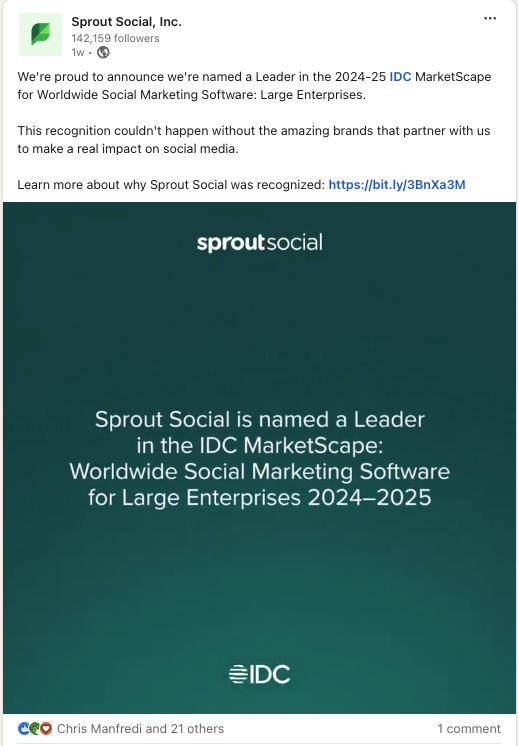
13. Share industry news and updates

Establishing yourself as an authority in your field is a strategic move that builds trust among your customers. This is particularly crucial for B2B brands where legislative or tech developments could greatly influence your audience.LinkedIn post by Sprout Social announcing they've been named a Leader in the 2024-25 ID MarketScape for Worldwide Social Marketing Software: Large Enterprises.

Text-only updates with a link in the comments can be effective for these updates. In fact, this method is wise since platforms like X, LinkedIn, and Facebook typically favor posts that keep users on their sites over those with external links.

14. Organize a social media takeover

Sometimes refreshing your social media presence requires letting someone else take charge.

Takeovers give your social accounts to someone else, usually for a day.

social media takeover idea post
Screenshot

Turning your social account over to an influencer or celebrity with a substantial, engaged following is an effective tactic to expose your brand to new audiences while introducing fresh perspectives to your account if you’re out of social media post concepts. You might also allow someone within your organization to manage your account temporarily for additional flavor.

Think about business allies or industry associates who could be suitable candidates for a takeover. The primary goal of a social media takeover is exposure, so ideally, choose someone whose followers align with your target market.

15. Provide live video updates

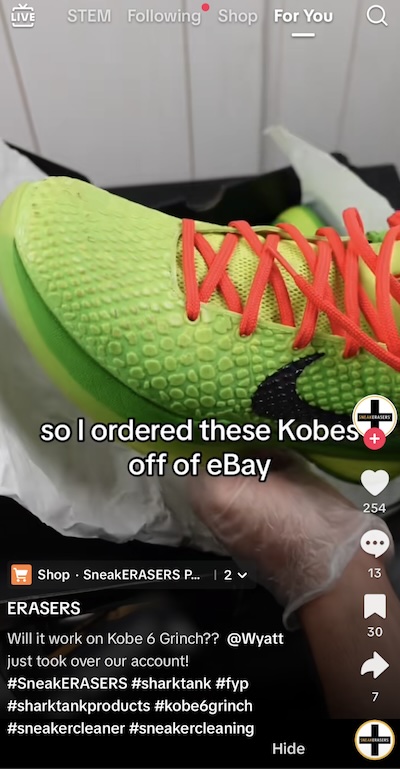
Live video ranks as the third most engaging type of content in feeds, partly due to the demand for genuine, less polished interactions with brands.

Whether you’re streaming from your vehicle or hosting a Q&A, responding to followers in real-time fosters a closer connection with your audience. Live broadcasts on TikTok are also quite appealing to shoppers.

live video post on TikTok

Be mindful that many followers may not be able to join live sessions, so offering them the option to view later is a remarkable way to maintain engagement.

16. Survey your audience

If social media has taught us anything, it’s that individuals love expressing their opinions.

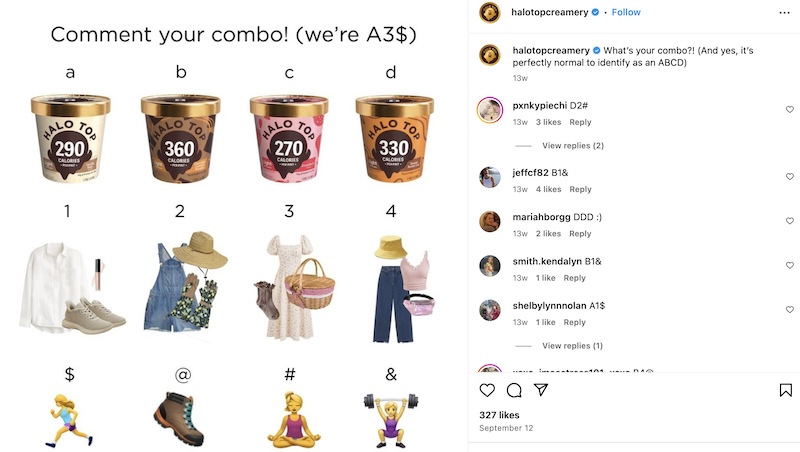
Features like polls on X or Instagram allow for quick insights into your followers’ thoughts. You can also create visual polls, similar to Halo Top:

halo top social media poll example

Polls don’t have to be formal or sales-centric. Social media promotes dialogue, so be prepared to absorb your followers’ feedback.

17. Support a community cause

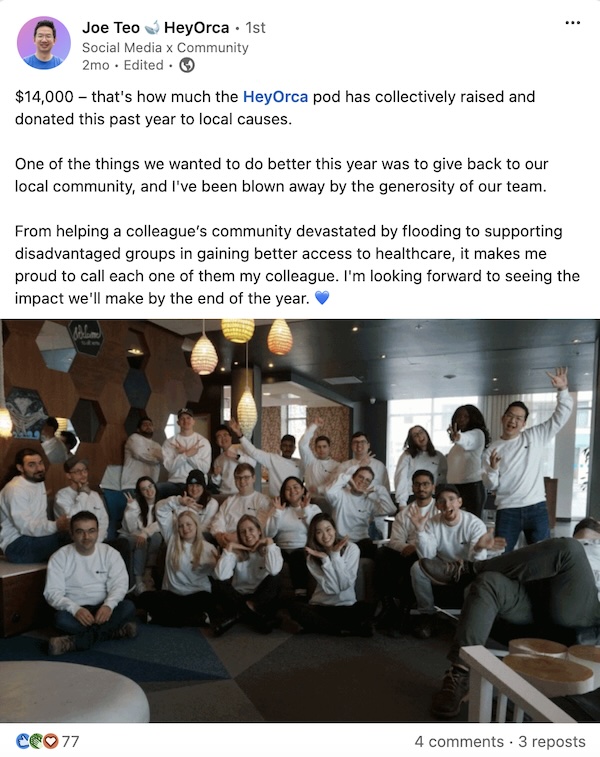
Demonstrate your brand values by showcasing your endorsement for a cause. This could involve one-off or ongoing donations to relevant organizations, and your brand can motivate followers to contribute. Alternatively, akin to HeyOrca, spotlight employee volunteer efforts and fundraising initiatives for local charities.

social media community cause post
Screenshot

Demonstrating support online is an effective way to enhance your brand authenticity, so embrace causes that resonate with your brand values.

18. Execute a social-exclusive promotion

While brands shouldn’t overwhelm their followers with constant promotions, features like Facebook carousel ads can yield a financial return on investment for your social media endeavors.

You might also advertise a sale or exclusive ad code on social platforms, as Beachwaver did during Black Friday on TikTok.

The beauty of implementing social media ads lies in their trackability.

For instance, Facebook’s ad platform offers significant insights into who sees your advertisements, click rates, and the value of your clicks. Additionally, utilizing exclusive coupon codes on TikTok or Instagram can provide an understanding of your followers’ spending behaviors.

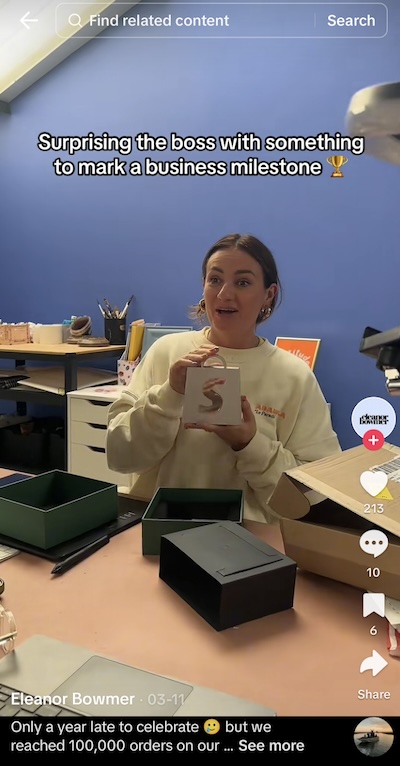
19. Announce a company milestone

Brands should embrace the celebration of their achievements and successes with their audience.

Featured in a prominent publication? Attained a sales objective? Excited about a new team member? Transitioned to a new workspace?

Share it with your followers. Revealing these highlights fosters a sense of humanity while indicating your brand’s progress.

company milestone social media post example

This is an excellent B2B social media concept as you’re not limited to needing visually appealing product images like on Instagram or TikTok. Consider posting these content milestones on LinkedIn instead.

Once again, impactful social media content is not solely about your product or service. Sharing your brand narrative and illustrating your worth based on your achievements can significantly enhance your company’s reputation among your audience.

20. Honor your team with employee spotlights

Employee spotlights serve to elevate team morale while generating engaging social interaction. Chances are you’ve encountered your share of “meet the team” posts scattered across platforms like LinkedIn.

meet the team social media post example
Screenshot

These posts can vary from quick shout-outs to detailed Q&As or mini-interviews with staff members. Showcasing your employees’ stories and achievements personalizes your brand and enhances employee morale. If you’re in search of more social media ideas incorporating your staff, refer to this employee spotlight template.

21. Showcase customer testimonials

Amidst the noise on social media, building trust in your brand is essential. Showcasing customer success stories and testimonials can highlight your product’s value without being overly promotional. Quotes, testimonial videos, and even written feedback are all viable options. Check out this customer review that Invisalign shared on their TikTok page.

If you haven’t already, start soliciting feedback from clients. Numerous brands have dedicated hashtags or designated areas on their website for customers to share their success stories. Always seek permission from customers prior to sharing their testimonials on social media.

22. Promote impactful case studies

If you’re aiming to demonstrate your brand’s expertise and positive outcomes through social media, case studies can be highly effective. By showcasing positive experiences from your customers or clients, you can make your social proof authentically social.

case study share example on LinkedIn.

Case studies exhibit particular popularity among B2B brands on LinkedIn. If you plan to share case studies there, consider altering them into visually compelling graphics or infographics to improve reach and engagement over merely posting a link.

23. Engage with your followers

Social media is a two-way street, so brands must be open to conversing with their followers.

This is particularly crucial for customer service interactions.

Respecting your customers’ time by responding to their queries communicates that your brand values them. Moreover, ensure that customer service inquiries are addressed promptly.

NZXT frequently interacts with their audience, emphasizing the importance they place on customer support.

social customer service example

We live in a time when social media customer service is vital, so you mustn’t ignore your followers. Be vigilant about notifications and @mentions regarding your brand.

24. Carry out an interview

Social media offers an effective alternative to traditional Q&A sessions, making interviews more accessible than ever.

Whether on TikTok, LinkedIn, or Facebook Live, interviewing an industry influencer or expert blends education with entertainment perfectly. Encourage your audience to submit questions or pose queries that would captivate your followers.

social media interview example

Social interviews often possess a casual, unscripted quality, creating a sense of authenticity for your audience. As an added benefit, you can repurpose your interviews across podcasts, blogs, and YouTube videos.

25. Share behind-the-scenes glimpses

Sharing behind-the-scenes content offers insight into your company culture, facilitating more personal customer connections.

supergoop behind the scenes social media post
Screenshot

This type of content is engaging and can be easily captured on your smartphone. From office tours to sneak peeks into your product creation process, there’s no shortage of social media content ideas that can feature BTS elements.

Which social media concept will you experiment with next?

Give these social media concepts a try if you’re weary of sharing repetitive content. Diversifying your content types can be beneficial.

With a wealth of ideas at your disposal, you can economize time by scheduling posts in advance using tools like Sprout—take advantage of our free 30-day trial to explore.

The post 25 Social media post ideas to inspire your brand [+ examples] originally appeared on Sprout Social.

Read More