
Crucial Social Media Data for UK Enterprises in 2025: Important Insights and Trends
Social media has evolved into a crucial element of the UK’s digital landscape. Its influence permeates the entire business pipeline, from engaging customers to making strategic decisions. Social media affects every facet of business operations and growth. For those working in social media in the UK or seeking to engage its vibrant user community, it’s essential to stay informed about the latest statistics and trends to make informed choices.
As we look toward 2025, several significant themes are coming to the forefront:
- Authenticity and meaningful engagement: UK consumers are increasingly attracted to brands that convey sincerity and purpose.
- The changing role of AI: AI is becoming more integrated into social media management, but ethical and strategic deployment is essential.
- Customised experiences: Consumers expect personalized content and interactions, making personalisation a central focus for brands.
- The growth of social commerce: Social media is no longer merely a platform for brand visibility; it is now a powerful channel for generating sales and conversions.
We aim to equip you with the essential data and insights required to navigate these social media marketing trends in the United Kingdom and to make decisions that yield tangible results. Let’s explore the data and discover the possibilities that await your brand:
What is the state of social media usage in the UK in 2025?
Before we examine the particulars of different platforms, let’s establish a foundational understanding of the overall social media environment in the UK. This context is invaluable for analyzing the opportunities and challenges presented by each platform.
- Internet connectivity in the UK: a remarkable 97% of the UK populace has internet access, indicating almost universal connectivity and a vast audience for social media interaction.
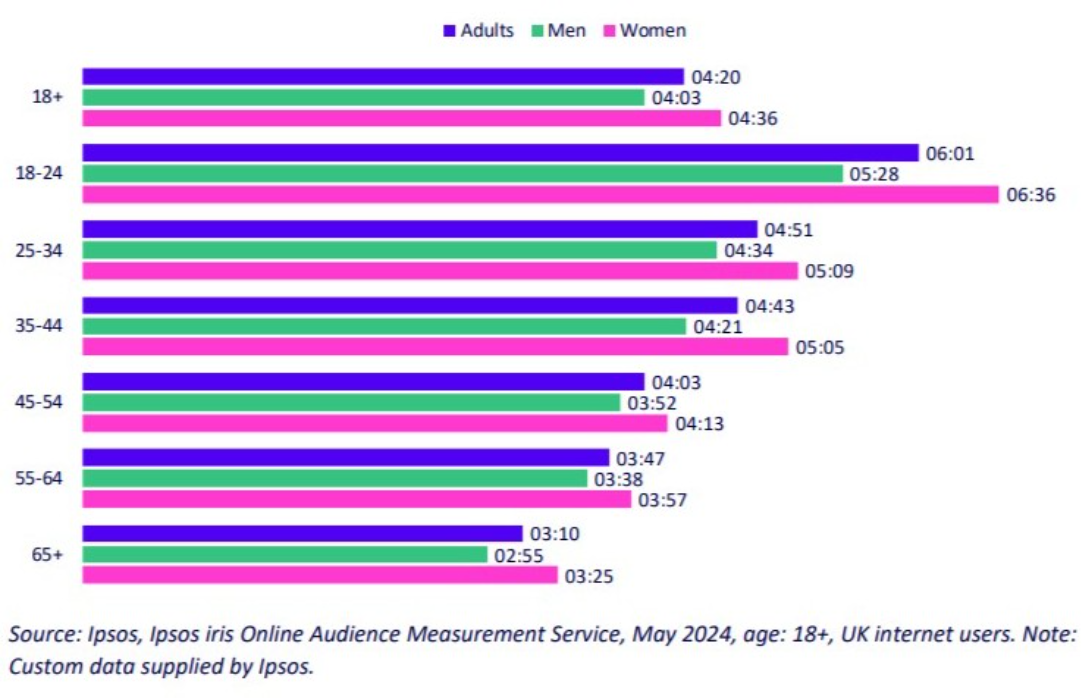
- Average online time: On average, individuals in the UK spend 4 hours and 20 minutes online daily, underscoring the significant role that digital platforms play in our daily lives.
- Daily social media engagement: In 2024, the average time spent on social media was 1 hour and 37 minutes per day, reflecting an 11% reduction from 2023. This indicates a rising intentionality among users in how they manage their online time.
Despite high internet and social media involvement, the decrease in daily usage indicates that quality is more significant than quantity. UK brands must concentrate on creating engaging, high-quality content that effectively captures attention.
Statistics on social media advertising in the UK
The social media advertising landscape in the UK is thriving, with substantial growth anticipated for 2025. This underscores the rising significance of social media in reaching and converting consumers, making it an essential investment for brands. The diverse age demographics across different platforms necessitate tailored strategies to engage various audience segments effectively.
4. Social media ad expenditure in the UK: The U.K. social media advertising sector is projected to achieve £9.95 billion in revenue by 2025, illustrating its growing significance in marketing initiatives.
5. Growth in social media advertising revenue: The anticipated year-on-year rise in social media advertising revenue for 2025 is estimated to be 13%, indicating robust ongoing momentum.
6. Overall social media user demographics: In January 2025, 79% of the UK population (54.8 million individuals) were using social media.
7. Online time by age group: Young adults (ages 18-24) spend the most time online, averaging 6 hours and 1 minute daily, while those aged 65 and older spend the least, at 3 hours and 10 minutes.
The UK’s social media advertising sector is flourishing, with significant growth expected for 2025. This highlights the increasing relevance of social media for reaching and converting consumers, making it a critical channel for brands to invest in. The varied age demographics across platforms call for specialized social media marketing strategies to effectively engage different audience segments.
Facebook metrics in the UK
While Facebook remains widely used in the UK, its allure among younger users is diminishing. Brands targeting Gen Z and younger Millennials may need to focus on alternative platforms. Nonetheless, Facebook is still effective for reaching older audiences and leveraging its extensive advertising reach.
8. Facebook user count: Facebook has 38.3 million users in the UK as of early 2025, representing 55.2% of the total population and 64.6% of the eligible demographic (aged 13+).
9. Facebook usage by age: While Facebook’s overall reach is considerable, engagement from younger users is dwindling. Users aged 18-24 spend an average of merely 15 minutes daily on the platform, compared to the total average of 39 minutes.
10. Facebook advertising potential: Between January 2024 and January 2025, Facebook’s potential ad reach in the UK grew by 1.2 million (+3.2%). This demonstrates ongoing growth in its potential advertising audience.
Whilst Facebook remains a significant platform in the UK, its appeal among younger audiences is declining. Brands focusing on Gen Z and younger Millennials may require prioritizing other avenues. However, Facebook continues to be advantageous for engaging older demographics and maximizing its extensive advertising reach.
Instagram metrics in the UK
Instagram’s impressive expansion and popularity among younger users, especially those aged 18-34, render it a vital platform for brands aiming to connect with this group. Its emphasis on visuals and various content formats provides ample opportunities for creative storytelling and brand promotion.
11. Instagram user count: As of early 2025, Instagram had 33.4 million users in the UK, amounting to 48.2% of the total population and 56.3% of the eligible demographic.
12. Instagram advertising reach: Instagram’s ad reach increased by 300,000 (+0.9%) from January 2024 to January 2025 and by 950,000 (+2.9%) between October 2024 and January 2025.
13. Instagram’s popularity with young adults: Instagram has surpassed YouTube and Facebook to become the second-most-visited app on smartphones among 18-34-year-olds, with reach growing from 78.5% in May 2023 to 81.2% in May 2024.
Instagram’s rapid growth and popularity with younger audiences, particularly those in the 18-34 age bracket, make it a key platform for brands looking to engage this demographic. Its visual nature and diverse content formats facilitate creative storytelling and brand development.
LinkedIn metrics in the UK
LinkedIn’s role as a professional networking site positions it perfectly for B2B marketing and reaching specific industry professionals. Its notable growth in ad reach provides brands with a valuable chance to connect with potential partners and clients.
14. LinkedIn user count: In early 2025, LinkedIn had 45 million members in the UK, equivalent to 64.9% of the total population.
15. LinkedIn advertising reach: In early 2025, LinkedIn’s ads reached 81.8% of the UK population aged 18 and older.
16. LinkedIn’s development: LinkedIn’s potential ad reach in the UK saw a significant rise of 6 million (+15.4%) from early 2024 to early 2025.
LinkedIn’s status as a professional networking platform renders it an ideal avenue for B2B marketing and reaching targeted industry professionals. Its substantial ad reach growth represents an excellent opportunity for brands to connect with prospective clients and collaborators.
Pinterest metrics in the UK
Though Pinterest’s growth has somewhat decelerated, it remains an important platform for engaging audiences interested in visual inspiration and product discovery. Its emphasis on niche interests and purchase intent makes it a preferred medium for driving traffic to online stores and product listings.
17. Pinterest user count: Early in 2025, Pinterest had 15.5 million users in the UK, constituting 22.4% of the entire population.
18. Pinterest ad reach: Pinterest’s advertising reach in the UK matched 22.9% of the local online user base, regardless of age.
19. Pinterest’s development: Pinterest experienced notable growth in its potential ad reach, increasing by 1.99 million (+14.7%) between early 2024 and early 2025. Growth slowed between October 2024 and January 2025, with only a 50,000 (+0.3%) increase.
Despite a slight deceleration in growth, Pinterest continues to be a valuable platform for reaching UK audiences seeking visual inspiration and product discovery. Its emphasis on targeted interests and purchase desire makes it an ideal medium for directing traffic to online shops and product pages through Pinterest marketing.
Reddit metrics in the UK
Reddit’s swift growth, especially among younger adults, offers a significant chance for UK brands to connect with engaged communities. Its distinctive focus on niche interests and sincere discussions necessitates a specialized approach that emphasizes authentic interaction and community building.
20. Reddit’s growth: Reddit’s reach among UK online adults increased by 47% year-over-year, touching 22.9 million users by May 2024 and rising further to 24.6 million (52%) by June 2024.
21. Reddit’s appeal to young adults: this surge in popularity was primarily driven by young adults, with 71% of those aged 18-24 and 63% of those aged 25-34 utilizing the platform by May 2024.
22. Reddit’s ranking within the top 10: this expansion positioned Reddit among the top 10 online platforms for young adults in the UK for the first time.
Reddit’s rapid rise, especially among young adults, presents brands with a considerable chance to engage with active communities. Its unique focus on niche interests and genuine discussions requires a thoughtful approach that emphasizes authentic engagement and community building.
Threads metrics in the UK
Threads’ quick ascent highlights its potential as a platform for real-time interaction and engagement. However, its minimal average daily usage indicates that brands should concentrate on producing content that fosters quick and impactful interactions.
23. Threads user count: In July 2024, Threads reached 5.3 million (11%) of UK online adults, increasing to 6.6 million (14%) by September 2024.
24. Threads usage: Even with its quick growth, Threads’ average daily usage was relatively low in July 2024, with users spending just 3 minutes daily on the platform.
25. Threads gender distribution: In July 2024, Threads had an almost equal gender distribution among UK users, with 49% male and 51% female.
Threads’ rapid growth underscores its potential for real-time discussions and interactions. Nevertheless, its low average usage suggests that if Threads marketing is a focus for your brand this year, it needs to concentrate on creating content that encourages quick and meaningful engagements.
TikTok metrics in the UK
TikTok’s prominence among younger audiences makes it essential for brands aiming to reach Gen Z and Millennials. Its short-form video style demands creativity and authenticity to grab attention and enhance engagement. Consider blending entertaining and informative content to cater to the diverse habits of this demographic.
26. TikTok user count: As of early 2025, TikTok had 24.8 million users aged 18 and above in the UK.
27. TikTok’s penetration among young adults: TikTok demonstrates particularly strong outreach among young adults, with 74% of online individuals aged 18-24 utilizing the platform in May 2024.
28. TikTok usage: Although the average time spent on the app is lower than on some other platforms, at 13 minutes daily for UK adults in May 2024, it rises to 64 minutes for those aged 18-24.
29. TikTok’s growth: TikTok’s possible ad reach in the UK rose by 2.08 million (+9.2%) from early 2024 to early 2025 and by 987,000 (+4.1%) between October 2024 and January 2025.
TikTok’s prominence among younger audiences in the UK makes it essential for brands targeting Gen Z and Millennials. This platform’s short-form video format necessitates ingenuity and genuineness to capture attention and foster engagement. Consider including both entertaining and educational content in your TikTok marketing strategy to address the various usage patterns within this demographic.
WhatsApp metrics in the UK
WhatsApp’s extensive reach and daily usage, especially among young adults, make it a significant tool for direct communication and customer support. Its emphasis on private messaging offers chances for personalized interactions and nurturing customer relationships.
30. WhatsApp’s reach: WhatsApp remains the most widely used messaging app in the UK, reaching 87% of UK online adults as of May 2024.
31. WhatsApp’s daily engagement: 64% of UK online adults used WhatsApp daily in May 2024, up from 58% in May 2023.
32. WhatsApp’s popularity among young adults: WhatsApp was the app with the highest daily reach among online 18-24-year-olds in May 2024, connecting with 63% of this demographic.
WhatsApp’s significant reach and daily engagement, particularly among younger audiences, positions it as a valuable tool for direct communication and customer service. Its focus on private messaging creates opportunities for building relationships and personal interactions with customers.
X (formerly Twitter) metrics in the UK
Despite changes and a drop in advertising reach, X remains relevant for brands aiming to engage in news and discussions, particularly with a male audience. Its fast-paced environment necessitates constant monitoring and prompt responses to remain relevant and maintain engagement.
33. X user count: In early 2025, X had 22.9 million users in the UK, which is 33% of the entire population.
34. X advertising reach: X’s potential advertising reach declined by 2.73 million (-10.7%) from early 2024 to early 2025 and by 1.14 million (-4.7%) between October 2024 and January 2025.
35. X gender distribution: As of early 2025, X’s adult advertisement audience in the UK was predominantly male, consisting of 65.8% men and 34.2% women.
Even with its recent transformations and decreasing ad reach, X marketing continues to be pertinent for brands engaging in discussions and news, especially among a male demographic. Its fast-moving nature demands ongoing attention and quick responses to stay relevant and engaged.
YouTube metrics in the UK
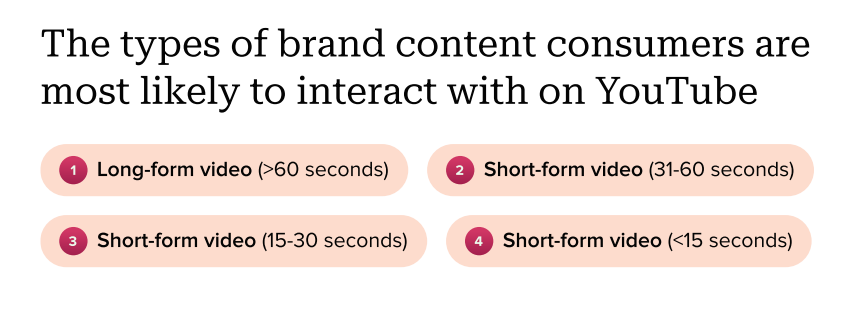
YouTube’s dominance in video content and extensive reach across various demographics positions it as a powerful platform for audience engagement and brand development. Its varied content types, encompassing both short and long videos, present flexibility to cater to different audience preferences and campaign objectives.
36. YouTube user count: at the start of this year, YouTube had an impressive 54.8 million users in the UK, representing 79% of the overall population.
37. YouTube’s reach: YouTube is recognized as the most widely used social media service among UK online adults accessing it through smartphones, tablets, or computers, with 94% (44.5 million) visiting in May 2024.
38. YouTube engagement: more than half (54%) of online adults visited YouTube daily in May 2024, marking an increase of 11 percentage points since May 2023.
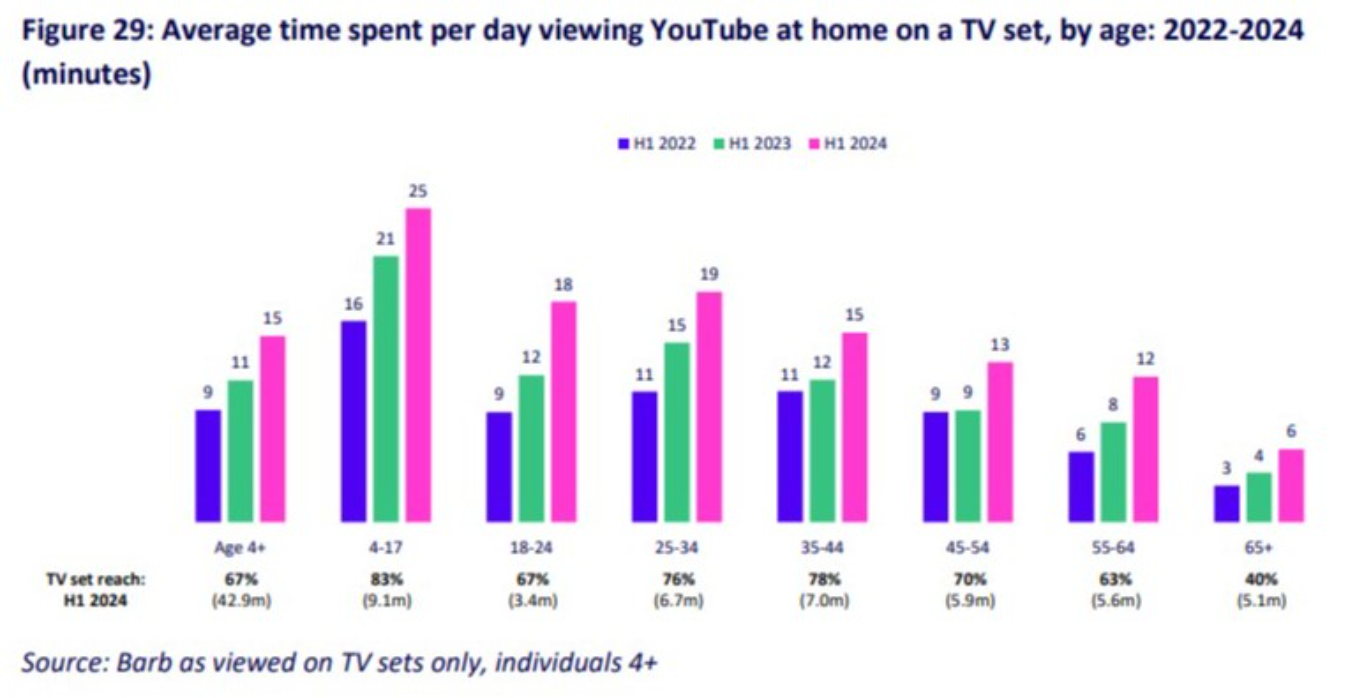
39. YouTube’s increasing popularity on TV: YouTube viewing on TV screens is expanding, primarily fueled by children and young adults.
YouTube’s position as a leading platform in video content and extensive reach across demographics make it an influential medium for building brands and engaging audiences. Its diverse content formats, encompassing both short-form and long-form videos, provide flexibility to cater to varied audience preferences and campaign needs.
Influencer marketing metrics in the UK
Influencer marketing remains a potent approach for reaching and connecting with UK audiences.
40. Increasing ad expenditure on influencers: expected to reach £1.04 billion in 2025.
41. Accelerating advertising landscape: brands are increasingly collaborating with micro-influencers for targeted engagement and genuine brand advocacy
42. Highly developed UK influencer ecosystem: a large number of influencers across various sectors.
Genuine connections and relevance are critical components of effective campaigns. Collaborating with influencers who align with your brand ethos and resonate with your target demographic can significantly enhance engagement and brand visibility.
Social media consumer behavior in the UK
Comprehending consumer behavior is vital for customizing social media strategies that resonate with your desired audience.
Social media community statistics:
Establishing vibrant online communities is key to cultivating brand loyalty and engagement.
43. Social media platforms as community hubs: enabling users to connect over shared interests, create and share content, and engage in discussions.
44. Monetization of social media largely hinges on advertising: typically targeted according to user behavior and demographics. Nevertheless, social media companies are increasingly exploring paid subscription models that offer enhanced services.
45. Reddit’s remarkable growth: underscores its evolving role in fostering online communities, predominantly among young adults.
46. Concerns regarding online harms persist: 97% of adult users in the UK reported being concerned about at least one online harm as of June 2024.
Where applicable, focus on fostering authentic relationships, delivering valuable content, and actively engaging within your communities.
Social search metrics:
The role of social media in product discovery emphasizes the significance of optimizing content for social search.
47. Trends and culture: social media is the primary medium consumers use to stay updated with trends and cultural phenomena.
48. Social search: UK consumers actively search for product and service solutions on social media when they have an immediate requirement.
When relevant, utilize pertinent keywords, hashtags, and engaging visuals to ensure your products and services are readily discoverable by potential clients.
Social commerce statistics:
The emergence of social commerce unveils a significant opportunity for brands to shift from awareness to sales, converting social media into a direct sales avenue.
49. Algorithms are pivotal: in enhancing product discoverability and awareness on social media.
50. The significance of comments and direct messages: growingly prevalent channels for social customer service engagements.
51. User-generated content and online communities: play a vital role in enhancing long-term brand loyalty.
52. Social commerce growth: the leading medium for discovering new products, with 30% of UK social users intending to increase their social purchases in 2025.
53. Importance of response times: 73% of social media users agree that if a brand fails to respond, they are likely to choose a competitor.
UK marketers should integrate shoppable features, prioritize social customer service, and harness user-generated content to bolster trust and encourage purchases.
Leverage UK social media statistics to shape your strategy
The social media environment in the United Kingdom is as dynamic as ever this year. The statistics illustrate that consumer behavior is evolving, new platforms are arising, and the role of social media in the customer journey is expanding.
By embracing authenticity, harnessing AI effectively, personalizing experiences, and investing in social commerce relevant to your sector, brands can forge strong connections with their audiences and achieve meaningful outcomes.
Keep in mind, social media is no longer solely a broadcasting platform; it is a robust medium for engagement, community development, and driving business success. Stay adaptable, adjust to the shifting landscape, and continue to innovate and experiment to flourish in our vibrant social media ecosystem.
Are you ready to explore the complexities of UK social media marketing more deeply? Download the UK Sprout Social Index™ for insights into what matters most to brands on social media and the consumers you aim to attract this year.
The article Social media statistics in the UK: What businesses need to know in 2025 first appeared on Sprout Social.
Read More




Recent Comments