
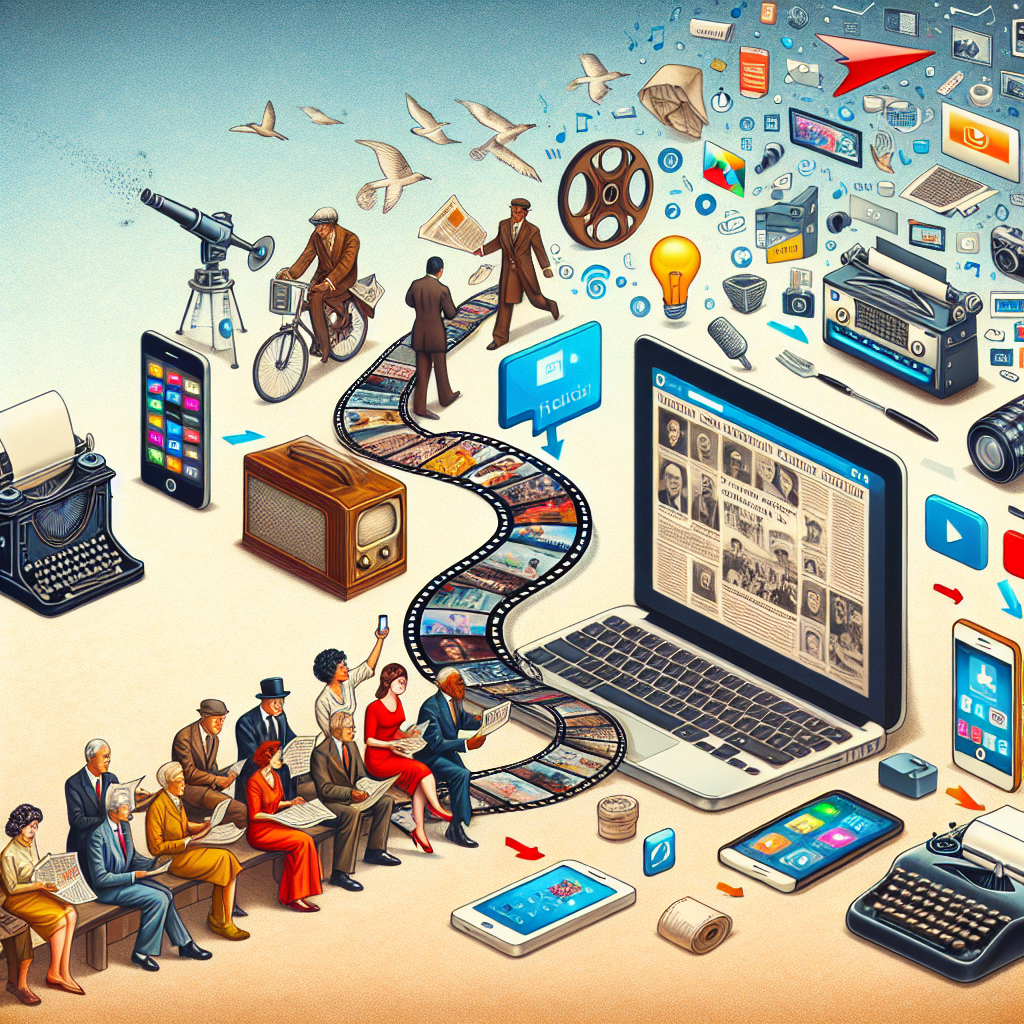
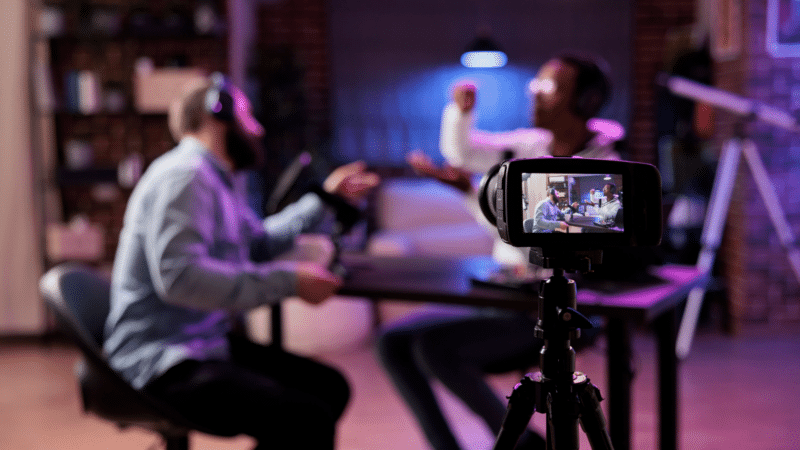
The media shake-up is happening now, and traditional outlets are struggling to survive. Legacy media is clinging to outdated business models like a boomer still trying to print out MapQuest directions.
Meanwhile, digital-first creators are raking in views, influence and cash at a pace that makes traditional networks look like retirement homes for irrelevance. Let’s look at the numbers that matter:
- Traditional TV ratings are in free fall, but YouTubers like MrBeast regularly earn over 100 million views per video.
- 50% of adults under 30 get their news from social media, not the 6 o’clock news or whatever’s left of newspapers.
- The average U.S. household pays for 4-5 streaming services, shelling out more than they ever did for cable — so much for “cutting the cord.”
- Top Substack writers are making millions, while newspapers are gasping for air.
Death of the gatekeepers
Legacy media built its empire on control. They decided what you watched, when you watched it and how much you paid. That power is gone. The gatekeepers weren’t just disrupted; they were steam rolled.
Want proof? Look at Netflix. Once the streamer was revolutionary, now it’s just another ad-supported network. In Q1 2024, 22% of U.S. subscribers watched ads — a 65% jump in a quarter. By 2027, 60% of Netflix subscribers will be watching commercials again.
The cycle has come full circle. Netflix was supposed to kill TV, but instead, it became TV.
Dig deeper: How influencers and content creators are reshaping brand strategies
The new media kingmakers
The industry’s transformation is written in the career moves of its fallen stars.
Chris Cuomo: From CNN prime time to multi-platform domination
Cuomo had a prime-time slot on CNN, pulling in millions of viewers. He lost his job after violating journalistic standards and allegations of sexual abuse by several co-workers. Cuomo joined NewsNation, a smaller cable network, but that’s just his side hustle. His real power move? Going digital-first.
- YouTube and TikTok clips: Short, highly shareable clips optimized for engagement.
- Podcast and streaming focus: Long-form discussions with no corporate filters.
- Audience control: Direct engagement with fans on social media.
Cable viewers might catch him on NewsNation, but his real empire is digital. Cuomo cracked the code: platforms > networks.
Don Lemon: Total reinvention as an independent brand
Lemon spent 17 years at CNN, hosting CNN Tonight and Don Lemon Tonight. CNN fired him after a big lapse in journalistic ethics, sexist on-air remarks and years of co-workers’ complaints about his misogyny. Lemon went fully independent. His new YouTube-first show, “The Don Lemon Show,” is direct-to-audience, giving him:
- Full creative control: No CNN producers dictating the conversation.
- No corporate risk: He owns his platform, so he can say what he wants.
- Streaming flexibility: Whether he’s live from an event, his home or anywhere in the world, he controls the delivery.
Lemon flipped the script: Why beg for a corporate job when you can own your platform?
Aaron Parnas: Political influence without a network
Before, if you wanted to be a political commentator, you had to:
- Get hired by CNN, MSNBC or Fox.
- Climb the ranks by playing the media game.
- Hope a network exec liked you.
Parnas built a TikTok-based political empire that puts some news networks to shame.
- Ultra-fast news reaction: While legacy media is still drafting scripts, he’s uploading takes breaking news within minutes
- Platform-native storytelling: He doesn’t just “report” he explains, reacts and engages
- No filter, no corporate angle: He’s talking directly to people in a way that feels real, not scripted
Parnas proved you don’t need a newsroom to influence political conversations. You just need an internet connection and a strong voice.
The Tubi effect: Winning by doing nothing
While every streaming service is playing a high-stakes game of content wars, subscription fees and ad-tier experiments, Tubi quietly pulled off a massive win by literally doing the opposite.
- No subscriptions. No paywalls. No annoying tiers. Just free content.
- No expensive exclusives. No billion-dollar franchise deals. Just an absurdly deep library of content people want to watch.
- No gatekeeping. No corporate ego. Just an algorithm that gives people what they want.
The result? 64 million monthly active users.
Tubi understands something the rest of the industry forgot: people don’t want to work to watch TV.
Meanwhile, look at the other streaming giants:
- Netflix is fighting an identity crisis, oscillating between premium prestige content and ad-supported garbage. It’s morphing into what it set out to destroy — linear TV but with more expensive subscriptions.
- Disney+ started as the home for family-friendly blockbusters. Now, it’s a chaotic mix of IP management struggling to find its niche outside of Star Wars and Marvel.
- HBO Max (or just “Max” now, because branding confusion is the future) keeps stripping away what made HBO unique to chase a broader audience.
- Peacock, Paramount+, Discovery+ — just repackaged cable TV with different logos and more monthly fees.
Tubi’s bet is refreshingly simple: remove the friction and people will watch. And it’s working.
Dig deeper: How to move beyond performative segmentation and embrace authenticity
The algorithm-driven future: How YouTube, TikTok and Substack interconnect
Think of the digital media landscape as a living, breathing machine where creators aren’t just making content. They’re engineering visibility by feeding the algorithm precisely what it wants. Here’s how the three dominant platforms interact.
YouTube: The king of retention and click-through
- YouTube rewards videos that keep people watching. Creators analyze watch time, audience retention graphs and click-through rates (CTR) like Wall Street traders watch stock trends.
- Thumbnails and titles are engineered for maximum clickability, balancing curiosity and clarity.
- A video that hooks viewers in the first 10 seconds and maintains a high retention rate is more likely to be pushed by YouTube’s algorithm.
- Many creators test short-form TikTok snippets before expanding on YouTube. A viral TikTok can signal to YouTube that a topic has audience demand.
TikTok: The viral factory
- TikTok’s algorithm is brutally efficient at identifying engaging content in seconds.
- Every swipe, comment and like influences what gets promoted. If a video gets strong engagement in the first hour, TikTok will push it to wider audiences.
- Creators iterate quickly, analyzing performance data and adjusting real-time content to fit trends.
- TikTok creators direct their followers to longer-form content on YouTube or deeper engagement on Substack. A viral TikTok can drive traffic to a YouTube deep dive or a paid newsletter.
Substack: The long-term loyalty builder
- Unlike the hyper-fast algorithms of YouTube and TikTok, Substack is about owning your audience.
- While social platforms control reach, email newsletters give direct access to subscribers, making it a hedge against algorithm shifts.
- Writers convert TikTok or YouTube fans into loyal readers by offering exclusive insights, paid content or community discussions.
- Viral creators monetize their reach on Substack, offering premium content and direct audience relationships no algorithm can throttle.
How they work together
- TikTok builds instant attention and virality — the first touchpoint.
- YouTube capitalizes on that attention with long-form engagement.
- Substack converts fans into long-term subscribers — providing a stable, monetizable audience.
Dig deeper: What makes content go viral, backed by research
This system eliminates dependence on any one platform and turns fleeting attention into a sustainable media empire.
The post How digital natives changed the game on legacy media appeared first on MarTech.
# How Digital Natives Transformed Legacy Media
The rise of digital natives—individuals who have grown up in the digital era—has dramatically reshaped the landscape of legacy media. Traditional media outlets such as newspapers, television networks, and radio stations have had to adapt to the preferences, behaviors, and expectations of a generation that consumes content in an entirely different way. This article explores how digital natives have influenced legacy media, leading to innovations in content creation, distribution, and engagement.
## Who Are Digital Natives?
Digital natives are individuals born during or after the widespread adoption of digital technology, typically from the early 1980s onward. Unlike previous generations, they have been immersed in the internet, social media, smartphones, and on-demand content from an early age. Their media consumption habits prioritize immediacy, interactivity, and personalization, which has forced legacy media to rethink traditional models of content delivery.
## The Shift from Traditional to Digital Platforms
One of the most significant ways digital natives have transformed legacy media is by shifting content consumption from traditional platforms to digital ones. While previous generations relied on newspapers, television, and radio for news and entertainment, digital natives prefer online platforms such as:
– **Social media (Facebook, Twitter, Instagram, TikTok, LinkedIn)**
– **Streaming services (Netflix, YouTube, Spotify, Hulu, Disney+)**
– **News websites and apps (BBC, The New York Times, The Guardian, BuzzFeed, Axios)**
This shift has forced legacy media organizations to establish a strong digital presence, leading to the rise of online news portals, video streaming services, and social media-driven content strategies.
## The Rise of On-Demand and Personalized Content
Digital natives expect content to be available on-demand and tailored to their interests. Unlike traditional media, which follows scheduled programming, digital platforms allow users to consume content whenever and wherever they choose. This has led to:
– **The decline of appointment-based TV viewing** in favor of streaming services like Netflix and YouTube.
– **The rise of algorithm-driven content recommendations**, which personalize news feeds and entertainment options.
– **The growth of podcasts and audiobooks**, which allow users to consume content while multitasking.
Legacy media companies have responded by launching their own streaming platforms (e.g., Disney+, HBO Max) and adopting AI-driven recommendation systems to keep audiences engaged.
## The Impact of Social Media on News Consumption
Social media has become a primary source of news for digital natives, often replacing traditional newspapers and television broadcasts. Platforms like Twitter, Facebook, and TikTok enable real-time news updates, citizen journalism, and viral content sharing. This has led to several key changes in legacy media:
– **Faster news cycles**: Traditional media outlets must now compete with social media for breaking news, leading to 24/7 news coverage.
– **Increased audience interaction**: News organizations engage with audiences through comments, live streams, and social media discussions.
– **Challenges in credibility and misinformation**: The speed of digital news dissemination has raised concerns about fake news and the need for fact-checking.
To adapt, legacy media outlets have integrated social media into their reporting strategies, using platforms like Twitter for live updates and Instagram for visual storytelling.
## The Democratization of Content Creation
Digital natives have also transformed media by becoming content creators themselves. Platforms like YouTube, TikTok, and Twitch allow individuals to produce and distribute their own content, competing with traditional media outlets. This has led to:
– **The rise of influencers and independent journalists**, who often have larger followings than traditional media personalities.
– **The popularity of user-generated content**, which provides diverse perspectives and grassroots storytelling.
– **The decline of traditional gatekeeping**, as anyone with a smartphone can create and share news and entertainment.
Legacy media has responded by collaborating with influencers, launching digital-first content initiatives, and embracing user-generated content in their reporting.
## The Evolution of Advertising and Revenue Models
With digital natives consuming less traditional media, advertising strategies have had to evolve. Traditional ad formats such as TV commercials and newspaper ads have given way to:
– **Native advertising and sponsored content**, seamlessly integrated into digital platforms.
– **Subscription-based models**, such as paywalls for online news (e.g., The New York Times, The Washington Post).
– **Influencer marketing**, where brands partner with social media personalities to reach younger audiences.
Legacy media companies have had to diversify their revenue streams, investing in digital subscriptions, branded content, and direct audience engagement through crowdfunding and memberships.
## Conclusion
Digital natives have profoundly transformed legacy media, pushing it toward digital-first strategies, on-demand content, social media integration, and new revenue models. While traditional media outlets have faced challenges in adapting, many have successfully evolved to meet the expectations of a digitally savvy audience. As technology continues to advance, the relationship

Recent Comments