

Influencer marketing is set to play a crucial role in the marketing strategies of most brands come 2025. Recent studies indicate a notable rise in Australian influencers, leading digital marketers and brands to invest heavily in this strategy.
This approach yields benefits such as enhanced conversion rates, increased engagement, and stronger connections, while boosting brand visibility and permitting customized methods to develop closer ties with consumers.
In this piece, we will explore significant statistics covering growth figures, return on influencer investments, and consumer confidence. You’ll also uncover the latest growth trends and favored platforms.
Statistics on the expansion of influencer marketing in Australia
Influencer marketing is thriving in Australia, with a promising outlook ahead:
- A quarter of Australians aged 18–44 identify as influencers. Moreover, 55% of adults aged 18–60 express willingness to abandon their jobs to become influencers, as reported by the Influencer Aspirations document.
- The influencer marketing sector is predicted to exceed US $800 million (AUD$1257m) by 2028, experiencing an 11% annual growth rate, propelled by influencer recommendations and word-of-mouth marketing.
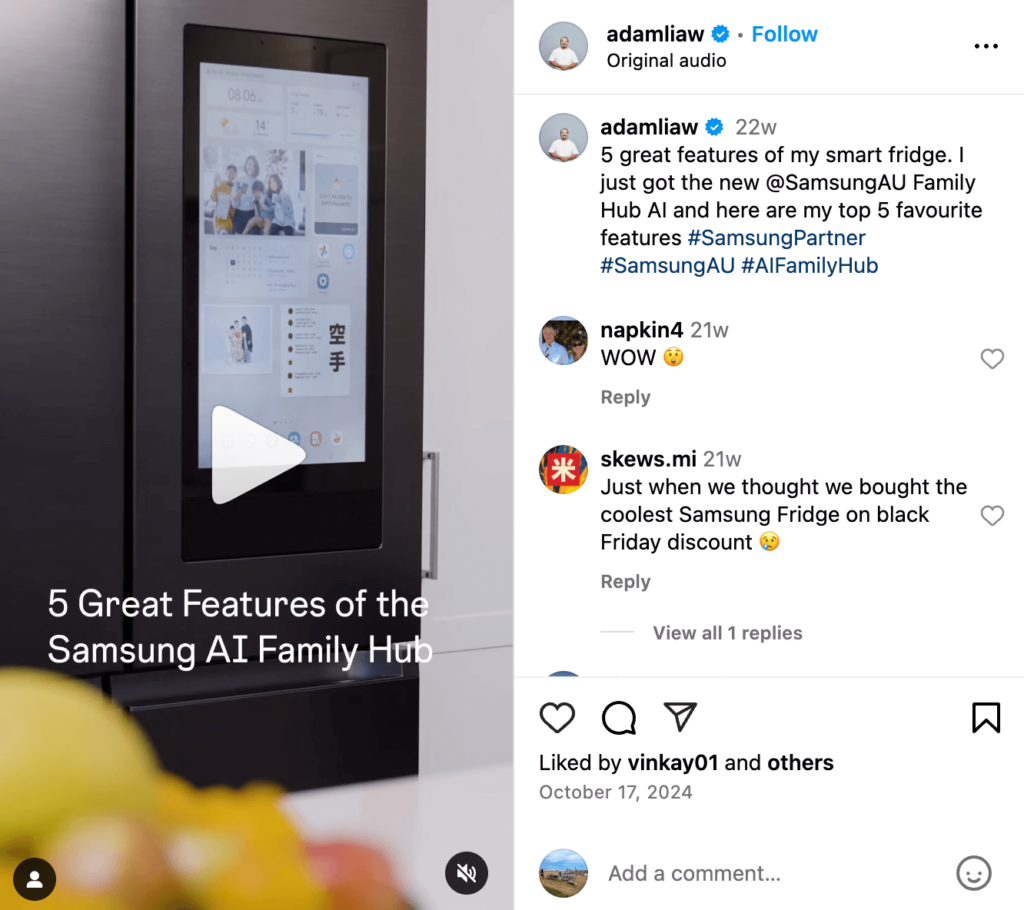
- Forty-six percent of Australians have bought a product after seeing it promoted by an influencer. For instance, Chef Adam Liaw frequently features products on his Instagram such as the Samsung Smart Fridge and Noritake kitchenware.
- According to Hoozu’s Trust in Influencer Marketing document, consumers hold greater trust in influencers than celebrities, with 59% stating they trust influencers’ sponsored content.
- Fifty-two percent of Australians aged 18 to 29 are more inclined to buy a product recommended by an influencer. For example, influencer Michaela Ludlow collaborates with Olay.

- The Australian landscape is ripe for influencer campaigns, marked by high internet and social media engagement. As of January 2024, Australia boasts 25 million internet users and 20 million social media users. Statista projects a new peak in Australian social media users by 2029, increasing to 26 million.
- Advertising expenditure in the Australian influencer market is anticipated to reach US $589 million (AUS $929 million) in 2025.
- Statista forecasts that the average ad spend per internet user in the Australian influencer market will be US $22 (AU $35).
The takeaway: Influencer marketing in Australia is witnessing rapid expansion characterized by a demand for authenticity, high social media involvement, and consumer trust. As social media usage keeps growing, influencer marketing will serve as a pivotal instrument for brands to enhance confidence and engagement. Brands should seize this evolution to reassess their customer engagement methods and modify their strategies accordingly.
Statistics on the platforms favored by Australians for influencer marketing
Australian influencers are identifying their platforms of choice, with women taking the lead in the influencer arena. Here are some statistics pertaining to preferred platforms and demographics.
- Australian Android users dedicate 38 hours and 51 minutes monthly to TikTok, according to We Are Social’s Digital 2025 report.
- Nano-influencers (1k-10k followers) comprise 78% of Instagram users in Australia and exhibit the highest engagement rates (12.6%) among all tiers, likely due to their niche followings, authenticity, and relatability.
- Fifty-five percent of TikTok influencers in Australia belong to the nano-influencer category. Despite their smaller audiences, they boast higher engagement rates and more profound connections with their audience.
- Instagram Influencer Marketing is substantial. Approximately 78% of Australian marketers deem Instagram posts the most effective for influencer marketing. Instagram Stories are also highly regarded, followed by YouTube videos (56%) and Instagram videos (54%).
- The 2025 Sprout Social Index™ Australia indicates that 24% of users plan to intensify their social media utilization in 2025.
- Ninety-four percent of Australian social media users agree that the majority of brands’ content effectively aligns with online culture, as per feedback from Australian respondents to The 2025 Sprout Social Index. Likewise, 93% emphasize the importance of brands keeping pace with online culture.
- Eighty-nine percent of marketers believe their TikTok influencer ROI is on par with or surpasses other marketing channels.
- Thirty percent of Australian Instagram influencers are females aged 18-24. The lifestyle category dominates, accounting for 16.4% of Australian influencers.
The takeaway: Instagram and TikTok are the most popular platforms among influencers, and brands acknowledge their effectiveness. Statistics indicate that eighty-nine percent of marketers observe a solid ROI from TikTok marketing, highlighting the platform’s growing influence. By intensifying influencer marketing on suitable networks, brands can connect more directly with their audience while amplifying brand visibility.
Statistics on consumer trust in influencers in Australia
Consumer trust is essential; buyers are willing to accept influencers’ recommendations, but desire authenticity as well.
- Authenticity in influencer marketing is crucial for establishing trust between audiences and influencers. About 62% of consumers who frequently purchase from influencers are also more prone to provide feedback on products recommended by influencers.
- Forty-four percent of Australian consumers indicate that transparency is vital to trusting influencers’ product endorsements. When an influencer endorses a brand, consumers expect them to disclose any affiliations.
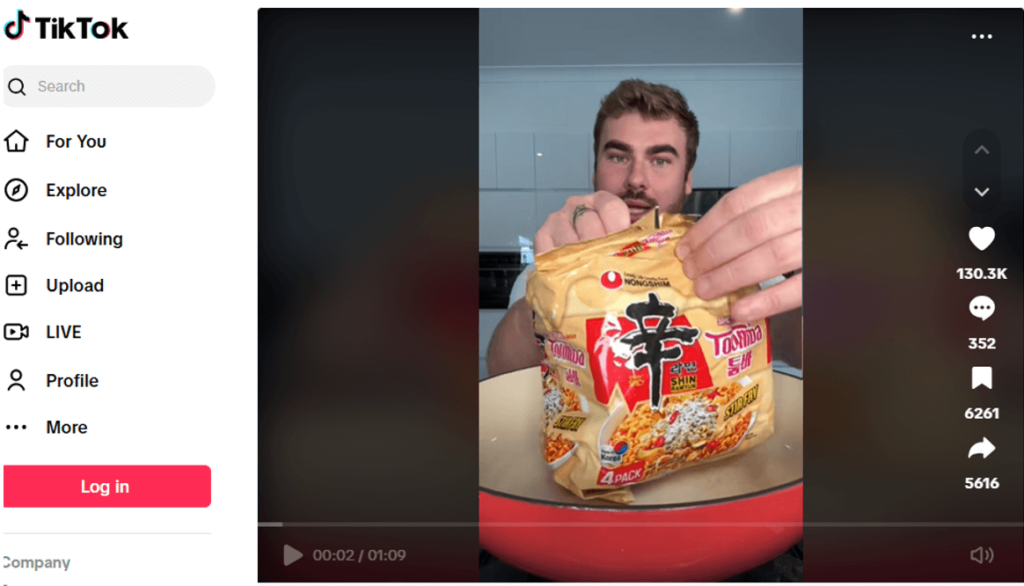
- Followers favor influencers demonstrating the functionality of products over mere endorsements. For instance, Australian chef Michael Finch shares cooking tutorials with his audience:
- Thirty-six percent of consumers trust an influencer if they have delivered solid recommendations previously. For instance, Australian fashion influencer Maxine Wylde boasts over 450,000 followers on Instagram and often features popular brands like Dulux.
- Nano influencers represent over 53% of brand collaborations. Despite their more modest audiences, they are viewed as more genuine, and followers are likely to trust and engage with them more.
The takeaway: Consumer trust and transparency are pivotal components of influencer marketing that enhance credibility. This is particularly true for nano influencers, providing insight into why they lead the way in brand collaborations. The data suggests that brands aiming to develop and sustain loyalty and trust should prioritize authentic partnerships with nano influencers.
Statistics on influencer selection and return on influence (ROI) in Australia
Influencer marketing yields a robust ROI and stands favorably against traditional forms of advertising. Marketers and brands can achieve greater value through strategic influencer selection and by collaborating with a variety of influencers. Let’s delve into the key statistics.
- Standard costs for a nano-influencer range from US $2.50 to $250 (AU $3.03 to $393.09 per post). Micro-influencers may charge from US $25 to $1,250 (AU $39.31 to $1965.46).
- Fifty-one percent of individuals aged 18-29 utilize TikTok for research before making purchases, while 38% of those aged 30-44 prefer Facebook.
- In The State of the Influencer in 2024 report, 92% of surveyed brands indicated that measuring influencer performance is vital for gauging ROI. The report also highlighted:
- One-third of brands claim influencers enhance engagement due to their capacity to access niche audiences, establish credibility, create compelling content, and foster social proof.
- Seventy-eight percent of brands identified the key advantage of working with influencers as effectively conveying primary messaging.
- Twenty-seven percent of brands noted influencers significantly assist with reach.
- By 2029, social commerce in Australia is expected to reach $3 billion (AU $4.6 billion), a significant increase from $1.63 billion (AU $251 billion) in 2023. This growth in social commerce will further drive the demand for influencers.
- To thrive online, brands must understand their audiences’ preferred platforms. Research indicates 88% of Australians lean towards Facebook. YouTube follows as the second favorite, trailed by Instagram and TikTok.
- The State of the Influencer in 2024 report reveals that 81% of brands collaborated with influencers. One-fifth report having participated in over 20 influencer marketing campaigns. The same report discovered:
- Eighty-six percent of surveyed brands believe video content resonates better with audiences compared to static formats. By integrating influencer marketing with more traditional approaches, marketers can create a more holistic strategy.
- Ninety percent of marketers assert that sponsored influencer content leads to greater engagement, as indicated by the Q1 2025 Sprout Social Pulse Survey.
- The Q1 2025 Sprout Pulse Survey also noted that 83% of marketers believe that sponsored influencer content drives more conversions than organic posts from brand pages.
- Music and beauty represent two of the most prominent influencer categories in Australia, with 8% focusing on music and 5% on beauty.
The takeaway: Influencer marketing offers a solid investment alongside conventional marketing. Social commerce is poised to nearly double by 2029, amplifying the value of influencer marketing. It’s essential for brands to measure the performance of their influencer campaigns to realize true influencer ROI. Specifically, brands should concentrate on engagement metrics, click-through rates, follower growth, cost per acquisition, conversions, and lead generation.
Statistics on influencer marketing trends in Australia
Lastly, let’s examine some of the emerging influencer trends in Australia.
- Previous research indicated that as many as 81% of 118 prominent Australian influencers might have violated advertising regulations. Others neglected to specify that their posts were advertisements. With the industry’s growth, influencers will face increased scrutiny, necessitating stricter adherence to legal requirements when brands pursue partnerships.
- One prevalent trend is the move toward authenticity, as previously discussed. Authenticity fosters more effective campaigns and greater audience engagement, encouraging brands to collaborate with content creators that align with their values.
- Micro-influencer marketing has emerged as a notable trend in Australia. Brands are increasingly leveraging micro-influencers, as their comparatively smaller audiences (10,000 – 100,000 followers) still yield substantial influence. Their higher engagement and ability to share “real” content resonate well with audiences.
- Social commerce is now firmly integrated into major social media platforms such as Instagram, TikTok, and Snapchat. By 2030, it’s projected to generate over US $10 million (AU $15 million) in revenue. Growth from 2024 to 2030 is estimated to exhibit a compound annual growth rate of 21.4%.
- Other upcoming trends include leveraging new platforms, crafting relatable content, embracing social commerce, and exploring novel hybrid payment models.
The takeaway: Australia’s influencer marketing landscape is continuously adapting with social commerce, hybrid payment structures, and micro-influencers becoming central trends. Micro-influencers are primary beneficiaries of this shift, given their smaller audiences foster deeper engagement and connections. By partnering with micro-influencers and aligning strategies with emerging trends, brands can effectively reach their target audience and maximize profit.
What regulations govern influencer marketing in Australia
The Australian Competition & Consumer Commission (ACCC) ensures that businesses adhere to fair trading standards. Additionally, the Audited Media Association of Australia (AMAA) has established an influencer marketing council (AiMCO) to create a code of practice and ethical guidelines for influencers. This code addresses influencer vetting, brand safety, and contractual aspects including content and intellectual property rights. A detailed outline of these implications for businesses can be found on sociallawco.com.au.
For influencers, one crucial best practice is disclosure. The guidelines from AiMCO are straightforward: Influencers must identify their posts as advertisements when they are:
- Compensated for promoting a product/brand/service.
- Incorporating a discount code or link as part of an affiliate program, and earning a commission.
- Receiving complimentary items, vacations, or other benefits.
Posts should also feature disclaimers using hashtags like #Ad, #PaidPromotion, #PaidPartnership, and #Promotion.
Other potential challenges for influencers might consist of copyright concerns, misleading statements, adherence to security laws, and defamation risks.
Navigating the Australian influencer landscape in 2025
The influencer marketing industry in Australia is witnessing substantial growth, and this trend is expected to persist. The aforementioned statistics offer valuable insights, showcasing the potential of influencer marketing, the preferred platforms, and the significance of authenticity.
Identifying and establishing relationships while comprehending ROI in influencer collaborations can be daunting. However, it needn’t be difficult. Explore the Sprout Social Influencer Marketing platform for seamless campaign execution.
The post Influencer marketing statistics for Australia 2025 appeared first on Sprout Social.

Recent Comments