Month: January 2025

A Manual for Examining Instagram Reels Analytics to Enhance Growth Strategies

To thrive with Instagram Reels, you need more than just the ability to jump on trends and edit videos. The key difference between successful creators and others lies in their utilization of analytics.

These metrics provide insight into what resonates with your audience and what doesn’t, enabling you to consistently share high-caliber videos that genuinely connect with them.

This article will guide you on how to monitor your Instagram Reels analytics. You’ll also discover which metrics are essential to track, what they reveal about your content, and how to leverage this data to grow a broader, more engaged audience.

How to access Instagram Reels analytics via the app

Before delving into the meaning behind your metrics, let’s ensure you can access them.

To view your Instagram Reels analytics, you must have a business or creator account. If you currently have a personal account, there’s no need to fret – you can easily transition to a professional account.

Once you’ve made the switch, Instagram offers two ways to monitor your Reels statistics:

  • View analytics for individual Instagram Reels
  • Check Reels metrics within overall account insights

We’ll guide you through each method below (illustrated with screenshots).

Monitoring analytics for individual Instagram Reels

Curious if that fresh hook worked? Or how many new followers a particular Reel gained? By assessing each Reel’s performance, you can pinpoint exactly which styles, subjects, and formats your viewers favor.

Here’s how to obtain these insights:

1. Open your Instagram profile and click the Reels tab to see all your Reels.

2. Select the Reel you wish to analyze.

3. Click View insights at the bottom to uncover metrics for that specific Reel.

View insights at the bottom of an Instagram Reel

Alternatively, you can tap the three-dot icon (•••) at the bottom right of your Reel and select Insights from the options to see the same metrics.

Monitoring Reels metrics within overall account insights

If you are looking for a wider understanding of how your Reels contribute to your overall performance on the platform, tracking Instagram metrics through account insights is the way to go. This approach allows you to identify trends across your content and assess overall engagement.

Here’s how to access this information:

1. From your Instagram profile, click the hamburger menu in the upper right corner.

2. Choose Insights to open your account’s analytics dashboard.
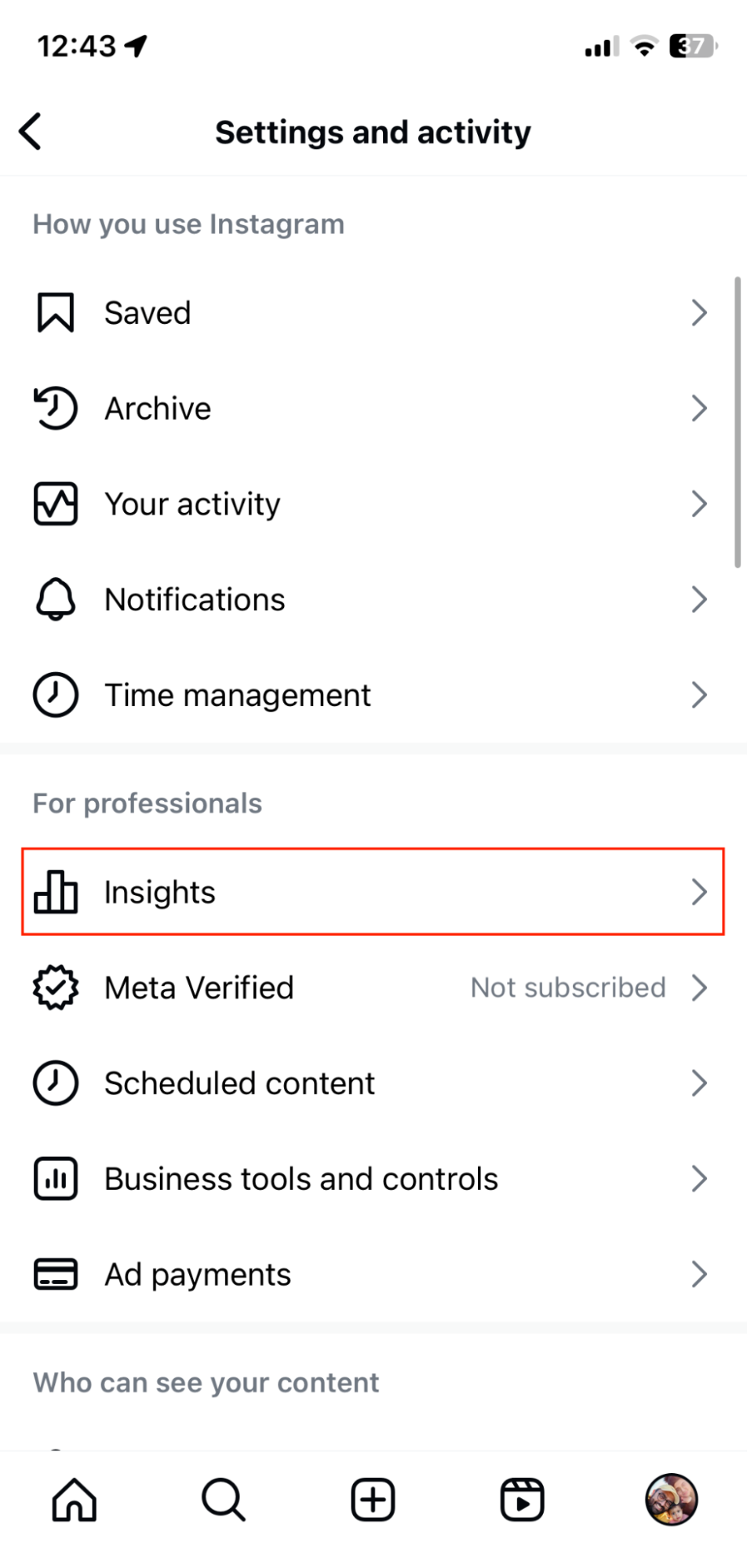
Finding Insights in Instagram's settings and activity menu

3. Scroll down to the Content you’ve shared section.

4. Click on Reels to view performance metrics for all of your videos. You can customize the time frame, filter by metric (e.g., views, comments, likes, reach, etc.), or sort your videos according to newest, highest, or lowest.

Note: You can also access your Professional dashboard directly from your Instagram profile. Tap on Content you shared and select Reels from the dropdown for the same insights.

Instagram professional dashboard menu

Instagram Reels metrics for informed decisions

Tracking Instagram Reels metrics can facilitate exponential growth on the platform—provided you grasp what each metric signifies for your strategy. Additionally, it’s critical to recognize how these metrics interact to reveal your content’s true effects.

Let’s break down each metric and what it discloses about your Reels performance:

Views

Views indicate how many times users have played or replayed your Reel. This metric reflects your video’s ability to captivate attention, particularly in the initial seconds.

Instagram Reels insights views

However, as views also include repeats by the same users, they do not inherently imply that you’ve reached a broad audience. When compared with other metrics, they can, however, provide significant insights into your content.

For instance, a Reel with high views but low average watch time may suggest a strong hook but poor engagement in the rest of the video.

Additionally, examine patterns in your top-viewed Reels. If Reels that begin with a strong statement garner twice as many views as those that start with questions, you may want to modify your hooks.

You could also experiment with various Reel thumbnails (e.g., text overlay or facial expressions) to discern what captivates your audience and encourages them to watch your Reel.

Reach

Reach indicates the number of unique accounts that have viewed your Reel. Instagram further divides this metric into the percentage of followers and non-followers who watched your video.
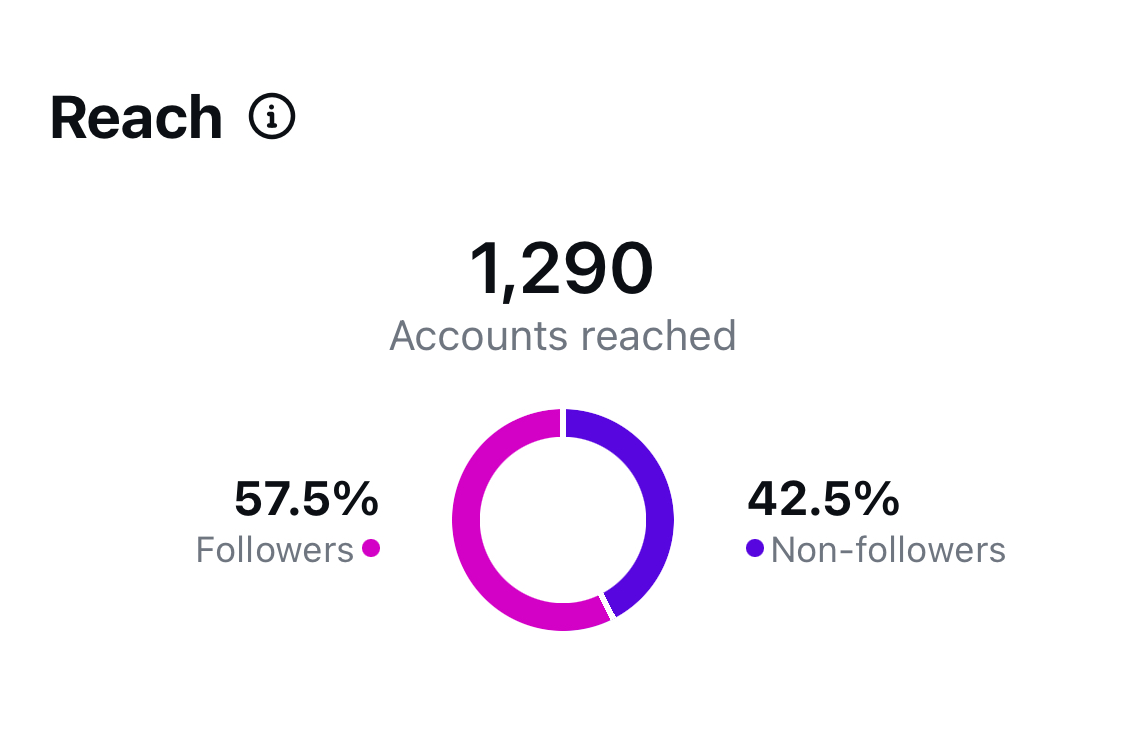
Instagram Reels insights reach

High reach typically signifies that the Instagram algorithm is effectively promoting your content to new audiences via the Reels tab, explore page, or hashtags. When your reach considerably surpasses your follower count, you’re successfully engaging with a wider audience.

There’s also a link between your views and reach. For example, exceeding views than reach indicates viewers are rewatching your Reel—an excellent signal of captivating content.

Monitor which types of content routinely reach fresh audiences. Many brands find that educational material typically travels further than promotional posts. Creating Reels on trending subjects can also significantly enhance your reach.

Watch time

Watch time quantifies the total duration viewers spend watching your Reel, including replays. This metric is useful for assessing audience engagement in a broader sense.
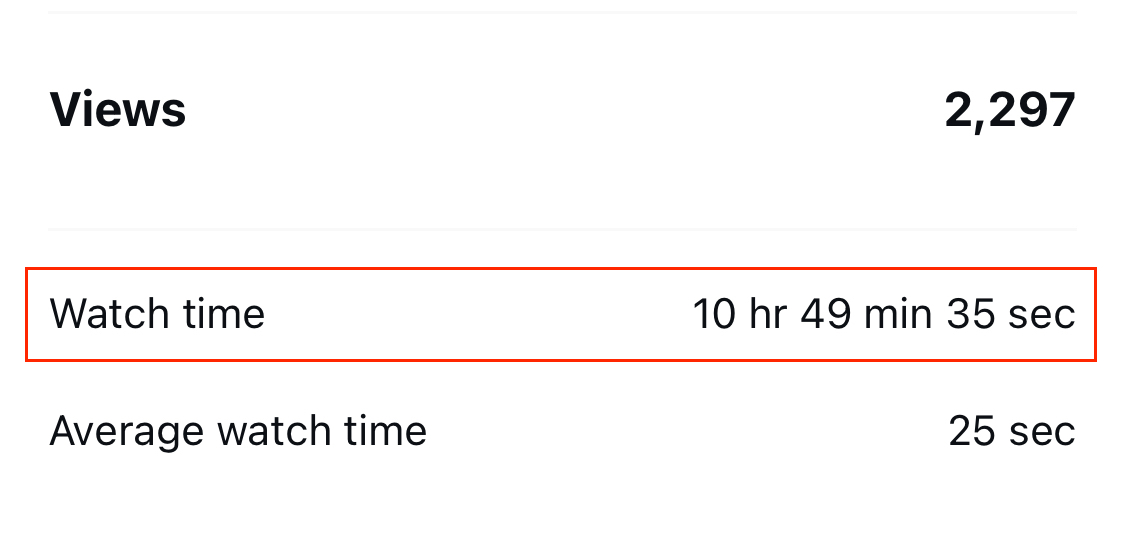
Instagram Reels insights watch time

For example, substantial watch time coupled with numerous unique views indicates a wider audience’s curiosity in your content. Conversely, high watch time alongside fewer unique views signifies deeper engagement from a smaller viewer base.

Watch time is also a valuable metric for establishing goals and gauging campaign success. For instance, your brand may assess total watch time across several Reels for a comprehensive view of which videos were most-watched overall.

Average watch time

The average watch time reveals how much of your Reel people generally watch before leaving. It is determined by dividing the total watch time by the number of initial plays (excluding replays).
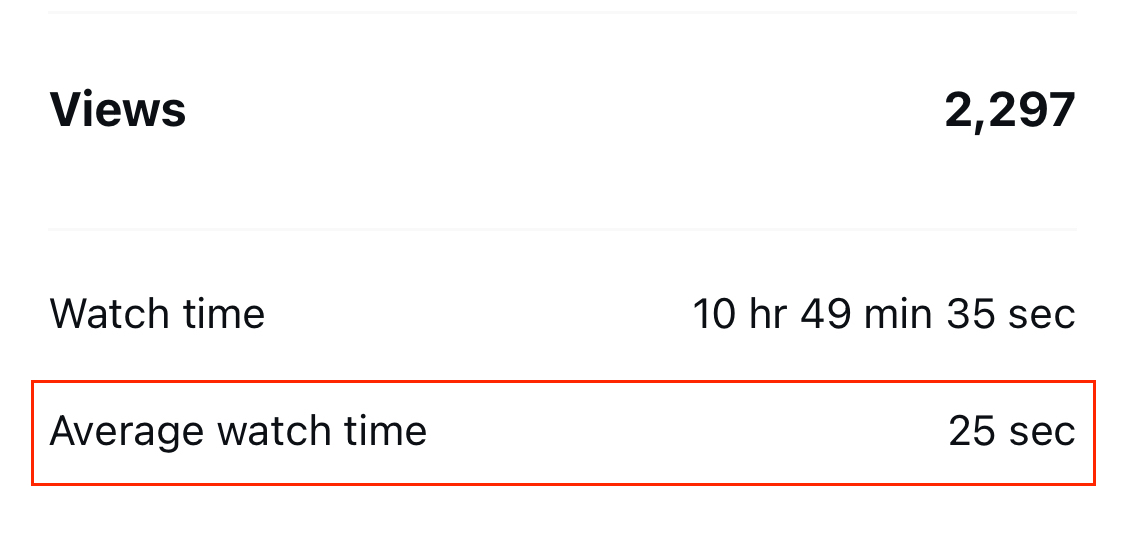
Instagram Reels insights average watch time

A high average watch time suggests that viewers are watching most or all of your video, instead of merely scrolling past after a few seconds.

In contrast, a low average watch time might indicate that your hook is misleading or your content fails to meet viewer expectations (for instance, being dull or not offering value).

Understanding the average watch time allows for a more accurate assessment of your content quality.

To illustrate, a 60-second tutorial with an average watch time of 50 seconds but fewer views might create a deeper impact than a 15-second viral clip with higher views yet only an average watch time of 5 seconds.

Reels interactions

Reels interactions indicate how viewers are actively engaging with your content. What actions do they take after viewing your Reel? This metric encompasses the following:

Instagram Reels insights interactions
  • Likes represent quick, positive reactions. While they are the most effortless form of engagement, they can help identify which Reels immediately resonate with your audience.
  • Comments indicate a deeper level of engagement. An abundance of comments on your Reels shows that they are effective in stimulating conversation.
  • Saves demonstrate Reels people want to refer back to later. To boost saves, consider sharing more educational material or videos that provide long-lasting value.
  • Shares reveal the content your audience finds valuable enough to share. Users generally prefer sharing Reels that are relatable, provide unique insights, or solve problems.

Your total Reels interactions are the aggregate of all the above sub-metrics. A higher number of interactions indicates that your content is promoting active engagement, while lower interactions suggest that viewers are consuming it passively without taking any action.

Follows

Follows indicate which Reels motivate viewers to join your audience. This metric directly influences your account growth.
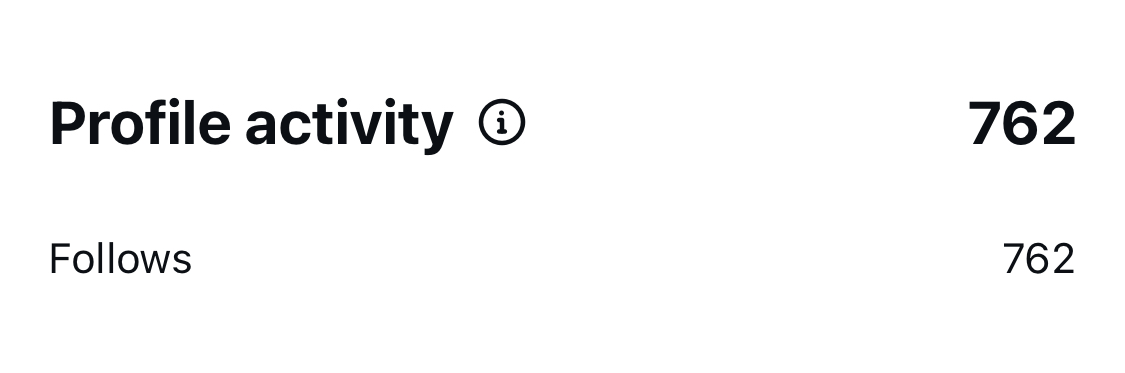
Instagram Reels insights follows

An increase in follows, even on Reels with moderate views, might highlight content that genuinely attracts your target audience on Instagram. These individuals not only appreciate your content—they desire more of it.

Follows from Reels can be a solid success indicator, especially if your brand’s objective is to cultivate community and long-term engagement on Instagram.

Enhancing your Instagram Reels analytics using Sprout Social

While Instagram’s built-in analytics cover the basics, serious brands and creators require deeper insights to thrive on Instagram. This is where Sprout Social’s Instagram analytics tools come into play.

Here are three ways Sprout can transform your Reels metrics into actionable insights that improve your social media content strategy:

In-depth analytics and reporting

Sprout Social’s social media analytics provide comprehensive insights into your Instagram Reels performance through custom, visual reports that can be easily shared.
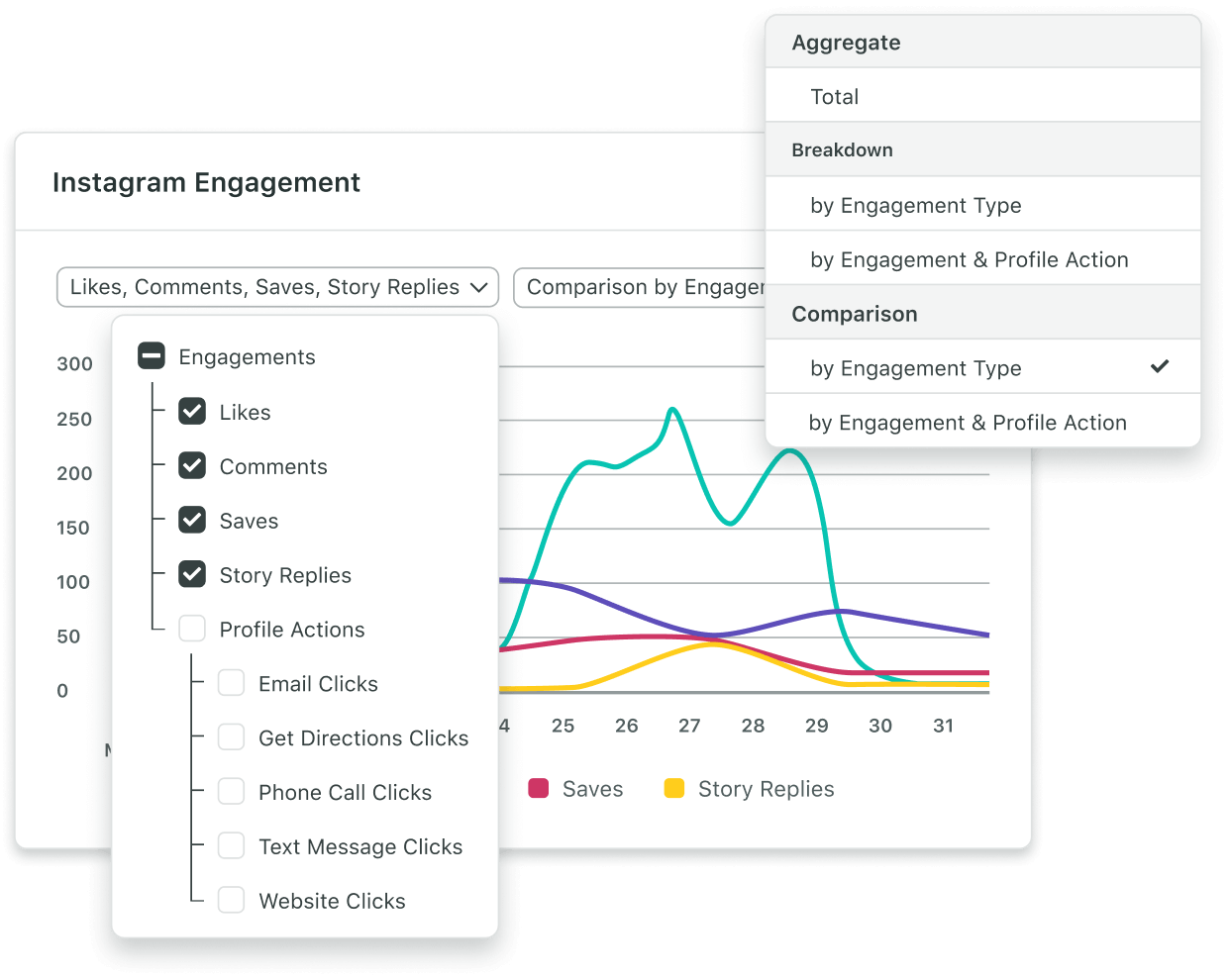
Sprout Social's Instagram report

Track unique metrics such as total plays for your Reels, which encompasses both initial plays and replays. This assists in understanding how your content resonates with your audience on a deeper scale and fine-tuning your social media strategy accordingly.

Smart Inbox for managing interactions

Rather than juggling between apps, you can respond to comments or inquiries on your Reels (and DMs) directly from Sprout’s Smart Inbox. This feature helps you achieve quicker response times and foster community by managing conversations effectively.

Sprout Social's smart inbox and messages

Calendar for tracking publishing activity

Sprout’s Publishing Calendar provides a clear overview of how Reels integrate into your overall content strategy. View your Reels alongside different content types (like posts or Stories), even across other platforms.
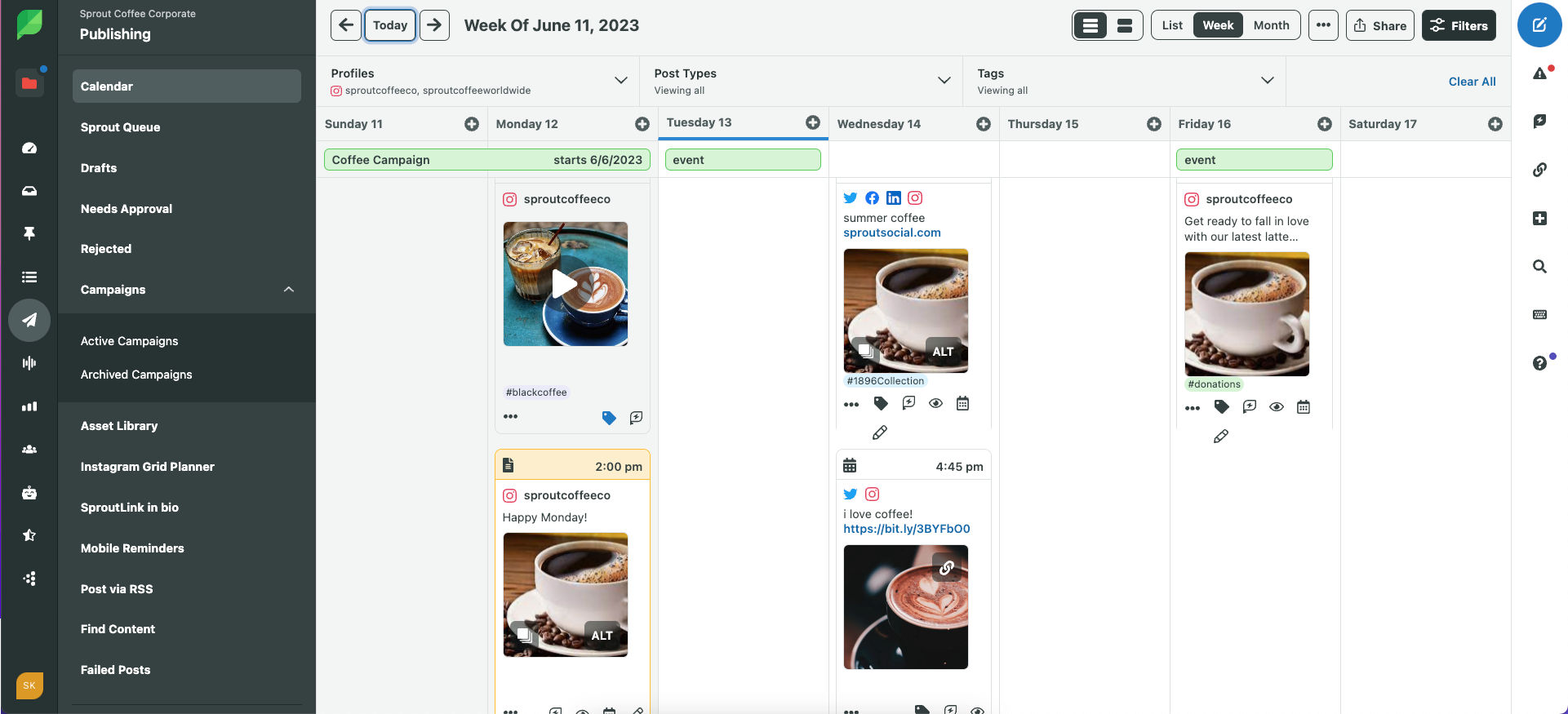
Sprout Social's publishing calendar

You can toggle between Monthly and List views, pinpoint gaps in your social media plan, and maintain a consistent posting rhythm that engages your audience.

Curious about the impact of improved analytics? Sign up for a free trial and convert your Reels data into tangible growth.

Start your free Sprout trial

How to enhance your Instagram Reels for optimal results

With an understanding of your analytics, it’s time to convert those insights into actionable steps. Here’s how to refine your Reels according to what the metrics dictate:

Leverage trends effectively

Creating Reels around trending topics and audio can elevate your performance, but a strategic approach is essential. Develop a quick checklist to evaluate trends before diving in:

  • Does it align with your brand?
  • Can you contribute value to it?
  • Will your audience care about it?

Take, for instance, Stanley’s interpretation of the “very demure, very mindful” audio trend:

An example of Stanley's Instagram Reel

Source

By being selective, you’ll focus on trends that authentically resonate with your brand’s voice (as Stanley achieves above with its Instagram feed mainly featuring colors and aesthetics). Consequently, your Reels will perform better as they genuinely engage your audience.

Pro tip: Trends you catch early commonly yield better results than those you join later. Sprout Social’s AI-powered listening tools can assist in identifying trending keywords and subjects on Instagram and beyond, keeping you ahead of the competition.

Refine your hooks – and follow through.

The initial moments of your Reel are pivotal in deciding whether viewers will linger or scroll past. Craft compelling openings that grab attention and compel viewers to continue watching.

Here are some tried-and-true hook strategies to implement in your Reels:

  • Begin with a striking point or assertion (whether spoken or text overlay)
  • Present an eye-catching visual or transformation (such as before and after)
  • Pose a question targeting your audience’s interests (and subsequently respond to it)

Oreo captivates viewers with this attention-grabbing Reel combining high-quality (and delectable) visuals, intriguing text, classic music, and ASMR audio.

An example of Oreo's Instagram Reel

Source

Remember, though: a strong hook is effective only if your content fulfills its promise. Ensure your content quality matches your opening, maintain an engaging pace, and conclude with clear value to enhance watch time and engagement on your Reels.

Pro tip: Save successful hooks from high-performing Reels within your niche. Use this collection of Reel ideas to test various openings and discover what resonates best with your brand.

Schedule around peak activity periods.

When your Reel is published influences its reach and engagement significantly. Instead of posting whimsically, establish a publishing calendar that aligns with your audience’s peak activity times.

You can also consult our guide to the best times to post on Instagram to discern average times diverse formats, countries, and industries thrive. Here’s an overview:
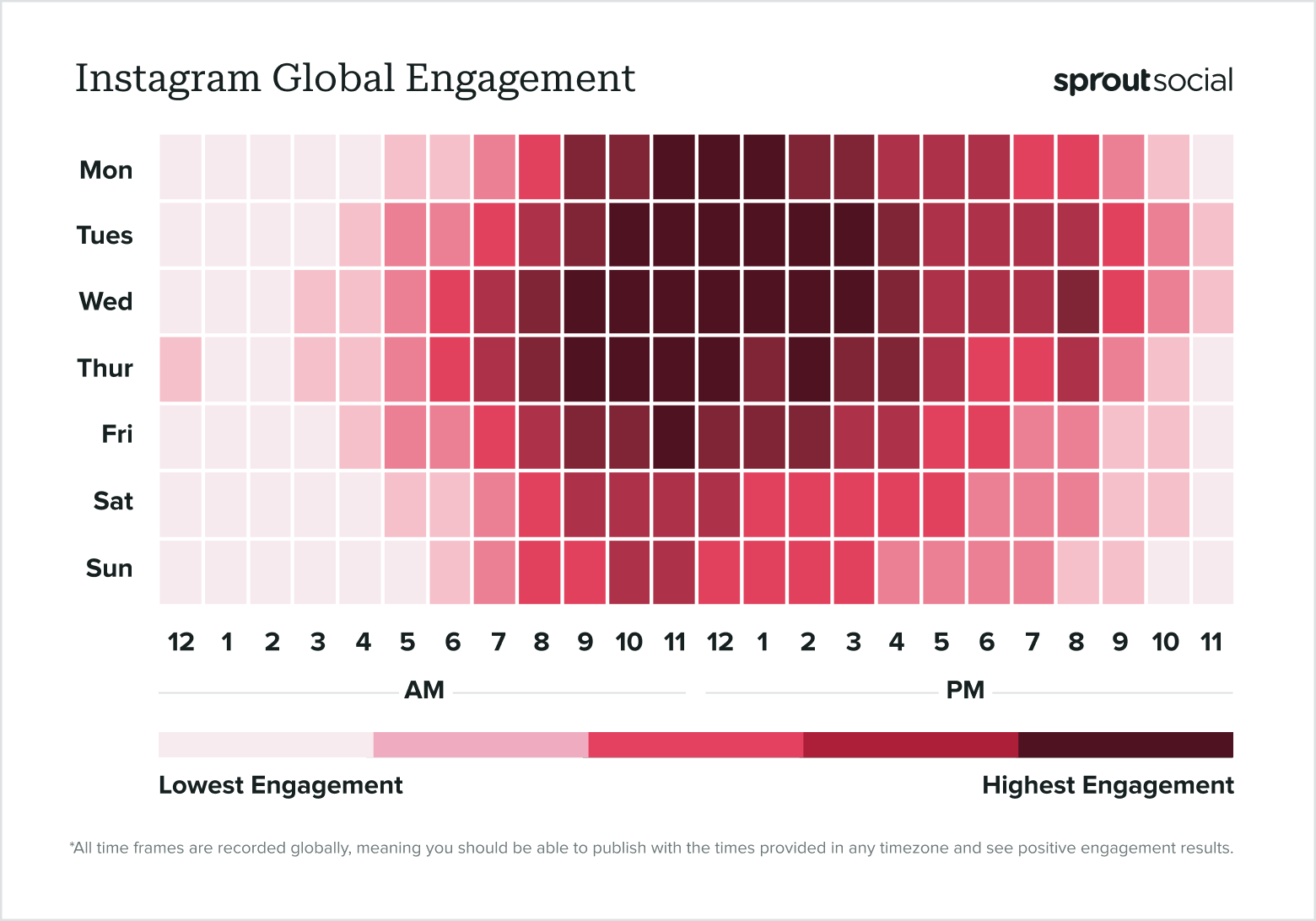
Based on data from Sprout Social, a data heat map show shows the best times to post on Instagram globally in 2024.

Source

Pro tip: Do your audiences span multiple time zones? Factor in their respective time zones when scheduling your Reels. Sprout’s ViralPost technology recommends optimal posting times for your audience based on historical data, and even automates your Reels scheduling.

Respond to comments swiftly

The first hour following the posting of your Reel is critical for generating engagement momentum. Allocate 15-30 minutes to actively engage with comments during this vital window.

This effort involves more than mere courtesy (though that’s essential)—it’s a strategic tactic to win over the algorithm and enhance your Reel’s exposure.

Avoid generic responses; instead, add real value to the dialogue. Personalize your replies, ask follow-up questions, and relate to viewers’ experiences. For instance, see how baby feeding app Solid Starts manages this:
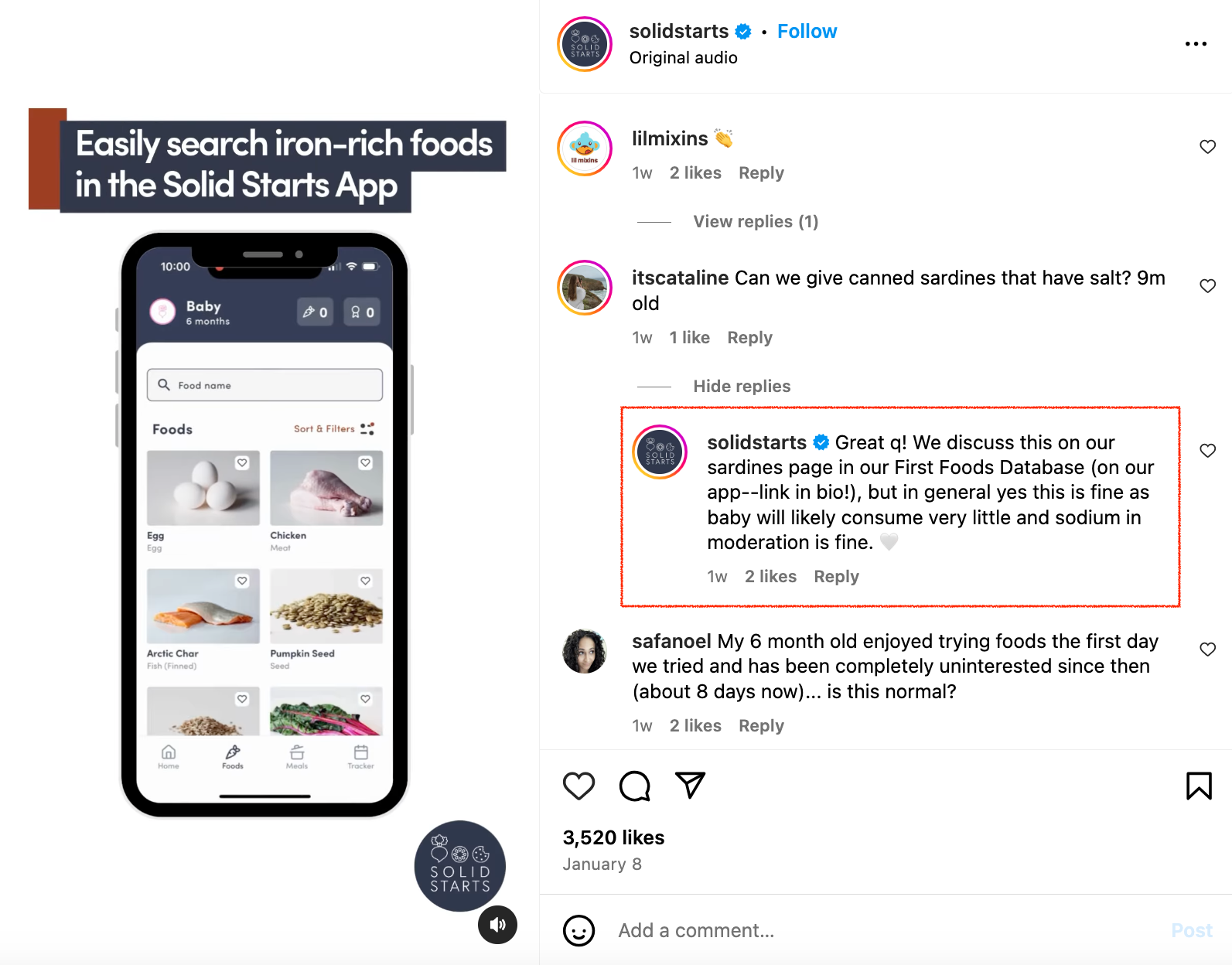
An example of Solid Start's Instagram Reel

Genuine engagement builds trust, sustains conversations, and encourages viewers to save, share, follow, and return for more content.

Utilize Instagram Reels analytics to inform your strategy

Consistently producing successful Reels isn’t purely a matter of luck—it involves understanding your analytics and applying that data to fine-tune your strategy. Begin with Instagram’s built-in analytics to monitor basic Reels metrics, and then leverage Sprout Social for an in-depth analysis of your performance. Sprout’s cross-platform analytics will clarify how your Instagram Reels and posts integrate into your overarching social media strategy. Start your 30-day free trial today.

The post How to analyze Instagram Reels analytics to grow appeared first on Sprout Social.

Read More

Grasping the Roles of Social Media Content Creators and Knowing When to Engage Their Services

As the realm of digital marketing persists in its transformation, so do the various career opportunities it presents. If you’re managing your brand’s marketing approach, it’s likely you’ve contemplated the idea of employing a social media content creator.

Currently, your social media manager may also oversee content production. However, in today’s social media environment, the responsibilities of a manager and a creator differ significantly.

Recruiting for a position you haven’t previously experienced can be challenging, particularly when it involves a role that is still developing within the field. If you aim to enhance your social strategy by employing a social media content creator, here’s all the information you require about their functions and the potential impact of their contributions on your brand’s social presence.

What is a social media content creator?

A social media content creator crafts and disseminates content designed to inform or entertain audiences on social platforms. They are digital narrators, trend innovators, and community cultivators who typically possess skills in visual design, videography, copywriting, and brand development, among other competencies.

Many content creators produce across multiple social media channels but may specialize in one or two, such as Instagram or YouTube. Some may excel in specific content types, like short-form videos or transient posts.

At first glance, this might appear limiting. In truth, it is quite the opposite. Social media trends and functionalities evolve daily. A social content creator’s concentration on their selected channel or format equips them with an unmatched comprehension of what flourishes on their preferred platforms.

Content creator vs. social media manager

While there is undoubtedly some overlap between social media content creators and social media managers, they are distinct occupations.

In simple terms, a social media content creator’s role is to develop and edit content, while a social media manager collaborates with them to establish a coherent strategy and oversee profiles. Social media managers are also usually tasked with cultivating communities around social accounts and may additionally handle customer support duties. By separating these responsibilities between creators and managers, each can concentrate on their own roles to achieve optimal outcomes.

Two (or more) social roles are vital for larger brands due to the crucial nature of social marketing. As reported in Sprout’s 2024 Content Benchmarks Report, brands post an average of 10 times daily. Balancing the creation and distribution of that much content across various social networks—while also managing a social media manager’s administrative and strategic responsibilities—is a considerable challenge.

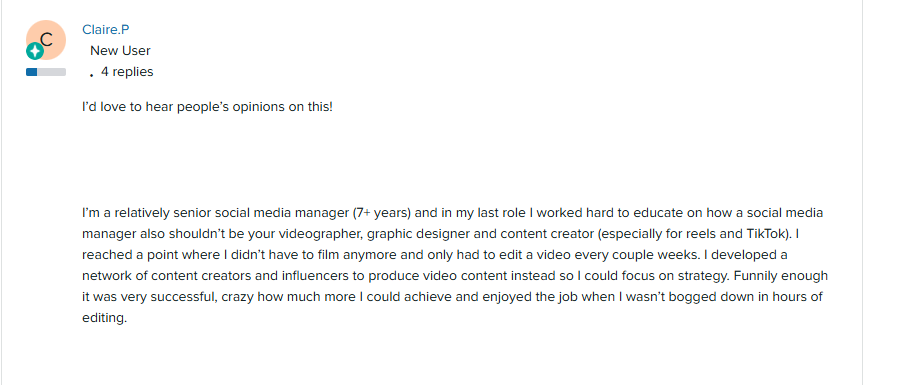
This clarifies the necessity for the social media content creator role to be well-defined for hiring departments. In discussions on The Arborteum, Sprout’s community forum, Claire.P, a senior social media manager, emphasizes her role in informing her company about the importance of having dedicated content creators for content generation.

Discussion on Sprout’s community forum regarding the distinction between these roles

Content creator vs. influencers

What about influencers? This comparison can become slightly more convoluted, as some influencers identify as content creators. The primary distinction lies in the intent behind their content.

Influencers create content aimed at swaying people, typically by showcasing their lifestyle or expertise. Their content is crafted to persuade audiences to purchase specific products or promote an aspirational lifestyle. They operate independently and cultivate their own small communities.

A social media content creator’s purpose extends beyond mere influence; they also aim to educate, raise awareness, express creativity, and more. Their content centers less on personal identity and more on the quality of the content itself.

Molly-Mae Hague boasts a considerable following across numerous social platforms and ranks as one of the UK’s leading social media figures. Her content style is highly personal, frequently highlighting fashion or her own line of products, classifying her as an influencer.

Molly-Mae is an influencer sharing relatable content on her social media

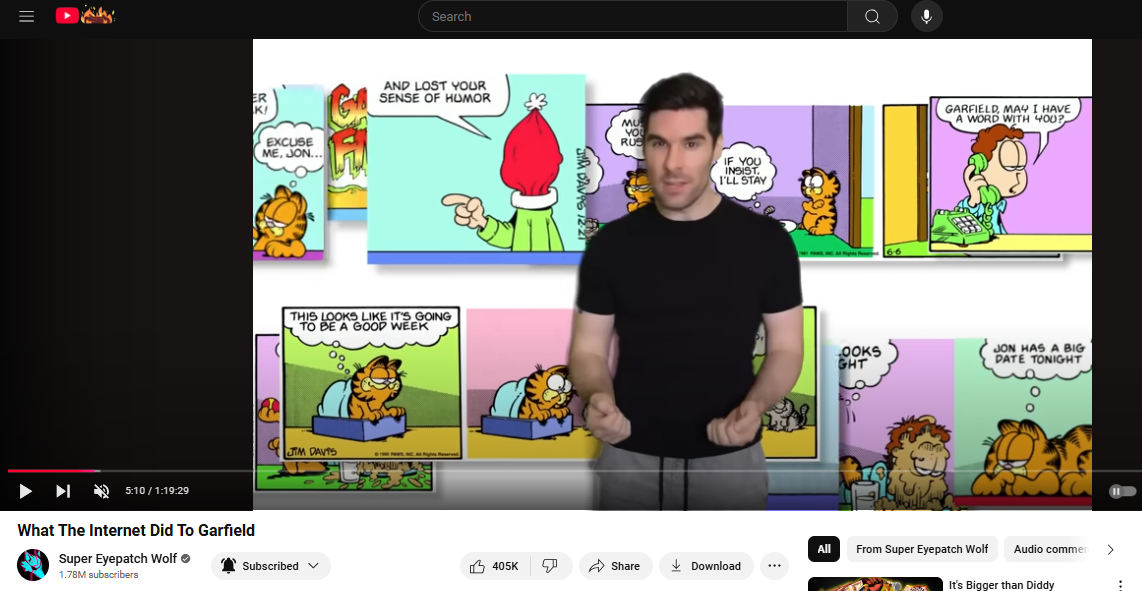
In contrast, Super Eyepatch Wolf is a YouTuber focusing on lengthy video essays about popular television shows that garner millions of views. His content aims to educate and entertain, positioning him more as a content creator.

SuperEyepatchWolf prioritizes video quality, thus being categorized as a content creator

If you’re still uncertain about the differences, take a look at our article on digital creators vs. influencers article.

Ultimately, remember: social media content creators can be onboarded as internal employees. While they may also operate as external contractors like influencers, larger organizations should contemplate establishing an in-house content creation team.

What does a social media content creator do?

The role of a social media content creator is dynamic and can shift based on various factors. Common responsibilities include:

  • Generating creative and original content ideas that align with a brand’s broader social strategy
  • Producing this content through filming, designing visuals, writing descriptions, and more
  • Editing content pre-release, keeping in mind the target audience and SEO
  • Adjusting content for use across diverse social networks
  • Coordinating with social media managers to monitor content calendars and analyze metrics
  • Keeping an eye on current social media trends for potential brand relevance

Benefits of hiring social media content creators

<pEmploying an internal social media content creator can revolutionize your social media team’s functionality. Here are some significant advantages this role can provide your brand.

Enhanced audience insights

Bringing a content creator on board means having someone who consistently generates content for your social media profiles. They will gain a comprehensive understanding of your target audience’s uniqueness and what they seek in your social media offerings.

By integrating content creation in-house, you’ll foster engagement on a channel you control, resulting in better brand development and data-driven improvements. Your internal social media content creator can also collaborate with your social manager and broader marketing team, as they’ll have access to your performance data to guide enhancements across your entire digital strategy.

On the other hand, hiring a creator externally can also be advantageous from an audience perspective. You might reach more followers through cross-promoting a campaign on their channels, and they could provide audience insights your team hasn’t yet considered.

More timely and pertinent content

Social media is inherently time-sensitive; trends and memes can shift rapidly. An internal content creator offers greater flexibility in managing your social profiles, optimizing your content creation and publication processes.

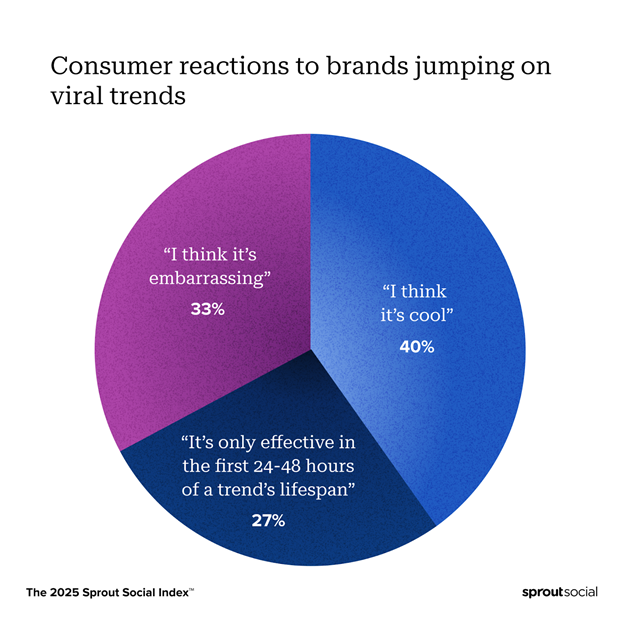
Having a dedicated creator allows you to adapt to trends swiftly. According to the 2025 Sprout Social Index, 27% of consumers feel that brands leveraging viral trends in their content are most effective when published during the initial 48 hours of a trend’s emergence.

Consumer reactions to brands engaging with viral trends, showing majority (40%) find it appealing while a portion find it embarrassing or only effective soon after trending

In addition to being reactive, an internal social media content creator can assist your brand by practicing proactive marketing. They should understand current trends and be capable of identifying which are most relevant for your brand and audience, helping you capitalize on the right trends before they lose relevance.

While working with an internal creator makes trend adaptation easier, collaboration with external creators on timely content remains feasible. These creators often possess a keen awareness of trends affecting their audience and can help you leverage them quickly if a strong working rapport exists.

Enhanced creativity and engagement

The primary function of a social media content creator is content development. With their focus strictly on content creation, they have more time to unleash their creativity and explore new angles for your content strategy.

This often results in more intriguing concepts and increased interaction with your social strategy. Skilled creators typically possess a proven success record with content generation and leverage this expertise to aid your brand.

Increased capacity for creative execution

Having a content creator alongside a social media manager allows for a shared workload. Expecting one to perform the other’s tasks can lead to exhaustion.

Recruiting a content creator is a crucial step in crafting a successful social media team. Once established, this team can collaborate effectively to improve outcomes for your brand.

When to hire a social media content creator

There are multiple indicators suggesting when your organization could gain from hiring a social media content creator.

The first and most significant sign is an overwhelmed in-house team. Today’s social media strategies are complex, encompassing numerous tactics. If your team is overextended, they will probably dedicate most, if not all, of their working hours to routine account management, leaving no room for innovative strategies or impactful initiatives.

Another signal is your content’s performance. If your engagement rates are stagnating or declining, a content creator can reinvigorate your brand’s profiles with fresh perspectives.

Additionally, consider the types of content you are producing. If you recognize value in videos or Reels but lack the proper skills, tools, or capacity for videography, recruiting a creator who specializes in video content production can be an effective solution.

Finally, you might simply desire to increase your posting frequency. Consistency and volume are vital for thriving social media profiles, and hiring a dedicated social media content creator enables you to produce more posts efficiently.

Finding the right social media content creator

If you aim to hire a social media content creator, there are various routes you can pursue. Depending on your requirements, you can:

Each of these options comes with its own advantages and drawbacks. Hiring an in-house creator is often the ideal solution for larger brands or teams, but it can also be a wise choice for smaller entities with a significant social media presence.

Regardless, it is essential to select the right social media content creator for your organization. These tips will aid in assessing candidates and aligning a creator with your brand.

Searching for content creators

Identifying content creators is the first major challenge. You can advertise the position like any other job — if you’re advertising, download our social media manager job description templates, which feature a digital content creator role description ready for customization.

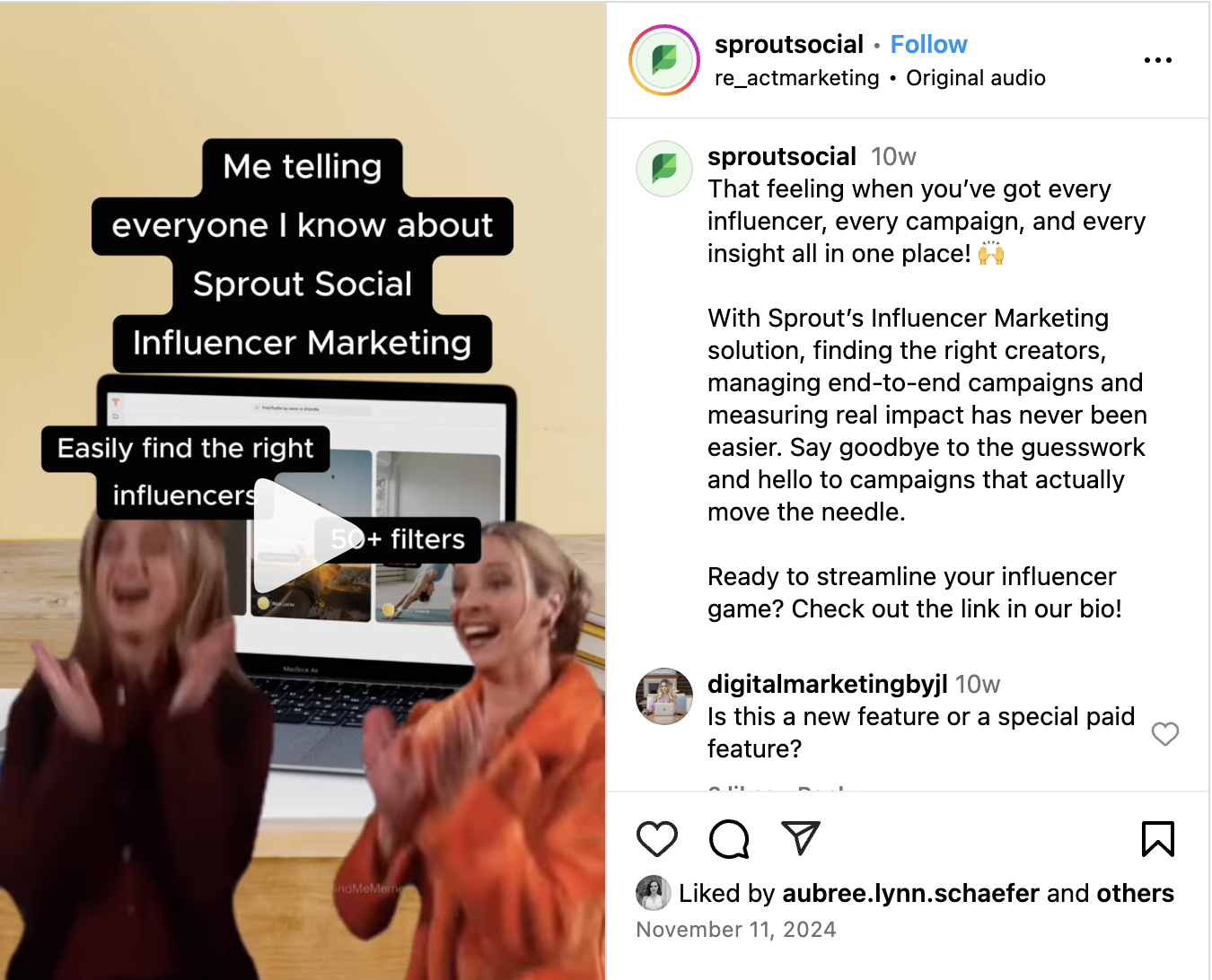
If you’re seeking a creator with a history of success, browse through a content creator database. Define your campaign objectives beforehand to easily filter potential candidates. Use a tool like Sprout Social Influencer Marketing to discover creators and influencers with established audiences that authentically connect with your brand, utilizing AI and advanced filtering by specific profile attributes.

Sprout Social Influencer Marketing facilitates finding content creators

Ensure creators comprehend your audience and values

Employing a tool allows you to filter creators by factors such as audience size. Review a creator’s profile personally and ascertain whether their values resonate with your brand’s. You should watch for apparent instances of profanity or controversy and whether they advocate for specific causes or contentious figures. Additionally, check if they’ve previously collaborated with your competitors.

Conduct these checks ahead of outreach or interviews, enabling you to narrow down candidates for term discussions. This streamlines your recruitment process, ensuring you engage only with serious candidates who are a fitting match for your brand.

Evaluate their portfolio

A capable content creator should possess a portfolio showcasing their work for potential employers or collaborators. Request this from all candidates under consideration and examine the content they’ve produced thus far.

This will provide you with insights into the types of content they are experienced in and their creative approach.

Jonpaulsballs is a distinct Instagram content creator who crafts custom footballs (soccer balls) using diverse shapes and materials. Recognizing his previous work, Pepsi contracted him for a campaign promoting their new Pepsi Smart Can, aligning with his usual content style.

Instagram collaboration post showcasing @pepsiglobal and @jonpaulsballs featuring a ball styled to resemble the Pepsi logo.

Portfolios should clearly present success metrics. Compare these metrics from various portfolios to assess a creator’s past success and their understanding of it.

It is equally important to examine which metrics a creator prioritizes. This indicates their platform comprehension and can signal whether they can collaborate effectively with your social media manager in tracking performance.

How brands can collaborate with social media content creators

The best method of working with a social media content creator will depend on whether they are employed by you or contracted. Below, we offer more explicit advice on collaborating with creators who are contractors rather than employees.

Clarify expectations when contracting creators

If you’re hiring a creator for a specific campaign, ensure transparency regarding your campaign objectives.

Articulate the exact deliverables you require from them and the KPIs to measure success. Provide a campaign outline before the project commences, allowing ample time for them to grasp your expectations.

Make sure to share your brand’s style guidelines as well, including your tone of voice, previous campaigns, and additional documents. The more information you relay to the creator, the simpler it will be for them to understand your brand and what you anticipate from them.

Focus on diversity and inclusion

It’s evident that brands have struggled to diversify the talent with whom they work. This presents a significant issue socially and commercially. Inclusive campaigns enrich your content by elevating diverse perspectives, expanding your reach beyond a single consumer group.

Creators from diverse backgrounds can imbue their unique life experiences and perspectives into the content they produce. Ensure your collaborations seek to amplify voices that often remain unheard.

Trust and respect your creators

To fully benefit from hiring social media content creators, you must grant them creative liberty. Remember, you’re counting on their unique perspective and voice. Restricting that can compromise both your brand and your relationship with the creator.

Much like partnerships with influencers, working with creators should be mutually beneficial. Honor them as unique individuals and seek harmony between their creativity and your brand’s ethos. Your collaboration should be advantageous for your brand and enriching for their professional journey.

Ready to hire a social media content creator?

Trends and consumer preferences are evolving quicker than ever. Social media content creators are in tune with cultural shifts and can assist your brand in maintaining relevance across social channels.

For additional insights required to enhance your social media strategy, explore the latest edition of The Sprout Social Index™. It offers data-driven insights on consumer expectations and the strategies other marketers are employing to keep pace.

The post What is a social media content creator and when should you hire one? appeared first on Sprout Social.

Read More

“Introduction to Git: A Brief Overview”

Stick around until the end to experience the beatmobile…

In this issue:

  • GoDaddy invests a cool half-million to back the WordPress community. 🤑
  • Post Status is transitioning into a Dutch nonprofit, and the reactions are quite positive.
  • The internet has finally reached a consensus on how to pronounce GIF.

Just In: What’s Happening?

Hope everyone is enjoying this fine January 76th! This meme nicely captures the vibe:

Humorous image depicting two women discussing the passage of time

 
But anyway, here’s what’s been up so far this year:

Woah Daddy! 🤑

GoDaddy (or maybe we should call them SugarDaddy) recently revealed that they’ve contributed $520,000 to support the WP Community Collective, a project aimed at funding and enabling WordPress contributors.

According to the GoDaddy announcement, the funding will assist in financing the collective’s “programs and partnerships that enhance open-source communities, drive innovation, and foster collaboration.”

GoDaddy employs two full-time developers, Kira Schroder and George Mamadashvili, who focus exclusively on WordPress core development. They also support 46 contributors, devoting 255 hours per week to WordPress across 17 teams.

WPCC President Sé Reed mentioned that the influx of funds will help them implement more sustainable paid Fellowship opportunities, allowing more individuals to dedicate their time and skills to WordPress development. This aligns perfectly with Ryan McCue’s recommendations in his blog post last October, “A Stronger Foundation for the Ecosystem.”

If you’d like to contribute and support the collective too, you can sign up here. (No worries, memberships start at $5 if you don’t have an extra half-million lying around. 😉)

New Core Interface, Who’s This?

As you might have noticed, the WordPress.com user interface underwent a change last week.

Everyone is familiar with the custom “Calypso” interface for registered WordPress.com users, but as mentioned in the blog post detailing the update, having two distinct interfaces between .org and .com was becoming “increasingly challenging.”

Thus, all WordPress.com users were moved to the standard wp-admin .org interface, promising them a “consistent and intuitive experience no matter where you WordPress.”

The reactions? It’s uh… not entirely optimistic. Some users welcomed the change, but many commented on the post expressing their dissatisfaction with the sudden switch and stated they found Calypso to be more efficient and user-friendly.

The expression, “if it ain’t broken, don’t fix it,” came up more than once. 😬

What’s your opinion on the update? Are you in favor of it, or do you believe it simplifies things for the WordPress team while neglecting user needs? Share your views in the comments!

Post Status Receives an Update

Founders of Yoast SEO Joost de Valk and Marieke van de Rakt have disclosed that they’ve acquired Post Status, the esteemed WordPress business community. They plan to transform it into a Dutch nonprofit foundation, benefitting from the country’s solid privacy protections and legal framework.

With a Slack channel boasting over 1700 active members, a buzzing job board, and a weekly newsletter, Post Status has become a vital component of the WordPress ecosystem since its inception in 2013 by Brian Krogsgard.

Joost de Valk informed members on Slack that the membership fee would be lowered, making use of Slack’s 85% discount for nonprofits.
Tia Wood, Founder of TheWPGirls.com, expressed, “So thrilled that the de Valks have acquired Post Status and are converting it into a nonprofit. You two are amazing Joost & Marieke. Kudos to everyone involved.”

Developer and consultant Carrie Dils also celebrated the acquisition, remarking, “I recall Post Status’ groundbreaking period with @Krogsgard, the leadership under @LindseyMillerWP & @corymiller303, and am excited for its future as a safe haven to gather and exchange ideas.”

Astonishing Facts & Stats

  • According to the State of Enterprise WordPress 2024 report, 61% of enterprise organizations contribute to the WordPress project. That’s a phenomenal jump from 38% in 2023! (Source)
  • The OOPSpam 2024 Annual Spam Report has been published. Can you believe that the USA and China account for nearly 58% of global spam? Yikes! (Source)
  • Plus, nearly 69% of spam targets WordPress sites, which is unsurprising given its popularity. Ensure your site is secure and updated, everyone! (Source)
  • Based on this survey, 84% of individuals are correct in using GIF as in gift over JIF as in giraffe. The remaining 16% are mistaken. #fightme (Source)

Must-Read Blogs & Resources

Is organizing your workflows a goal for 2025? Abby Wood’s comprehensive guide on project management tools might just be what you need. | Considering whether to accept that job offer? This quick test provides clarity. | Looking to schedule a call with that client far away? This might be the best visualizer we’ve found for pinpointing a convenient time for both of you. | The nomination deadline for 2025 Core Team Reps is January 31st, so click here to nominate people (or yourself!)

Fun Break Distractions

Have kids and want to teach them coding? Scratch is a fantastic kids coding platform.

Think you’re fast on the keyboard? Test your typing speed here.

Not satisfied with your typing speed? This is a great touch-typing tutor that can help you improve.

Got your popcorn ready and snuggled up but unsure of what to watch? Movielens will provide tailored movie recommendations based on your previous IMDB ratings.

When you find the ideal film to watch, this is how you’ll likely appear.

And lastly, my dream car isn’t real…. (Wait for the rear view mirror harmonica!) 😲

Read More

Strategies for Closing the Communication Divide Between Executives and Social Media Teams

I have been immersed in social media since its early days. I’ve observed its transformation from a platform where users would “poke” friends and share #TBT images to a vital force that shapes global culture. The impact of social media on worldwide events and national elections underscores its profound integration into our society.

It’s almost unbelievable to think about a time when it was seen as revolutionary for brands to establish an online social presence. Today, it’s essential. On social platforms, brands boost sales, shape perceptions about their products and companies, and even create multi-million dollar enterprises from scratch.

While the landscape of social media has significantly transformed throughout my career, social teams still often feel overlooked. Even though social data stands as one of the most easily accessible and real-time consumer insight sources available today, many teams are uncertain about how (or lack the resources) to align social initiatives with company objectives.

By enabling teams to master not only the creativity but also the methodology behind social data narratives, brands can enhance long-term visibility, build pipelines, and evolve products. Assist your social team in articulating their insights in a manner that resonates with executives, board members, and product teams to make this valuable data prominent and actionable.

This article details how the Sprout social media team extracts significant business outcomes from social data and what marketing leaders can do to effectively bridge the communication gap with their social teams.

Do executives truly place trust in social teams?

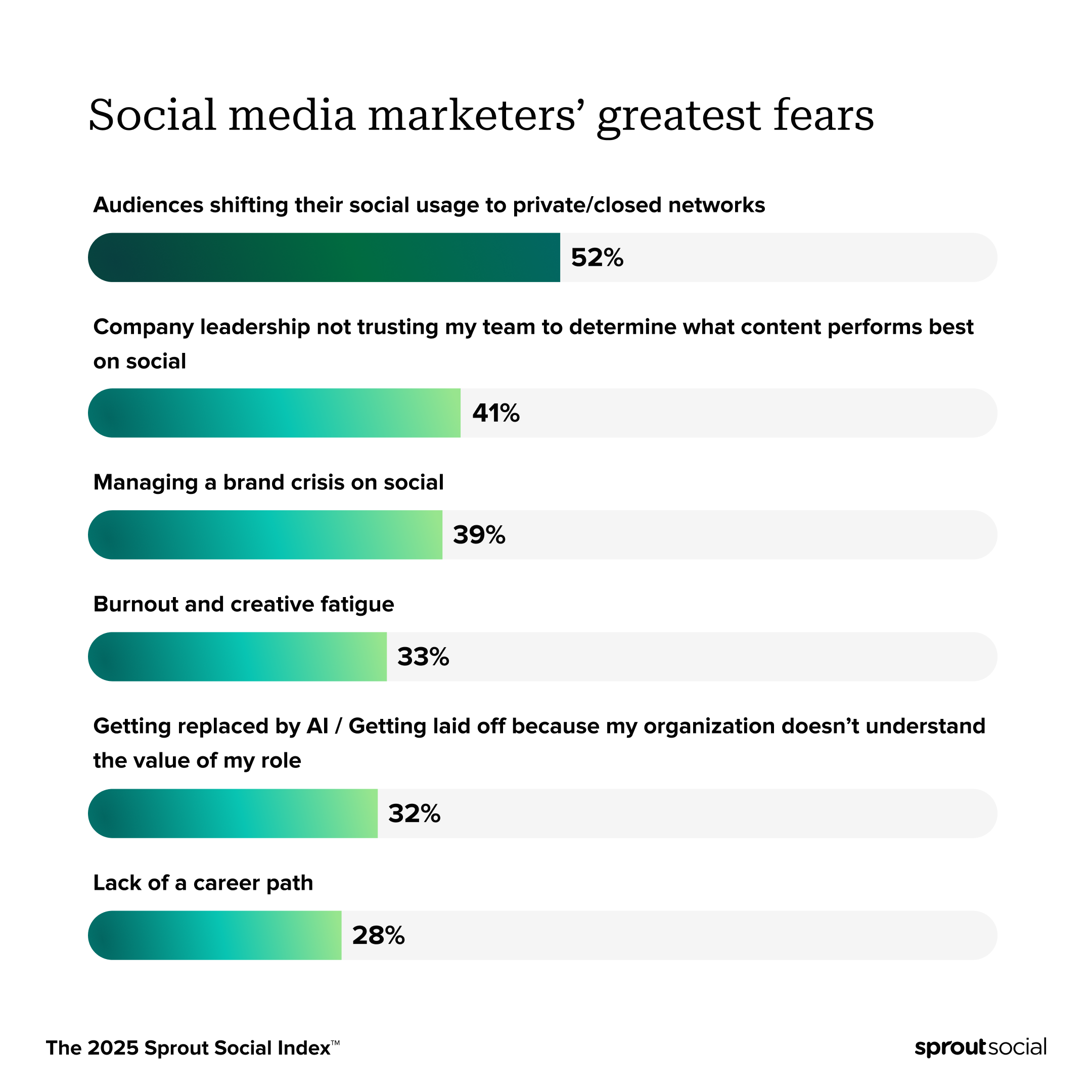
As indicated by The 2025 Sprout Social Index™, 41% of social marketers express that their biggest concern is a lack of trust from company leadership regarding their ability to publish high-performing content. This is intriguing since more than half of marketing leaders affirm that executives fully trust their social teams—this figure rises to 74% among the executives themselves.

A chart from The 2025 Sprout Social Index™ that ranks social media marketers' greatest fears. Their top fear is audiences shifting their social usage to private/closed networks, and their second greatest fear is company leadership not trusting teams to determine what content performs best on social.

Social media professionals question whether leadership is genuinely committed when they encounter difficulty in obtaining resources and approvals, even after meeting or exceeding KPIs. According to the Index, 92% of leaders expected their teams to fulfill their annual objectives by the end of 2024.

Why is trust in social teams lacking? Leaders and teams are often misaligned regarding how much social content should reflect the organization’s priorities.

Align corporate objectives with creativity and performance

Social teams are inherently motivated to produce the most effective content possible. Consider the latest trending formats and memes. Often, this content is broadly appealing but fails to emphasize the priorities that leaders prioritize.

When a coherent connection between social content and an executive’s goals is absent, resources such as budget or personnel may be shifted to other teams that have a more direct influence on company growth. Leaders have a unique opportunity to sync essential initiatives with social content and campaigns—this alignment provides the social team with crucial direction and demonstrates executives’ dedication to shared objectives.

For instance, senior leaders empowered my team to develop a series that displays how Sprout marketers utilize our platform to impact business goals and social strategies. We anticipated that this would not yield the same results as posts focused on trends, so we pushed ourselves to infuse a sense of fun and internet-savvy culture into the content.

The outcome was unexpected, as these meme-themed posts and short talking head videos actually garnered two to three times more engagement than our usual posts.

Executives should encourage social teams to meet business needs, but social teams equally deserve the freedom to creatively approach content—both can coexist. Does your social team comprehend where leaders’ attention lies? If they do not, communicate this to them. While that doesn’t imply dictating their full content agenda, it does entail guiding content themes and inviting the social team into strategic discussions.

Leverage appropriate data to garner additional resources

Even if social content aligns with company goals, that does not ensure your performance metrics resonate with the KPIs that leaders value. Many social marketers present data like impressions or production volumes to executives, only to be met with lukewarm responses.

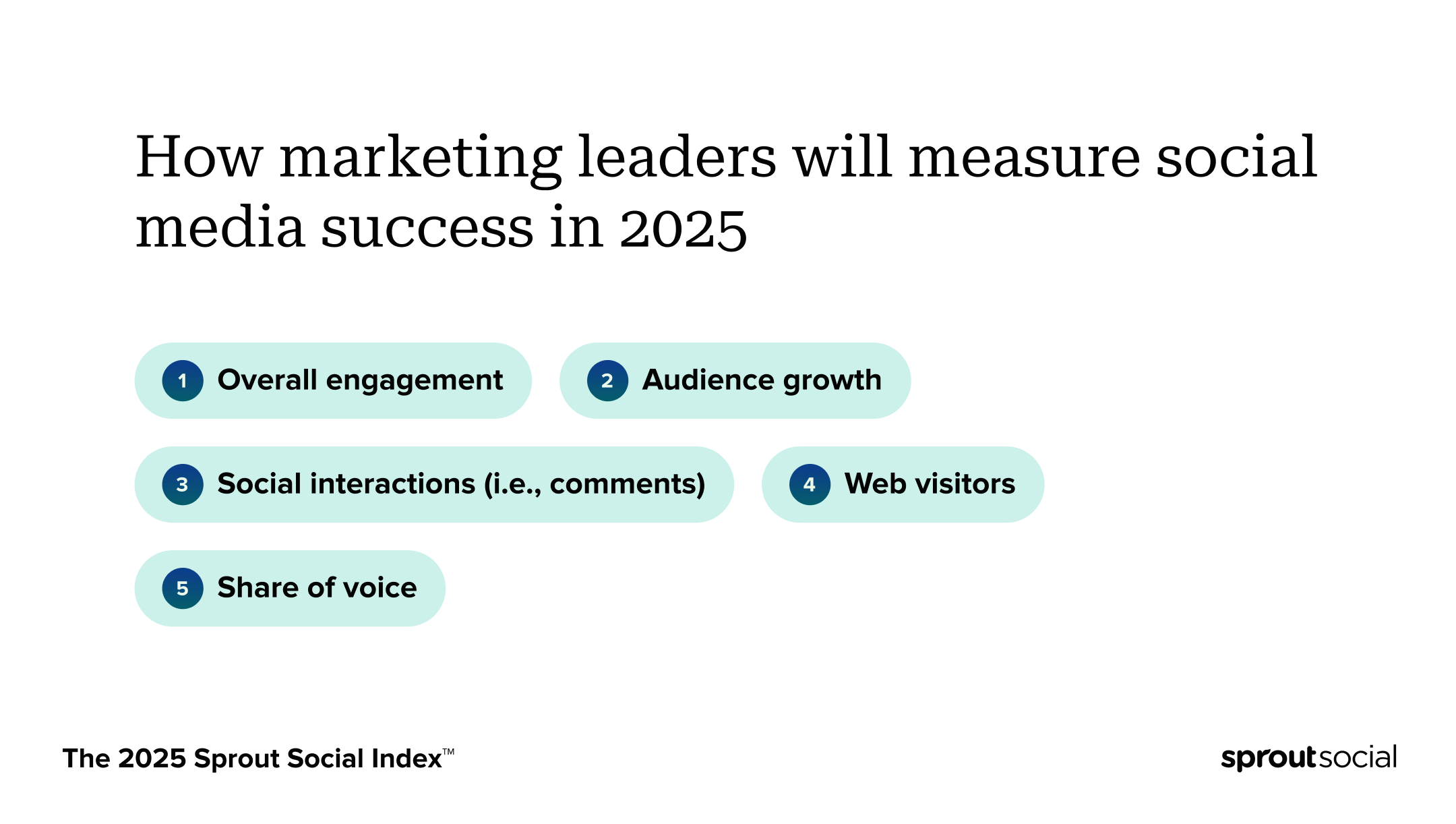
A chart from The 2025 Sprout Social Index™ that ranks how marketing leaders will measure social media success in 2025. The top metric is overall engagement, followed by audience growth and social interactions (i.e., comments).

The Index notes that leaders prefer teams to evaluate success using metrics such as engagement, audience growth, and social interaction volume. Clearly communicate your desired KPIs to your team and offer constructive feedback on how they can enhance their reporting dashboards and executive summaries. Assist your team in realizing that when they seek more personnel or resources, they need to substantiate their requests with compelling data.

Moreover, there’s potential for social teams and executives to extend their focus beyond conventional performance metrics and concentrate on more valuable data, such as audience insights obtained from social listening, competitive analysis, and direct connections to pipeline development. Accomplishing this effectively demands stronger collaboration and suitable tools.

How Sprout fostered alignment between our social and leadership teams

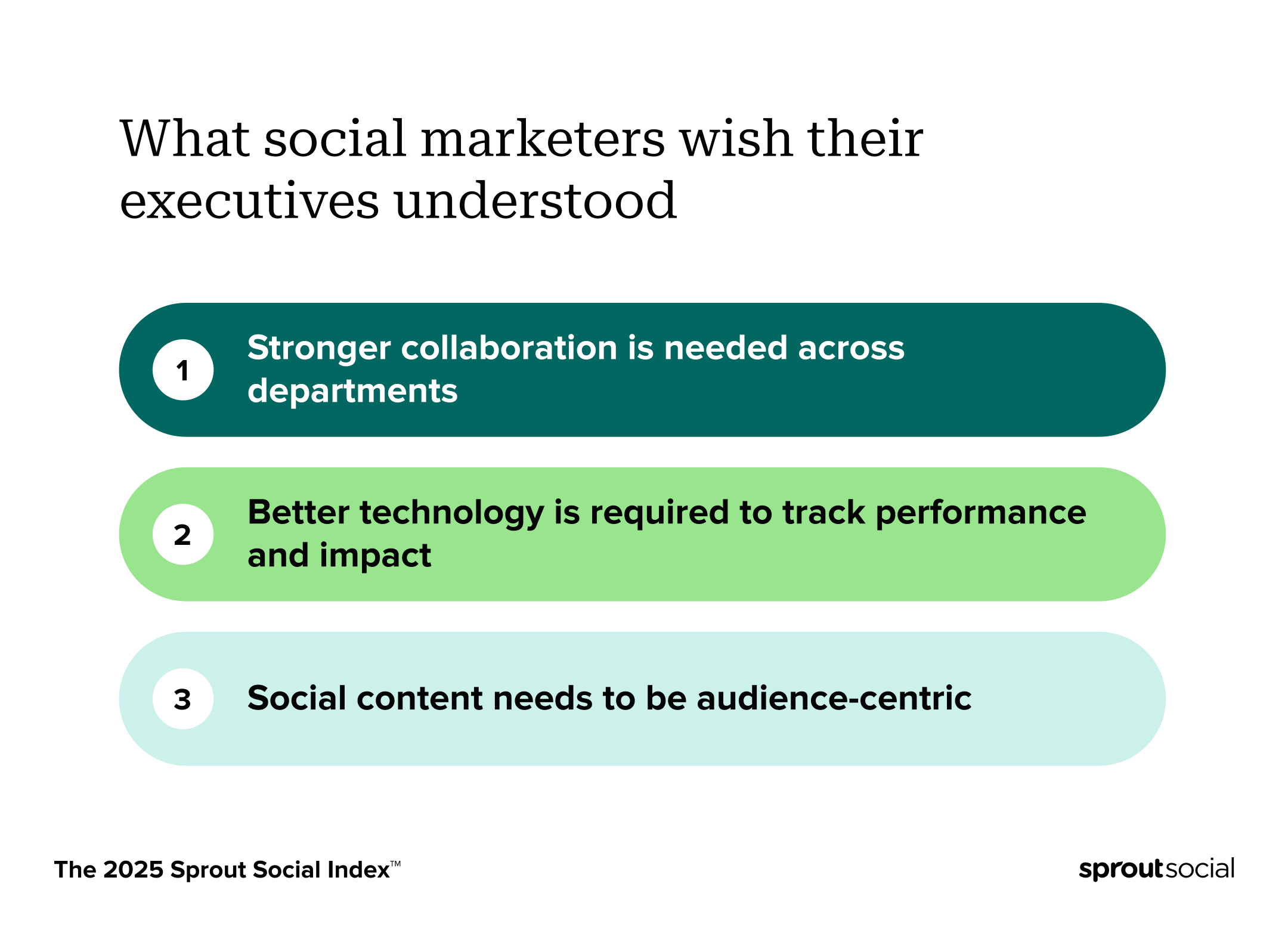
The Index discovered that what social marketers most wish their executives understood is the necessity for greater collaboration across departments. Even at Sprout Social—where we embrace the power of social data—leveraging sophisticated social insights required more concerted collaboration across our marketing function.

Here are three steps we implemented to unearth insights meaningful to our CMO, board members, and our product team, as well as actionable measures you can adopt to eliminate communication hurdles.

A chart from The 2025 Sprout Social Index™ that ranks what social marketers wish their executives understood: 1. stronger collaboration is needed across departments, 2. better technology is required to track performance and impact, 3. social content needs to be audience-centric

1. Achieve executive consensus on objectives

Rushing into reporting without a clear understanding of what you’re aiming to measure can lead to ineffective narratives. It’s essential to start with your objectives and work backwards. At Sprout, our initial step involved our CMO and me directing our team to redefine our reporting approach in line with Sprout’s key business priorities while demonstrating return on investment.

We needed to shift away from reporting on excessive or irrelevant metrics and instead focus on linking organic social content to metrics further along the sales funnel. We envisioned a reporting system that allowed us to utilize our tools to capture multi-touch attribution—from top-of-funnel engagement and reach figures down to demand creation.

We prioritized identifying the content that drives pipeline revenue, which aided us in isolating key metrics like Earned Media Value (EMV), Cost Per Lead (CPL), and Leads Generated.

With backing and co-creation from executives, we presented this initiative to other marketing teams. An executive sponsor ensured that this endeavor was prioritized within their agenda.

2. Develop meaningful reporting routines

Working in partnership with other marketing functions is the only way to fully grasp the value of social. Most consumers interact with your brand multiple times before making a purchase or signing up for a webinar. By uniting teams across marketing, including operations, SEO, and field and events, we were able to reassess the customer journey and create measurement systems that served all teams well.

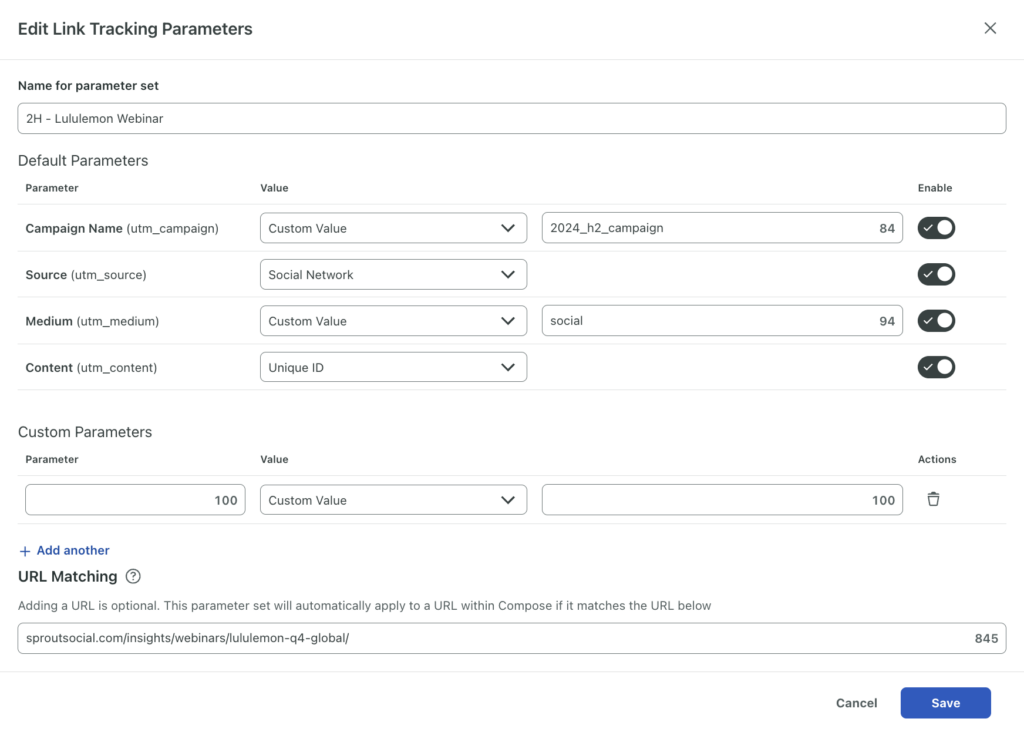
We collaborated with marketing analytics to connect our social initiatives directly to revenue through Sprout’s partnership with Salesforce. Diligent UTM tagging made multi-touch attribution feasible, allowing us to track the influence of social media, influencer marketing, and employee advocacy on leads through the customer journey and sales tunnel. This newly established multi-touch attribution model revealed an astounding 5,800% rise in pipeline impact.

A dashboard within the Sprout platform where you can edit link tracking parameters.

This integration enables us to view a more comprehensive picture of the effects of organic social media across diverse channels and functions. By forming a council of marketing stakeholders, we have paved the way for heightened interest in social performance and made these vital insights more accessible.

3. Refine data storytelling

After we extract data using our platform, it’s time to infuse metrics with meaning through captivating data storytelling. We craft a narrative that conveys the importance of social media and its impact on the company as a whole.

We consolidate our key metrics linked to business value along with competitive context, ensuring leadership recognizes how we compare to industry counterparts. Your team can even utilize the executive social media scorecard that our social team provides to our CMO monthly.

This scalable approach allows us to consistently deliver valuable insights not just to our CMO, but also to the broader marketing organization, the entire Executive Leadership Team, board members, and the product team.

Through illustrating the impact of our strategy, we’ve gained extra funding for team expansion, broadened our influencer marketing initiatives, and obtained support for Sprout’s brand activation at Design Miami 2024. Achievements like these rely heavily on a robust comprehension of our data.

Utilize relevant social data to narrow the trust divide

Bridging the communication void between executives and social teams transcends mere data—it necessitates alignment, collaboration, and effective storytelling. By applying the strategies discussed here, you can convert social media insights into a formidable tool that propels business growth and nurtures trust within your organization.

For additional insights on equipping your social team to craft impactful data narratives, refer to The 2025 Sprout Social Index™.

The article How to close the communication gap between executives and social teams first appeared on Sprout Social.

Read More