

Influencers and creators have a crucial impact on social media marketing worldwide. Numerous top brands turn to influencer marketing to enhance product visibility, foster brand recognition, and boost sales.
No matter the product, collaborating with an influencer can place your business in front of an ideal audience. However, the initial step can be daunting: influencer outreach.
To assist you in successfully securing the right partnerships, we’ve developed a 5-stage influencer outreach strategy. Discover how to shape your approach, identify suitable influencers, and cultivate long-term relationships for sustained success.
What does influencer outreach entail?
Influencer outreach refers to reaching out to influencers for brand collaborations, generally involving research and communication through direct messages or emails.
While some marketing approaches may be purely transactional, influencer partnerships emphasize relationships that benefit both parties. You benefit from their audience, while they enjoy trying your offerings and receiving compensation. Additionally, both you and the influencer gain new content.
Your choice between a select group of dependable influencers or hundreds at once depends on the resources available for managing those relationships.
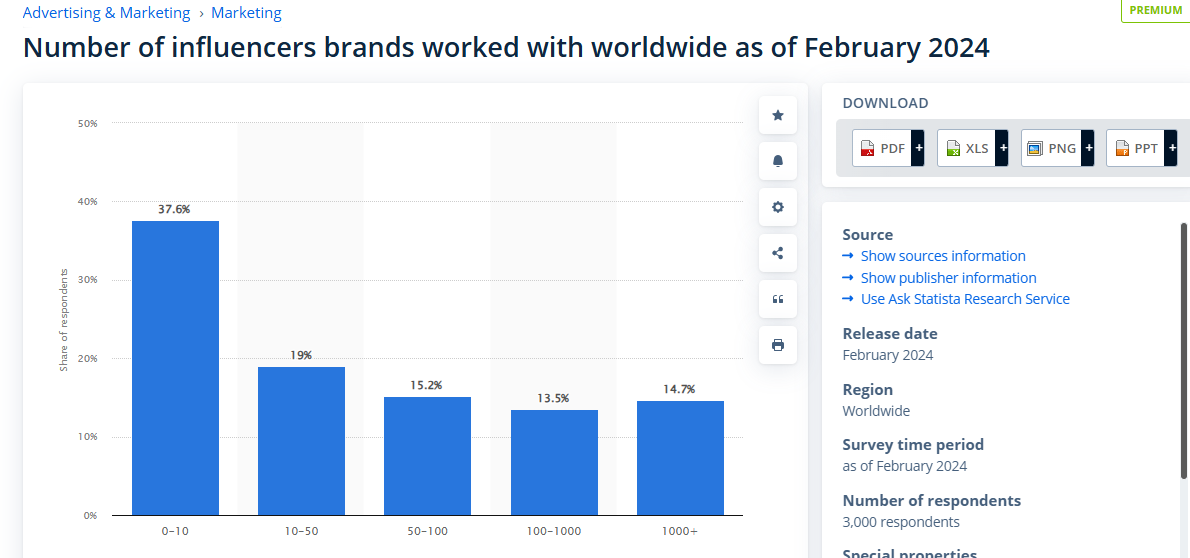
As of 2024, 38% of brands have collaborated with 10 or fewer influencers, whereas 62% have engaged with 10 or more, including 15% collaborating with over 1,000. Your outreach process focuses on securing a few reliable contacts, then expanding as budget and capacity allow. Yet it’s essential to concentrate on the unique relationship your company builds with each influencer.
Steps to formulate an effective influencer outreach strategy
These five steps will lead you to success in influencer outreach, irrespective of your business size or sector.
1. Establish your influencer marketing goals
Start by detailing your overarching influencer strategy. Define the primary objectives you aim to accomplish through your partnerships. Set similar goals for your upcoming campaign and examine how they align.
Common influencer marketing goals include:
- Generate more user-generated content (UGC)
- Build trust in your brand
- Raise awareness around a new product or service
- Increase leads
- Encourage user reviews
- Boost sales
- Enhance website traffic or follower count
These objectives will steer every aspect of your influencer outreach approach and campaigns. They will determine the type of influencers to pursue, the budget required, and the criteria for measuring success in your partnership.
2. Recognize the ideal influencers for your campaign
To locate the right influencers, begin by evaluating their reach.
Influencers are divided into four primary categories based on their audience size across various platforms, ranging from mega-influencers and celebrities with over 1 million followers to nano-influencers with fewer than 10,000.
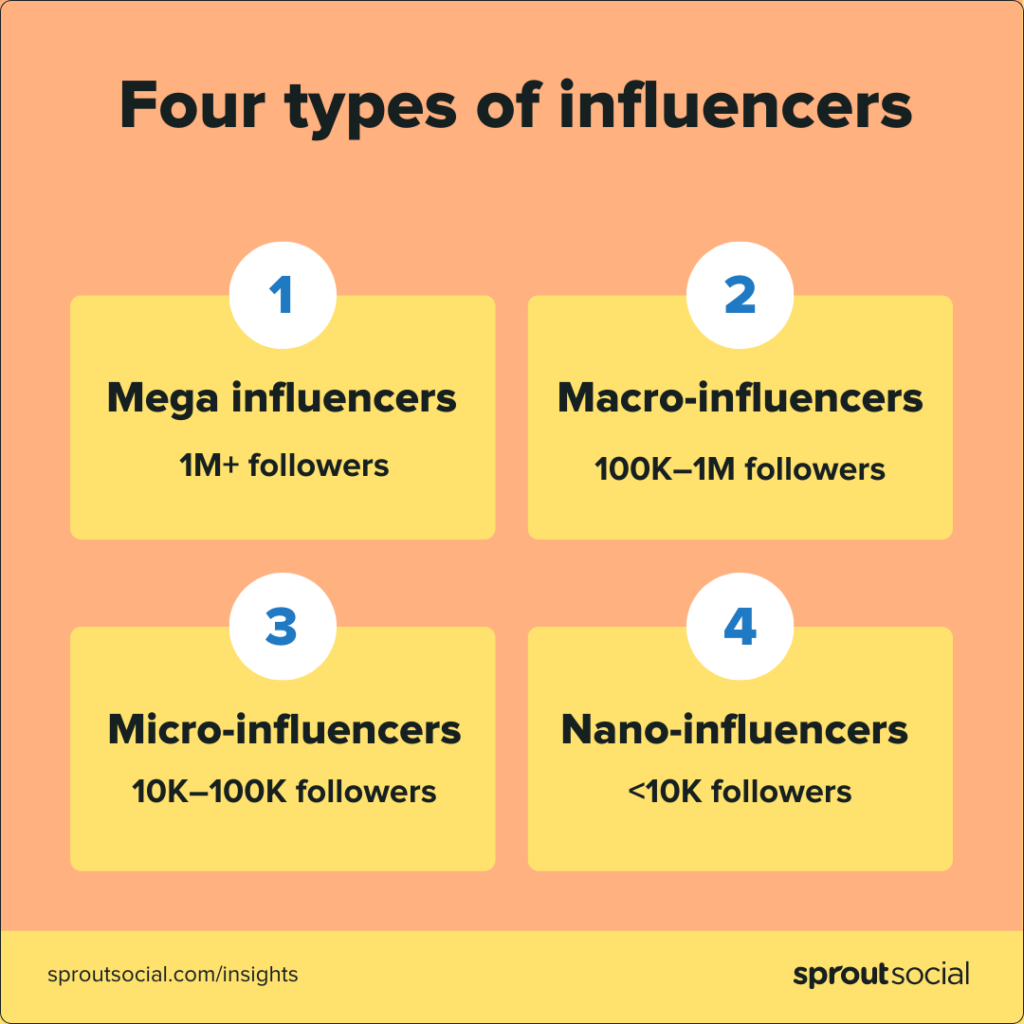
A large following does not guarantee an influencer will be a better partner. It’s preferable to collaborate with those who align with your company’s values and have a target audience similar to yours. The choice also relies on your campaign objectives; smaller influencers may yield better engagement and conversion rates, while bigger influencers offer a broader reach.
Size alone isn’t the only factor. It’s necessary to focus on diversity while searching for influencers, incorporating black creators and other BIPOC influencers. Partnering with individuals from various backgrounds enables you to create diverse content appealing to different audiences.
Look for influencers based on their audience demographics, such as:
- Age
- Gender
- Location
- Preferred social media platform
- Purchasing power
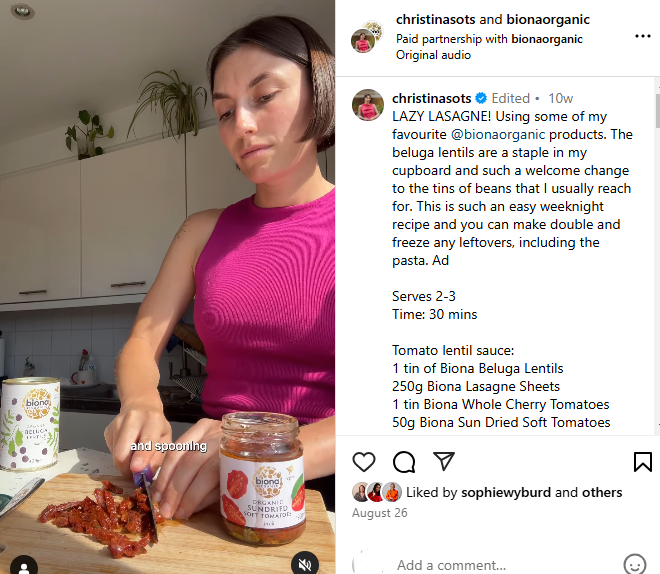
Influencers with high audience connection to your brand are more likely to achieve successful campaigns. For instance, Biona Organic, a vegetarian brand, collaborated with Christinasots, a vegan influencer, to create a recipe using Biona Organic products. This partnership generated over 788,000 impressions for both the creator and the brand.
Monitor the engagement metrics of any influencer you consider partnering with, especially those specific to your industry. Sometimes, a smaller, highly engaged audience can yield better results than a larger but less interactive community.
Much of this research can be conducted manually through social media platforms, but it can be labor-intensive. Save time by using a dedicated solution like Sprout Social Influencer Marketing (previously Tagger).
Sprout enables you to filter search results based on brand affinity, instantly revealing influencers with shared interests and audiences via data-driven analysis. You can also verify audience authenticity to ensure an influencer’s following is genuine and engaged.
When identifying influencers, adapt your strategy for various social media platforms. Below is how your approach should differ for each major platform.
Influencers for an Instagram campaign
The majority of consumers (61%) indicate that Instagram is their primary social media channel for product discovery, which is where influencers thrive.
In Instagram influencer marketing, engagement rates are crucial. Aim for an engagement rate of at least 3%.
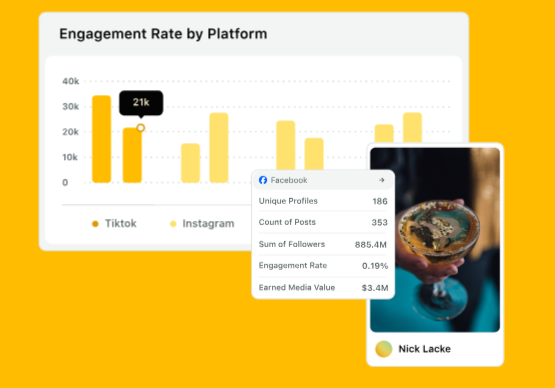
Additionally, consider the type of content produced by an Instagram influencer. If your campaign involves video, ensure the influencer specializes in Reels.
Influencers for a TikTok campaign
TikTok influencer marketing provides access to smaller subcultures. TikTok influencers frequently engage niche audiences with specific content preferences tied to their hobbies and interests.
Monitoring TikTok subcultures can also help identify an influencer’s niche audience. Engaging these audiences can enable your brand to leverage some of the advantages of niche marketing, such as reduced competition and optimized marketing expenditure.
Influencers for a YouTube campaign
Several metrics are vital for YouTube influencer marketing success, notably subscriber counts, engagement rates, and watch time.
Evaluate an influencer’s average video duration and frequency of posting. This insight helps you understand how long it takes them to produce content and where your advertisement could fit into their typical video structure.
Influencers for a Facebook campaign
Facebook influencers can aid brands in targeting vast audiences; 83% of social users have a Facebook account, and nearly half (44%) engage with brand content on Facebook daily.
With Instagram Stories and Reels now available in the Facebook app, negotiating bundled content packages with your influencers is feasible. Your Facebook influencer marketing efforts can thus yield a broader reach while being more cost-effective.
Influencers for a LinkedIn campaign
When searching for LinkedIn influencers, follower count is typically the most significant metric.
Be attentive to audience connectivity, as well as the influencer’s content focus. It’s also worth checking if a LinkedIn influencer has a newsletter or a substack, as these can expand their audience and indicate the topics they frequently address.
3. Prepare your compensation proposal
After compiling a list of influencers, determine how you will compensate them. Familiarize yourself with standard influencer pricing benchmarks. The offer you make will hinge on variables like the influencer’s reach, content type and volume, and the compensation model selected.
Common compensation arrangements include payment per post, subscriber, or view, among others. Remember to consider alternative payment methods, like affiliate marketing, complimentary product access, or extended package agreements spanning several months.
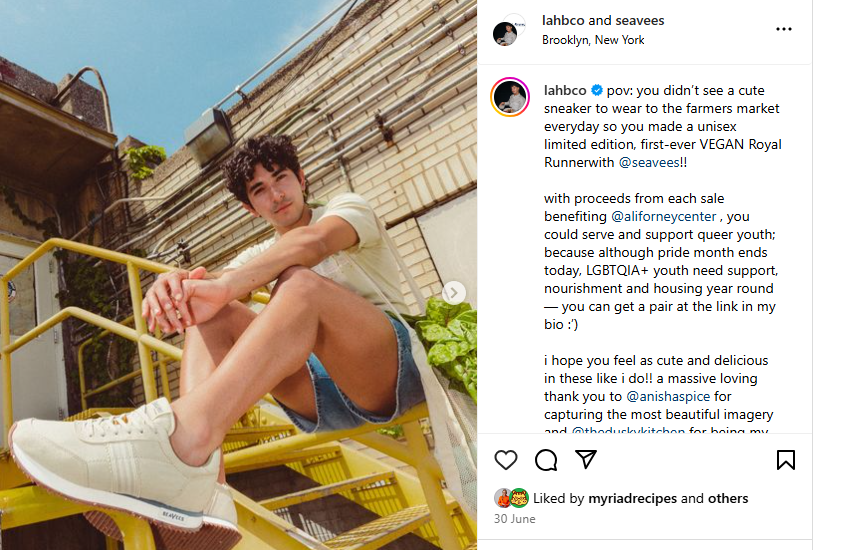
An example of a distinctive influencer collaboration is SeaVees’s partnership with inclusive food influencer Lahbco. SeaVees collaborated with Lahbco to design a unique shoe inspired by his values and experiences, aimed at his follower base. Proceeds from the shoe also benefit the Ali Forney Center, supporting homeless LGBTQ+ youth in New York City. This represents an excellent example of an alternative compensation model where all parties, including the company, influencer, and broader community, reap rewards.
Ensure all of this aligns with your budget. If you haven’t yet, download Sprout’s influencer marketing toolkit for a budgeting template to help you grasp influencer marketing expenditures within your broader social media budget. You’ll also receive a campaign brief template to clarify your campaign objectives further.
4. Develop an engaging influencer outreach message
Simplify your influencer outreach strategy by crafting DM and email templates that enable you to contact multiple influencers simultaneously. However, steer clear of generic, mass-produced templates that are likely to be overlooked by influencers.
To personalize your templates, include several customizable sections where you can reference the influencer’s name, recent activities, or specific aspects of their work that resonate with you.
For instance, you could say, “I loved your recent campaign post on ____, and we were hoping to create something comparable,” or “It was fantastic to see you raise awareness about ____ in your latest Reel.”
The more customized, the better. It’s important to make a strong first impression and demonstrate to influencers that you truly value their contributions.
Ensure the following essential details are included in your outreach template:
- Initiate with the influencer’s name and a personalized greeting related to their content.
- Introduce your company and brand. If feasible, connect this to the aforementioned personalization.
- Detail your campaign. Further personalize by referencing a campaign they’ve executed with another brand, if possible.
- Outline the specifics of how you envision the campaign unfolding, including deliverables and timelines. You can refine these later, but it’s critical that this information is accurate.
- Clarify your mutual value proposition and your initial compensation offer.
- Conclude with a call to action requesting a meeting or their thoughts on your campaign idea.
This could resemble the following:
Hey [influencer name], I noticed your [previous content and thoughts].
I collaborate with [brand] in [your role], and we’re eager to partner with an influencer for a new campaign.
The campaign involves [campaign details]. After observing your [recent content, awareness, work with or other personalization] I believe you’d be an ideal fit.
We’re hoping to propose [compensation and budget].
Please inform me of your thoughts or questions, and I’ll be glad to address them. Thank you for your time, and I look forward to potentially working together,
[your name, title]
[your company]
If sending emails, ensure you construct a concise subject line. Keep it brief and straightforward, such as “Collaboration Opportunity with [Your Brand].” You can add more personalization, but clarity is key so that the influencer quickly understands your email’s purpose when scanning through their busy inbox.
Following up on your influencer outreach messages
If you haven’t received a reply to your initial outreach, don’t be discouraged! Follow up after a couple of weeks.
Influencers are often occupied, so a polite follow-up message can keep the dialogue active. Keep your follow-up brief and courteous. Here’s an example:
Hey [influencer name],
I wanted to follow up quickly regarding my last message about our upcoming [campaign name]. Would you be interested in collaborating or discussing this further?
Thank you,
[your name]
[your company]
5. Cultivate a long-term relationship with influencers
Establishing a lasting relationship with influencers benefits both parties. Firstly, you’ll reduce the outreach effort needed for your subsequent campaigns.
Collaborating with an influencer over a longer term is also excellent for enhancing your brand’s credibility. Your audience will notice continuous campaigns featuring the same influencer, validating your reputation as a company people value partnering with. You might even negotiate a package deal extending over a longer period, which can be more advantageous for both your budget and the influencer.
The influencer’s audience will also continue to see your campaigns, which helps reinforce their awareness and trust in your brand.
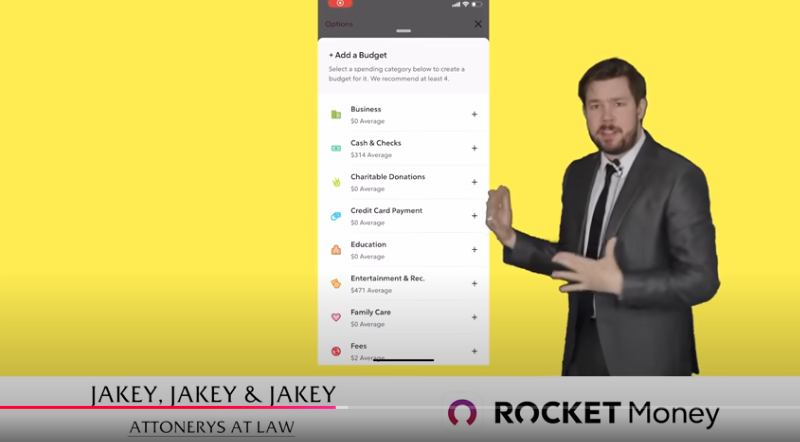
Mega YouTube influencer NakeyJakey has regular collaborations with brands like OperaGX and RocketMoney, among others. He produces comedic skits that have evolved into a staple of his gaming videos. These collaborations have fostered significant followership and elevated awareness surrounding the tech companies he partners with.
To nurture your relationship with an influencer and build a long-term collaboration, concentrate on genuine connection and mutual support. Consider:
- Sharing the outcomes of your campaigns
- Regularly checking in, rather than just when launching a new campaign
- Celebrating joint successes
- Highlighting instances where their contributions made a significant impact
- Engaging with their content on your social channels
- Viewing them as creative partners, rather than merely promotional tools
- Ensuring timely payments
- Implementing administrative processes that simplify their tasks and yours
Investing your time and effort into these relationships will translate to more successful campaigns.
Best practices for influencer outreach
Although every influencer outreach strategy varies, three best practices are consistently applicable.
Conduct thorough research
Research is a key component of the vetting process. Without precise research, you risk compromising your campaign before it begins.
Utilize tools like Sprout Social Influencer Marketing for data-driven insights on potential partners. Our tools consolidate available data to help you monitor relevant metrics such as engagement rates and brand affinity.
When you reach the outreach stage, investigate how each influencer prefers to be contacted. Some may have an agency that handles collaborations, while others might prefer direct emails or DMs. This information can typically be found in their bio. Respecting an influencer’s preferred communication method establishes a good foundation for your relationship.
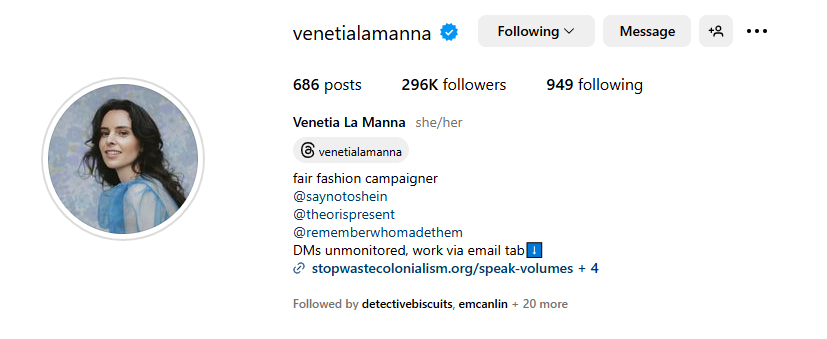
An example illustrates the point: activist and fair fashion influencer Venetia La Manna states in her bio that she does not check her DMs and directs potential collaborators to her email address.
Clearly communicate campaign needs
Clearly outline your campaign expectations before an influencer starts generating content. Much of this should be included in your outreach correspondence.
Also, include your campaign requirements in an influencer contract. Clarify who is responsible for costs incurred during content creation, alongside usage rights.
Share your objectives and anticipated key performance indicators (KPIs) with your influencer before the campaign kicks off. This way, they won’t be surprised when you assess the results later.
This is a critical stage in understanding how to recruit an influencer. Clearly communicating at every step keeps your campaign on a successful path.
Assess campaign results and make continuous improvements
Campaign effectiveness can be measured through various influencer marketing KPIs.
Begin with calculating your ROI. Determine expected ROI as you draft your initial compensation proposal. To maximize this ROI, strive to incrementally enhance your campaigns over time.
However, campaign success isn’t solely based on financial outcomes. Other important KPIs to track might include:
- Reach and impressions
- Earned media value
- Enhancements in positive brand perception
- Heightened awareness
- Leads garnered or conversions achieved
- Growth rate of followers or audience
Assign a KPI to each goal of your campaign. This simplifies tracking success and highlights where to make adjustments for future campaigns.
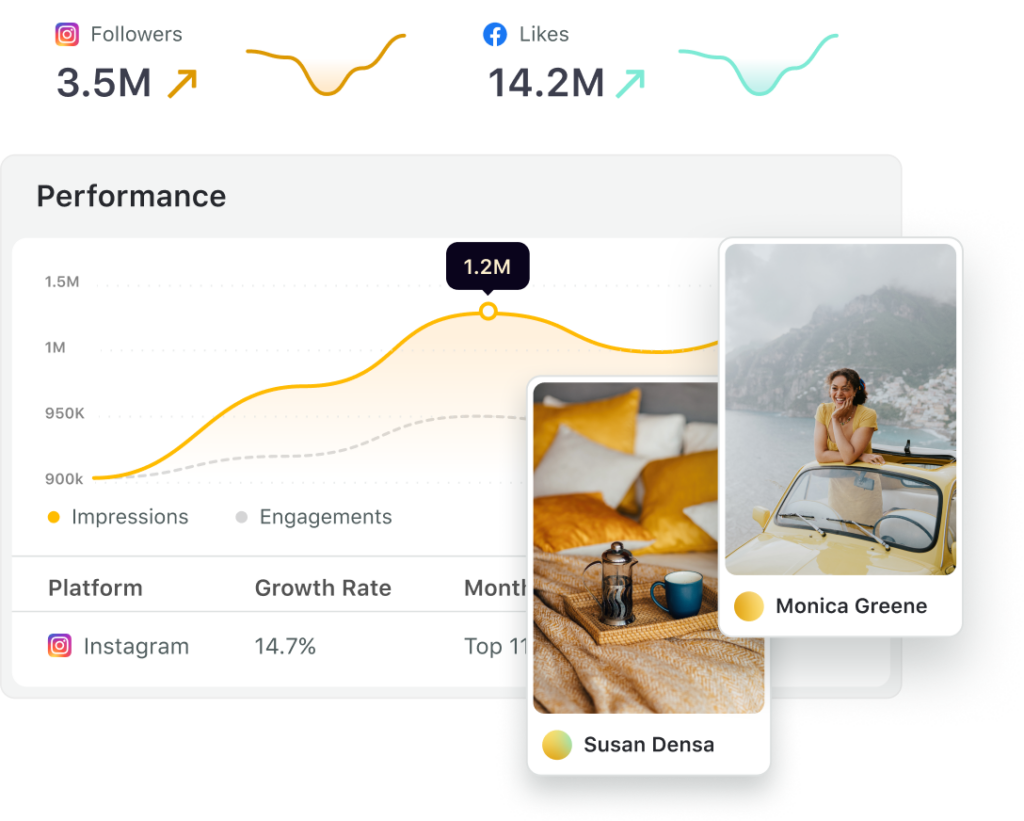
Utilizing Sprout Social Influencer Marketing can streamline KPI evaluations. Sprout’s platform assists in determining whether your influencer campaigns are working effectively. Modular analytics dashboards enable you to monitor ROI and additional metrics, providing clarity on how well your campaigns perform and validating their value to leadership.
Leveraging the power of influencer outreach
With a refined influencer outreach strategy, you can effectively identify and partner with suitable influencers for your brand. By continuously improving your campaigns and nurturing relationships, you’ll be on a solid path toward achieving substantial success.
Enhance your strategy using Sprout’s influencer marketing plan template. Initiate a 7-week schedule that optimizes your efforts while enhancing campaign performance.
The post Influencer outreach: The 5-step strategy guide first appeared on Sprout Social.

Recent Comments