

“Advertisers are looking for more of a full-funnel approach, from end to end, working with a smaller set of DSP partners, thinking about a way to connect all the touchpoints and to be more personal, to tailor that message. The paths all need to unite to be able to have the right data, the right touchpoints, the right customer journey.”
Thoughts from a wide-ranging conversation on retail marketing and advertising with Sherry Smith, executive managing director, Americas, at digital advertising platform Criteo. The discussion began with the possible divestment of Chrome by Google.
So what if Google sells Chrome? Any court-compelled sale of Chrome by Google is a long way down the road. Can retailers forget about it for now? “I think it’s a realistic challenge we should be thinking about now,” said Smith. “The industry is changing so rapidly. We went back and forth for years over the potential deprecation of cookies; we have to have Google in our sights in terms of what could continue to change.”
Smith also talked about the fast growth of retail media and CTV. He noted that consumers are now taking non-linear paths when they shop. “At Criteo, we’re constantly thinking about how this world is continuing to evolve and how to anticipate that. It’s better to prepare.”
Nevertheless, even following a sale of Chrome, Google would presumably retain its search and advertising businesses. There are already changes happening in search, not least with the AI input in search results. “Retailers need to think about how to ensure they are getting the eyeballs they need and the conversions they need,” said Smith. “I think these changes create a unique opportunity for retailers to foster a more competitive, open web environment.”
If a sale happens, Chrome would likely continue under new ownership. Any issues it faces would help Firefox, Microsoft Edge or Safari. But life would go on as usual. “As far as what the end result would be,” said Smith, “I’m not entirely sure. I think we’re trying to look at different outcomes for our partners to think about.”
Dig deeper: DOJ seeks sale of Chrome in Google antitrust case
The search and discovery process has changed already. The sale of Chrome would have an impact, but the space is feeling impacts from other sources already. “Social has been on the rise for the past several years as far as discovery goes,” said Smith. Another new horizon is the ability to use LLM capabilities to search for products and services. Google may offer AI Overviews, but consumers can just go direct to ChatGPT.
“One thing our clients are focused on,” said Smith, “is how they make their website experience frictionless and easy to navigate and offer more predictive-type search. App development for retailers is going to be really interesting — how they continue to offer an omnichannel-type experience for shoppers in-store.”
The rise of retail media. Criteo’s customers are thinking about how they can leverage all the data they have in order to work with advertisers, Smith said. “There has been an absolute rise [in retail media] and our goal is to make sure we’re helping to connect the ecosystem. It’s cumbersome to work with multiple retailers one-by-one so we are trying to enable capabilities to work across not only multiple, but to do it globally and at scale.”
Isn’t the term “retail media network” becoming too narrow, because it’s not just retailers that have large first-party datasets that can be leveraged to create relevant audiences. Publishers do too, for example. “We work with delivery partners outside the retail space,” Smith said. “Uber is a very big client of ours. How are these companies thinking about that valuable data and how they can monetize it and create some type of commerce network?”
Speaking of publishers, Criteo works with Hearst too, said Smith. “It’s been interesting to see this space evolve and I think it’s going to be saturated with those beyond the retail space as well.”
CTV is right around the corner. CTV is not part of Criteo’s purview today, said Smith. “It is where we are going tomorrow.” Will we see more activity from Criteo in the CTV space next year? “I think you will see more of Criteo in the upper funnel, period,” said Smith.
The post What retailer marketers should be thinking about in 2025 appeared first on MarTech.
**Key Considerations for Retail Marketers in 2025**
The retail industry is undergoing a seismic transformation, driven by evolving consumer expectations, technological advancements, and global economic shifts. As we approach 2025, retail marketers face a unique set of challenges and opportunities that require strategic foresight and adaptability. To remain competitive in this dynamic landscape, marketers must prioritize innovation, personalization, and sustainability. Below, we explore the key considerations for retail marketers in 2025.
—
### 1. **Hyper-Personalization: The New Standard**
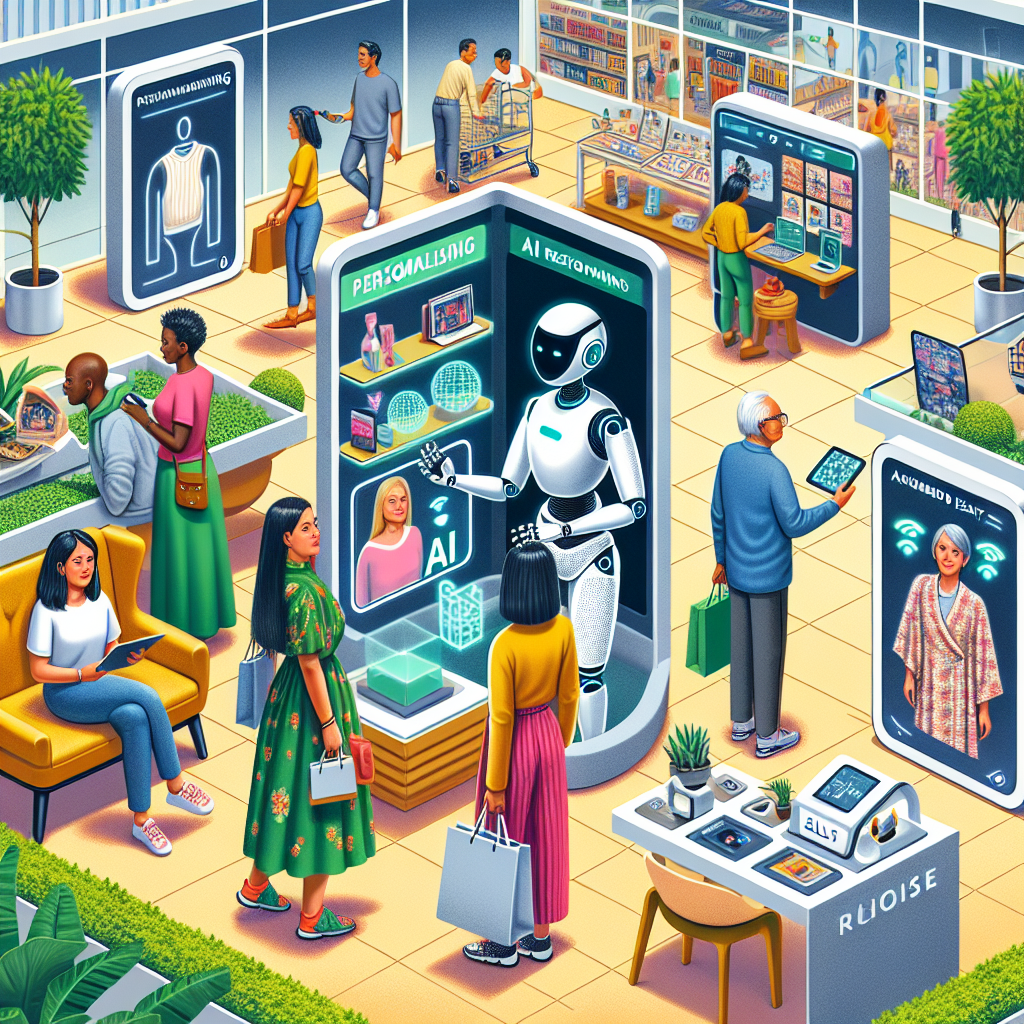
In 2025, consumers expect brands to understand their preferences and deliver tailored experiences. Generic marketing campaigns are no longer sufficient. Retail marketers must leverage data analytics, artificial intelligence (AI), and machine learning to create hyper-personalized interactions.
– **Actionable Insight:** Invest in customer data platforms (CDPs) to unify data from multiple touchpoints. Use predictive analytics to anticipate customer needs and deliver personalized product recommendations, content, and promotions.
– **Example:** Retailers like Amazon and Sephora are already setting the standard by using AI-driven personalization to suggest products based on browsing history, purchase behavior, and even mood.
—
### 2. **Omnichannel Integration**
The line between online and offline shopping continues to blur. By 2025, seamless omnichannel experiences will be a baseline expectation for consumers. Retail marketers must ensure that customers can transition effortlessly between digital and physical channels.
– **Actionable Insight:** Develop a unified commerce strategy that integrates inventory, payment systems, and customer data across all channels. Use tools like augmented reality (AR) to bridge the gap between online and in-store experiences.
– **Example:** Brands like Nike have successfully implemented omnichannel strategies, allowing customers to browse products online, try them in-store, and complete purchases via mobile apps.
—
### 3. **Sustainability as a Core Value**
Sustainability is no longer a niche concern; it’s a mainstream demand. By 2025, eco-conscious consumers will expect brands to demonstrate genuine commitment to environmental and social responsibility.
– **Actionable Insight:** Incorporate sustainability into your marketing narrative. Highlight eco-friendly practices, such as using recyclable packaging, sourcing ethical materials, or reducing carbon emissions. Transparency is key—consumers want to see measurable progress.
– **Example:** Patagonia has built its brand identity around sustainability, resonating with environmentally conscious consumers and setting an example for the retail industry.
—
### 4. **The Rise of Social Commerce**
Social media platforms are evolving into powerful retail channels. By 2025, social commerce will account for a significant portion of online sales. Retail marketers must embrace this trend by creating shoppable content and leveraging influencers.
– **Actionable Insight:** Partner with micro-influencers who align with your brand values to reach niche audiences. Use platforms like Instagram, TikTok, and Pinterest to create engaging, interactive shopping experiences.
– **Example:** Brands like Glossier and Fenty Beauty have mastered social commerce by using user-generated content and influencer partnerships to drive sales.
—
### 5. **AI and Automation in Marketing**
AI and automation are revolutionizing retail marketing, enabling brands to optimize campaigns, improve customer service, and streamline operations. By 2025, AI will be indispensable for data-driven decision-making.
– **Actionable Insight:** Use AI-powered tools to analyze customer behavior, predict trends, and automate repetitive tasks like email marketing and ad targeting. Chatbots and virtual assistants can enhance customer support and engagement.
– **Example:** Retailers like H&M use AI to predict fashion trends and optimize inventory, ensuring they meet customer demand without overstocking.
—
### 6. **Focus on Experiential Retail**
As e-commerce continues to grow, physical stores must evolve to remain relevant. By 2025, brick-and-mortar locations will serve as hubs for experiential retail, offering unique, immersive experiences that can’t be replicated online.
– **Actionable Insight:** Transform physical stores into experiential spaces where customers can interact with products, attend events, or participate in workshops. Use technology like virtual reality (VR) to create memorable in-store experiences.
– **Example:** Apple and IKEA have embraced experiential retail by creating interactive showrooms and offering hands-on product demonstrations.
—
### 7. **The Importance of First-Party Data**
With increasing regulations around data privacy and the phasing out of third-party cookies, first-party data will become a critical asset for retail marketers in 2025. Building direct relationships with customers will be essential.
– **Actionable Insight:** Encourage customers to share their data by offering value in return, such as personalized discounts or exclusive content. Implement robust data security measures to build trust.
– **Example:** Loyalty programs like Starbucks Rewards incentivize customers to share data while fostering brand loyalty.
—
### 8. **Globalization Meets Localization**
While globalization opens up new markets, consumers increasingly value localized experiences. Retail marketers must strike a balance between global reach and local

Recent Comments