

B2B brands must prioritize their LinkedIn content marketing strategy without delay.
There is simply no superior platform on social media to establish yourself as a key player in your industry.
From networking and recruitment to fostering credibility and more, the advantages of LinkedIn marketing are evident. However, formulating a content strategy on LinkedIn differs significantly from platforms like Instagram or TikTok.
Are you looking to captivate your audience and turn your presence into business success? You must be strategic in your approach to the platform. This article outlines how to develop a LinkedIn content marketing strategy from the ground up.
Why engage in content marketing on LinkedIn?
Having a LinkedIn profile is a necessity for B2B brands.
However, no organization should join a social platform merely for the sake of it.
Let’s examine the advantages and significance of LinkedIn content marketing, including what makes it beneficial.
Disseminating current industry trends
Latest news. Legislative changes and regulations. The list is extensive.
Distributing industry trends is fundamental to LinkedIn content marketing for a good reason. It demonstrates that you actively engage in your field. Moreover, maintaining activity on the platform keeps you informed and enables you to identify opportunities to educate your audience.
Take a look at how Tastewise presents an industry report that highlights the company’s expertise.

Providing these types of insights serves to educate and engage your audience while enhancing your credibility.
Connecting with a specific audience
LinkedIn allows brands to finely target and segment their audience targeting.
For instance, do you want your brand to connect with C-suite SaaS executives? Or with entry-level staff in manufacturing? You absolutely can!
In contrast to other social networks where formal content may come across as “dull,” LinkedIn content marketing is inherently business-focused. The platform is a treasure trove for engaging specific roles within particular industries.
Establishing brand credibility and thought leadership
Consistent, high-quality content on LinkedIn is vital for building trust.
This pertains to both your organization as a whole and your team.
Beyond merely sharing trends, think about how you can communicate your company’s values, achievements, and viewpoints.
If executed effectively, LinkedIn can help enhance the public persona of your company, particularly regarding your leadership and executive staff.
Networking opportunities
LinkedIn content marketing extends beyond self-promotion. It also provides a chance to forge business connections and expand your team.
It’s commonplace for brands to recruit and evaluate employees through LinkedIn. Moreover, it’s easy to find companies networking and showcasing their participation in events on the platform.
Posts from events, like this one from Sprout Social, highlight business partnerships and foster face-to-face networking.
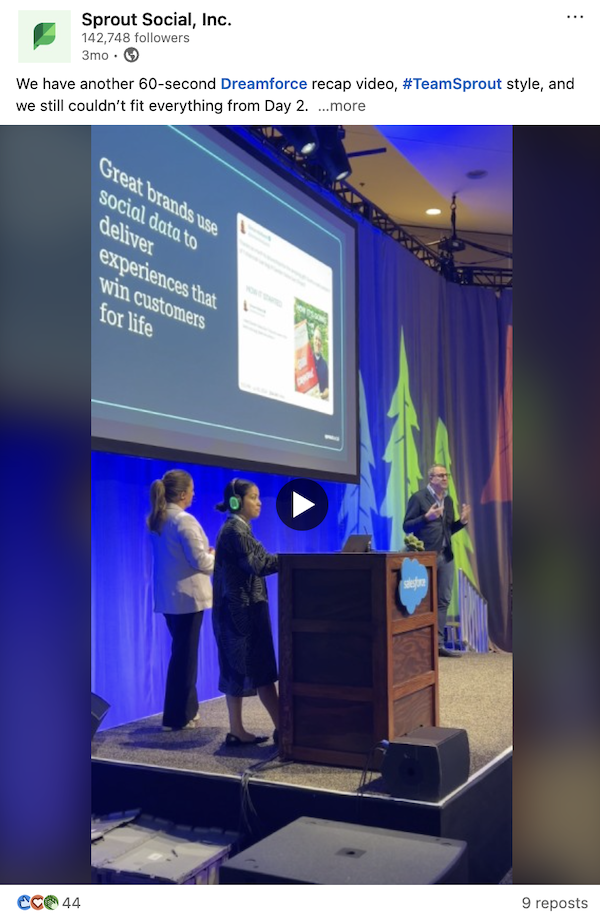
Regularly sharing such content and recruiting on LinkedIn underscores your company’s growth and reliability. All of this is excellent for promoting yourself as a leader.
Generating leads
Consider this: nearly 25% of all B2B digital advertising takes place on LinkedIn.
The platform is an ideal venue for connecting with B2B clients as they investigate your organization and its accomplishments. Through both organic content and advertisements, lead generation on LinkedIn can serve as a steady, long-term channel for your brand.
This ultimately ties together all the advantages of employing content marketing on LinkedIn.
The more you establish yourself, the more credible you become, making it easier to attract new, targeted customers.
Developing your LinkedIn content strategy in 5 steps
Like any networking endeavor, creating a content strategy from scratch can seem overwhelming. Here’s a brief guide to essential steps to get your strategy launched without becoming overly stressed.
1. Set clear goals and objectives
So, what’s the purpose of your presence on LinkedIn?
This isn’t just a rhetorical question. Establishing a footprint on any social network requires a significant investment of time and resources, and LinkedIn is no different.
Thus, you need to clarify your goals and key performance indicators (KPIs). Consider these sample objectives based on your priorities:
- For thought leadership, aim for a consistent posting frequency from your brand and personnel profiles.
- For audience awareness, monitor your LinkedIn analytics for reach and user interactions.
- For lead generation, evaluate interaction levels, traffic from LinkedIn, and engagement metrics for your ads.
- For networking, track views on your job listings, interactions, and tags from other accounts, as well as overall platform engagement.
Whatever your goals may be, it’s essential to monitor your progress and development through data. This will allow you to connect your LinkedIn content marketing initiatives back to real business outcomes.
2. Define your target audience
We cannot stress this enough: LinkedIn is a B2B platform.
Particularly if you cater to a B2C audience, avoid promoting coupons or deals on the platform. Instead, consider who is actively engaging on LinkedIn in your sector and who should be interacting with your content.
Are you targeting C-suite executives or entry-level professionals? Will you be utilizing the platform for recruitment? Understand the roles you’re aiming for and create content that resonates with those individuals.
This is where your LinkedIn analytics and tools like Sprout Social come in handy. Check out Sprout Social’s analytics that highlight how you can analyze your LinkedIn audience based on industry and job roles. These insights can guide your content strategy and help assess whether your posts resonate.
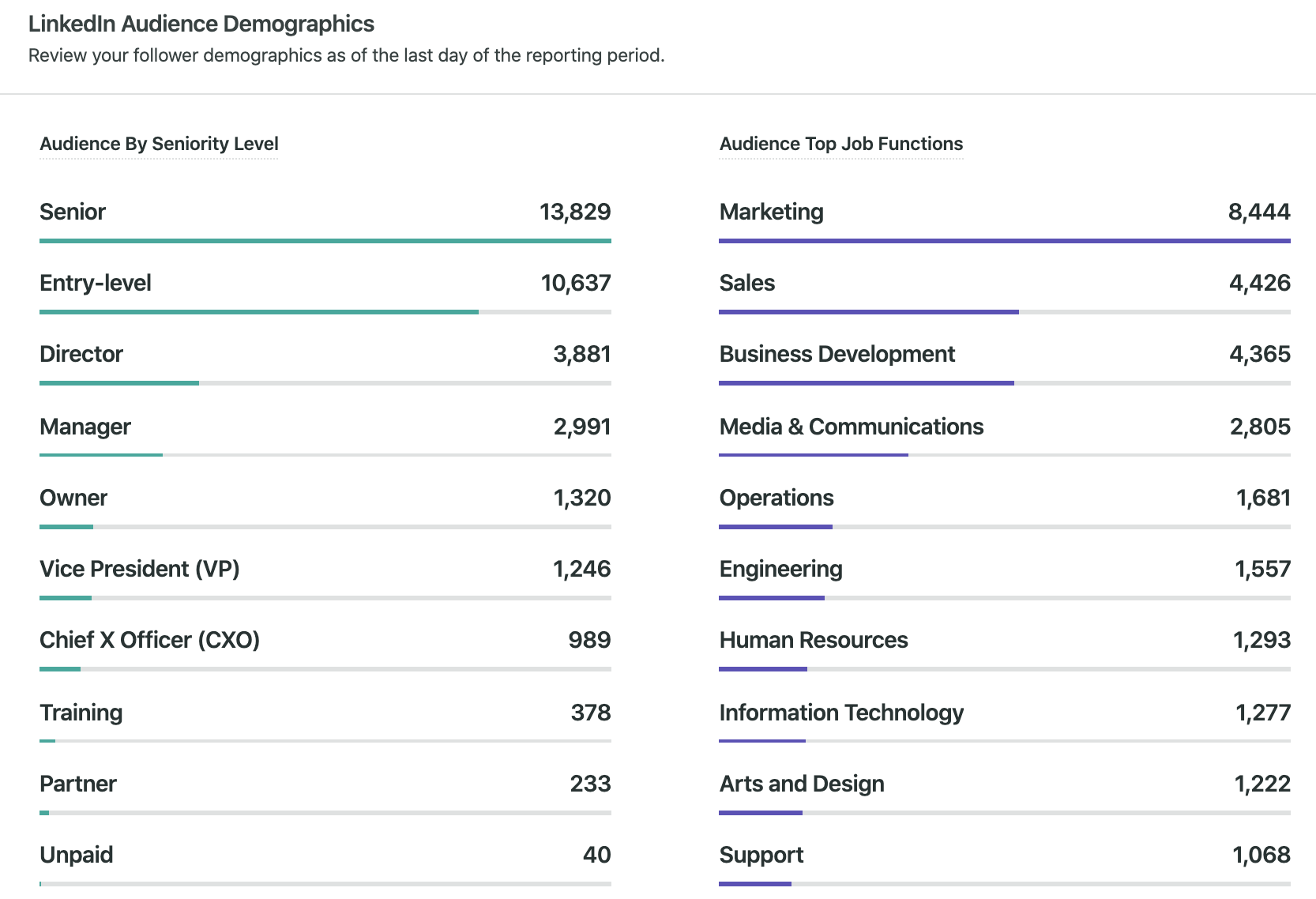
3. Outline your content pillars, topics, and formats
Structuring your LinkedIn content strategy into pillars and main topics not only helps keep your presence focused but also aids in organization. With your objectives and target audience in mind, hone in on what to post for optimal engagement.
Your broader content pillars could include:
- Company achievements, milestones, and product unveilings.
- Updates and news from the industry.
- Behind-the-scenes content, featuring employee recognition and culture-focused pieces.
- Thought leadership insights from your executive team.
Next, you can lay the groundwork for these pillars by exploring various content formats, like:
- Text posts paired with compelling visuals.
- Long-form articles.
- Infographics and images.
- Videos (native uploads and live streaming).
- LinkedIn Stories.
- Polls and inquiry posts.
Brands have a wealth of options when it comes to LinkedIn post ideas. The challenge lies in discerning what your capacity allows for and what types of content will resonate most with your audience.
Eager for further insights on expanding your LinkedIn and cross-platform content strategy? Our 2024 Social Media Content Strategy Report reveals effective content pillars and formats for each platform, including brand examples.
4. Develop your content calendar and publication routine
With your pillars and formats decided, it’s time to create your precise content calendar.
For instance, how frequently do you intend to post and at what times? According to Sprout’s research, optimal posting times on LinkedIn typically lie on weekdays around 10:00 a.m. to noon.
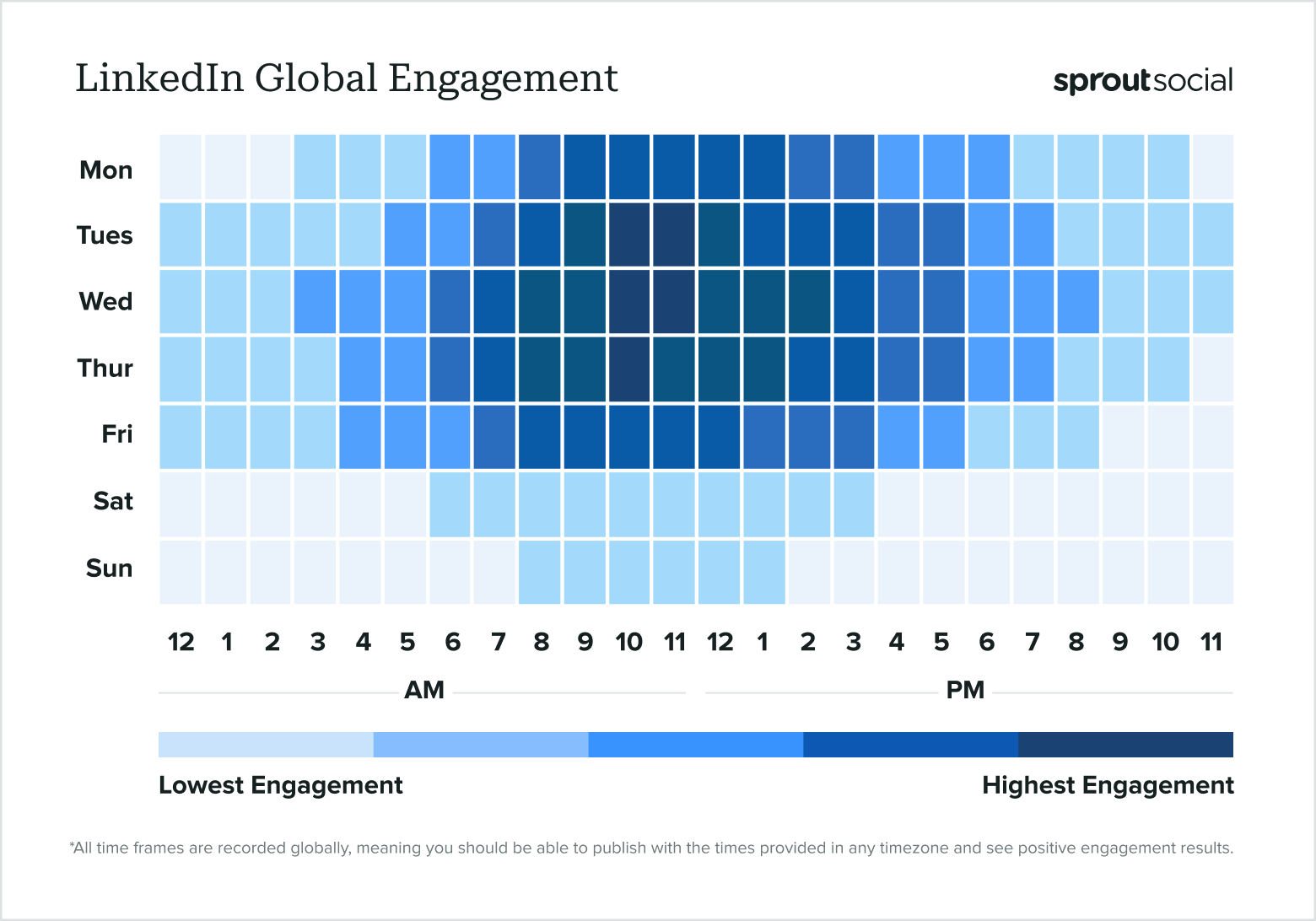
Consider your content pillars while planning your calendar to ensure each theme receives an adequate number of posts. Scheduling tools for LinkedIn, such as Sprout Social, can facilitate visualizing your content calendar, ensuring you cover all pertinent themes and formats.
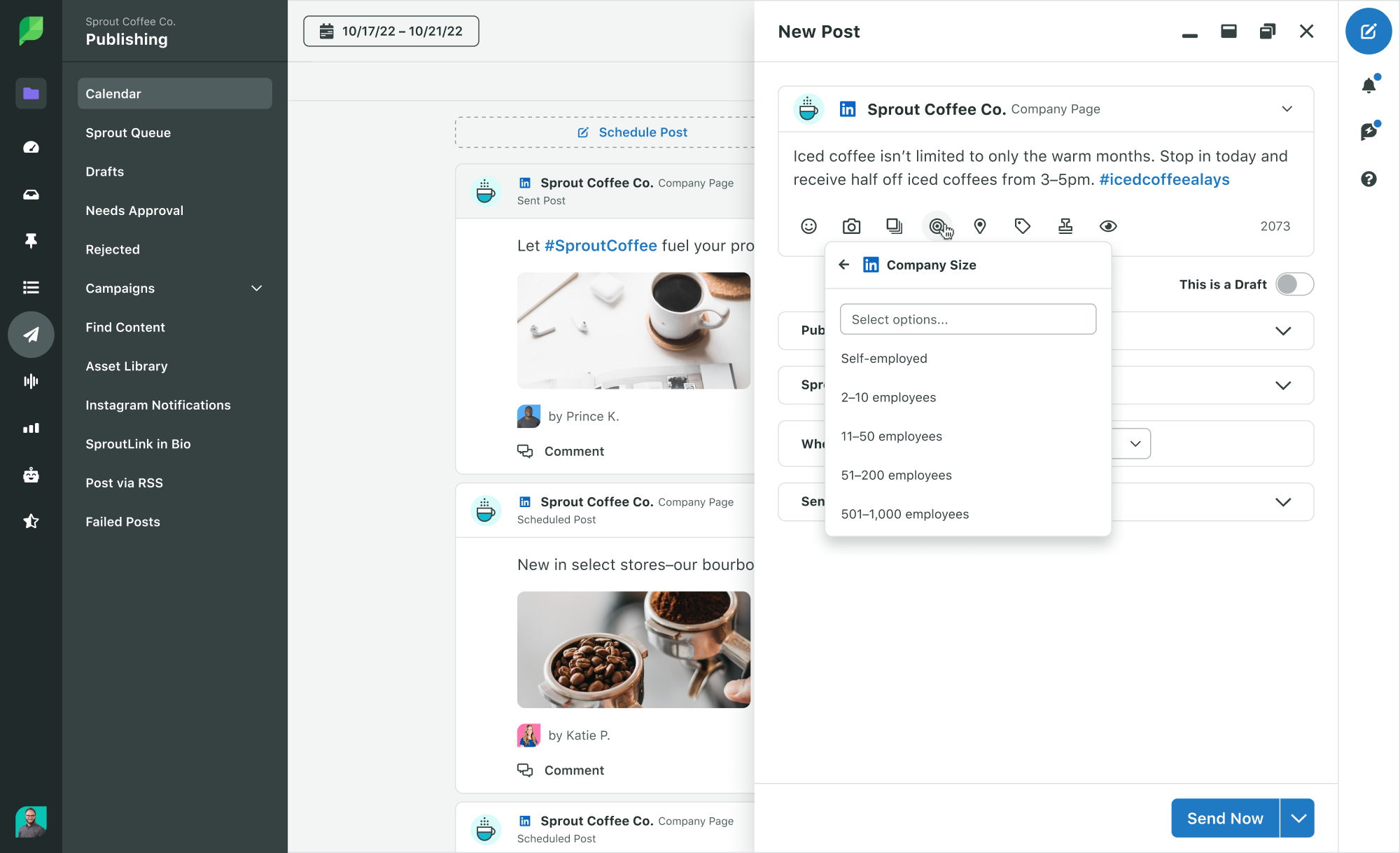
5. Promote, share, and measure your content
Growing your presence on LinkedIn can be challenging, especially for newly established companies. Consistency and involving your employees in promoting and cross-posting your content where appropriate are key.
By combining LinkedIn analytics, you can assess over time what strategies are effective and which aren’t, allowing you to focus on the formats that generate the most engagement. You may find that polls or employee-centric content drive more growth than merely reposting articles or memes. You’ll only know by analyzing your content performance.
Best practices for LinkedIn content marketing
To conclude, let’s recap some best practices for LinkedIn content marketing and showcase brands that excel in their strategies.
Craft attention-grabbing headlines and captions
Sharpening your copywriting abilities is wise on LinkedIn, where hooks are extremely effective.
Figma often employs engaging hooks at the start of their posts, yielding strong engagement and positive reactions from followers.
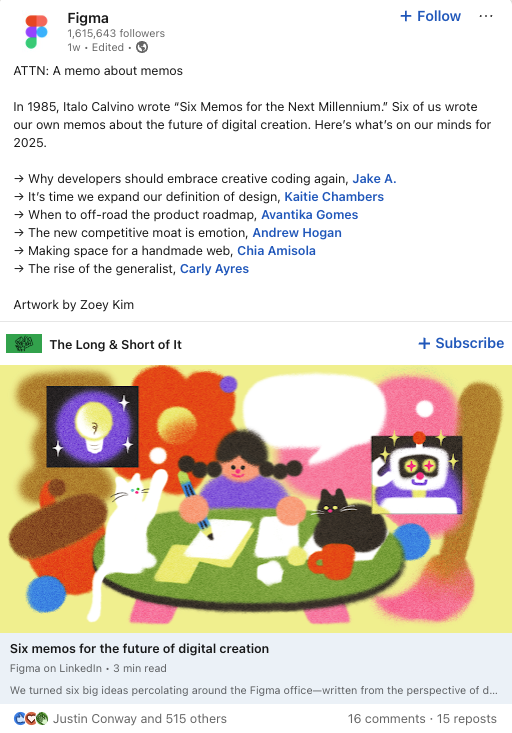
Keep in mind: although LinkedIn serves as a professional platform, it doesn’t necessitate a dull or rigid approach.
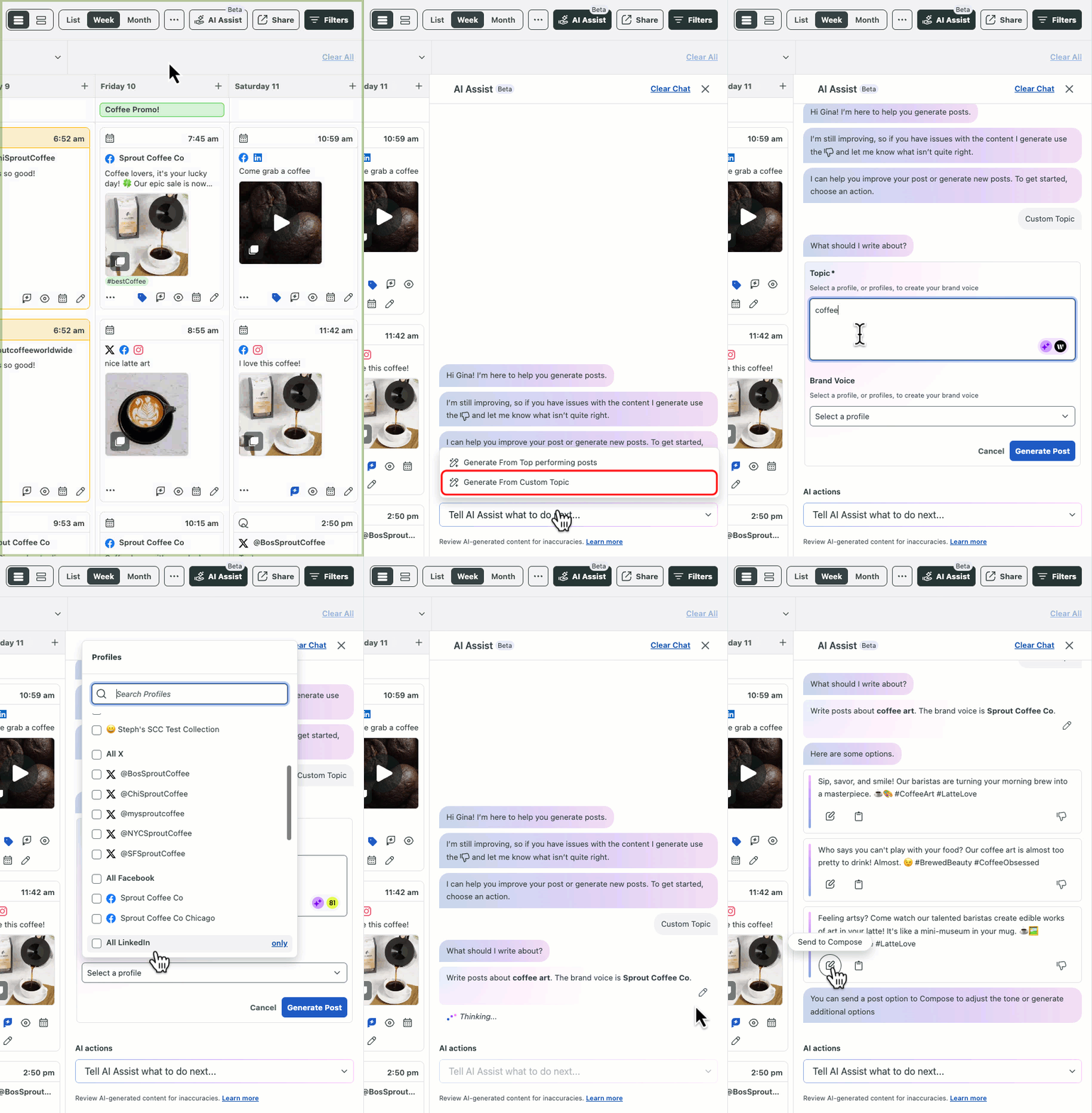
Be inventive with your headlines and captions, avoiding the practice of simply placing links or resources without any context. If you’re struggling to brainstorm, consider using an AI social writing tool like Sprout to generate ideas and hooks.
Incorporate compelling visuals
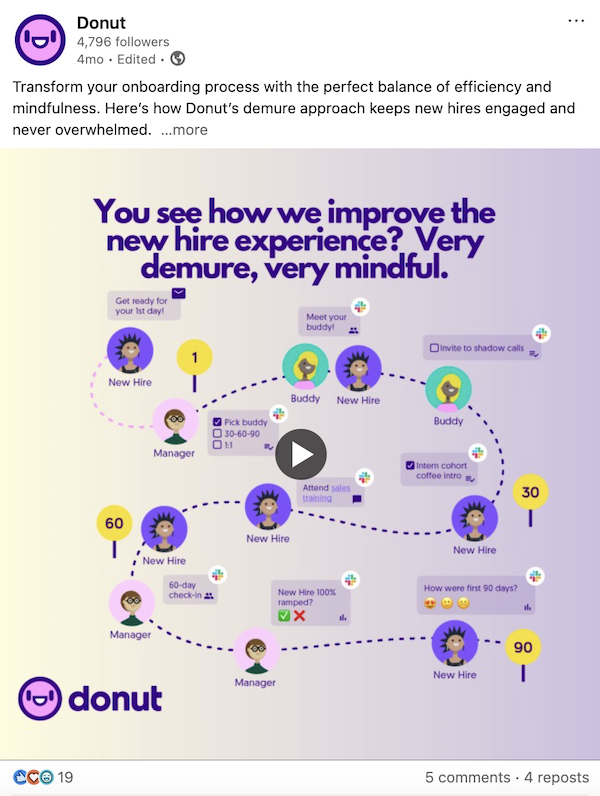
Similar to other platforms, the LinkedIn algorithm favors keeping users engaged on the site. Therefore, posting visuals such as photos and videos is ideal for fostering interaction compared to merely sharing links.
This image and video shared by Donut illustrate how brands can captivate users with strong visuals.
In another example, this post from DocuSign transforms a customer testimonial into a graphic. This showcases an effective example of repurposing content across social media.

Visuals, infographics, repurposed quotes, and videos are just some examples of what you can share, not only to enhance engagement but also to reinforce your brand identity through your content strategy on LinkedIn.
Incorporate pertinent calls to action
Again, don’t simply post random content on LinkedIn and anticipate engagement or interactions. To reach your intended outcomes, being specific about your goals is vital, meaning you should guide your audience toward taking defined actions.

Recent Comments