

Customer engagement and experience (CX) are in the midst of yet another big shift thanks to new technology and changing customer behaviors. So businesses are turning to AI to personalize interactions, boost satisfaction and improve efficiency—all while driving revenue. Two recent reports provide important insights into today’s CX landscape, investment trends and AI’s growing role.
CX is no longer just about keeping customers happy—it’s a key driver of business results and the C-suite knows it. According to Nextiva’s 2025 CX Landscape report, 89% of CX decision-makers say their execs understand CX’s impact on profit margins. Most leaders now see CX as a revenue driver (79%) rather than a cost center (21%).
No surprise, this has made it easier to get CX investments OK’d — 67% of respondents say it’s less of a battle than five years ago. Furthermore, nearly all companies (94%) have seen ROI on their major CX investments.
Dig deeper: 7 proven strategies for effective B2B customer retention
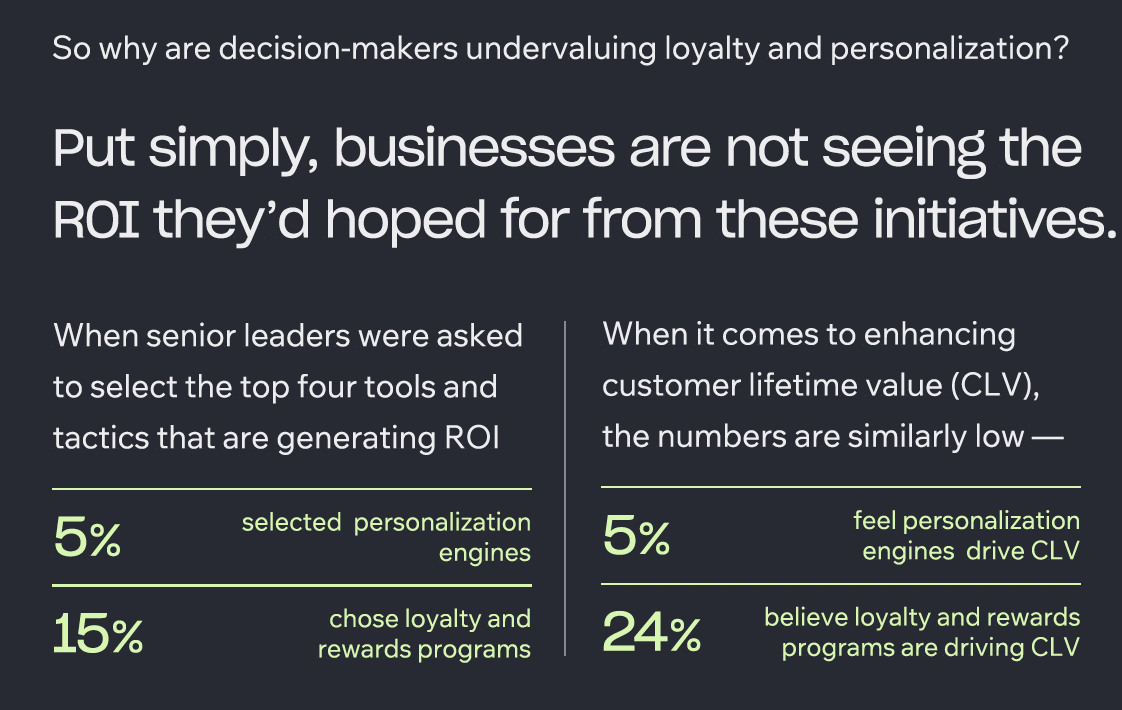
However, there’s a difference between getting ROI and getting the ROI you want. According to The Future of Customer Engagement from Apply Digital, only 5% of senior execs said personalization engines were delivering sufficient ROI. Only 15% said this about rewards and loyalty programs. Nearly the same numbers said this about those methods and customer lifetime value.
Yikes.
Even so, 47% of respondents in the Apply Digital report continue to see loyalty and rewards programs as a powerful tool for repeat business.
AI’s expanding role in customer engagement
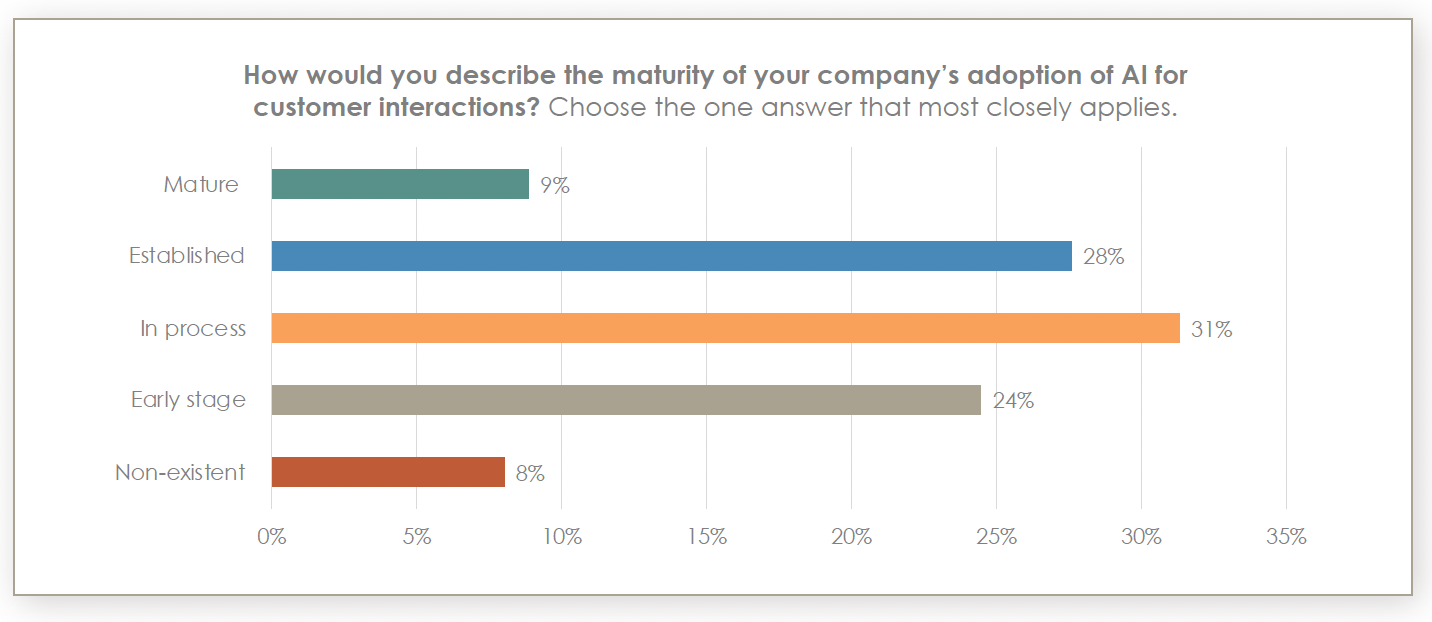
AI’s importance in CX is an accepted fact. Ninety-three percent of senior leaders in The Future of Customer Engagement Report say AI is a key part of their current strategy. Key doesn’t mean up and running, though. The 2025 CX Landscape Report found 24% of businesses are just getting started with AI and 31% are now actively implementing it.
As always, one major challenge is data. The 2025 CX Landscape Report found that 86% of companies struggle with customer data being spread across different systems. Other hurdles include customer resistance to change, lack of internal expertise and budget constraints. The Future of Customer Engagement Report found that customer resistance was the biggest challenge (90%), with other factors like budget limitations and data collection difficulties also ranking high.
Dig deeper: Voice agents will change how you think about your brand and your website
However, practice with AI pays off. The more experience and investment companies put into AI, the greater the returns. According to The 2025 CX Landscape Report, 84% of mature AI adopters say they’re getting high value from their investment.
Balancing AI and the human touch
While AI can enhance customer engagement, it works best when paired with human interaction. A strong handoff between AI and human agents is essential — 98% of respondents in the 2025 CX Landscape Report agree. However, many CX leaders are still figuring out how to make that transition seamless. One major roadblock? Employee resistance — 36% of companies report pushback when implementing AI-human handoffs.
To overcome this, businesses need to innovate how AI and employees work together. Features like supervisory monitoring and real-time agent support can improve workflows. When employees feel empowered by AI, they’re more satisfied — 51% of companies that have made major AI investments say their employees are extremely happy with the results.
Methodologies
Nextiva’s 2025 CX Landscape report is based on an online survey of more than 1,000 CX leaders with decision-making responsibility at companies with more than 100 employees in the United States, Canada and the United Kingdom. The full report can be found here.
Apply Digital’s Future of Customer Engagement report is based on a survey of 500 senior leaders at U.S. and Canadian companies with more than $500 million in annual revenue. The report can be found here.
The post AI adoption in CX is rising, but implementation challenges remain appeared first on MarTech.
# Growing AI Adoption in Customer Experience Faces Implementation Challenges
Artificial Intelligence (AI) is transforming customer experience (CX) across industries, enabling businesses to provide faster, more personalized, and efficient service. From chatbots and virtual assistants to predictive analytics and sentiment analysis, AI-powered solutions are helping companies enhance customer interactions. However, despite its growing adoption, implementing AI in CX comes with significant challenges that organizations must address to maximize its potential.
## The Rise of AI in Customer Experience
AI is revolutionizing customer experience by automating repetitive tasks, analyzing vast amounts of data, and delivering real-time insights. Some key applications of AI in CX include:
– **Chatbots and Virtual Assistants**: AI-driven chatbots provide instant responses to customer queries, reducing wait times and improving service efficiency.
– **Personalization**: AI analyzes customer behavior and preferences to offer tailored recommendations and experiences.
– **Predictive Analytics**: Businesses use AI to anticipate customer needs, detect potential issues, and proactively address concerns.
– **Sentiment Analysis**: AI tools analyze customer feedback from reviews, social media, and surveys to gauge sentiment and improve service strategies.
– **Automated Customer Support**: AI-powered systems handle routine inquiries, allowing human agents to focus on complex issues.
These AI-driven innovations enhance customer satisfaction, improve operational efficiency, and drive business growth. However, implementing AI in CX is not without its challenges.
## Key Challenges in AI Implementation for Customer Experience
### 1. **Data Quality and Integration Issues**
AI systems rely on vast amounts of data to function effectively. However, many businesses struggle with poor data quality, fragmented data sources, and integration challenges. Inconsistent or incomplete data can lead to inaccurate AI predictions and poor customer experiences. Organizations must invest in data cleansing, integration, and management to ensure AI systems operate effectively.
### 2. **High Implementation Costs**
Deploying AI solutions requires significant investment in technology, infrastructure, and skilled personnel. Small and medium-sized businesses (SMBs) may find it challenging to afford AI implementation, limiting their ability to compete with larger enterprises. Companies must carefully assess the return on investment (ROI) and explore scalable AI solutions that align with their budget.
### 3. **Lack of AI Expertise**
AI implementation requires specialized knowledge in machine learning, data science, and automation. Many organizations lack in-house expertise, making it difficult to develop and maintain AI-driven CX solutions. Businesses must invest in AI training, hire skilled professionals, or partner with AI service providers to bridge the knowledge gap.
### 4. **Customer Trust and Privacy Concerns**
AI-powered CX solutions often involve collecting and analyzing customer data, raising concerns about privacy and security. Customers may be hesitant to engage with AI-driven services if they feel their personal information is at risk. Companies must implement robust data protection measures, comply with regulations like GDPR and CCPA, and be transparent about how AI is used to build trust with customers.
### 5. **Balancing AI and Human Interaction**
While AI enhances efficiency, over-reliance on automation can lead to impersonal customer interactions. Some customers prefer human support, especially for complex or sensitive issues. Businesses must strike the right balance between AI-driven automation and human touch to ensure a seamless and empathetic customer experience.
### 6. **AI Bias and Ethical Concerns**
AI systems can inherit biases from training data, leading to unfair or discriminatory outcomes. Biased AI algorithms can negatively impact customer interactions and damage brand reputation. Organizations must implement ethical AI practices, regularly audit AI models, and ensure fairness and inclusivity in AI-driven CX solutions.
### 7. **Scalability and Maintenance Challenges**
AI systems require continuous updates, monitoring, and optimization to remain effective. As businesses grow, scaling AI solutions to handle increased customer interactions can be challenging. Companies must adopt flexible AI architectures and invest in ongoing maintenance to ensure long-term success.
## Overcoming AI Implementation Challenges
To successfully implement AI in customer experience, businesses should consider the following strategies:
– **Invest in Data Management**: Ensure high-quality, well-integrated data to improve AI accuracy and effectiveness.
– **Adopt a Phased Approach**: Start with small AI projects, measure success, and gradually scale AI adoption.
– **Prioritize Customer Privacy**: Implement strong data security measures and maintain transparency in AI usage.
– **Combine AI with Human Support**: Use AI to enhance, not replace, human interactions for a balanced customer experience.
– **Address AI Bias**: Regularly audit AI models to ensure fairness and eliminate biases.
– **Provide AI Training**: Upskill employees and hire AI experts to manage AI-driven CX initiatives effectively.
## Conclusion
AI adoption in customer experience is growing rapidly, offering businesses innovative ways to enhance customer interactions and drive efficiency. However, successful AI implementation requires overcoming challenges related

Recent Comments