
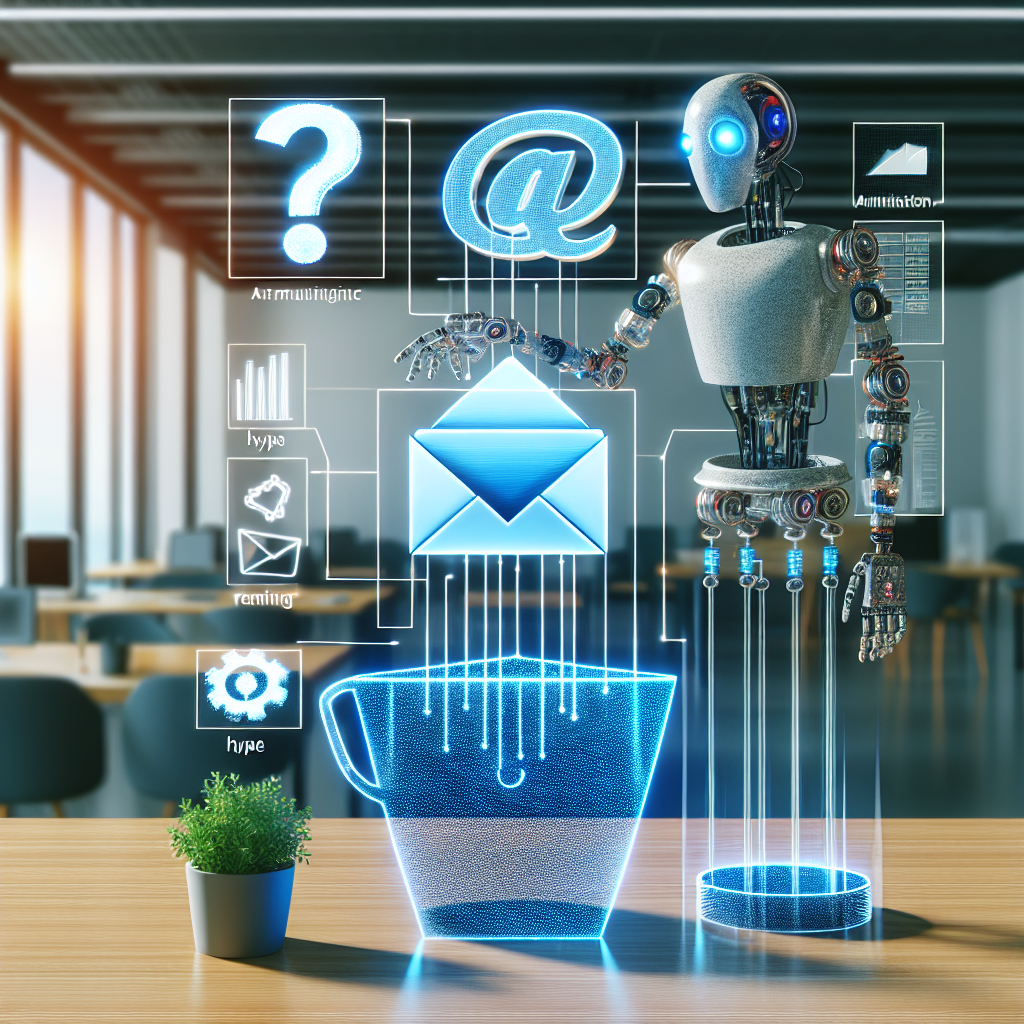

Is AI truly revolutionizing email marketing, or is it just another overhyped technology?
If you’ve been wondering how AI can (or should) fit into your email marketing strategy, you’re not alone. Marketers everywhere are evaluating whether AI-powered tools can genuinely improve their campaigns, streamline their workflows and drive better results — or if they’re just expensive add-ons with little impact.
In our latest MarTech Intelligence Report, Email Marketing Platforms: A Marketers Guide, we take a deep dive into how AI is shaping the next generation of email platforms. Here’s a sneak peek at what’s changing — and what you need to know before investing in your next email marketing solution.
The AI-powered email revolution
The role of AI in email marketing is evolving beyond simple automation. Today’s top platforms leverage AI for:
- Hyper-personalization – AI analyzes customer behavior in real-time, crafting highly personalized subject lines, email content and product recommendations. This can boost engagement rates.
- Predictive analytics – Instead of reacting to customer behavior, AI-driven platforms anticipate what subscribers will do next, optimizing send times and content accordingly.
- Automated content creation – No need to change browser tabs. Generative AI tools in email platforms can now suggest, refine or even write subject lines, body copy and calls to action, helping marketers scale content production.
- Intelligent A/B testing – Traditional A/B testing takes time and manual effort. AI can streamline the process by testing multiple variables simultaneously and selecting the best-performing combinations.
- Enhanced deliverability – AI can detect patterns that affect email deliverability, helping marketers adjust campaigns to avoid spam filters and maximize inbox placement.
Hype or game-changer?
It’s clear that AI is transforming how email campaigns are created, optimized, and delivered — but is it delivering measurable ROI? The answer depends on how well you integrate AI into your strategy and which platform you use.
Marketers who embrace AI-driven platforms report: Higher open rates and conversions thanks to AI-optimized subject lines and personalization. More efficient workflows, reducing the time spent on content creation and segmentation. Better customer insights that allow for more relevant and engaging campaigns.
However, not all AI tools are created equal. Many platforms claim to offer AI-powered features, but some are more sophisticated than others. That’s why choosing the right email marketing platform in 2025 is crucial.

Email marketing helps organizations acquire and retain customers, build businesses and make more money. Explore the platforms essential to email marketing in the latest edition of this MarTech Intelligence Report.
How to choose an AI-powered email marketing platform
If you’re considering switching or upgrading your email marketing platform, look for these AI must-haves:
 Advanced personalization capabilities – Can the platform generate dynamic, AI-driven content tailored to individual users? Automated optimization – Does it offer AI-powered A/B testing, predictive analytics, and optimized send times? Seamless integration – Can it easily sync with your CRM, ecommerce platform and other marketing tools? User-friendly AI implementation – Is the AI intuitive, or is there a steep learning curve? Proven results – Does the platform provide case studies or data showing how AI improves performance?
Get the full picture: Download the latest MarTech Intelligence Report on email marketing platforms
AI is no longer a futuristic concept — it’s shaping the next era of email marketing. The key is knowing which platforms truly leverage AI for results and which ones are just adding AI as a buzzword.
Our 2025 MarTech Intelligence Report on email marketing platforms breaks down the top platforms, their AI capabilities, and how they compare on key performance metrics. Whether you’re looking to enhance personalization, automate content creation or boost engagement, this guide will help you choose the best AI-powered email solution for your business.
Email marketing helps organizations acquire and retain customers, build businesses and make more money. Explore the platforms essential to email marketing in the latest edition of this MarTech Intelligence Report.
The post AI and email marketing: All hype or real game-changer? appeared first on MarTech.
# Is AI Transforming Email Marketing or Just Overhyped?
Artificial Intelligence (AI) has been making waves across various industries, and email marketing is no exception. With promises of improved personalization, automation, and data-driven decision-making, AI is often touted as a game-changer for email marketers. But is AI truly transforming email marketing, or is it just another overhyped trend? Let’s explore the impact of AI on email marketing and whether it lives up to the expectations.
## **How AI is Changing Email Marketing**
AI is being integrated into email marketing in several ways, enhancing efficiency, engagement, and conversion rates. Here are some key areas where AI is making a difference:
### **1. Hyper-Personalization**
Traditional email marketing relies on segmentation, where audiences are grouped based on demographics, behaviors, or past interactions. AI takes this a step further by enabling hyper-personalization. AI algorithms analyze vast amounts of data, including browsing history, purchase behavior, and engagement patterns, to craft highly personalized email content tailored to individual recipients.
For example, AI can determine the best product recommendations for each subscriber, ensuring that emails feel more relevant and engaging. This level of personalization can significantly boost open rates, click-through rates, and conversions.
### **2. Automated Content Generation**
AI-powered tools like GPT-4 can generate compelling email subject lines, body content, and even calls to action. These tools analyze past campaign performance and industry trends to create content that resonates with the target audience. Marketers can use AI to test multiple variations of subject lines and email copy to determine which performs best.
### **3. Optimized Send Times**
AI can analyze recipient behavior to determine the optimal time to send emails. Instead of relying on generic best practices, AI-driven email marketing platforms can identify when each subscriber is most likely to open and engage with an email. This ensures that messages reach inboxes at the right moment, improving engagement rates.
### **4. Predictive Analytics**
AI can predict customer behavior by analyzing past interactions. For example, AI can identify subscribers who are likely to churn and trigger re-engagement campaigns automatically. It can also forecast which products a customer is likely to purchase next, allowing marketers to send timely and relevant offers.
### **5. Automated A/B Testing**
A/B testing is a crucial part of email marketing, but traditional methods can be time-consuming. AI automates this process by continuously testing different subject lines, images, and content variations. It then selects the best-performing elements in real-time, optimizing campaigns for maximum effectiveness.
### **6. Spam and Deliverability Optimization**
AI helps improve email deliverability by analyzing factors that impact spam filters. It can detect patterns that may trigger spam filters and suggest adjustments to improve inbox placement rates. AI also monitors engagement metrics to ensure that emails remain relevant and avoid being marked as spam.
## **Is AI Overhyped in Email Marketing?**
While AI offers numerous benefits, some argue that its impact on email marketing is overhyped. Here are a few reasons why:
### **1. AI is Not a Magic Solution**
AI can enhance email marketing efforts, but it is not a replacement for human creativity and strategy. Marketers still need to craft compelling messages, understand their audience, and develop effective campaigns. AI is a tool that assists in optimization, but it cannot replace the human touch required for storytelling and brand voice.
### **2. Data Quality Matters**
AI relies on high-quality data to function effectively. If a company’s customer data is incomplete, outdated, or inaccurate, AI-driven insights may not be reliable. Businesses must invest in proper data management to fully leverage AI’s capabilities.
### **3. Implementation Challenges**
Integrating AI into email marketing requires investment in technology and training. Small businesses with limited resources may struggle to implement AI-driven solutions effectively. Additionally, AI tools may require ongoing monitoring and adjustments to ensure they align with business goals.
### **4. Privacy and Ethical Concerns**
AI-driven personalization relies on collecting and analyzing user data. With increasing concerns about data privacy and regulations like GDPR and CCPA, businesses must be cautious about how they use AI in email marketing. Transparency and compliance with data protection laws are crucial to maintaining customer trust.
## **The Verdict: AI is Transforming Email Marketing, But It’s Not a Silver Bullet**
AI is undoubtedly transforming email marketing by improving personalization, automation, and data-driven decision-making. However, it is not a one-size-fits-all solution. Businesses that strategically integrate AI into their email marketing efforts can see significant improvements in engagement and conversions. However, AI should be viewed as a powerful tool that complements human creativity rather than replacing it.
For AI to be truly effective in email marketing, businesses must focus on high-quality data, ethical practices, and a balance between automation and human touch. While AI is not just hype, its success depends on how well it is implemented and integrated into a broader marketing strategy.
### **Final Thoughts**
AI

Recent Comments