
Content generated by AI has rapidly infiltrated social media, creating a substantial gray area regarding the responsible use of AI technology by brands.
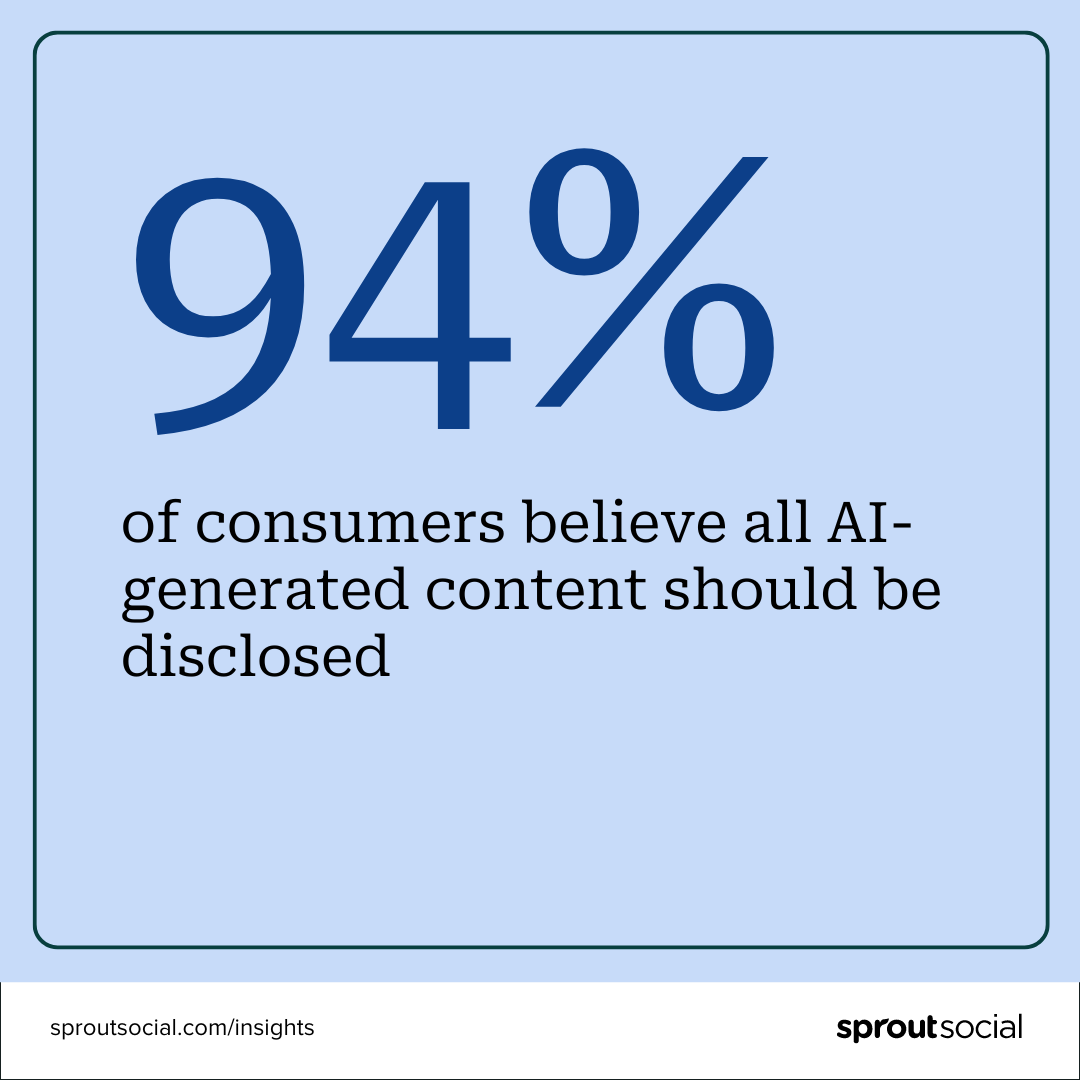
Some platforms, such as Meta, have introduced disclaimers for AI content. In May 2024, the company began tagging posts identified as AI-generated with a “made with AI” label. A recent Q2 2024 Sprout Pulse Survey indicated that 94% of consumers believe all AI content should be disclosed, making this disclaimer a fitting response.
However, unexpected challenges emerged. Artists and creators argued that the label inaccurately classified their original work as AI-generated. Marketers using AI Photoshop tools for minimal retouching found the label misleading. Meta ultimately clarified the application of AI disclaimers and developed more nuanced, creator-initiated labels.
Critical questions remain unanswered. Who should be accountable for enforcing the ethical use of AI? Do platforms or marketers have the duty of ensuring consumer transparency?
This guide explores the escalating discourse regarding AI disclaimers and examines how platforms and brands currently navigate them.
The escalating discourse about AI disclaimers
Although nearly all consumers agree that AI content should be disclosed, opinions differ on who should be responsible for that disclosure. The Q2 2024 Sprout Pulse Survey revealed that 33% think it’s the brands’ duty, while 29% believe social networks should take on that responsibility. Another 17% affirm that brands, networks, and social media management platforms share this responsibility.
Digital marketing consultant Evangeline Sarney points out that this divide arises from the nascent stage of AI-generated content and the uncertainty surrounding it. “First, we need to clarify what we are categorizing as AI content. If Adobe Generative Fill was utilized to add water droplets to an existing image, is disclosure mandatory? Given the backlash many companies have experienced due to AI-generated campaigns, it’s clear why they might hesitate to be transparent. AI content is not yet standard, and definitive guidelines are lacking. There isn’t a universal method for labeling that can suit every situation.”
What regulatory bodies state
Sarney’s assertion is reinforced by the fact that the US Federal Communications Commission (FCC) has issued AI disclosure stipulations for specific advertisements, yet hasn’t provided guidance for AI-generated content on social media. Some states have enacted their own laws to safeguard consumer privacy in the absence of federal regulations.
Internationally, the narrative shifts. In August 2024, the European Commission officially introduced the EU AI Act, aimed at curbing misinformation and requiring creators of generative AI models to implement disclosures.
The act states: “Deployers of generative AI systems producing or altering image, audio, or video content that comprises deep fakes must clearly disclose that the content has been artificially generated or manipulated. Similarly, if an AI system generates or modifies text intended to inform the public on matters of public interest, disclosure about the artificial origin or alteration of the text is also necessary.”
Nonetheless, the AI Act specifies that content reviewed by humans—which is subject to human editorial responsibility—does not require disclosure. The act also categorizes AI content risks and predominantly focuses on “unacceptable” and “high-risk” scenarios (such as exploitation and negative impacts on personal safety and privacy).
While this act could signify a move towards comprehensive AI disclosure standards, it still leaves considerable room for interpretation and requires further clarification—particularly for marketers and brands.
Consumer ethical dilemmas
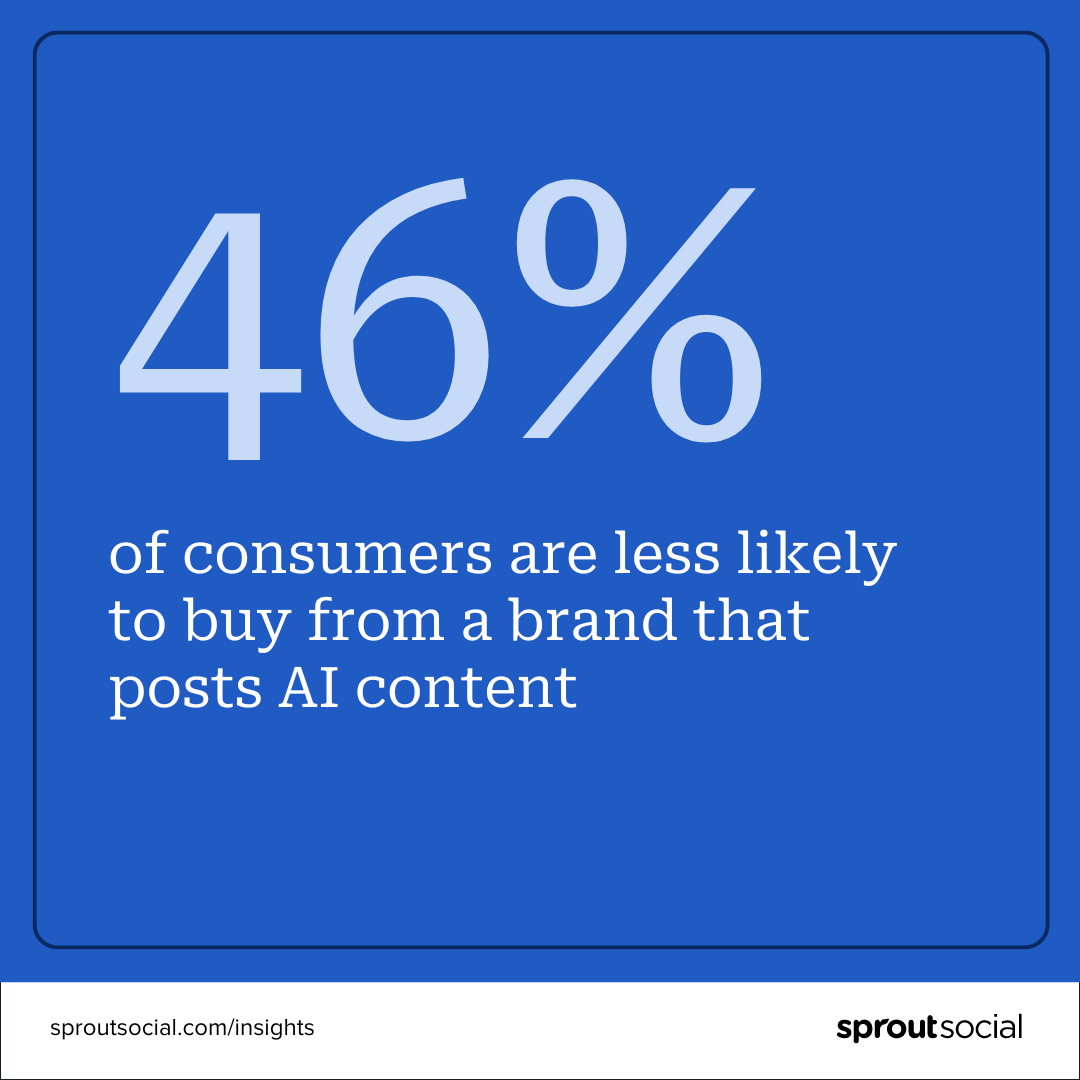
Where legislative measures fall short, consumer expectations (and apprehensions) can guide brand content development. For instance, the Q2 2024 Sprout Pulse Survey revealed that 80% of consumers share concerns that AI-generated content may lead to misinformation on social media, while another 46% are less inclined to purchase from brands that display AI content. According to Sarney, these two statistics may be interconnected.
“Consumers don’t want to feel deceived or think that a brand is concealing information. An image created with AI—and clearly resembling it—but not disclosed, might raise doubts among consumers. To preserve trust and authenticity, brands should establish frameworks for what must be disclosed and when.”
She also encourages marketers to critically assess why they are utilizing AI. Is it aimed at enhancing their creative capabilities and accelerating manual processes?
Sarney recounted a recent incident where a lifestyle magazine, previously criticized for a lack of diversity, created an AI-generated BIPOC team member. “Their Instagram feed was inundated with negative comments questioning why the company couldn’t simply hire a real POC. Commenters highlighted the dwindling job opportunities for the BIPOC community in the fashion sector, and many questioned why—rather than fabricating a fashion editor—the company didn’t take the initiative to hire one.”
Numerous applications fall under the umbrella of AI-generated content, and what makes sense to disclose will vary according to your brand, industry, and public risk. Generally, brands should avoid producing AI-generated humans (especially to represent children, the BIPOC community, and individuals with disabilities) without explicit disclosure of their actions and intentions. They should almost always refrain from generating AI content about current events or heavily inspired by others’ intellectual property. These domains present the highest AI risks regarding brand health—and crucially, public safety.
How various networks manage AI disclaimers
Amid the expanding conversation around AI disclaimers and the overall rise of AI-generated content, social networks are taking steps to curb misinformation and preserve trust in their platforms. Primarily, they are facilitating creator clarity in labeling their content as AI-altered. Below are the current approaches each network employs regarding AI disclaimers and their implications for brands.
Meta
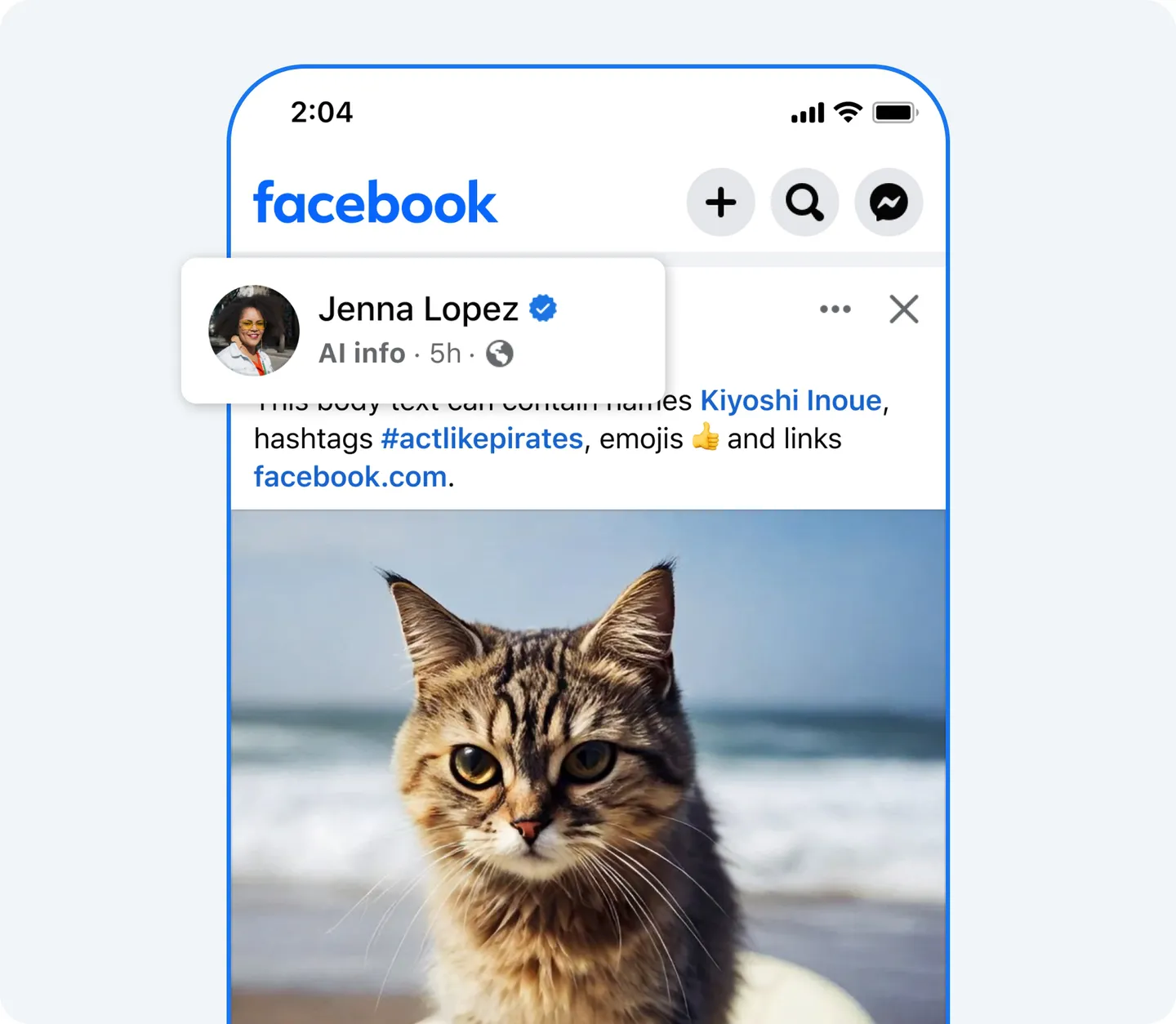
As previously stated, Meta revised their AI disclaimer label in July 2024 to better align with both consumer and brand expectations. They articulated their new “AI info” label in their blog post: “While we collaborate with companies industry-wide to enhance the process so our labeling method better aligns with our intent, we’re transitioning from ‘Made with AI’ to ‘AI info’ across our apps, which users can click for further information.”
The company has begun applying these labels when they detect standard AI image indicators or when users indicate they are uploading AI-generated content. By clicking the label, users can learn how AI might have influenced the creation of the image or video.
YouTube
YouTube introduced a tool in their Creator Studio that enables creators to self-identify when their video has been significantly altered with generative AI or is synthetic yet appears real. Creators must disclose AI-generated content when it resembles reality to the extent that one could easily mistake it for a real person, place, or event, following YouTube’s Community Guidelines.
As YouTube explains, “Labels will be displayed within the video description, and if content relates to sensitive subjects such as health, news, elections, or finance, we will also show a label within the video player window.”
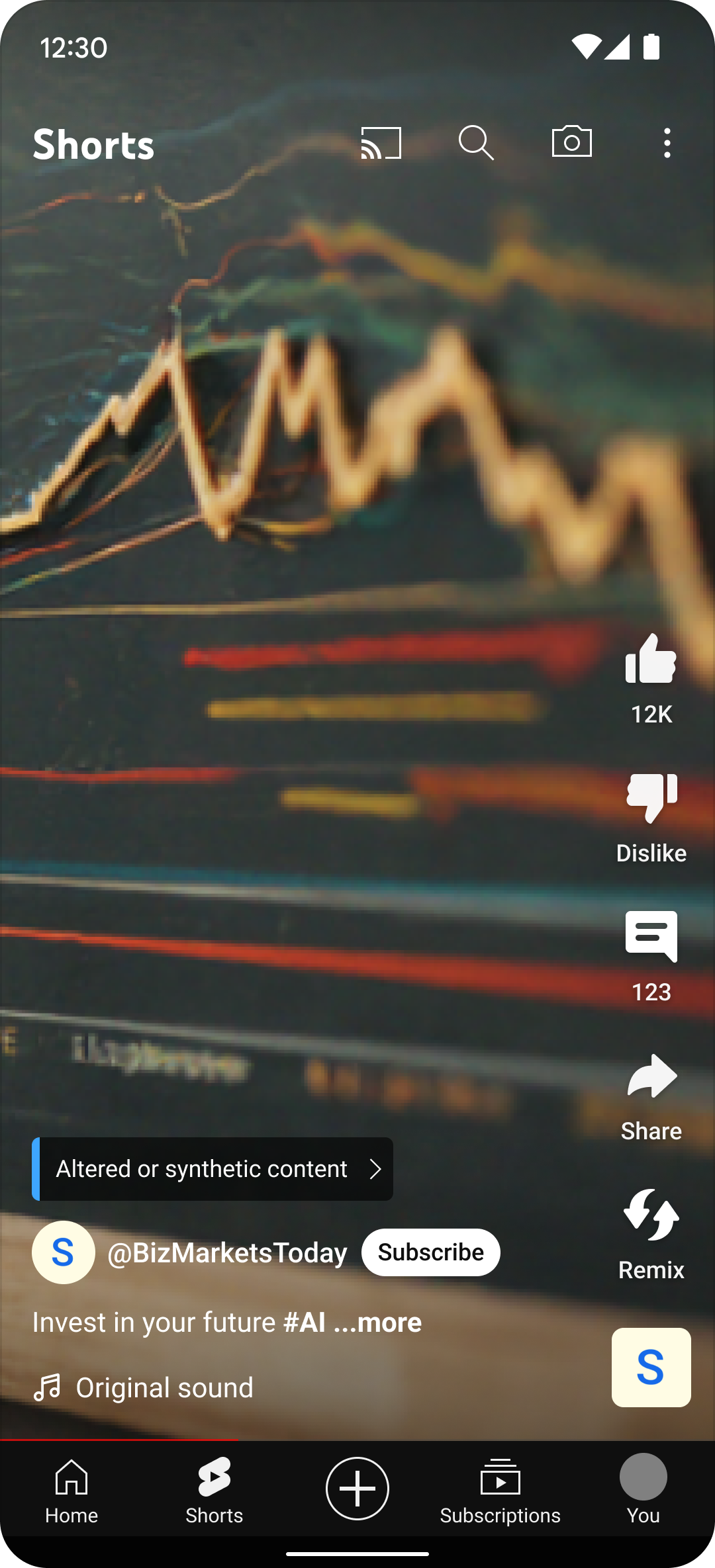
While YouTube necessitates creators to self-disclose when they have included altered or synthetic content in their videos, they may also apply the label in instances where this disclosure is absent, particularly when the content addresses the sensitive topics mentioned above.
TikTok
TikTok’s creator label for AI content enables users to indicate when posts are entirely AI-generated or considerably AI-edited. This label simplifies creators’ compliance with TikTok’s synthetic media policy, which was introduced in 2023.
The policy mandates that individuals label AI-generated posts featuring realistic images, audio, or video to assist viewers in contextualizing the content and curbing the potential dissemination of misleading information.
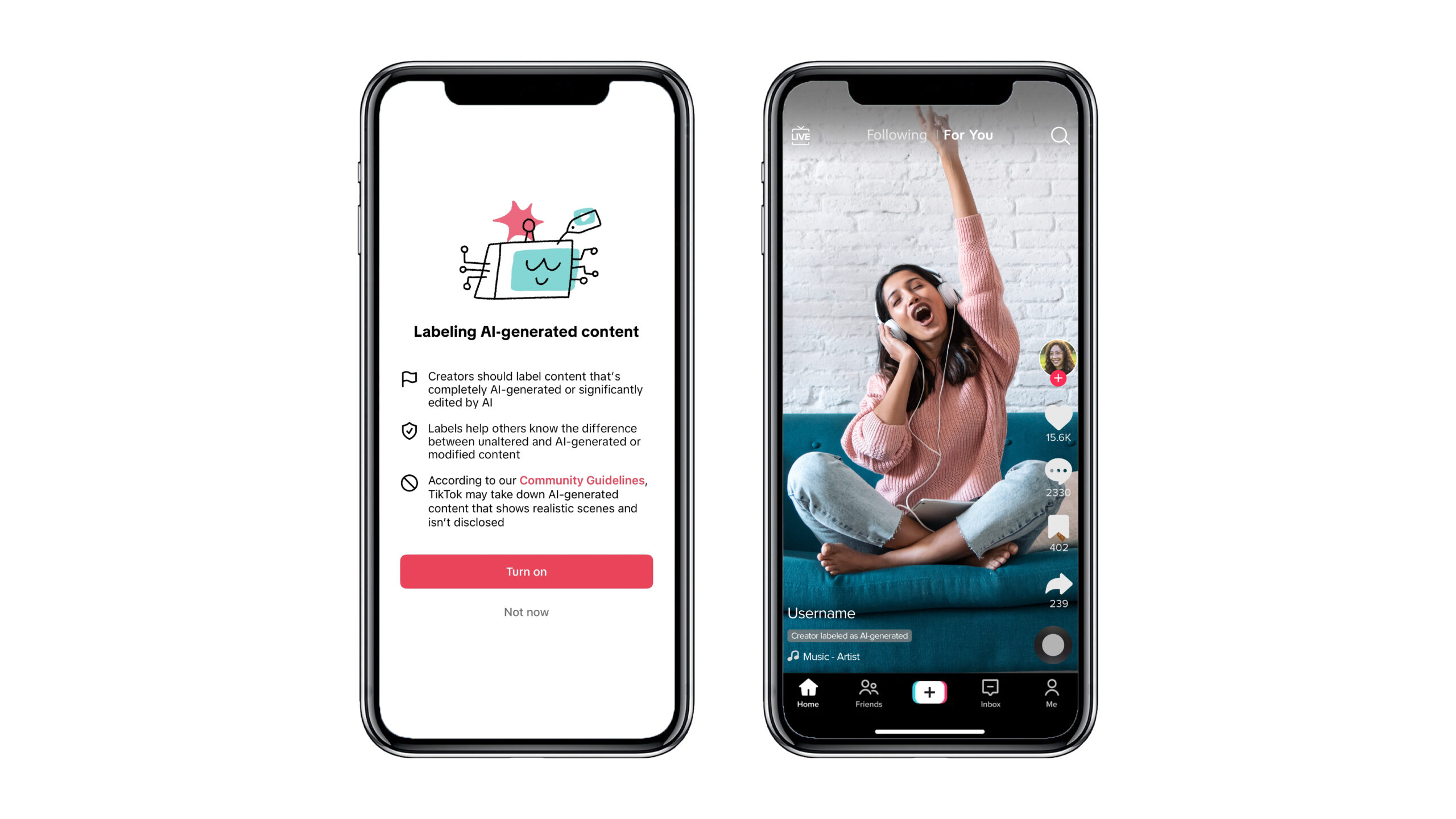
If creators fail to self-disclose AI-generated content, TikTok may automatically assign an “AI-generated” label to posts the platform suspects were modified or created using AI.
In May 2024, LinkedIn collaborated with the Coalition for Content Provenance and Authenticity (C2PA) to establish technical standards for clarifying the origins of digital content, including AI-generated materials. Rather than solely labeling content as AI-generated—an approach taken by many platforms—LinkedIn’s methodology would result in all content being labeled.
The platform clarifies, “Image and video content that is cryptographically signed using C2PA Content Credentials will bear the C2PA emblem. Clicking this label will reveal the content credential and available metadata, such as the content source (e.g., camera model noted or AI tool specified to have been used to generate all or part of the image), alongside information on who issued, to whom, and when.”
However, this verification is only effective if your content already incorporates C2PA credentials. If it doesn’t, it’s advisable to disclose AI-generated content in your caption, aligning with your brand standards.
AI disclaimer practices from three brands
With most platforms beginning to provide AI disclaimer labels, the manner of disclosing AI-generated content (i.e., utilizing their labels) becomes less significant than the act of disclosure itself. Whether in captions or as a watermark on an image or video, disclosures are not only necessary to comply with community guidelines (to prevent your content from being flagged or removed) but also to uphold trust with your audience.
Here are three brands that produce AI-generated content and their methods of disclosure.
Meta
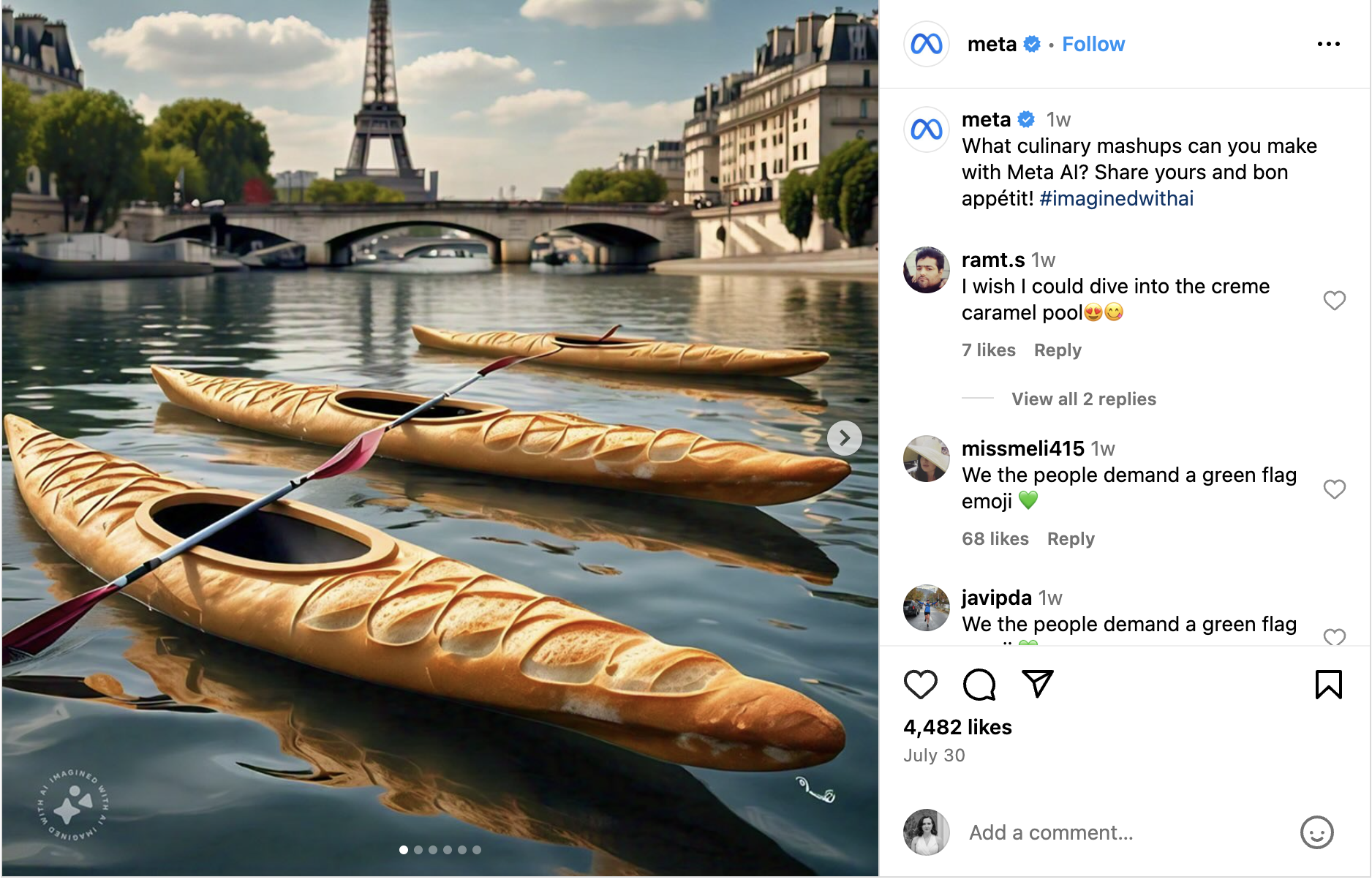
On Instagram, the platform marks its AI-generated images and videos with the hashtag #ImaginedwithAI in their captions and an “Imagined with AI” watermark in the lower left corner of their visuals.
The organization also shares narratives about AI usage in their captions, encouraging followers to experiment with specific prompts on their Meta AI platform (like “culinary mashups,” as shown in this post).
MANGO
The Spanish fashion brand MANGO launched their first fully AI-generated campaign on LinkedIn. Their statement was less about disclosure and more focused on the technological advancements that enabled the campaign. In their post caption, the brand elaborated on their decision to produce an entirely AI-driven campaign and its impact on their business strategy.

Toys“R”Us
Toy retailer Toys“R”Us recently released a one-minute video detailing their company’s origin that was wholly created by AI. The brand asserts that this video is the first-ever brand film produced using OpenAI Sora technology, which they described in their YouTube caption and press release.
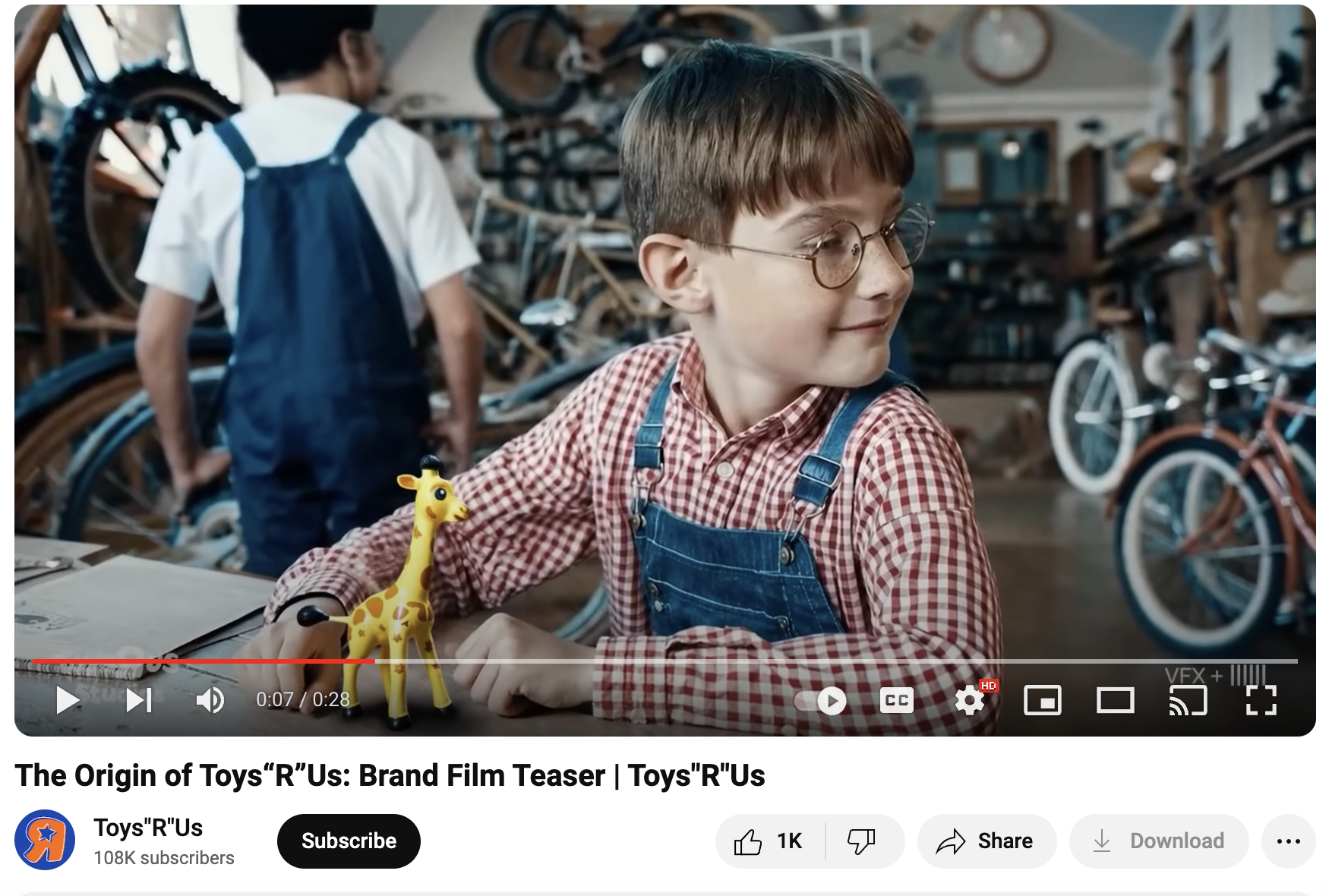
Since the film debuted at the Venice Film Festival, Toys “R” Us has been promoting its AI origins—demonstrating that disclosures can be powerful opportunities for generating brand excitement. Even if AI-generated content elicits negative reactions, Toys “R” Us exemplifies that (at times) all publicity can be good publicity.
Disclose based on your audience’s preferences
As AI-generated content becomes more common on social media, brands must find a balance between innovation and transparency. This entails crafting brand guidelines that specify when AI disclaimers are essential. While platforms are instituting individual policies and some regulatory bodies are intervening, the majority of the responsibility still rests with brands.
When determining the appropriateness of making AI disclosures, consider your audience. Disclosures are crucial for maintaining credibility when AI significantly alters reality or involves sensitive subjects. However, minor modifications might not necessitate explicit labeling.
By recognizing these subtleties, you can utilize AI responsibly in a manner that enhances your team’s productivity and creativity (instead of creating a branding crisis).
Seeking additional methods to ethically incorporate AI into your team’s workflows? Discover how CMOs are employing AI in their marketing strategies.
The post AI disclaimers: What marketing leaders need to know appeared first on Sprout Social.

Recent Comments