

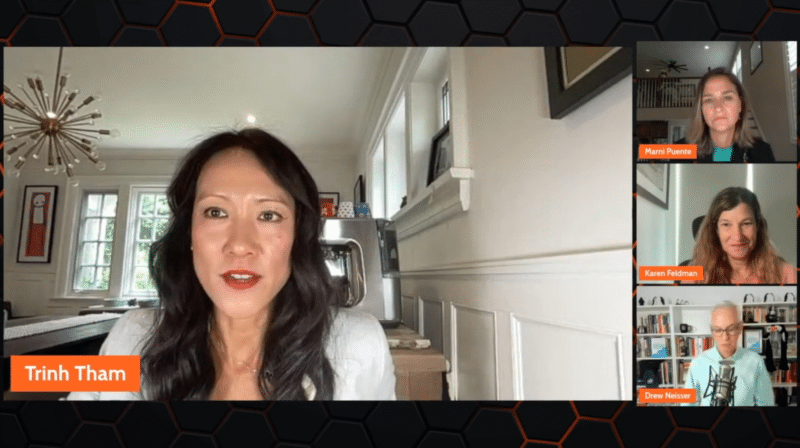
How can marketers overcome office politics to build cross-organization relationships needed to do their jobs? That was the topic discussed by marketing leaders at the keynote for Day 2 of The MarTech Conference.
“For marketing leaders, office politics can thwart collaboration, undermine authority and prevent the adoption of a singular strategy,” said Drew Neisser, founder of CMO Huddles, who moderated the conversation, which included three accomplished marketing leaders.
Dealing with politics in an organization
“I believe politics exists everywhere — they’re inevitable,” said Marni Puente, SVP/CMO for Fortune 500 government contractor SAIC. “So, it’s not so much about eliminating the politics, it’s about navigating.”
Puente suggested finding commonalities with leaders in the C-suite and across the business. Above all, establish trust, which is the basis of any working relationship.
Also, it doesn’t hurt to apply some of your marketing skills to understanding and connecting with stakeholders in the business.
“As marketers, we really have a leg up in terms of building relationships with key stakeholders — whether with the board, C-suite, direct reports or peers,” said Puente. “And part of that is because so much of what we do is looking at our customers or our clients, and applying the same principles we apply when we think about our buyers and mapping out that buyer persona. Really understanding what motivates them. What are their pain points? What are their needs?”
Understanding people’s motivations helps marketers overcome the organization’s politics and build solid relationships with those key stakeholders.
Dig deeper: How to secure leadership buy-in for digital marketing intiatives
Show that you understand the business
One of the best ways to build trust as a marketer is to demonstrate that you understand the business. Show that marketing is an able partner in important business decisions.
“I think it’s really important to make sure you are very clear that you understand the business…and that you can bring unique value from a marketing lens,” said Karen Feldman, VP marketing and communications at IBM Consulting.
This means the marketer at the table is able to provide data-driven answers to questions from other leaders in the organization.
“I do find there’s nothing better than bringing the facts and bringing fresh thinking that other leaders might not have on their minds,” Feldman said.
Not only is the thinking fresh and fact-based, but it’s aligned with business priorities established by other leaders in the business. A successful working relationship makes clear that marketing understands and shares those priorities.
Being a cross-functional team member
Being a strong marketing leader means being a member of a cross-functional team.
Sure, marketing leaders work with their marketing team to carry out marketing functions. But they also have to build relationships with leaders of the other teams. And those leaders, along with the marketing leader, make up a team, too.
“I have always found that if I can’t get my cross-functional stakeholders and partners onboard with an idea or a campaign or an initiative, nothing’s going to get done,” said Trinh Tham, founder of Straatt Business Reimagined.
Also, don’t underestimate the importance of communication with your team members.
“Make sure that you’re not only asking questions yourself, but that you’re opening yourself up to questions, opening yourself up for dialogue,” said Tham. “As long as everyone has a common understanding of the objectives, and that open line of communication, I’ve found that to be important.”
Go here to see the entire presentation. Registration is free.
The post Overcoming workplace politics: A marketer’s guide to cross-functional partnerships appeared first on MarTech.
# Navigating Workplace Politics: A Marketer’s Handbook for Building Effective Cross-Functional Partnerships
In today’s fast-paced business environment, marketers are expected to do more than just create compelling campaigns. They must also collaborate with various departments—sales, product development, finance, and even IT—to drive business growth. However, working across departments can be challenging due to differing priorities, communication styles, and, yes, workplace politics. Navigating these dynamics effectively is critical for marketers who want to build strong cross-functional partnerships and achieve success.
This article serves as a marketer’s handbook for understanding and managing workplace politics while fostering productive relationships across departments.
## 1. **Understanding Workplace Politics**
Workplace politics refers to the informal, and sometimes hidden, power dynamics that influence decision-making within an organization. These dynamics often stem from individual ambitions, departmental goals, or even personal relationships. While the term “politics” may carry negative connotations, it is important to recognize that politics are a natural part of any organization. The key is to navigate them ethically and strategically.
### Common Political Dynamics in Cross-Functional Teams:
– **Competing Priorities:** Different departments often have conflicting goals. For example, marketing may prioritize brand awareness, while finance is focused on cost control.
– **Resource Allocation:** Departments may compete for limited resources, such as budget, personnel, or time.
– **Influence and Power:** Certain departments or individuals may hold more sway over decision-making, which can impact the success of cross-functional initiatives.
## 2. **The Importance of Cross-Functional Partnerships in Marketing**
Cross-functional partnerships are critical for marketers because they enable the alignment of marketing efforts with broader business objectives. By collaborating with other departments, marketers can:
– **Gain Insights:** Working with product teams can provide marketers with a deeper understanding of product features and customer pain points.
– **Improve Campaign Effectiveness:** Sales and customer service teams can offer valuable feedback on customer behavior, helping marketers tailor their messaging.
– **Ensure Alignment:** Collaborating with finance and operations ensures that marketing strategies are aligned with the company’s financial and operational goals.
However, building these partnerships requires more than just scheduling meetings. It requires a thoughtful approach to communication, collaboration, and yes, navigating workplace politics.
## 3. **Strategies for Navigating Workplace Politics**
### a. **Build Relationships Early**
One of the most effective ways to navigate workplace politics is to build relationships before you need them. Take the time to get to know key stakeholders in other departments. Attend cross-departmental meetings, participate in company events, and engage in informal conversations. By establishing rapport early on, you can create a foundation of trust that will make future collaborations smoother.
### b. **Understand Departmental Goals and Pain Points**
To build effective partnerships, it’s essential to understand the goals and challenges of the departments you’re working with. For example, if you’re collaborating with the product team, take the time to understand their development timelines, technical constraints, and customer feedback. If you’re working with finance, understand their budgeting cycles and key performance metrics.
By demonstrating that you understand their priorities, you can position yourself as a valuable partner rather than just another department vying for resources.
### c. **Communicate Clearly and Transparently**
Clear communication is the cornerstone of any successful cross-functional partnership. When working with other departments, be transparent about your goals, timelines, and expectations. Avoid jargon or overly technical language, especially when communicating with non-marketing teams. Instead, focus on how your initiatives will benefit the company as a whole.
Additionally, be open to feedback and willing to adjust your approach based on the needs of other departments. This flexibility will help you build goodwill and foster a collaborative environment.
### d. **Find Common Ground**
When navigating workplace politics, it’s important to find common ground with other departments. Look for areas where your goals align with theirs. For example, both marketing and sales teams are often focused on driving revenue, albeit through different means. By highlighting these shared objectives, you can create a sense of unity and collaboration.
### e. **Leverage Data to Build Credibility**
In a politically charged environment, data can be your best ally. Use data to back up your proposals and demonstrate the potential impact of your marketing initiatives. For example, if you’re advocating for a larger marketing budget, present data on the return on investment (ROI) of previous campaigns or industry benchmarks.
By grounding your arguments in data, you can build credibility and make it harder for other departments to dismiss your ideas based on subjective opinions.
### f. **Stay Neutral and Avoid Gossip**
Workplace politics often involve interpersonal conflicts or rivalries between individuals or departments. As a marketer, it’s important to stay neutral and avoid getting drawn into these conflicts. Engaging in gossip or taking sides can damage your reputation and make it harder to build cross-functional partnerships.
Instead, focus on maintaining a professional demeanor and fostering a culture of collaboration. If conflicts arise


Recent Comments