

The earlier you begin monitoring social media conversions, the more advantageous it will be.
Establishing a social media presence is almost mandatory for brands in the current landscape.
However, this does not prevent doubtful stakeholders from scrutinizing its worth as a medium.
At the same time, contemporary marketing hinges on being “data-driven.” Linking your social marketing to business outcomes can prove difficult without adequate tools.
The truth is that tracking conversions is essential for a genuine grasp of your social media ROI. This entails revealing what works, what doesn’t, and how your initiatives are affecting outcomes.
This article elaborates on how monitoring and enhancing your social media conversion rate can be beneficial.
What constitutes a social media conversion?
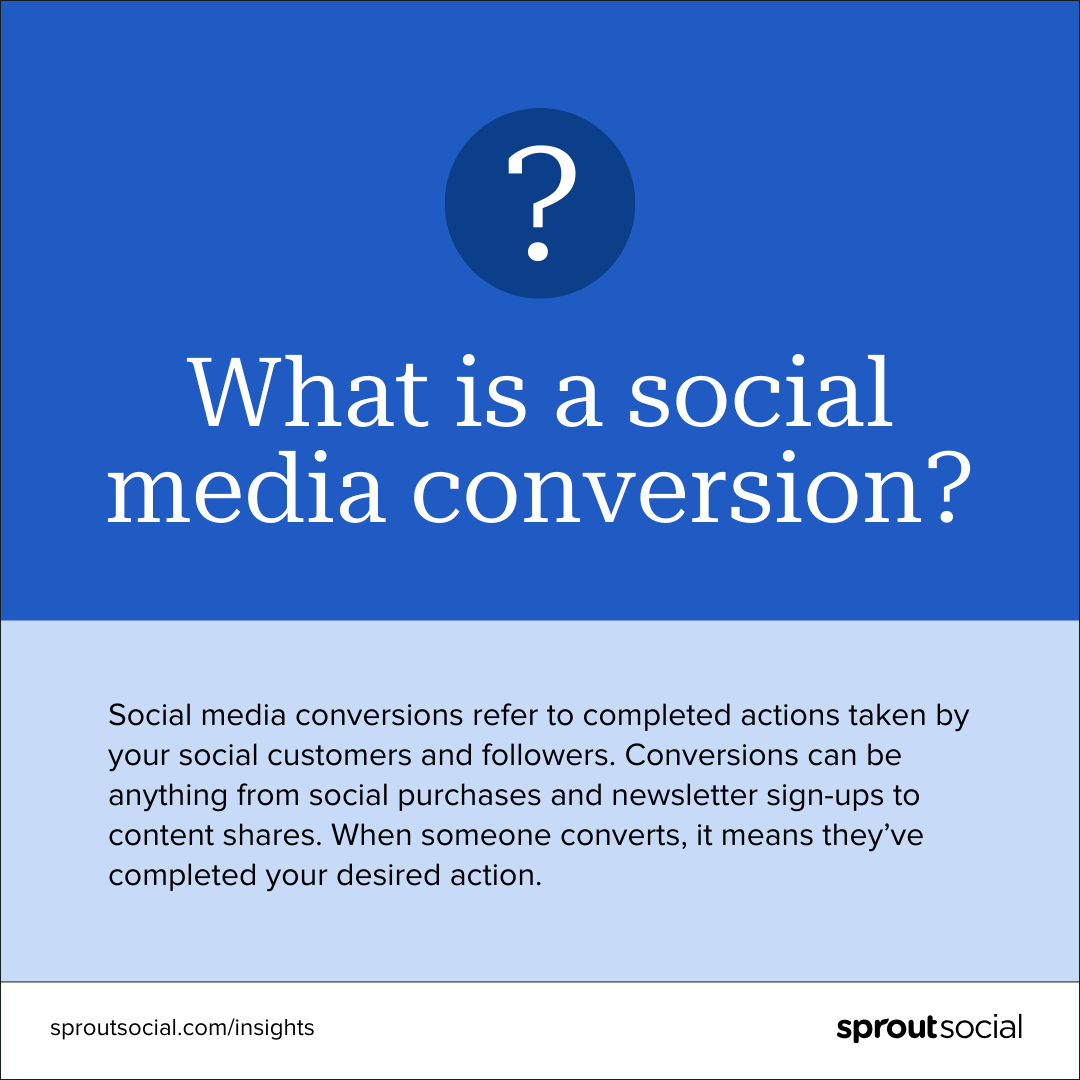
Social media conversions denote completed actions taken by your social customers and followers. Conversions encompass a range from social purchases and newsletter sign-ups to content sharing. When someone “converts,” it signifies they have completed the action you desire.
How to determine social media conversion rate
Determining your conversion rate from social media is relatively simple at first glance.
You just need to divide the total number of conversions (actions) by the total number of people reached.
Here’s a straightforward formula you can use:
Social media conversion rate = (number of conversions / total audience) × 100
For social media conversions, this generally involves examining the organic impressions or reach of a post or campaign. You can also consider Google Analytics or paid impressions for sales-focused tracking.
Calculating conversions is vital for assessing the effectiveness of your social media marketing strategy, presuming you’ve set up conversion-tracking effectively and meaningfully.
Below, we delve into four steps to make it work.
Establish your conversion objectives and funnel
Before delving into analytics, you must clarify your intended outcomes.
Your conversion goals might shift based on the social media campaigns you execute.
For instance, do you seek more newsletter subscribers? Increased website traffic? More leads through social ads? All these are completely valid options, provided they are well-defined in advance.
Monitor your social traffic
For each conversion objective, you must ensure that you can track your desired actions. This will depend on your technology stack and the level of detail you wish to achieve with social media conversions.
For instance, tools like Google Analytics can be employed to observe traffic deriving from your social platforms. From there, you can ascertain key stages customers navigate before taking any particular action.
Consider advancing conversion tracking with tools such as Sprout Social’s URL tracking. This feature lets you create unique, trackable links for your social content, providing accurate monitoring of social conversion rates across posts, ads, and entire campaigns.

Utilize reporting tools
Built-in analytics have limitations when it comes to tracking conversions.
That’s why we advocate for using Sprout’s robust reporting tools to link specific goals and outcomes to your campaigns. This will assist in pinpointing which strategies successfully drive conversions.
For instance, Sprout provides a Web Conversions report for paid campaigns. This report offers a clear insight into how your social ad traffic interacts with your website and how many individuals ultimately convert.

Paired with Sprout’s Link in bio function, you can direct social traffic directly to your preferred landing pages and promotions with click-tracking. Using SproutLink on your social accounts allows you to discover more about your social customers and gain better attribution for your social endeavors.

Examine the data
Your data will reveal what’s effective, what’s not, and where improvements can be made.
If this is your initial experience tracking social media conversions, the outcomes may be enlightening.
For example, you might discover that traffic from TikTok converts significantly more than visitors from Instagram. Alternatively, a certain type of product or post may yield most of your conversions.
You might also find that your initial conversion targets were overly ambitious or that your reporting has gaps. If that’s the case, adjustments can be made for future campaigns.
10 techniques to elevate your social media conversion rate
With tracking established and organized, it’s time to look into ways to optimize.
Here are ten methods to enhance conversion rates within your social media campaigns.
1. Fine-tune conversion landing pages
First things first: the design of your landing pages is crucial for conversions.
Above all, you must ensure a smooth user experience, which involves:
- Creating clear buttons and calls-to-action with clickable areas
- Avoiding excessive imagery or clutter on your landing pages
- Ensuring vital links or calls-to-action are prominently displayed
Moreover, ensure your pages load quickly on mobile devices, as that’s likely where most traffic will originate. Additionally, these landing page examples can motivate your design choices.
2. Intelligently utilize product-specific landing pages
In certain instances, your social media traffic may be directed to a generic landing page.
However, one of the optimal methods to boost conversions is to avoid a one-size-fits-all approach.
Emphasizing a specific product on its own landing page creates a more personalized and coherent customer journey, aiding in conversion rates and minimizing drop-offs.
For example, observe how Krave effectively employs their SproutLink for this purpose.
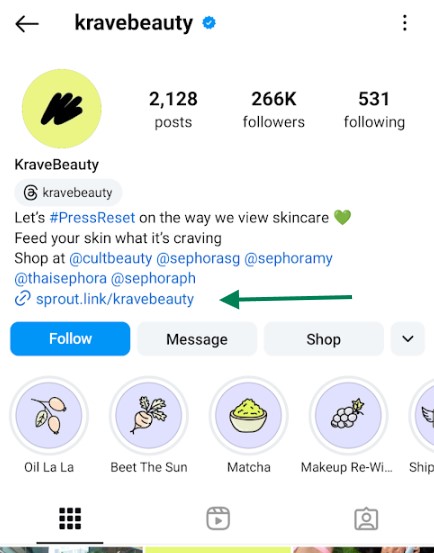
Each of their Instagram images leads to particular product pages and landing pages based on visitor interaction.

This tactic minimizes friction for visitors as they don’t need to search further once they arrive on the site. In essence, you can direct traffic straight to where they need to be to convert.
3. Utilize video to captivate and promote your brand
Videos related to products are closely linked with higher social media conversion rates.
Recognized for enhancing conversions and the time spent on webpage, it’s clear why video-driven posts and ads have become a trend amongst brands. Videos effectively showcase your products in action while attracting the attention of social customers.
Here are some popular types of social video content to consider for elevating conversions:
- Instructional and tutorial videos
- Before-and-after clips
- Reviews and testimonials
From TikTok to Instagram and YouTube, numerous opportunities exist to showcase videos throughout the customer journey. This can encompass organic social posts, ads, and landing pages. Experiment with different formats over time to gauge how video content influences outcomes.
4. Develop compelling calls to action
The effectiveness of calls to action is critical for steering social media conversions.
Ideally, your CTAs should resonate with your offers and content. Refrain from using generic phrases like “Click here” whenever feasible. This applies to your social media landing pages, product pages, and ads.
Below is an example from LinkedIn featuring a relevant “Join Us” CTA aligned with the offer presented.
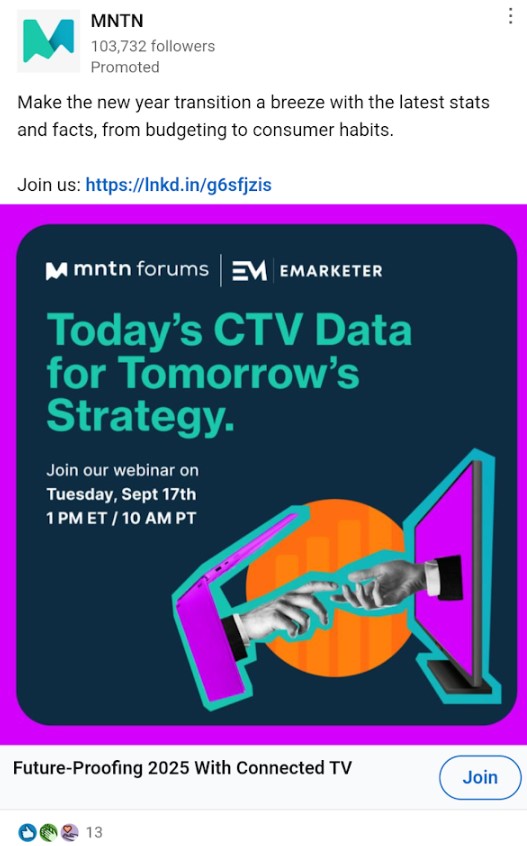
As with most other elements of boosting conversions, experimenting with various calls-to-action can help refine your results over time.
5. A/B testing your posts for enhanced conversion rate
Similar to any marketing metric, analyzing your social media conversion rate involves examining your data. A touch of creative testing pays off.
For instance, do you understand which content types yield the highest engagement, clicks, and website traffic? By analyzing your posts quantitatively, you can modify your content strategy to align with your social media conversion goals.
No brand is going to achieve perfection from the outset. Improving your conversion rate requires a long-term commitment to analyzing and optimizing.
The positive aspect is that tools like Sprout can expedite the process so you don’t have to engage in endless trial-and-error. Features such as the Post Performance Report for content analysis can uncover key traits that resonate with particular audiences.
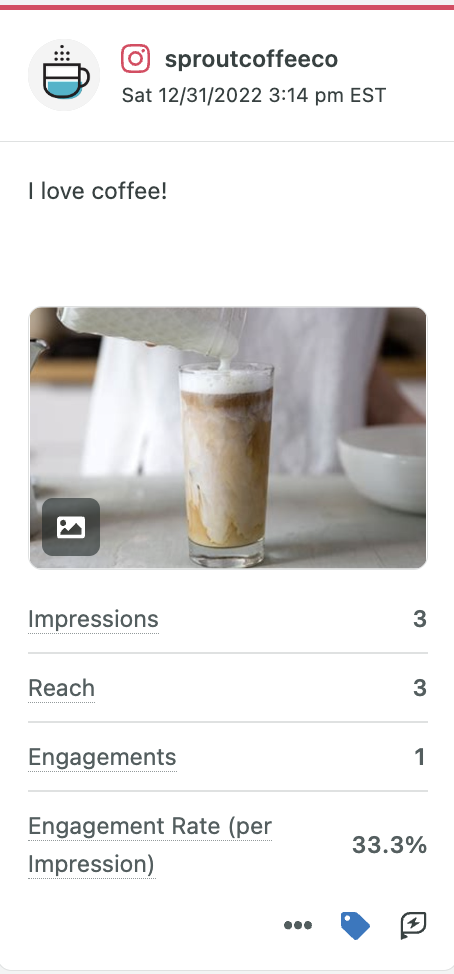
By leveraging these insights, you can more accurately determine what content drives engagement and when. By consistently reviewing your analytics, you can split-test your organic campaigns to identify which posts have the greatest potential for engagement.
6. Maintain brand consistency
Consistency in branding across all touchpoints on various networks is essential.
Once someone questions whether they are on the “correct” site, it’s a negative sign. Elements like color schemes, links, landing pages, and more across TikTok, Instagram, and other channels all contribute to your brand identity.
This fosters brand awareness and familiarity, ultimately improving your conversion rate.
7. Demonstrate social proof with user-generated content
As a form of social proof, user-generated content is unrivaled for promoting social media conversions. Thus, incorporating customer photos, videos, and reviews into your marketing approach is a wise decision.
Enhancing your social media conversion rate doesn’t mean confining these creatives to social media. Utilize them in advertisements, on landing pages, and even on product pages.
Curating user-generated content is a modern expectation for brands and serves as a subtle method to drive sales.
8. Employ social listening to stay abreast of purchasing trends
No market or customer base is entirely static.
Earlier, we indicated that engaging customers is about experimentation and evolution. This necessitates keeping up with industry trends as well as understanding the desires and requirements of your customers.
Sprout’s social listening features simplify understanding what your audience wants and expects from your brand, ensuring your social presence remains dynamic.

From customer feedback about your brand to trending topics worth addressing in sales-related posts, these insights can directly shape your social sales strategy.
9. Harness social commerce for immediate conversions
With social commerce, customers can complete purchases directly from social media posts. This streamlines the process for both shoppers and your marketing efforts to drive conversions.
Consider how you can showcase products directly without having to divert traffic from a post to a specific product page. A quick purchasing process makes it more appealing for customers who might otherwise leave their carts behind or continue browsing in their social feeds.
10. Monitor your social analytics and conversions
With reporting and analytics, you can attribute specific goals and outcomes to campaigns, understanding what converts and what falls short. This entails URL-tracking, recognizing trends among traffic sources, and probing into the quality of your social traffic.
You won’t grasp your performance until you begin benchmarking and examining your social media analytics.
Enhance your social media conversion rate
Customers do not act on social media by mere chance.
Implementing a social media conversion strategy is crucial for any brand wishing to convert their audience through social channels.
A key method for achieving this is having the right technology stack and tools to monitor interactions with your audience.
Gaining deeper insights entails moving beyond basic tools. Features within Sprout enable brands to delve into conversion data for more actionable insights and attribution. Check out our guide on social media reporting to discover how Sprout can assist you in achieving your brand’s social conversion objectives.
The post Social media conversion: 10 Ways to boost your conversion rate first appeared on Sprout Social.

Recent Comments