

It’s time for a unique installment of the Post Performance Report (PPR), a series dedicated to highlighting the social media posts and campaigns that inspire us, while delving into the genius behind them. We explore how your brand can leverage these examples to ignite your own scroll-stopping ideas—optimizing your budget and achieving more with less.
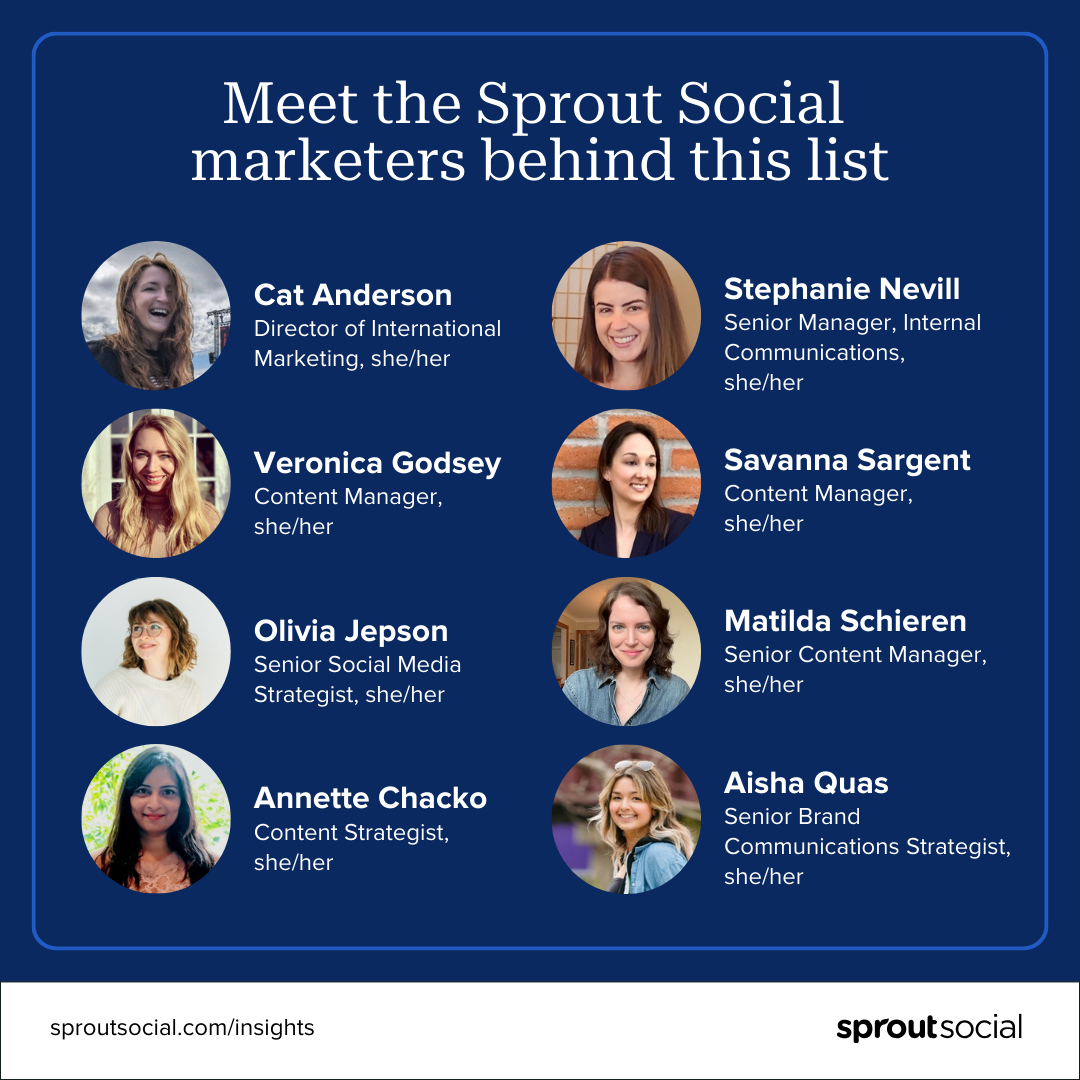
In this year’s end-of-year review, we’re presenting the top brands on social media for 2024, as chosen by members of Team Sprout. These are the brands that caught our attention mid-scroll, that we excitedly shared with friends, family, and colleagues, and were so impressive and surprising that we couldn’t stop discussing them.
Some of these brands may seem familiar, being regulars on the Insights blog. However, others are hidden gems and local treasures. Without further delay, here are our selections for the best brands and campaigns of 2024, categorized by industry.
Food & beverage brands making waves in unexpected places
When you think of food and beverage marketing, you typically picture enticing professional images. Perhaps the occasional cheeky or provocative brand voice. Yet, this year’s most unforgettable brands have excelled on emerging networks and in surprising spaces.
Surreal Cereal: The unlikely LinkedIn sensation
Surreal Cereal, the high-protein, low-sugar cereal brand, is drawing attention on LinkedIn with its latest product launches, brand collaborations, out-of-home ad campaigns, and commentary on quirky aspects of workplace culture.
Cat Anderson, Sprout’s Director of International Marketing, explains what makes their content so captivating. “Surreal Cereal utilizes LinkedIn in the most unconventional, noticeable way I’ve ever encountered. They compose these long-winded 35-slide carousels that challenge viewers to keep reading, cleverly weaving their product into one of the final slides.”
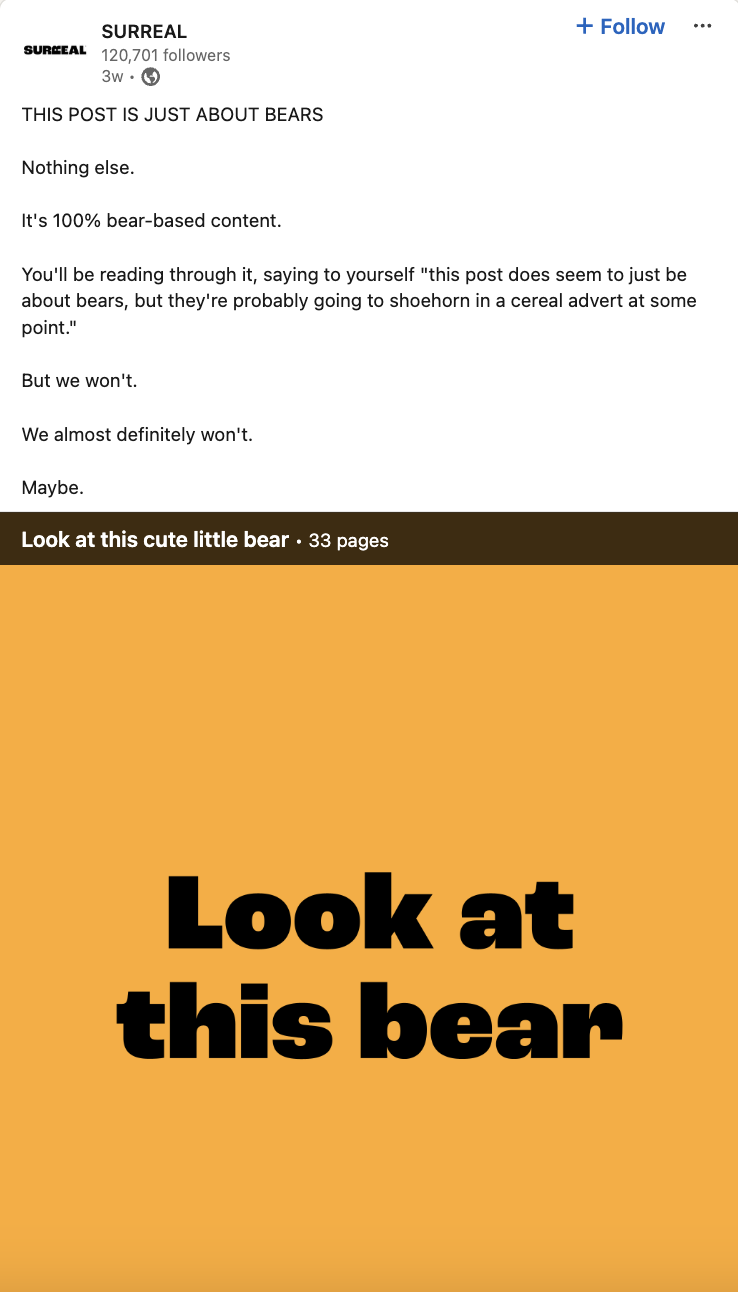
The unexpected nature of both Surreal Cereal’s content and their chosen platform is more strategic than it may appear. According to The 2024 Content Strategy Report, nearly half of Gen X and Millennials are present on LinkedIn—yet, there’s only one notably memorable cereal brand on the site.
Rachael Goulet, Sprout’s Director of Social Media, emphasizes the necessity of diversifying your network strategy to avoid oversaturation. “If both you and your competitors are competing for consumer attention in the same space, it complicates your ability to build a following, receive engagement, and drive conversions. Additionally, you miss out on chances to connect with your audience. Instead of merely blending with the crowd, discover how your audience engages with alternative networks, and carve out room in your strategy and team for innovation.”
The strategy: If you find yourself lost in the algorithm, consider fostering community on new platforms. The secret to replicating a strategy like Surreal Cereal’s lies in preserving your brand voice and resonating with your audience’s interests. This doesn’t entail rigidly adhering to platform norms; often, quite the opposite is true.
Beyond Meat: Thriving on Threads
Beyond Meat is celebrated for its disruptive approach. As the first publicly-traded plant-based meat business, they’re adept at capturing attention. While many brands have developed top-tier strategies on Threads over the past few years, Beyond Meat presents a unique twist on the “unhinged” persona.

Outrageous brand voices are prevalent on platforms like X and TikTok, yet many brands adopt a more reserved approach on Threads. Beyond Meat’s posts often resemble a stream of consciousness rather than a detailed marketing strategy. This method fosters camaraderie among the perpetually online.

At first glance, it might seem that Beyond Meat’s approach on Threads is merely for entertainment’s sake. However, this seems to be part of a broader strategy to reinvigorate its presence in public discourse. Following their historic IPO, the brand faced a campaign questioning the healthiness of its products. This year, Beyond Meat has been working to regain positive sentiment and successfully restore its earnings.
The strategy: Adopting an unhinged social persona poses challenges. Mainly because many have attempted it before with vague motives. Beyond Meat discovered a unique niche on Threads, which contributed to their success. However, a closer look reveals that they carefully reinserted themselves into online culture and cultivated a community of enthusiasts—an integral part of a larger marketing strategy.
McDonald’s x Mets: Grimace, the MLB MVP
McDonald’s has captivated the internet over recent years by reintroducing their character Grimace. The enormous purple entity became a viral hit following the Grimace Shake trend on TikTok in 2023.
In 2024, Grimace (and McDonald’s) joined forces with the New York Mets baseball team. It all commenced when Grimace tossed the first pitch at a Mets game, which sparked a seven-game winning streak. Since then, the lovable purple character has become a staple at Mets games and now even has an honorary seat in the stadium.
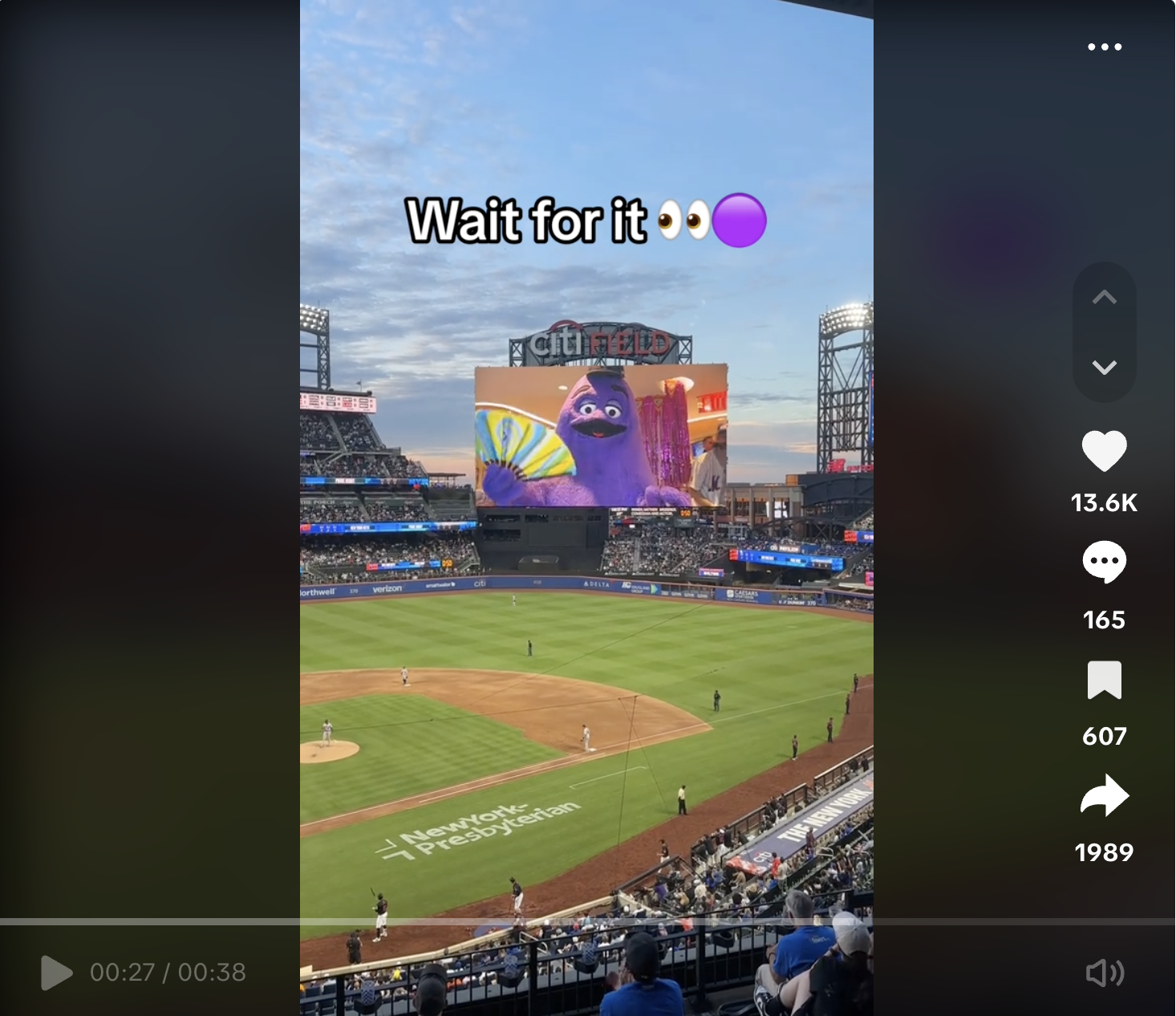
This collaboration has led to additional real-life activations and content, including a takeover of a 7 Train and fans donning Grimace costumes at games. As Olivia Jepson, Senior Social Media Strategist at Sprout, states, “The community surrounding Grimace and the Mets is unparalleled. This partnership is even spawning further collaborations, like with the Metropolitan Transportation Agency, establishing a whole Grimace universe.”
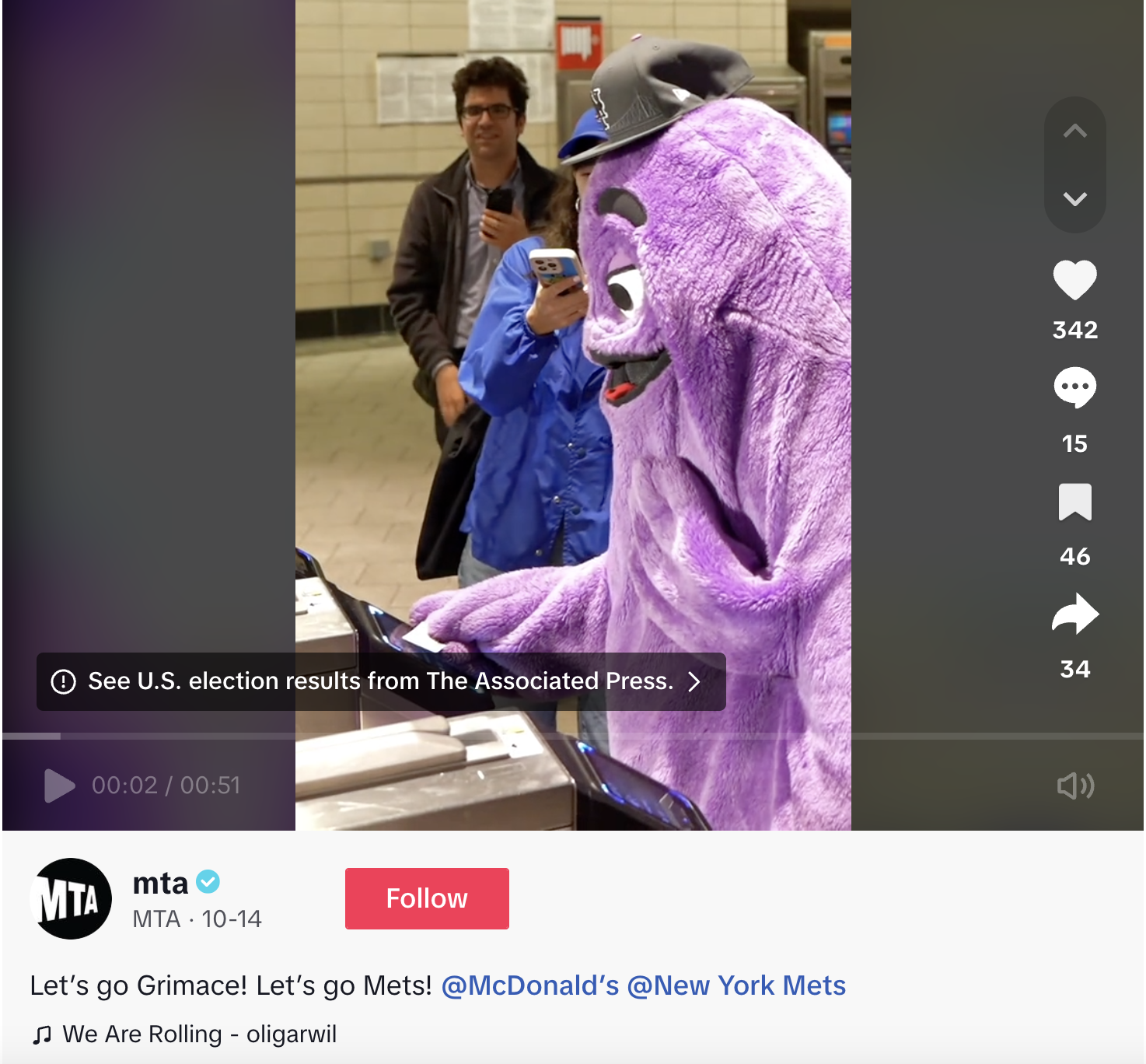
The strategy: Few anticipated that Grimace would emerge as a sports icon and the unofficial mascot of the Mets in 2024. Unexpected as it is, the brand partnership—like all effective collaborations—was authentic and driven by fan enthusiasm. When seeking your next partnership, prioritize what your audience desires above everything.
Electronics & technology companies making humans the focus
When researching “how do tech companies utilize social media,” the first result suggests social marketers discuss products, services, and research breakthroughs.
Technically yes, that’s accurate, and they should do that. However, it’s equally (if not more) crucial to highlight how these advancements benefit people—placing individuals at the forefront of the narrative.
Humanizing a brand on social media is essential to building trust. Almost 80% of consumers believe that a brand’s presence on social media significantly impacts their level of trust in the brand compared to 2023, according to the Q1 2024 Sprout Pulse Survey.
Here are brands putting the human back in personal technology.
Currys: Committing to employee-driven original content
Currys is the leading omnichannel retailer of technology products and services in the UK and Ireland. The first Currys outlet opened in 1884 as a bicycle manufacturing business. Much like personal technology, the brand has significantly evolved over the last 140 years.
Currys serves as a prime example of how to transition a well-established brand into the social media landscape by engaging audience interests, humanizing the brand, and fostering trust with new generations. “Currys is thriving on social media—which may be surprising for a long-standing British electronics retailer. They heavily invest in employee-generated content and execute it effectively. They also have a deep understanding of their audience. For example, they recognize the surging demand for air fryers and prominently feature them in their content,” states Anderson.

The method exceeds merely showcasing their products and team members. Currys employs a distinct sense of humor and trending formats (when appropriate for their brand) to demonstrate their understanding of online culture. However, the truly remarkable part of their approach is their employees—from their delivery and comedic timing to the enjoyment they exhibit while creating the content.
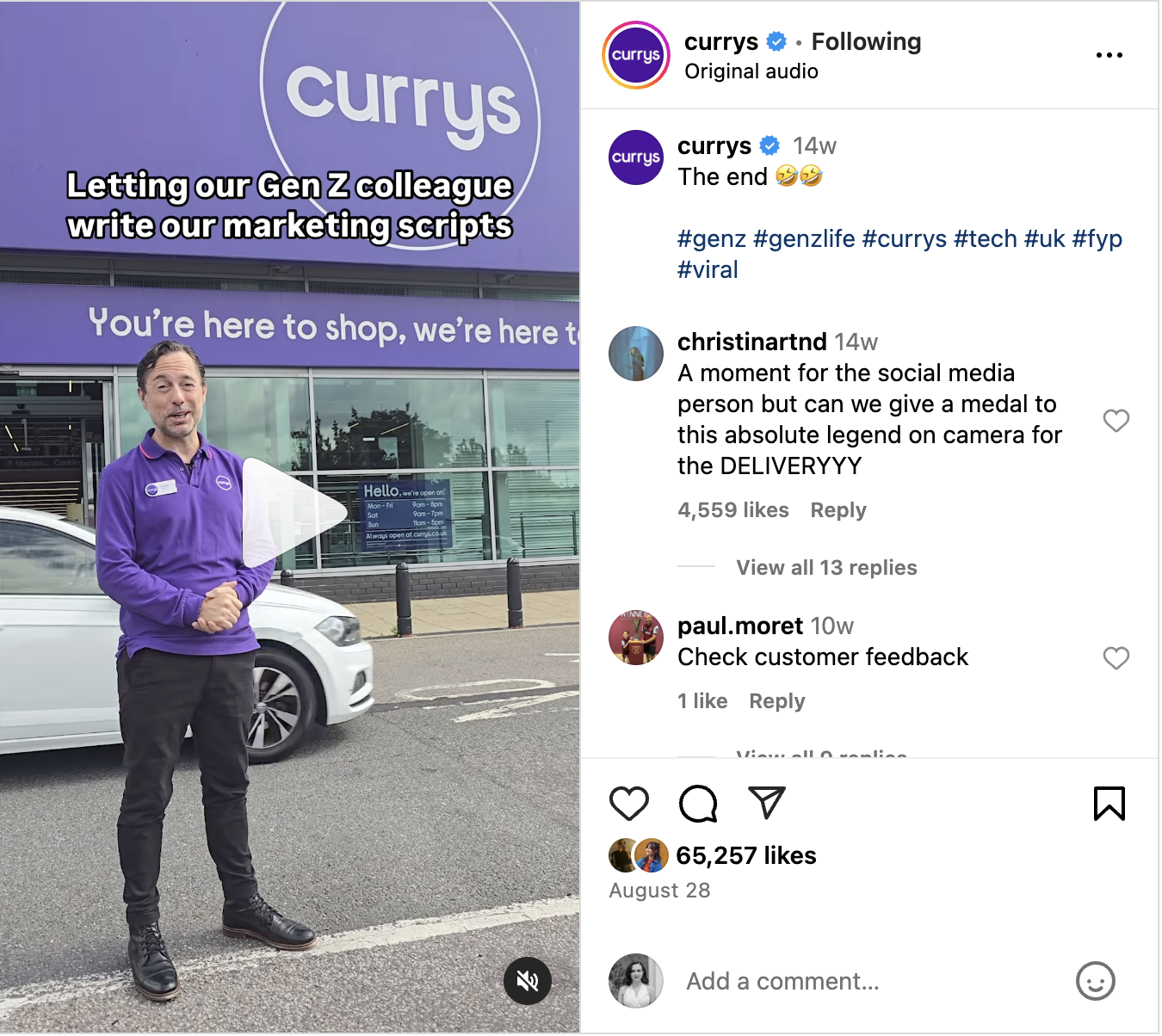
The brand boasts 345 million followers collectively on TikTok, YouTube, and Instagram, the top platforms for Gen Z. Their outstanding online presence may be translating to increased brand awareness and revenue by attracting more visitors to their stores.
The strategy: Understanding your audience—their interests, sense of humor, and unique niches—is crucial for creating a social strategy. Take a cue from Currys and infuse your content with references to cultural touchstones that resonate with your audience. Note: This approach isn’t exclusive to Gen Z. You can leverage humor and inside jokes to effectively engage Millennials, Gen X, and Baby Boomers.
Canva: Their team elevates product launches
Canva’s design platform provides templates and tools for crafting graphics across various marketing channels. This Australian brand is especially cherished by marketers, including those who contributed to this list.
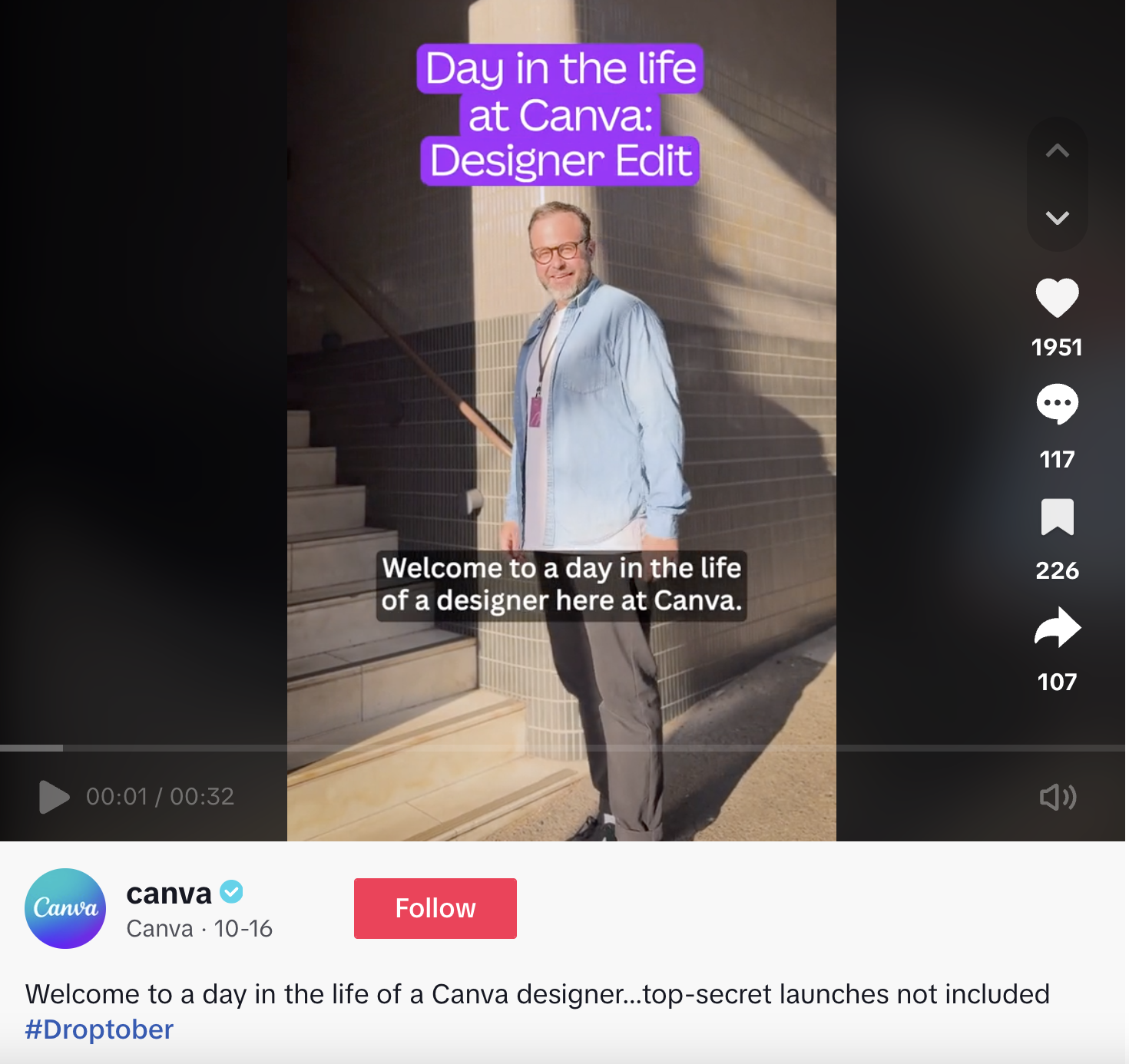
Apart from their product offerings, Canva excels at discussing their technology in a manner that highlights its value to everyday users. According to Aisha Quas, Senior Brand Communications Strategist at Sprout, “I admire Canva’s method of communicating product updates. Their Droptober campaign was an entertaining way to announce feature updates without falling into technical jargon. From the pre-launch teasers to the friendly competition between sales and marketing and even literally featuring team members in the product, it’s hard to pick a favorite from the campaign’s creative elements.”

All their campaigns this year have been overwhelmingly successful, and Droptober was no exception. Per Sprout Social Listening data on X from November 3-December 3, 2024, discussions about Canva and the Droptober initiative demonstrated an impressive 88% positive sentiment.
The strategy: Regardless of whether your industry involves clothing or technology, and whether you’re B2B or B2C, your end users are still people. Resist the urge to overload your social posts and campaigns with jargon. Instead, concentrate on the daily needs of your clientele.
Cisco: The faces of #TechTok
Cisco is a provider of software, networking, and cybersecurity solutions. The company illustrates that even highly technical brands can carve out their niche on TikTok when they share product education content that’s enjoyable, relatable, accessible, and emphasizes human stories.
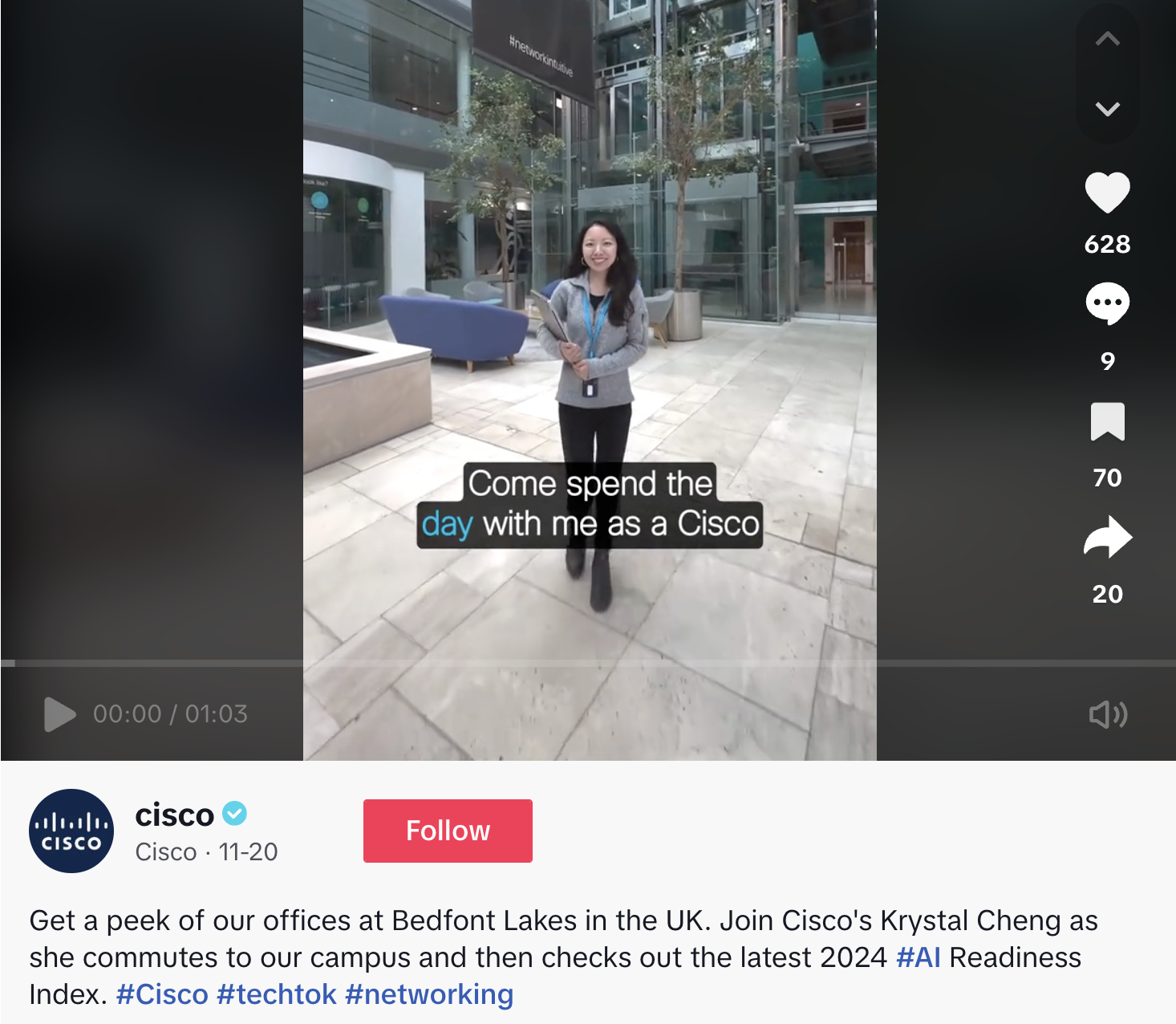
Like this video where viewers follow a Communications Manager at Cisco through her day in London. She utilizes Cisco’s AI in her daily tasks and mentions her company’s latest report on AI adoption. In another video, a team member provides a Gen Z-inspired tour of their Glasgow office.
In this on-site interview, a customer shares how he uses Cisco technology to facilitate his work providing clean drinking water to underserved, remote communities in Colombia.
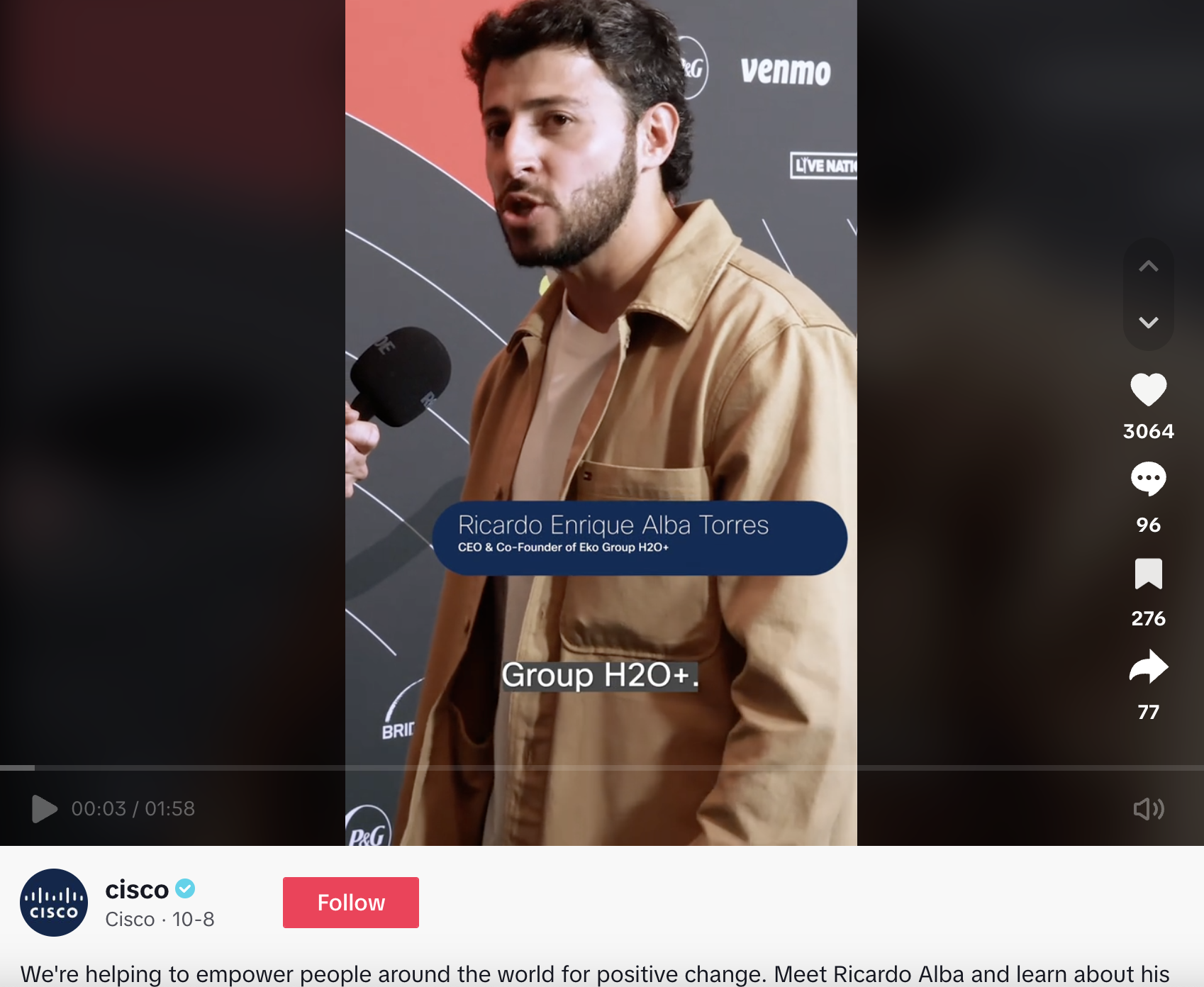
By prioritizing people-first content, Cisco has garnered nearly 121,000 followers and over 869,000 likes on TikTok.
The strategy: There’s room on social media for brands from all industries, even on platforms primarily used by B2C companies. To excel, brands must incorporate a human-focused storytelling aspect into their content.
Nothing: The brand that’s shaking up everything in tech
The British technology brand Nothing designs and reimagines consumer electronics. For instance, they take popular smartphones and redesign them for enhanced camera capabilities and aesthetics, and they re-engineer wireless earbuds for improved comfort, extended battery life, and better sound quality with AI.
The brand is still in its early stages, and much of their marketing revolves around educating consumers about their operations and purpose. CEO Carl Pei is the figurehead of many of their content pieces.
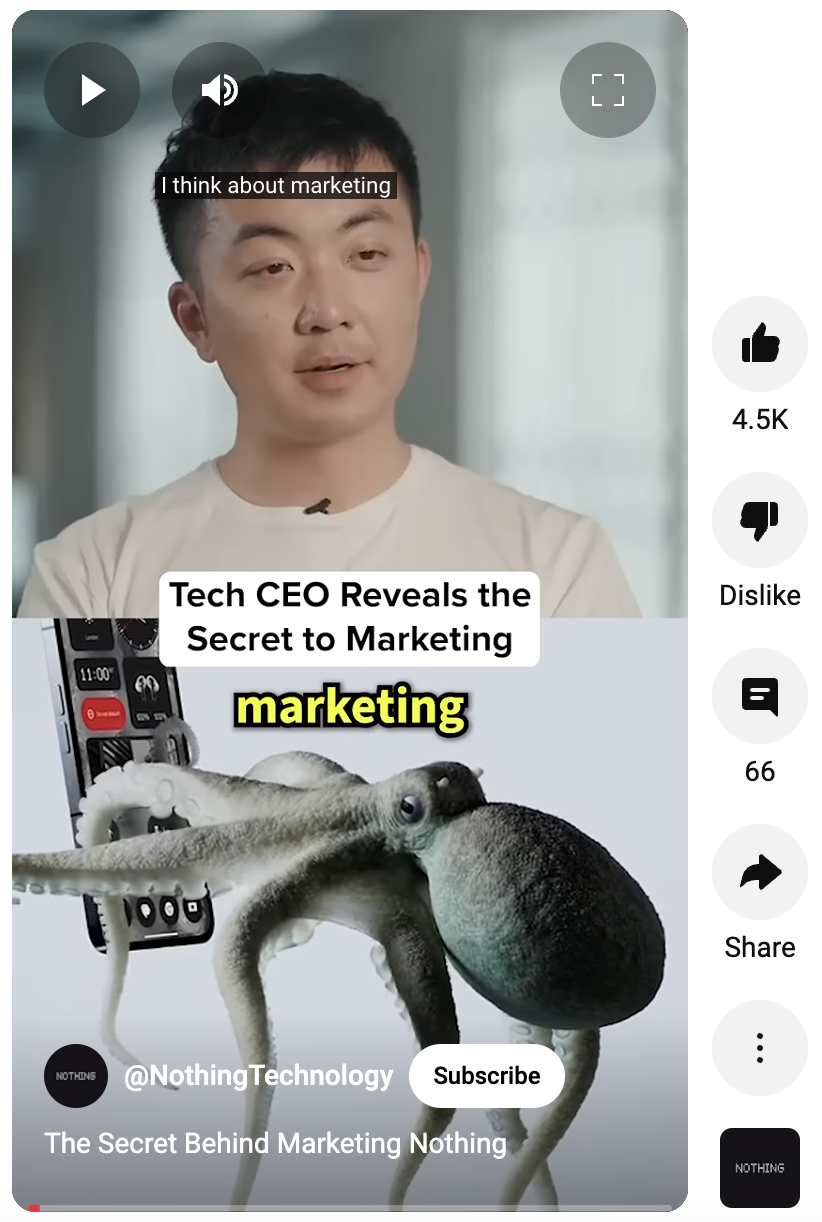
Anderson notes, “Nothing is a brand that doesn’t get enough visibility on social media. Their founder-led content on YouTube Shorts and TikTok is genuinely distinctive. From captivating sludge content to humorously edgy factory test videos, these community-driven product release announcements showcase an alternative outlook in the tech industry.”

The strategy: If feasible for your brand, leverage your C-suite as figures in your social content to amplify your brand’s ethos, particularly if your brand has a disruptive identity. Just ensure they present a distinctive, authentic perspective.
Government organizations embracing humor on social media
Government entities carry a crucial duty to cater to the needs of their constituents, which includes maintaining a presence on social media. Despite the seriousness of their roles, their social media content doesn’t always have to mirror that tone. When suitable, humor can be the best method for government organizations to amplify significant messages. Edutainment content—which educates and entertains—is what consumers are increasingly looking for from organizations, according to a Q2 2024 Sprout Pulse Survey.
Here are some of our favorite government entities redefining social media engagement.
AZ DOT: Delivering transportation updates the social-first way
The Arizona Department of Transportation (AZ DOT) employs social media to inform citizens about transportation safety in Arizona.
According to Savanna Sargent, Manager of Content at Sprout Social, “AZ DOT’s Instagram content improves transparency for constituents by providing updates on roadway work progress and explaining the rationale behind the regulations they enforce. The agency is also recognized for its witty safety messages on highways, to the extent that citizens contribute their own ideas (creating laugh-inducing posts).”
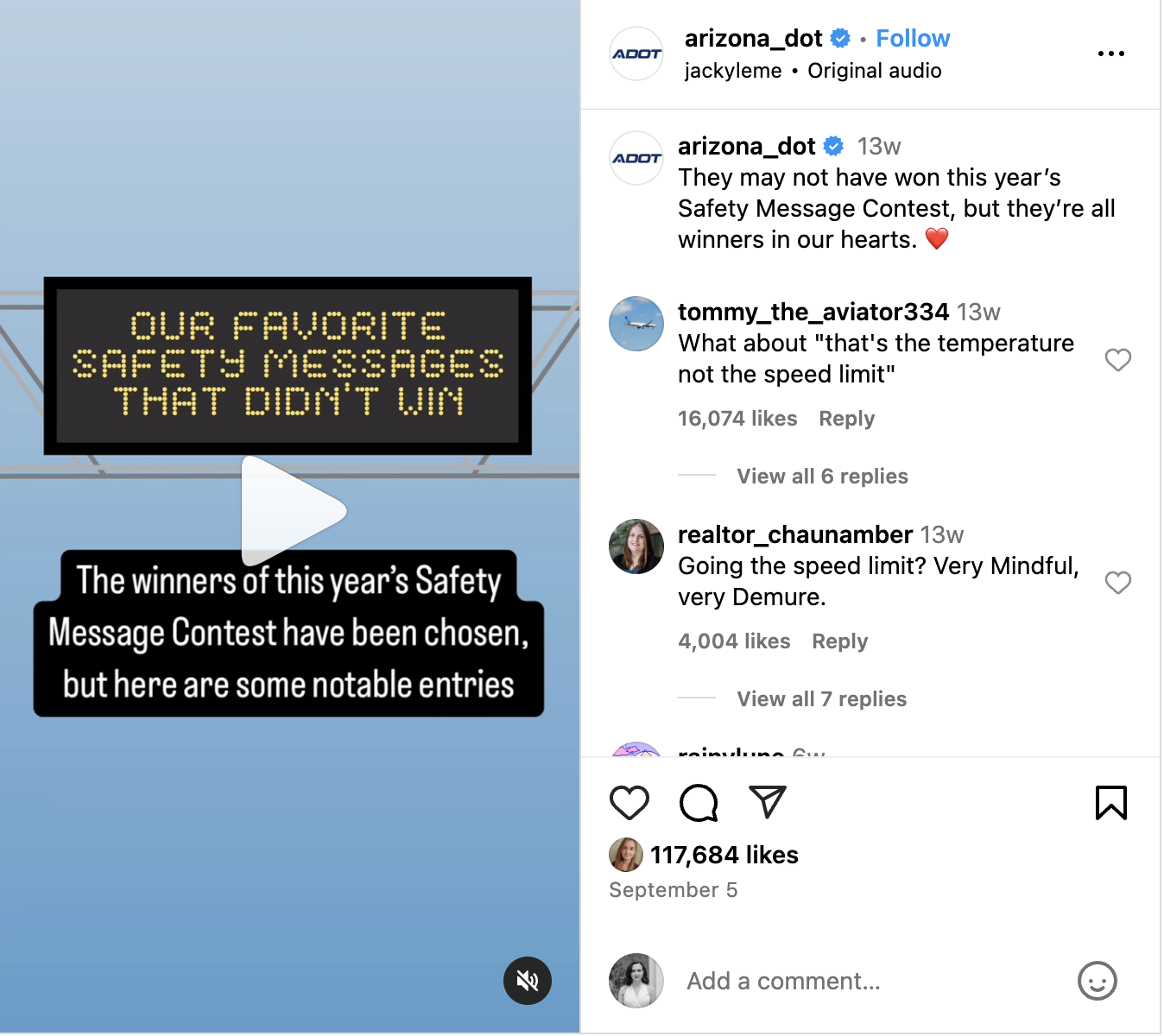
AZ DOT similarly utilizes popular memes to draw attention to important updates, such as guidance for driving in mountainous regions or holiday weekend road closures.

The strategy: The weight of your message doesn’t always necessitate a serious delivery. As demonstrated by AZ DOT, humor and online culture can effectively enhance clarity in communication.
TSA: Transforming its image from foe to friend
The Transportation Security Administration (TSA) is a US government agency committed to ensuring the safety of all transportation modes, including highways, railways, mass transit systems, and notably, airports.

Its role is undeniably significant. Yet, on social media, the TSA has developed a reputation as a “pun princess,” as noted in their Instagram bio. Senior Manager of Internal Communications, Stephanie Nevill, adds, “TSA’s Instagram handle is ‘Travel Tips and Dad Joke Hits.’ They maintain a strong social presence despite being a governmental entity.”

The strategy: The TSA realizes that transportation regulations aren’t the most thrilling topic. Many travelers find screening processes frustrating. By injecting humor into the relationship between the agency and airline passengers, the TSA can more effectively communicate rules and regulations. If your brand operates in a “serious” sector or faces substantial consumer feedback, think about how you can approach common concerns or inquiries with lightheartedness.
National Park Service: Merging education and entertainment
The National Park Service (NPS) oversees all natural, historical, and recreational areas in the US. Their mission is to protect wildlife, landmarks, and the visitors who frequent them, making their responsibilities quite significant.

On social media, the NPS shares animal facts to encourage visitors to keep a safe distance. They also highlight park rangers, picture-perfect moments, and nature facts. They manage to deliver this messaging with a distinctive sense of humor that is undeniably engaging.
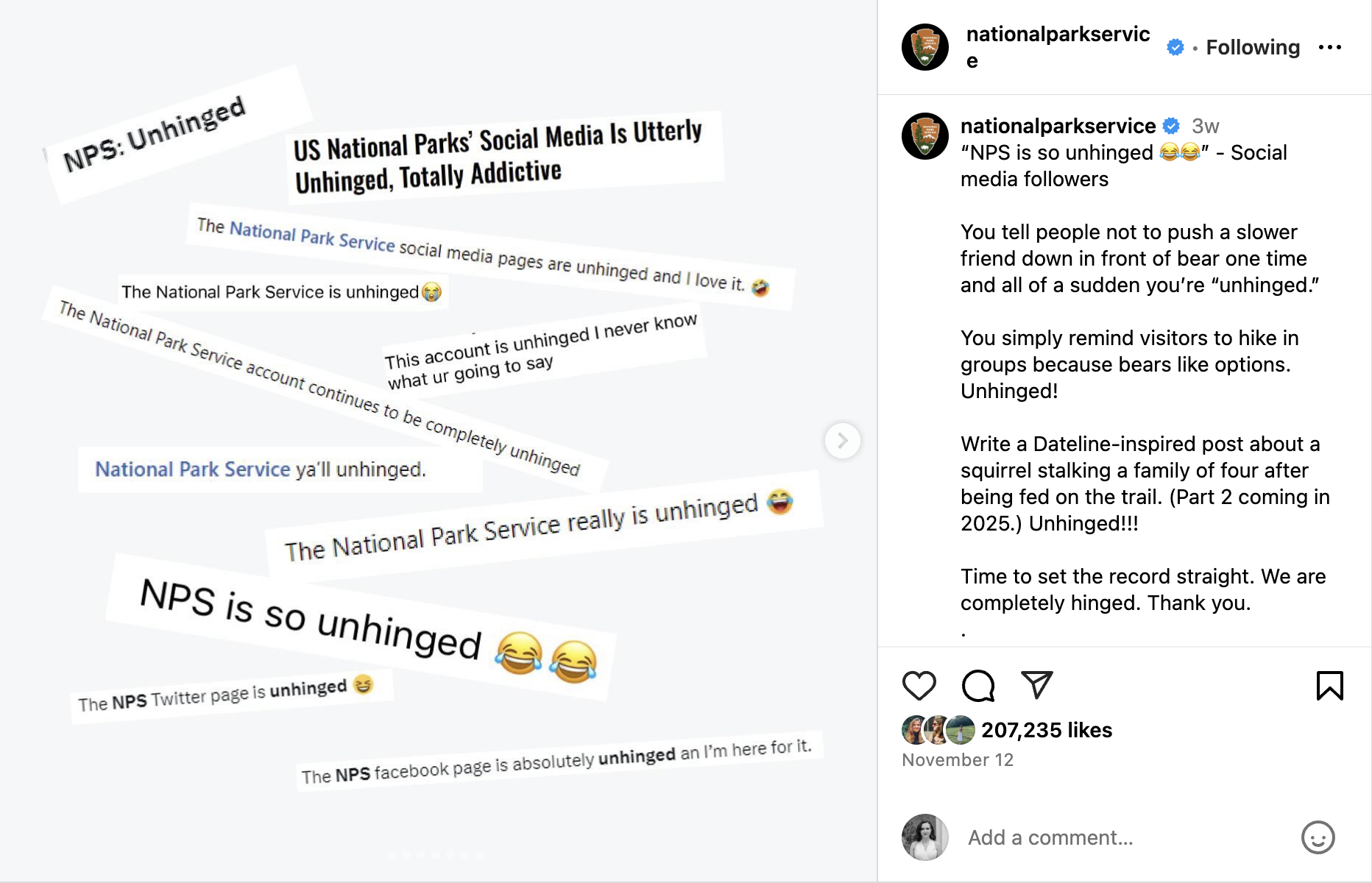
Nevill comments, “I frequently find myself resharing posts from the NPS with friends and colleagues in communications. The agency excels at presenting information in the most surprising ways. Their awareness of the buzz their posts create online is quite charming.”
The strategy: NPS packages educational content in a humorous and entertaining format. Taking inspiration from the NPS, implement edutaining content to raise awareness and cultivate a loyal community.
Retail brands creating significant cultural moments
According to a Q4 2024 Sprout Pulse Survey, 89% of consumers were motivated to make a purchase by brand-related social content during this holiday season.
While social media is important across all sectors, retail brands see the most immediate connection between their online engagement and financial success. The 2024 Content Strategy Report indicated that consumers are most willing to buy when they observe a product or service in action, underscoring social’s role as the contemporary shopping mall. Yet, platforms are nearing a point of maximum saturation, pushing retail marketers into a state of creative exhaustion.
Our favorite brands are forging ahead—creating their own cultural moments and embedding themselves into trends in truly unique ways.
Jacquemus: Infusing surrealism into social media
The French label Jacquemus is renowned for its surrealist social media content as much as for its whimsical designs inspired by Parisian fashion. Their social presence is integral to their brand identity and plays a crucial role in maintaining their relevance.
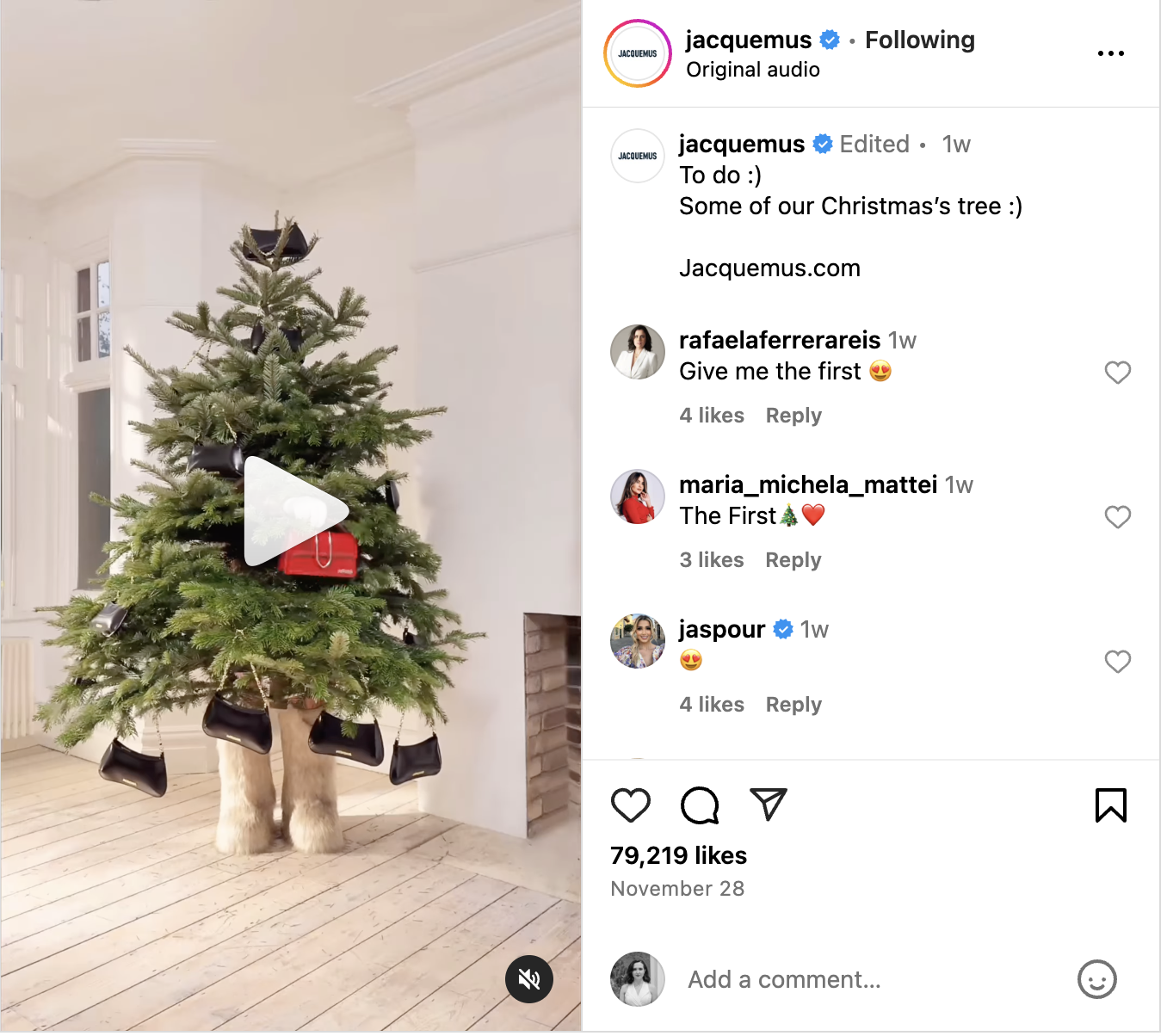
Anderson adds, “Jacquemus’ social content prompts users to question what they just witnessed. It resembles an Easter egg hunt, sparking curiosity about what bizarre discovery awaits next. Their style of video content tantalizes the dopamine receptors in viewers’ brains. While other brands have achieved surrealism, Jacquemus’ perspective feels refreshingly distinctive.”

Jacquemus’ global expansion—with newly established stores in London and New York City—demonstrates the success of their digital-first strategy. The fashion brand’s rapid and sustained growth stands in stark contrast to many other luxury retailers that have faced ongoing difficulties in 2024.
The strategy: Social media shouldn’t merely be another task on your marketing checklist. Brands that excel make social the core of everything they do. Social activities—including content creation, community engagement, and trend observation—should inform every other aspect of your approach.
Away: Transforming online trends into brand excitement
The premium luggage brand Away emerged as a breakout star in 2024. They found innovative ways to incorporate their suitcases (literally) into the most talked-about moments of the year. However, they didn’t simply replicate trends, as that tactic generally doesn’t lead to long-term success. Instead, they reimagined these instances with their brand at the forefront, beginning in January with their response to Calvin Klein’s Jeremy Allen White advertisement.
While other brands resorted to fire emoji reactions and somewhat suggestive comments, Away took a more creative route. They adorned one of their suitcases with Calvin Klein underwear and recreated the ad (with the skyline as a backdrop). Jepson comments, “I will always remember the Calvin Klein Away moment. It was a masterclass in swiftly leveraging a social conversation.”

They also ingeniously referenced Beyonce’s recent album launch and the 2024 summer games. In a nod to their Calvin Klein recreation, the brand recently collaborated with winners from local celebrity lookalike contests, including Chicago’s own Jeremy Allen White lookalike.

The competitive suitcase market is overflowing with brands. By embedding their brand into the most talked-about moments of the year, Away gained invaluable visibility and established its position as the industry frontrunner.
The strategy: While there’s much discussion in the social media realm about the necessity of original content (see the following section for more insights), there remain opportunities for brands to partake in trending dialogues. However, there is a significant distinction between merely participating in a trend and crafting your own cultural narrative. Before deciding to recreate a trend, consider: “Is this something any brand could do, or is it intrinsically linked to our products and identity?”
Local spotlight: Mastering the creation of original content
Social media saturation is increasingly creating challenges for marketers to keep up with the demand for content and discover imaginative strategies to stand out. Original content presents a route to achieving reach and significance. According to The Sprout Social Index™, nearly four in ten consumers state that the most memorable brands on social prioritize original content over merely following trends.
Here are a few of our favorite local heroes and small enterprises illuminating the way for brands of all sizes.
Andy Warhol Museum: Utilizing what they have available
The Andy Warhol Museum located in Pittsburgh, Pennsylvania, is a celebration of the famous artist and his influence. On social media, the museum recounts Warhol’s contributions to art, reflects on his iconic media moments, and shares personal stories about their experiences with the artist.
Matilda Schieren, Senior Content Manager at Sprout, shares her thoughts on what makes their content intriguing: “I’m impressed by what the Andy Warhol Museum is doing on TikTok. They’ve created several original series that effectively highlight their knowledgeable staff, such as the Red Couch series, along with their rich archival footage featured in “15-Second Fridays.”

The strategy: As you develop your original series, leverage what you already possess—whether it’s internal experts, archival materials, or your brand’s legacy.
Hamilton Humane: Saving lives one animal at a time
Hamilton Humane is an animal shelter located near Indianapolis, Indiana, that emphasizes its open admission and no-kill policies. Given their capacity to take in numerous animals, the shelter faces heightened pressure to secure loving homes for each animal, which is where their social media presence comes into play.
Veronica Godsey, Content Manager at Sprout, states, “Hamilton Humane excels at narrating each pet’s story to enhance their chances of adoption.” In their posts, the shelter introduces animals in the first person, allowing each pet to narrate its own story. These pictures and captions tug at heartstrings significantly.

Godsey adds, “They also incorporate updates, such as adoption success stories of pets who found homes, and partner with local businesses to host (and promote) events that align with their mission in an engaging manner.”

The strategy: The most effective original content amplifies your brand’s aims or mission. For nonprofit organizations like Hamilton Humane, this is a perfect opportunity to introduce the people and animals you support.
The Crab Museum: Contextualizing crabs through memes
The Crab Museum in Margate, England, is Europe’s premier crab museum (and the continent’s sole crab museum, according to our findings). As stated in their Instagram bio, the museum offers a “delightfully perplexing tourist attraction.”

On social media, the brand has cultivated a following by embracing absurdity and meme culture. Their posts revolve around their passion for crabs and educating audiences about “crab facts,” primarily through their uniquely crafted memes. They also tackle environmental and social issues using this recognizable content style.

The Crab Museum has received accolades for their online presence, been recognized for their social media contributions by prominent media organizations like The New York Times and The Guardian, and welcomed 80,000 visitors last year.
The strategy: When contemplating the creation of your original content and formats, it may appear to be labor-intensive. However, leveraging memes and static posts makes it more approachable.
Seek inspiration across brands and sectors in 2025
This concludes our inaugural year of the PPR franchise. It serves as a profound reminder of the inspiration social marketers can derive from various industries, organization types, sizes, and regions.
Stay tuned for the upcoming year and future editions of PPR, which will spotlight brands that excel at creating original content, emerging on unexpected platforms, and much more.
In the interim, keep these key takeaways in mind:
Post Performance Report Takeaways
- Prioritize people in everything you do. Humanize your brand by showcasing staff. Familiarize yourself with the subcultures and niche interests that resonate with your audience. Watch for the conversations gaining traction with your audience. Center your strategy around entertaining them.
- Engage in the unexpected. The social media landscape is continuously evolving. Don’t hesitate to experiment. Identify the void in your industry or on a new platform. Just be sure to remain authentic to your brand.
- Be at the forefront of online culture. Attempting to replicate every trend will exhaust your team and lead only to short-lived success. Create enduring relevance through original content and meaningful brand relationships.
And if you encounter a social post or campaign worthy of recognition, tag us @sproutsocial and use #PostPerformanceReport to have your idea featured in a forthcoming article.
The post PPR special edition: The best brands on social media in 2024 originally appeared on Sprout Social.

Recent Comments