
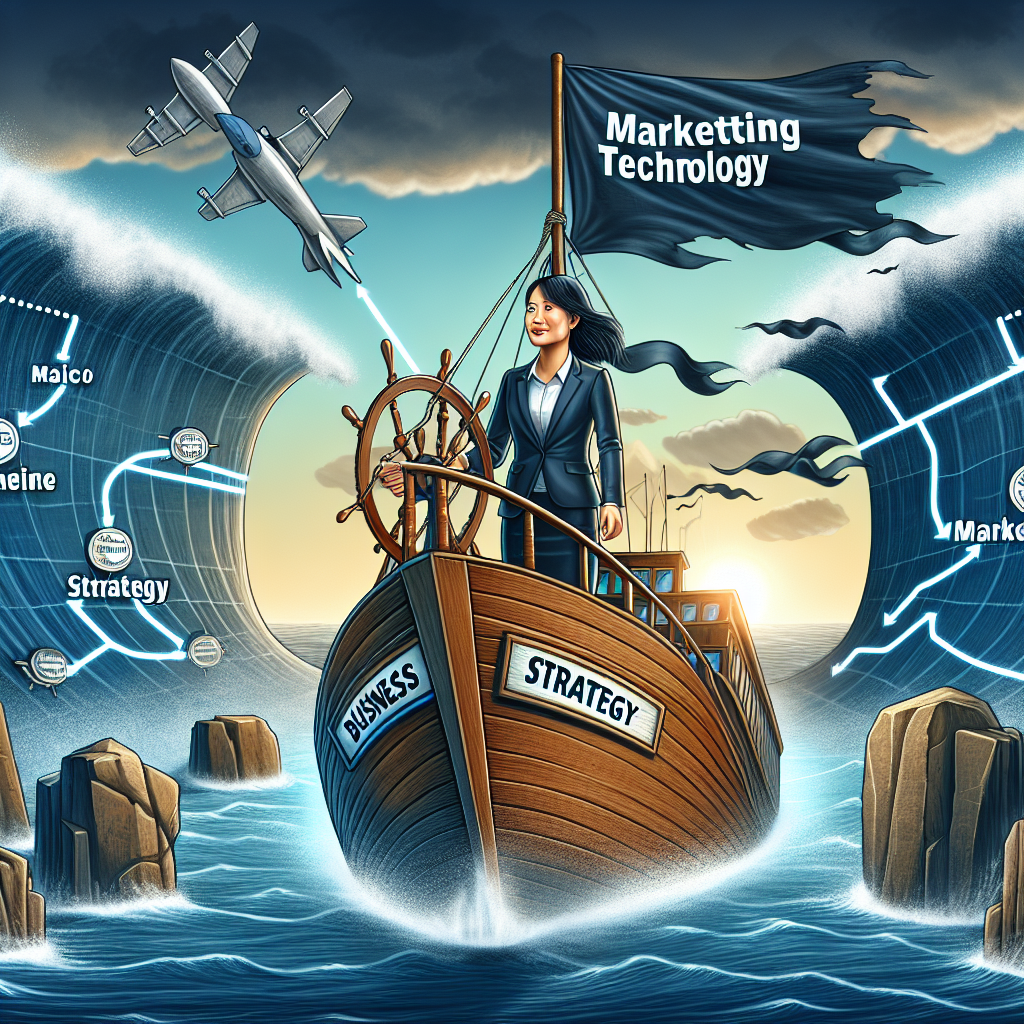
Let’s discuss the elephant in the room: is your martech stack aligned with your business goals? This isn’t just a “check-in now and then” thing. It’s about making sure your marketing technology investments are more than just fancy tools. They should be strategic assets, a vital and consistent part of your overall business strategy.
If you subscribe to Gartner’s opinions, you’re probably spending most of your time building an AI-enabled marketing team for 2024. However, this alignment I’m talking about is considerably more consequential. It ensures that the martech you already invested in — and may buy in the future — supports and actively enhances the company’s goals and customer experience (CX).
But what exactly does alignment involve, why is it essential and how can you, the CMO, make it happen? The answers to these questions lie in understanding the intricate relationship between you, your martech and your company’s broader objectives.
Understanding alignment in martech
Alignment in martech means ensuring that every martech platform, tool or service (we’ll use the term “tools” to represent all three going forward) used by the marketing organization contributes towards the company’s overall goals.
This isn’t about having the latest tools but the right tools that complement and enhance the company’s business, marketing, CX and technology strategies. In a rapidly churning digital landscape, it’s about staying aware of trends and ensuring your martech stack is adaptable and scalable.
The importance of alignment
The importance of this alignment can’t be overstated. Disconnected martech stacks describe situations where the marketing technology tools and platforms a company uses are not correctly integrated or aligned with the company’s overarching business strategies and goals. This disconnection can manifest in several ways:
- Lack of integration. When different tools in the martech stack don’t communicate or share data effectively, leading to silos of information.
- Misalignment with business goals. The technology may be advanced or wildly popular, but it doesn’t support or enhance the company’s objectives, such as customer engagement, market expansion, or revenue growth.
- Inefficient processes. Without alignment, marketing efforts might not fit or work well with other departments like sales or customer service, causing process inefficiencies.
- Poor data utilization. Disconnected martech stacks frequently fail to leverage data effectively, missing out on insights that could drive strategic decisions.
By understanding these challenges, you can proactively ensure your martech strategies align with current and future business objectives, accommodating market dynamics and consumer behavior shifts. Plus, effective martech alignment has broader market implications, like:
- Setting industry standards for customer engagement.
- Driving innovation in marketing strategies.
- Influencing competitive dynamics within the industry.
As companies increasingly adopt data-driven and technology-integrated approaches, those who focus on and excel in martech alignment could shape market trends and consumer expectations.
Dig deeper: Why you should always ask why: Strategy must lead tactics in marketing planning
The role of the CMO in alignment
It might sound counter-intuitive, but the CMO is pivotal in aligning martech with business strategies. You must understand the technological aspects and the company’s goals and strategy. Beyond selecting the right tools, you must lead the way (ideally in partnership with the CTO or CIO) in fostering a culture where technology bridges business outcomes.

Take Martech’s 2024 Salary and Career Survey
From AI to layoffs, it’s been quite a year. We’d like to know how it’s been for you. Please take this short survey so we can have your input on the state of martech salaries and careers.
This involves navigating challenges such as ensuring team buy-in, training staff to use new tools effectively and keeping up with a sometimes wild pace of technological change. This work requires a blend of technical knowledge, strategic thinking and cross-functional collaboration. To achieve alignment:
- Audit and evaluate your current martech. Understand the existing martech landscape. Assess how each tool aligns with business goals.
- Define clear objectives. Set specific, measurable objectives that align with the company’s overall strategy.
- Select the right tools. Choose tools that meet current needs and can scale and evolve with the company.
- Integration and implementation. Integrate new tools with existing systems to enhance their collective superpowers.
- Continuous monitoring and optimization. Regularly review and adjust the martech stack to ensure it continues to align with evolving business strategies.
- Cross-functional collaboration. Work closely with other departments, especially sales, to ensure that martech supports broader business objectives.
Dig deeper: Unifying the C-suite: A roadmap for CMO-CTO partnerships
Benefits of alignment
Like a healthy spine, a well-aligned martech stack has many benefits.
- For the CMO, it translates into more strategic influence and the ability to demonstrate clear ROI on martech investments.
- For the business, it means more efficient operations, better customer insights and improved agility in responding to market changes.
- Customers benefit through improved experiences, more relevant communications and overall satisfaction.
Case study: Transforming martech in a fashion retail company
In this illustrative case study created from real-world consulting engagements, StyleBoutique, a made-up fashion retail chain, faced challenges with a disjointed marketing technology stack, including:
- Ineffective email marketing.
- An underutilized Digital Experience Platform (DXP).
- An inefficient customer relationship management (CRM) platform.
- Fragmented analytics tools.
Their journey is a compelling example of strategic martech alignment.
Challenges and goals
- Business goal: Boost online sales and enhance market competitiveness.
- Marketing goal: Improve campaign personalization and efficiency.
- Customer experience goal: Provide engaging, unified customer experiences.
- Technology goal: Achieve quick wins in martech optimization for immediate impact.
Strategic solutions
- Email marketing revamp. Implemented targeted email campaigns using existing data, resulting in a significant uptick in customer engagement.
- DXP utilization. Leveraged the DXP’s existing capabilities for improved online customer interactions, dramatically enhancing the user experience.
- CRM data cleanup. Conducted a quick audit and cleanup of CRM data, improving the accuracy of customer segmentation.
- Analytics integration. Unified existing analytics tools for a clearer view of customer behavior, enabling more intelligent marketing strategies.
- Cross-departmental workshops. Initiated short, focused workshops to align marketing, sales and IT teams, creating a more cohesive approach to using martech.
Outcomes
- Sales impact. An impressive 15% increase in online sales within a short period.
- Customer engagement. Enhanced through more relevant and personalized email campaigns.
- Operational efficiency. Improved with streamlined analytics and cleaner CRM data.
- Quick adaptation. Rapid alignment of teams led to a more agile response to market and customer needs.
This case study underscores the importance of aligning martech with business strategies. The company boosted sales and customer engagement by pragmatically leveraging existing tools for quick wins, setting a precedent for how strategic martech alignment can quickly transform business outcomes.
Dig deeper: Marketing technology optimization: The path to peak martech stack performance
Transform business outcomes through aligned martech
Aligning marketing technology with a company’s broader strategies is not just a technical effort but a strategic one. It demands a visionary CMO who understands the interplay between technology and business.
By achieving this alignment, companies can transform their martech stacks from a motley collection of tools into a strategic asset that drives business growth and enhances customer experiences. The case of StyleBoutique vividly illustrates the transformative power of a well-aligned martech stack and serves as an inspiring example for businesses across diverse industries.
Now, it’s your turn. Take a moment to reflect on the alignment of your martech stack. Are your marketing technologies fully supporting and enhancing your company’s strategic goals? If not, it’s time to do something about it.
Start by auditing your current martech stack, setting clear objectives and ensuring each tool and strategy syncs with your business’s broader objectives. And remember, the journey of martech alignment is continuous and evolving — you need to start today to stay ahead.
The post The CMO’s guide to aligning martech and business strategy appeared first on MarTech.
As the role of the Chief Marketing Officer (CMO) continues to evolve, it’s becoming increasingly important for marketing leaders to align their technology investments with their overall business strategy. With the proliferation of marketing technology tools and platforms, it’s easy to get caught up in the latest trends and lose sight of the bigger picture. However, by taking a strategic approach to marketing technology, CMOs can ensure that their investments are driving real business results.
The first step in aligning marketing technology and business strategy is to have a clear understanding of the company’s overall goals and objectives. This means working closely with other members of the executive team to ensure that marketing efforts are aligned with the company’s vision and mission. Once the CMO has a clear understanding of the company’s goals, they can begin to evaluate which marketing technologies will best support those objectives.
One key consideration when selecting marketing technology is to ensure that it integrates seamlessly with other systems and tools already in use within the organization. This includes everything from customer relationship management (CRM) systems to analytics platforms. By selecting technologies that work well together, CMOs can create a more cohesive and efficient marketing ecosystem.
Another important factor to consider is the scalability of the technology. As the company grows and evolves, its marketing needs will change. It’s important to select technologies that can grow and adapt along with the company. This means looking for solutions that offer flexibility and customization options.
Once the right technologies have been selected, it’s important to ensure that they are being used effectively. This means providing training and support to the marketing team to ensure that they are able to fully leverage the capabilities of the tools at their disposal. It also means regularly reviewing and analyzing the performance of the technology to ensure that it is delivering the desired results.
Finally, it’s important for CMOs to stay up-to-date on the latest trends and developments in marketing technology. This means attending industry conferences, reading trade publications, and networking with other marketing leaders. By staying informed, CMOs can ensure that they are making informed decisions about their technology investments and staying ahead of the curve.
In conclusion, aligning marketing technology and business strategy is a critical task for today’s CMOs. By taking a strategic approach to technology investments, CMOs can ensure that their marketing efforts are driving real business results. This means having a clear understanding of the company’s goals, selecting technologies that integrate well with existing systems, ensuring scalability, providing training and support, and staying informed about the latest trends and developments in the industry. By following these guidelines, CMOs can create a marketing technology ecosystem that supports their company’s overall business strategy.

Recent Comments