

Governance is the key to ensuring that program goals are met during implementation of a digital asset management (DAM) system, as well as for future use of the system.
“Ultimately, it’s the only way to manage and mitigate risk for your DAM,” said John Horodyski, managing director for Salt Flats, and a MarTech contributor, in a session at The MarTech Conference. “And while governance is often misunderstood as a set of rules, it is so much more than that.”
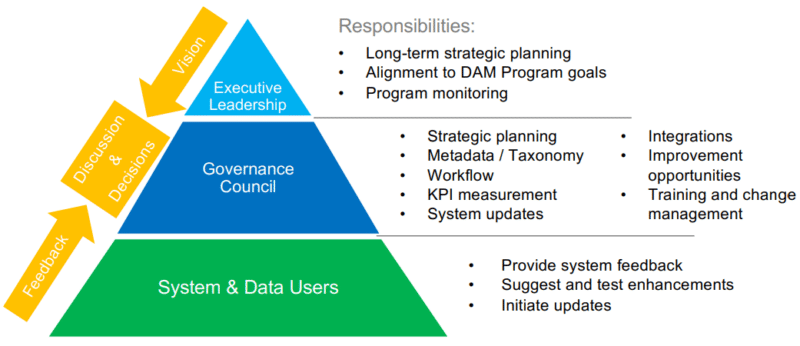
Best practices for DAM governance call for three main tiers of stakeholders, described below. Each tier has different responsibilities and levels of influence on governance.
“It’s important to note that governance demands a cultural presence and footprint [in the organization], especially in global companies,” said Horodyski.
System and data users
These are the team members who are working in the DAM on a regular basis. They provide feedback on how well processes and workflow are going.
“They’re suggesting and testing enhancements to the DAM, and also updates,” Horodyski said.
Executive leadership
At the top of the governance structure are the executives.
“[The executives] are focused on long-term strategic planning alignment to any sort of DAM program goal, as well as monitoring the system,” said Horodyski.
Take Martech’s 2024 Salary and Career Survey
From AI to layoffs, it’s been quite a year. We’d like to know how it’s been for you. Please take this short survey so we can have your input on the state of martech salaries and careers.
Governance council
In the middle of the governance structure sits the governance council. They receive the goals from the executive leadership, as well as the feedback from DAM system users.
The governance council manages a full range of responsibilities related to DAM processes. These include strategic planning, metadata and taxonomy, workflow management, KPIs, system updates, integrations and DAM training.
Dig deeper: DAM expert Rachel Edwards on finding the perfect balance of metadata
Taken as a whole, this governance committee is essential to managing DAM implementation and updates. They are the people who make change possible and ensure that your organization’s DAM is adaptable for years to come.
In addition to people, here’s more information about the three other essential components of a flexible future-proof DAM:
It’s no simple thing to create, but it is more than worth it in both the short and long term.
The post How to structure digital asset management governance appeared first on MarTech.
Digital Asset Management (DAM) is a critical aspect of any organization’s digital strategy. It involves the management of digital assets such as images, videos, documents, and other media files. As the volume of digital assets continues to grow, it becomes increasingly important for organizations to have a structured governance framework in place to manage these assets effectively.
Governance for Digital Asset Management refers to the policies, procedures, and standards that an organization puts in place to ensure that its digital assets are managed efficiently and effectively. It involves defining the roles and responsibilities of individuals and teams within the organization, as well as establishing guidelines for the creation, storage, and distribution of digital assets.
Here are some key steps to structuring governance for Digital Asset Management:
1. Define Your Goals and Objectives: Before you can establish a governance framework, you need to define your goals and objectives for Digital Asset Management. What do you hope to achieve with your digital assets? How will they be used within your organization? What are the key performance indicators (KPIs) that you will use to measure success?
2. Establish Roles and Responsibilities: Once you have defined your goals and objectives, you need to establish the roles and responsibilities of individuals and teams within your organization. Who will be responsible for creating digital assets? Who will be responsible for managing them? Who will be responsible for distributing them? Clearly defining these roles and responsibilities will help to ensure that everyone knows what is expected of them.
3. Develop Policies and Procedures: Next, you need to develop policies and procedures for managing digital assets. These should include guidelines for the creation of digital assets, such as file naming conventions, metadata standards, and file formats. They should also include guidelines for the storage of digital assets, such as where they will be stored, how they will be backed up, and how long they will be retained.
4. Implement Standards: In addition to policies and procedures, you should also implement standards for Digital Asset Management. These standards should be based on industry best practices and should be designed to ensure that your digital assets are of high quality and are easily accessible.
5. Train Your Team: Once you have established your governance framework, you need to train your team on how to use it. This should include training on the policies and procedures that you have developed, as well as training on any tools or software that you will be using to manage your digital assets.
6. Monitor and Review: Finally, you need to monitor and review your governance framework on a regular basis. This will help you to identify any areas that need improvement and to make any necessary changes to your policies and procedures.
In conclusion, structuring governance for Digital Asset Management is essential for any organization that wants to manage its digital assets effectively. By defining your goals and objectives, establishing roles and responsibilities, developing policies and procedures, implementing standards, training your team, and monitoring and reviewing your governance framework, you can ensure that your digital assets are managed efficiently and effectively.

Recent Comments