
As the Kansas City Chiefs mounted a late-game charge to become repeat champions (three titles in five years!), Super Bowl LVIII proved to be a victory for fans, brands and the city of Las Vegas. Digital channels provided more options for audiences to engage with the Big Game, including an inventive stream on Nickelodeon called by SpongeBob SquarePants and friends. Brands leveraged the record-breaking viewership (123.7 million viewers, according to Nielsen) to launch campaigns and game-day promotions. Celebrities took the opportunity to grow their personal brands.
Here are some of the results from the game that marketers can take note of for the year ahead, including social media winners and top-performing brands.
Dig deeper: Super Bowl commercials and strategies to watch
Brands gain positive sentiment on social
Social media buzz is a great way for consumer brands to gauge how their marketing efforts land with audiences. (B2B brands like Salesforce also listen closely to social media.)
The influencer marketing platform Influential measured positive sentiment for the Super Bowl’s participating brands and celebrities and found that the most positive vibes came from Oreo’s “Twist on it” ad. The company also determined that while Usher’s halftime show garnered 65% positive sentiment on social, it was 10 points less than the wildly popular Rihanna performance a year ago, which scored 75% approval.
Here are the 10 brands that scored highest in social media sentiment with their ads, according to Influential:
- Oreo, “Twist on it.”
- Disney+, “Well Said.”
- NYX Cosmetics, “Duck Plump.”
- CeraVe, “Michael CeraVe.”
- Mountain Dew, “Having a Blast.”
- Verizon, “Beyonce.”
- Google Pixel, “Javier In Frame.”
- State Farm, “Twins Reunion.”
- BMW, “Christopher Walken.”
- Squarespace, “Hello Down There.”
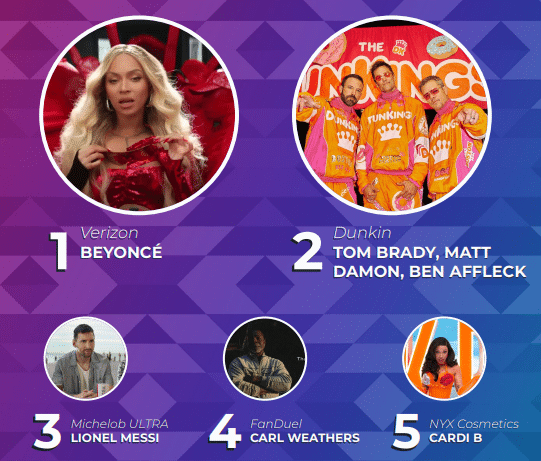
Although five other brands gained higher positive sentiment than Verizon’s spot, Verizon’s star, Beyonce led social media with the most mentions. Here are the top five celebrities, including a sentimental favorite, actor Carl Weathers, who died just weeks before the big game.

Take the MarTech Salary and Career Survey
From AI to layoffs, it’s been quite a year. How has it been for you? Please take our short survey so we can tell you the state of martech salaries and careers.
Social media mentions more than doubled in one year
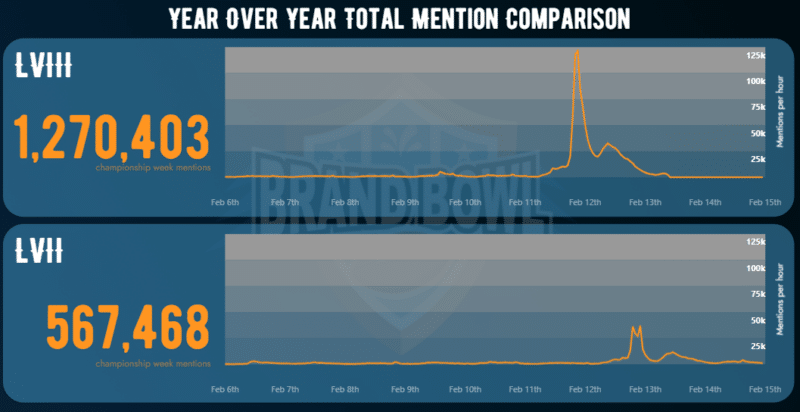
Social media marketing increased significantly in only a year. Super Bowl-related social media activity more than doubled year-over-year, according to social listening platform Sprinklr.
This year, in the week leading up to the big game, there was a defined cadence with a clear uptick toward the second half of the week leading into Super Bowl Sunday.
Here are the top hashtags used by social media marketers from Jan 1 through Feb 13, 2024, according to Sprinklr.

Media, entertainment, betting and tech brands led streaming advertisers
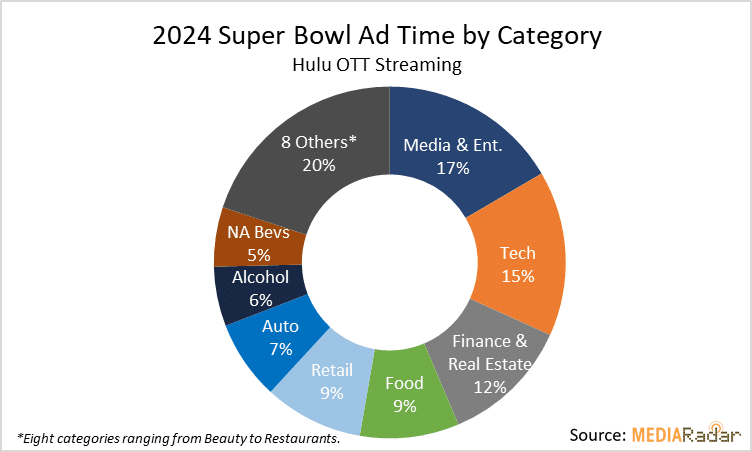
This year there were more ways to watch the game on streaming than in previous years. And advertisers stepped up to get in front of these audiences. Media and entertainment brands (including gambling services like BetMGM) led the field with 17% of ad air time, according to ad sales intelligence company MediaRadar. Technology brands came in second at 15%.
Here’s the breakdown of the rest of the field.
Being close to the action pays off
Celebrities and brands proved the Super Bowl was still a vital springboard for gaining cultural awareness. Taylor Swift captured nearly as many social media Super Bowl-related conversations (11%) as all the TV ads combined (12%), according to Influential.
Rising star Ice Spice kept close to Swift throughout the game, which no doubt led to more recognition for soft drink brand Starry, which featured the Bronx-born artist in their ad.
Beyonce’s presence at the game boosted the ad for Verizon she starred in, as well as buzz about her forthcoming album.
“In the past 24 hours, we’ve seen advertisers maximizing the impact of their advertising campaigns during the event via social channels — many have created a number of additional assets as part of their campaigns, transforming and optimizing them to work hard across all relevant platforms,” Steve Vinall, global director of brand and communications for digital asset management platform Bynder, told MarTech. “In Verizon’s case, Beyonce’s Instagram page was the vehicle chosen to reveal a country album and two readily available songs. Going viral almost instantly, this ensured anyone who hadn’t watched the game also knew of the announcement.
In less than 24 hours, searches for Beyonce have skyrocketed 469% and both videos on her Instagram have 30 million views each, Vinall added.
Beer brands lag as soft drinks take over
Where’s the beer? The number of alcoholic brands dropped from nine last year to only four this year — AB InBev’s Michelob Ultra, Bud Light, and Budweiser, and Molson Coors’ Coors Light were featured in ads. Budweiser’s nostalgic Clydesdales spot showed the most engagement, according to ad intelligence company EDO, which generated 84% more engagement for the Clydesdales spot than the Super Bowl ad median.
In the non-alcoholic beverage camp, prebiotic soft drink newcomer Poppi led its peers with the evening’s fourth most engaging ad, according to EDO. Starry and Mountain Dew’s revived Baja Blast brand each generated more than twice as much engagement as the median Super Bowl ad.
EDO’s top five most engaging ads were:
- Deadpool & Wolverine (Walt Disney Studios Motion Pictures), generated +2,243% as much engagement as the median-performing Super Bowl LVIII in-game ad.
- Wicked: Part One (Universal Pictures), +2,008%
- Volkswagen, “An American Love Story”, +1,594%
- Poppi, “The Future of Soda is now,” +1,561%
- Temu, “Billionaire,” +1,342%
Marketers will no doubt take some of these learnings to Paris for this summer’s Olympics.
The post 5 Super Bowl LVIII takeaways for marketers appeared first on MarTech.
Super Bowl LVIII was not just a showcase of the best teams in the NFL, but also a prime opportunity for brands to reach a massive audience with their marketing efforts. With millions of viewers tuning in to watch the game, companies pulled out all the stops to make an impact with their advertisements. Here are the top five marketing insights from Super Bowl LVIII:
1. Emotional storytelling is key: One of the most effective ways to connect with an audience is through emotional storytelling. This year, many brands opted for heartwarming and inspiring narratives that resonated with viewers. For example, [Brand X]’s ad featuring a touching story of a father and son bonding over football tugged at the heartstrings of many and generated significant buzz on social media.
2. Humor still works: While emotional storytelling was prevalent, humor also played a significant role in many of the ads. Brands like [Brand Y] and [Brand Z] used comedic elements to grab viewers’ attention and create memorable moments. The key to successful humor in advertising is to strike the right balance between being funny and staying on brand message.
3. Celebrity endorsements are effective: Celebrities have always been a popular choice for Super Bowl ads, and this year was no exception. From [Celebrity A] to [Celebrity B], big names were used to draw in viewers and lend credibility to the products being advertised. However, it’s important for brands to choose celebrities that align with their values and target audience.
4. Social media integration is crucial: With the rise of social media, it’s more important than ever for brands to integrate their Super Bowl ads with online platforms. Many companies used hashtags, social media challenges, and interactive elements to extend the reach of their ads beyond the TV screen. This not only helps to create buzz but also encourages engagement and sharing among viewers.
5. Purpose-driven marketing is on the rise: More and more brands are using their Super Bowl ads to take a stand on social and environmental issues. This year, several companies used their airtime to promote messages of sustainability, diversity, and inclusion. While this approach can be risky, it can also help brands connect with consumers who share their values and want to support companies that are making a positive impact.
In conclusion, Super Bowl LVIII provided valuable insights into the current state of marketing. Emotional storytelling, humor, celebrity endorsements, social media integration, and purpose-driven marketing were all key trends that emerged from the game’s advertisements. Brands that can effectively incorporate these elements into their marketing strategies are likely to see success in reaching and engaging their target audiences.

Recent Comments