


Ad spending on retail media networks (RMN) is projected to increase 26% this year to nearly $55 billion, according to a new study from the ANA. Despite this, it’s clear advertisers are still hesitant about the channel.
RMNs have attracted a lot of attention in the past few years, partly because of the extraordinary proliferation of new entrants in the channel. Even so, the percentage of ANA members using them has remained relatively flat, 58% last year and 60% in 2024. The same is true for upcoming use: 87% said they were unsure/weren’t going to use them, a three percentage point drop from 2023.
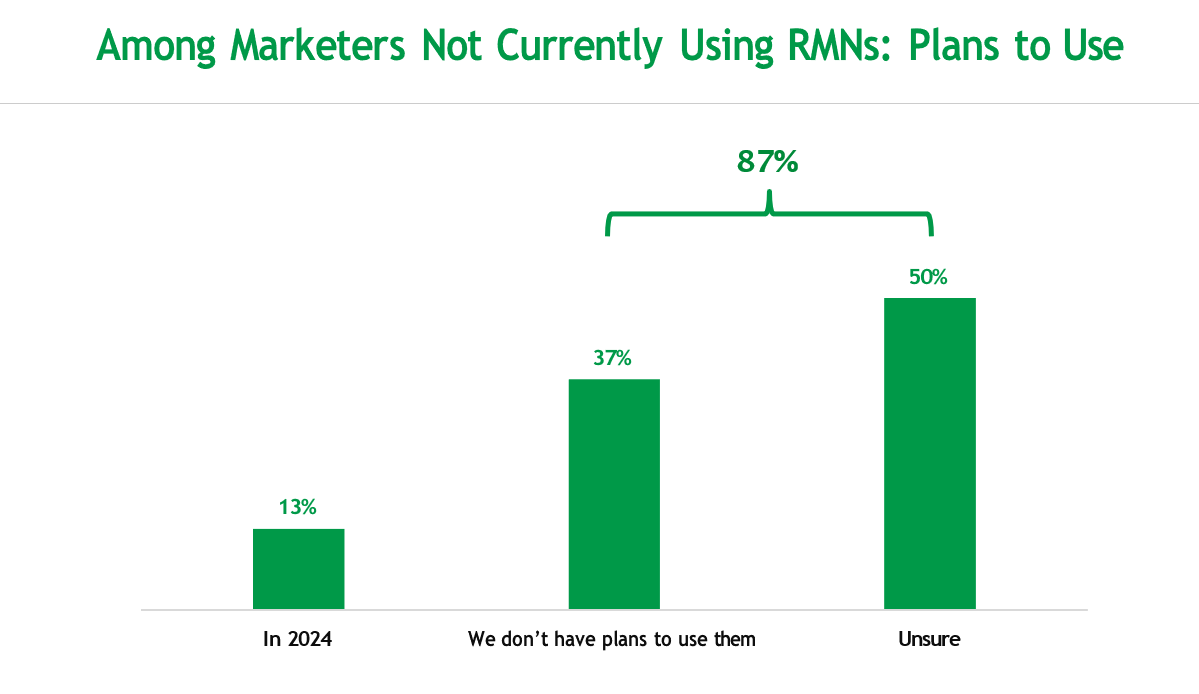
The overall increase in RMN spending is because fewer marketers are spending significantly more on the platforms. The number of marketers adding additional retail media platforms is declining, with only 35% saying they will be using more, down from 58% in 2023.
Furthermore, there was a significant drop in advertisers using Amazon Advertising, the industry’s leading RMN (accounting for some 77% of all retail media spending). Only 61% are using it, compared to 82% a year ago.
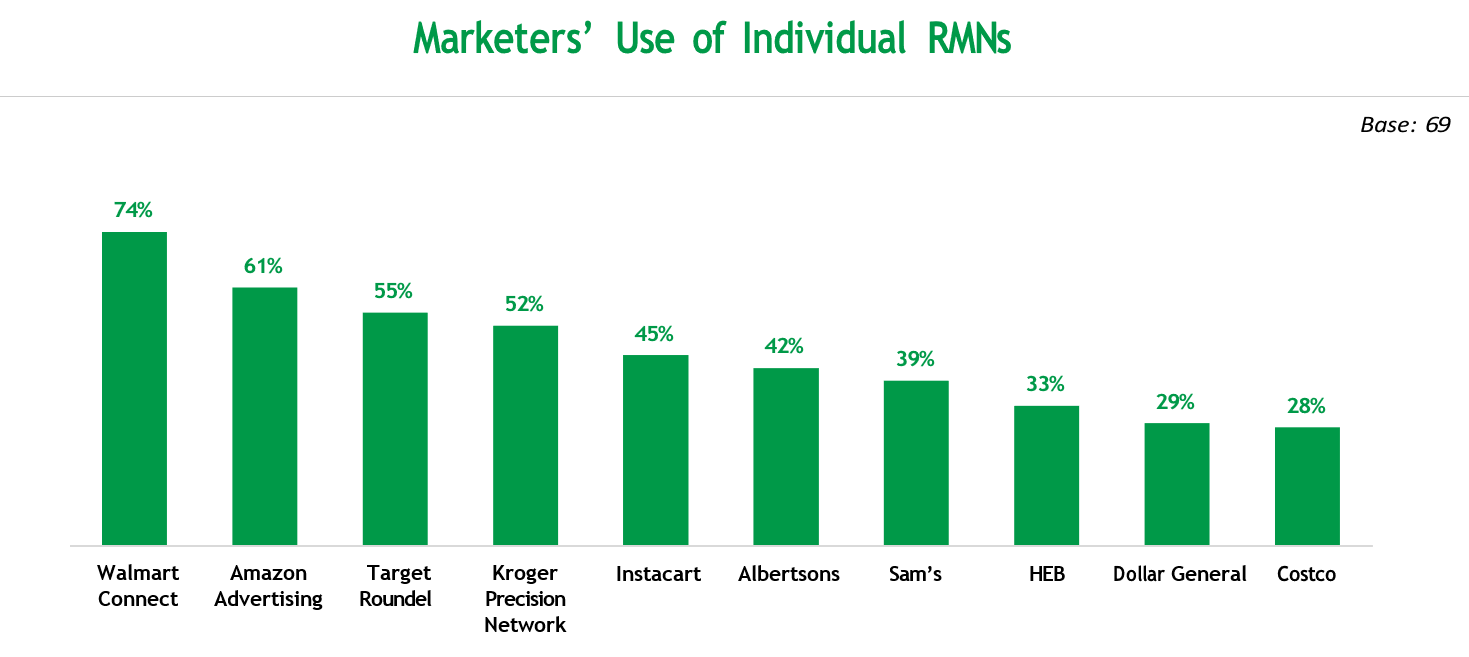
Part of this is due to the lack of standardization in measurement among different channels. As one responder put it, “Very important to push retailers on measurement requirements to advertiser’s standards to be on parity with other media outlets.”
Dig deeper: 3 challenges for marketers as retail media networks evolve
However, it is very telling that many advertisers see RMNs as a “have-to-buy” versus a “want-to-buy.” While 41% see them as a useful marketing tool (up from 31% in 2023), 35% are “meh” about RMNs and 23% see them as a cost of doing business. Also, 63% of brands said retailers’ influence was “a lot of the reason” they used them.
Even so, advertisers are optimistic about the future of the networks. Two-thirds expect them to become a valuable marketing tool within two years. That is partly because of the continuing work towards measurement standards. It is also a reflection of marketers seeing more opportunities within the RMNs. While once viewed as a strictly transactional tool — focused on incremental sales and lift, now 68% of advertisers use them for mid- and upper-funnel communications and national brand/equity plans.
The full report can be found here (Registration required).
Why we care. Marketers, especially CPG companies, initially viewed retail media networks as a business cost with established partners. They have since recognized them as effective sales drivers and potential full-funnel partners. While primarily seen as sales tools, many marketers now believe retail media can enhance consideration and awareness. The importance of RMN first-party data is significant.
The post RMN ad spending up 26% but questions remain appeared first on MarTech.
**RMN Ad Spending Increases by 26%, Raising Ongoing Concerns**
In a rapidly evolving digital landscape, Retail Media Networks (RMNs) have emerged as a powerful force in the advertising world. The latest data reveals a significant 26% increase in ad spending on RMNs, underscoring their growing influence. However, this surge in investment has also sparked a series of concerns among industry experts, marketers, and consumers alike.
### The Rise of Retail Media Networks
Retail Media Networks are digital advertising platforms operated by retailers that allow brands to promote their products directly on the retailer’s website, app, or other digital properties. Retail giants like Amazon, Walmart, and Target have pioneered the RMN model, leveraging their vast customer data and online traffic to offer targeted advertising opportunities to brands.
The appeal of RMNs lies in their ability to deliver highly relevant ads to consumers who are already in a shopping mindset. This targeted approach has proven to be effective, leading to increased ad spend by brands eager to capitalize on the opportunity to reach consumers at the point of purchase.
### The 26% Surge in Ad Spending
According to recent industry reports, ad spending on RMNs has surged by 26% over the past year. This growth is driven by several factors:
1. **Data-Driven Targeting**: RMNs offer brands access to first-party data, enabling them to create personalized and relevant ad experiences. This level of targeting is particularly appealing in an era where third-party cookies are being phased out.
2. **Shift to E-Commerce**: The ongoing shift towards e-commerce, accelerated by the COVID-19 pandemic, has made RMNs even more attractive. As consumers increasingly shop online, brands are allocating more of their ad budgets to digital channels, including RMNs.
3. **Proven ROI**: Brands are seeing a strong return on investment (ROI) from RMN campaigns. The ability to measure the impact of ads on actual sales, combined with the precision of targeting, has made RMNs a key component of many brands’ advertising strategies.
### Concerns and Challenges
While the growth of RMNs presents exciting opportunities for brands, it also raises several concerns:
1. **Data Privacy**: The use of first-party data for ad targeting has raised concerns about consumer privacy. As retailers collect and utilize vast amounts of data, there is growing scrutiny over how this data is handled and whether consumers are adequately informed about its use.
2. **Competition and Fairness**: Smaller brands may find it challenging to compete with larger players who can afford to invest heavily in RMN advertising. This could lead to a concentration of market power among a few dominant brands, potentially stifling competition and innovation.
3. **Ad Saturation**: As more brands flock to RMNs, there is a risk of ad saturation, where consumers are bombarded with too many ads. This could lead to ad fatigue and a decline in the effectiveness of RMN campaigns.
4. **Transparency and Measurement**: While RMNs offer robust targeting capabilities, there are concerns about the transparency of ad performance metrics. Brands may struggle to verify the accuracy of reported data, leading to questions about the true effectiveness of their campaigns.
### The Future of RMNs
Despite these concerns, the future of RMNs appears bright. As retailers continue to refine their platforms and address the challenges, RMNs are likely to become an even more integral part of the digital advertising ecosystem. Brands will need to navigate the complexities of RMN advertising carefully, balancing the benefits of targeted ads with the need to protect consumer privacy and ensure fair competition.
In conclusion, the 26% increase in RMN ad spending is a testament to the growing importance of these platforms in the digital advertising landscape. However, as with any rapidly growing industry, it is essential to address the concerns that arise to ensure sustainable and ethical growth. Brands, retailers, and regulators must work together to create a balanced and transparent ecosystem that benefits all stakeholders, including consumers.

Recent Comments