
There’s a saying that if you attempt to attract everyone, you end up appealing to no one. Niche marketing is an exceptionally focused type of advertising. Through niche marketing, companies target their offerings to a small, defined, and specific audience.
As social media algorithms grow more personalized and precise, it becomes increasingly challenging for brands to cut through the clutter. To thrive in the current landscape, businesses must engage these unique niches with highly tailored marketing initiatives.
Thankfully, influencer marketing enables brands to connect with these niche groups. Collaborating with popular social media personalities who have established loyalty among these target demographics allows brands to enhance their visibility and engage niche audiences authentically.
This article will comprehensively discuss niche marketing, including a detailed plan for creating niche influencer partnerships, as well as campaign examples to spark your creativity.
What is niche marketing?
Individuals in a niche market have distinct preferences or requirements that vary from the wider market. Brands frequently segment almost every market into distinct categories based on factors such as:
- Geographic location
- Psychographic data (interests, values, and attitudes)
- Demographic base (age, income, gender, education level)
- Quality level (premium, moderate, high, low)
- Price point (high, discount, wholesale)
Niche marketing is typically more straightforward than advertising to a broad audience, as niche consumers have specific desires and needs.
For example, a business selling generic handbags must cater to a wide variety of tastes and preferences. In contrast, a company offering handbags designed for new mothers, which also function as diaper bags, has a more targeted focus. Tools like Facebook ad targeting and social media monitoring have also simplified the niche marketing process.
The advantages of niche marketing
Niche marketing enables companies to comprehend their audience’s specific needs and communicate directly with them. It’s all about forging genuine connections, which is why many social media platforms have enhanced their targeting capabilities for niche segments. By employing niche marketing along with a social media strategy, businesses can enjoy numerous benefits:
Build stronger brand loyalty
With fewer people in a niche market, there’s a greater opportunity to form deep, meaningful relationships. Take the example of Black Girl Sunscreen.
While there are many sunscreen options available, few cater to the unique characteristics of Black skin. Many products contain ingredients that oxidize, resulting in an unwanted white cast or grayish hue on darker skin tones. Black Girl Sunscreen developed a formula specifically for Black women, resulting in a cult following.

Face less competition
The more niche your business is, the fewer competitors you’ll encounter offering identical products or services. A niche solidifies your unique selling proposition, enabling your brand to stand out in the market.
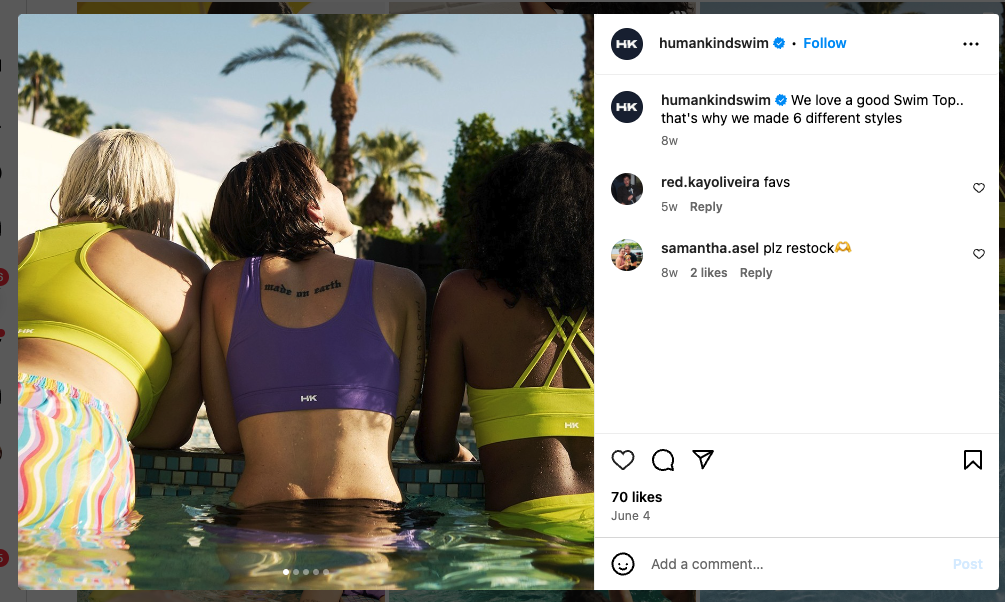
For instance, Humankind is a swimwear and clothing line that embraces gender inclusivity. Instead of battling against every clothing brand, it designs fashionable, comfortable, and inclusive apparel for individuals who wish to break free from traditional gender constraints.
By specifically catering to those seeking gender-neutral clothes, they experience less competition than brands attempting to attract a general audience.
Maximize marketing expenditure
Advertisements tailored to a niche audience tend to be more relevant and appealing, leading to improved performance metrics like increased click-through rates (CTR) and decreased bounce rates. Additionally, collaborating with niche influencers generally provides a higher return on investment as their fees are usually lower compared to macro-influencers with widespread appeal.
This cost efficiency does not compromise impact; niche influencers typically possess highly engaged followers who trust their recommendations. As highlighted in the 2024 Influencer Marketing Report, nearly half (49%) of consumers of all ages make monthly purchases influenced by influencer posts, underscoring the significant power of strategically targeted, authentic content in driving conversions.
How brands can utilize influencers to engage niche markets
Niche marketing and influencer collaborations offer many advantages, but there is a learning curve involved. While you may be familiar with some prominent broad influencers, locating individuals within a specific niche necessitates additional effort.
Here’s how to start.
Identify a niche within your target audience
The niche segments within your target market possess distinct preferences and requirements. For example, the makeup industry is broad, but it encompasses niches such as products for acne-prone skin, professional artists, and mature skin—and that merely scratches the surface.
To discover thriving niches within your target audience, commence with research on native platforms. Unless you have a specific hypothesis to test, there’s no need to be overly structured initially. Instead, immerse yourself in content with an open mindset for possible brand implications.
Examine the comment sections of your brand accounts. Explore competitor profiles or utilize the “see similar accounts” feature to identify trends.
Enhance your insights using a social listening tool. Such tools can summarize discussions around a topic, divulging insights crucial for your strategy.

Discover trending influencers within the niche
After pinpointing a niche to target, begin searching for influencers. Conducting native platform research is essential at this stage. Utilize relevant hashtags to uncover top posts in the niche. You may also browse the comments of popular posts to find influential figures in that space.
If time is limited, an influencer marketing tool like Tagger by Sprout Social can expedite this process. It features a profile discovery tool that simplifies influencer research through intelligent filters that categorize and analyze creators with audiences relevant to your brand or a specific niche.

Execute influencer outreach
By now, you should have a list of potential influencers to collaborate with. Before reaching out, ensure your social media profiles and current content are up-to-date. Lay the groundwork for warmer outreach by engaging with their content from your brand accounts beforehand.
When commencing your outreach, check if they have outlined communication preferences. For example, some influencers prefer to be contacted through their management teams rather than directly. Then, send a friendly note that outlines why you believe they would be an ideal fit for your brand, what you’re offering, and what you aim to accomplish through the collaboration.
If you’re unsure what to say, consider using these influencer outreach email templates.
Collaborate on content creation
While it may be challenging to relinquish creative control, Forrester research indicates that excessive direction is a common pitfall for brands working with creators.
Influencers possess a deep understanding of their audience. They recognize what content resonates best. When brands allow influencers to produce content in their unique style, it appears more authentic, resulting in better outcomes.
Consumers seem to prefer this approach too. Our influencer marketing report reveals that over two-thirds (67%) of consumers believe the most successful influencer-brand partnerships are genuine and sincere.
Engage with the community of the niche
Post-campaign, there’s still work to do. Actively interacting with influencer partners and their followers demonstrates that your brand genuinely cares about connecting with that community, rather than merely seeking profit.
Engagement can manifest in various ways, from responding to TikTok comments to partaking in social media discussions and sharing user-created content. Being present and engaged online throughout the campaign will foster trust within that community, resulting in enhanced loyalty and brand awareness through word-of-mouth marketing.
Niche marketing examples to motivate your strategy
Curious about what your niche marketing campaign could look like? Here are several examples to invigorate your creativity.
1. e.l.f. ’s Make up over Makeup initiative
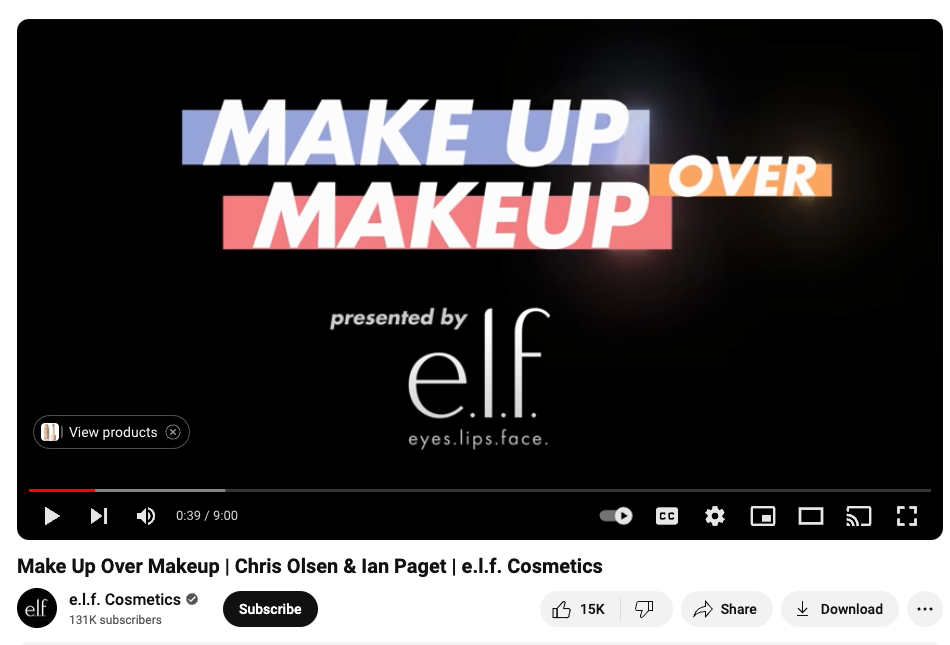
Ian Paget (@ianpaget) and Chris Olsen (@chrisolsen) were a well-known social media duo with over 12.7 million TikTok followers and 327,000 subscribers on a jointly managed YouTube channel. Following their breakup, fans were disheartened. However, cosmetic brand e.l.f. seized the chance for a distinctive brand collaboration.
The “Make up over Makeup” campaign featured both social media stars in a YouTube video where they reflected on their breakup while applying each other’s makeup. By teaming up with two prominent figures from the LGBTQ+ community, the campaign effectively enabled e.l.f. to engage with a niche audience in the beauty realm.
2. Dunkin Donuts x Corporate Natalie
Natalie Marshall (@corporatenatalie) is a content creator with over a million followers on TikTok and Instagram, known for her comedic takes on work-from-home corporate life.
Recently, Dunkin Donuts partnered with Natalie and actor Will Arnett to create a short commercial that featured an ensemble of emerging stars playing “summer interns.” Given Natalie’s significant appeal among fans of corporate humor, this collaboration allowed Dunkin to connect with that audience in a relatable manner.

3. Ring x Pet-fluencers
Ring, a home security firm, invited pet owners to share videos or images captured by their Ring cameras on Instagram or TikTok using the hashtag #RingPets. For every submission received, Ring donated to the ASPCA (the American Society for the Prevention of Cruelty to Animals) and local animal shelters, totaling a contribution of $500,000.
Furthermore, participants who used the hashtag #contest entered a chance to have their pet featured in an upcoming Ring advertisement. Since numerous customers utilize their Ring devices to watch over their pets, the campaign raised awareness for their pet monitoring features while aligning the brand with this niche audience.

Embark on your niche influencer marketing strategy
There’s no need to cast a wide net to establish a memorable brand. One of the most effective and swift paths to marketing success involves concentrating on a specific group of customers. By earning their trust and loyalty, you can pave the way for increased revenue.
A clearly defined niche will also facilitate the identification of influencers who have cultivated a following comprising your target customers. Partnering with these influencers will amplify your growth, putting your brand in front of an engaged audience of devoted fans.
Are you ready to take the plunge? Download our influencer marketing toolkit for resources that will assist you in discovering and connecting with influencers to expand your brand among the right audiences.
The post Niche marketing: How brands can use influencers to reach niche pockets of the internet first appeared on Sprout Social.

Recent Comments