

Integrating social media is an excellent approach to uniting marketing initiatives across various channels. It allows customers to purchase directly through social platforms like TikTok and Instagram, enriching the shopping experience with effortless e-commerce. Furthermore, it equips brands with crucial social insights for valuable customer and market intelligence. Consequently, these integrations enable you to deliver unforgettable brand experiences to your audiences, including top-notch customer service.
You have the opportunity to enhance your marketing initiatives through a more cohesive omnichannel strategy, which can boost your online visibility and audience engagement. Additionally, you break down digital silos, facilitating smoother customer interactions that result in higher conversion rates and, ultimately, increased revenue.
Continue reading to discover various strategies to leverage social media integrations for business growth. Also, uncover real-world examples of brands utilizing these integrations to enhance their omnichannel strategies and ensure a unified customer experience.
What does social media integration mean?
Social media integration refers to the process of linking a brand’s social media channels with other digital solutions, such as CRMs, e-commerce platforms, or websites, to provide a seamless, cohesive user experience. It allows customers to effortlessly utilize their social media accounts or linked email addresses to interact, shop, or log in without needing to switch between different apps or sites, creating an enhanced omnichannel customer journey.
This integration also streamlines social media workflows for marketing teams. It offers invaluable insights into customer behavior and market trends, aiding in understanding the influence of social media efforts on conversions and brand perception.
Advantages of social media integrations
Social media integrations simplify customer interactions across digital channels and provide marketers with insights to meet business objectives. Below are additional detailed benefits.
Optimized workflow
Linking social media platforms with your digital tools like CRM software, email marketing, SMS marketing, and analytics streamlines and automates your social media processes. Teams can manage tasks such as content creation, scheduling, and performance tracking smoothly. You can also connect your social media platforms with customer service tools, such as Salesforce Service Cloud, allowing for efficient handling of inquiries and complaints, thus providing quicker customer support on social media.
Improved customer insights
Social media integrations enable you to merge your social data with customer databases, resulting in a more holistic understanding of your audience. This empowers you to devise data-driven proactive marketing strategies that are personalized and targeted for superior outcomes.
Enhanced engagement
According to The 2023 Sprout Social Index™, 51% of consumers feel that the most memorable action a brand can take is to respond to customers on social media.

With social media integrations, real-time interaction across platforms is feasible, enabling your customer service teams to react more quickly to inquiries and feedback, both negative and positive.
This swift and consistent engagement fosters a remarkable brand experience, cultivating stronger customer relationships.
Centralized analytics
Integrating social media with analytics platforms such as Google Analytics or Facebook Insights allows you to monitor performance across channels, shedding light on how your social media activities impact traffic, engagement, and sales. Moreover, aggregating data from diverse platforms into a single dashboard helps track key metrics and evaluate performance for more efficient data-driven decision-making. This integration also assists you in demonstrating your social ROI to stakeholders through compelling data storytelling.
Consistency across channels
Brands can establish consistent messaging across multiple channels, which aids in maintaining a cohesive online presence. For instance, all your social media profiles can be linked with your websites, blogs, and other applications, allowing customers to purchase products or services directly through social posts or advertisements. Furthermore, audiences can share your content and interact with you on their preferred platforms.
Implementing social media integrations in your marketing strategy
Social media integrations allow you to refine your marketing strategy and enhance product offerings based on customer interactions. Here are some methods to utilize these integrated tools for engaging customers, boosting conversions, monitoring sales, and driving revenue.
Connect e-commerce with social platforms
Linking your e-commerce with social media is among the most impactful marketing strategies for driving sales. For instance, e-commerce integrations with platforms like Shopify and Facebook Shops allow you to create shoppable posts, simplifying the purchasing process for customers directly on your social media platforms without leaving the app.
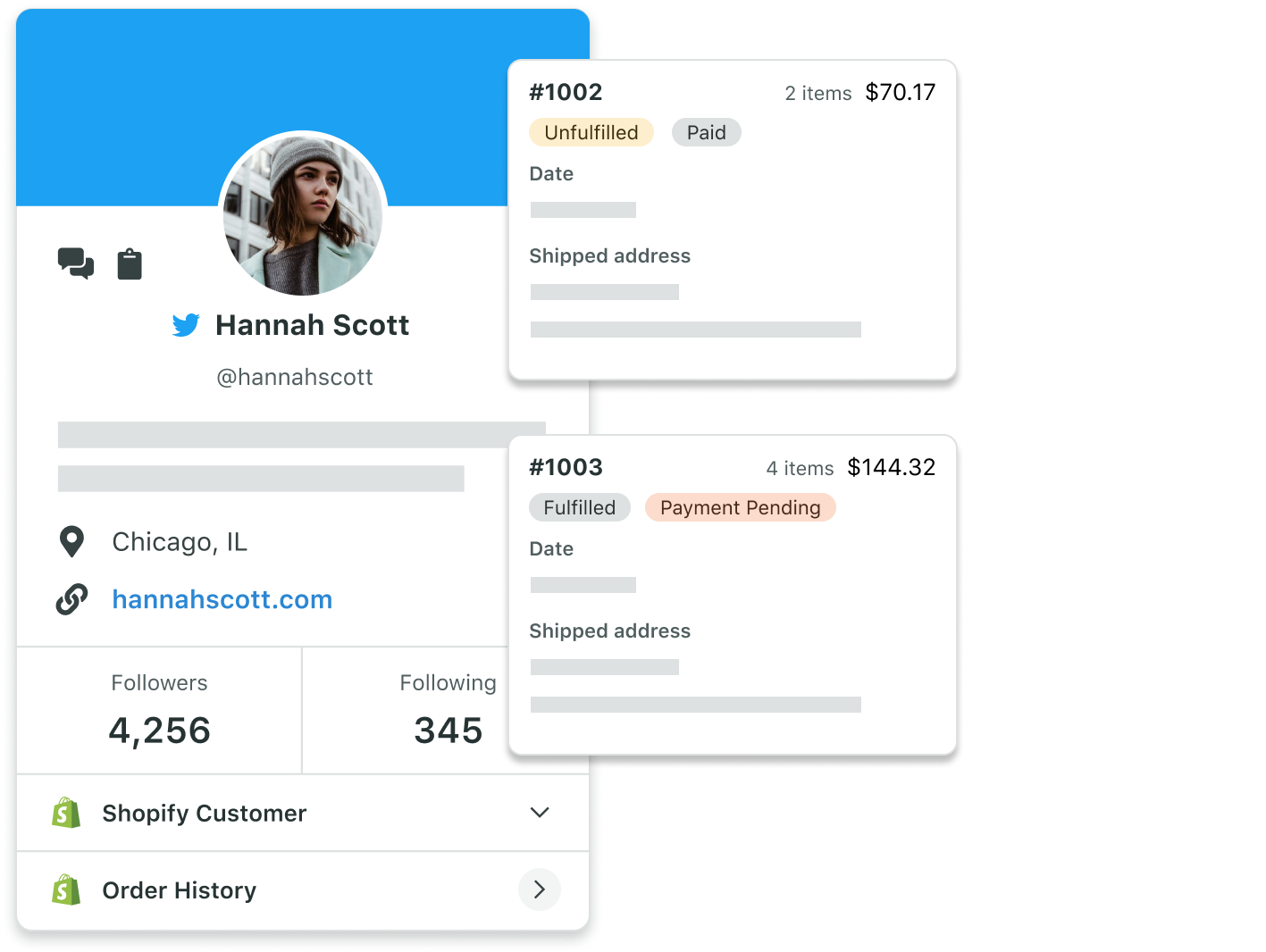
If you currently utilize Shopify or Facebook Shops, Sprout’s social commerce integration is an excellent way to manage orders and customer information seamlessly. You can enhance product visibility and introduce engaging sales opportunities within your content through scheduled posts that include product links.
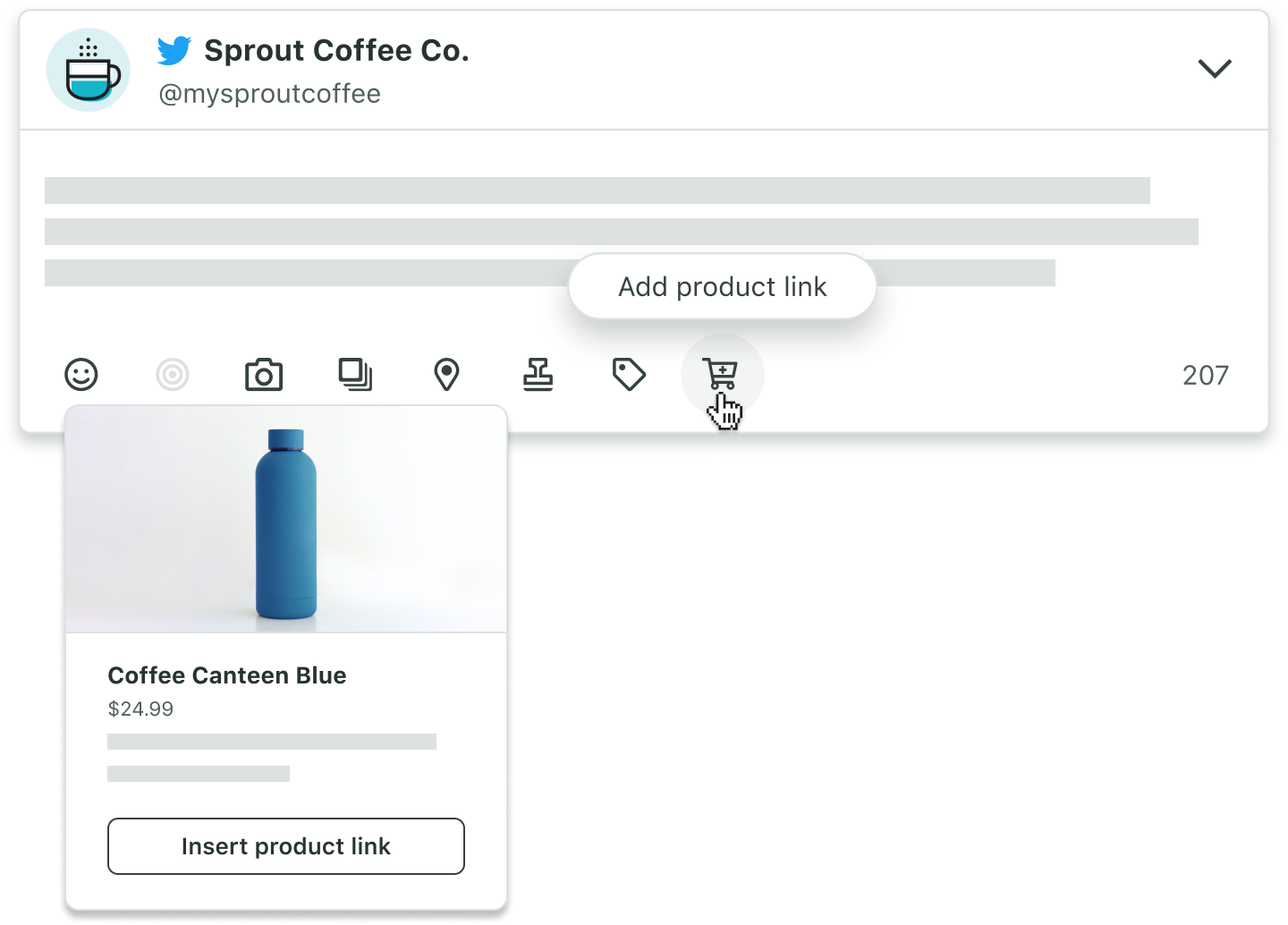
You can also assist customers more efficiently by accessing all pertinent order information from a single dashboard, eliminating the need to switch between platforms. Additionally, customized responses can be provided to facilitate quicker purchases. Platforms like TikTok and YouTube can be explored for shopping integrations by linking videos to product pages for in-app shopping experiences.
Targeted advertisements on Facebook, Instagram, or TikTok can re-engage customers who have visited your online store but have not made a purchase. Showcasing the precise products they viewed or pairing them with promotions or discounts can drive conversions.
Further enhance your omnichannel approach by incorporating email marketing into the equation. Supercharge your email campaigns using insights garnered from your social data, broaden the reach of your newsletters, and expand your audience with strategic links.
Regularly monitor your social commerce analytics to gauge effectiveness and assess referral traffic. This practice will assist in refining your strategy over time. Creating UTM parameters for your most frequently used links can be tedious, but Sprout’s Google Analytics and Bitly integrations simplify link creation within your publishing workflow.
Sprout’s Google Analytics integration establishes tracking rules to automatically add parameters to links in posts shared via Sprout. These parameters feed into Google Analytics tracking results (that are also accessible in Sprout’s Google Analytics Report). URL tracking rules can be created and modified within Sprout, automatically applying to Sprout’s Compose publishing window once a URL is added to a post.
Sync social channels with your CRM
Integrating social media with your CRM tools is a powerful method for centralizing customer data and interactions. For example, with Sprout, you can link your LinkedIn account to your Salesforce CRM software. This integration allows your sales teams to track leads, observe social interactions, and manage customer relationships directly from the CRM, simplifying the nurturing of prospects.
This also assists in tracking customer engagement, conversations, and preferences within one system.

You can associate existing Salesforce contacts with new social profiles within the same workflow. If a Salesforce contact doesn’t exist, you can create one within Sprout to capture the new lead in your marketing funnel. Once a lead is created or linked, you can access Salesforce Contact and Case information related to that user directly from Sprout’s Smart Inbox reply layer.
Sprout’s lead management integrations include Marketo and Microsoft Dynamics 365 as well.
Upon integration, this consolidated data can be used to create personalized marketing campaigns. By tracking customer interactions with your products and services across social media and your CRM, targeted offers can be crafted for them. Additionally, user retargeting efforts can enhance messaging for improved conversion rates.
Moreover, real-time social media interactions feeding into your CRM enable your support and sales teams to respond more effectively to customer inquiries or complaints. This creates a unified experience to foster robust customer relationships and advance strategic marketing initiatives.
Explore review and reputation management integrations
Review and reputation management integrations, such as those offered by Sprout for review platforms like TrustPilot or Glassdoor, help bolster your online reputation. This social integration allows you to monitor and manage reviews across your business and locations from one centralized stream.
Similarly, link your social accounts with Google My Business (GMB). Set up custom notifications for new reviews and categorize them into unique priority inboxes. For example, set alerts for negative reviews with one or two stars. Quickly respond to reviewers from within Sprout to address unsatisfactory customer experiences, provide resolutions, clarify concerns, or express gratitude for feedback.
Review integrations also allow you to share positive reviews across your social profiles, enhancing your brand’s credibility. This approach reinforces your brand reputation and strengthens customer ties by demonstrating your appreciation for their feedback.
Tracking reviews and social media interactions from one consolidated source makes identifying market trends and customer sentiment easier.
Integrate customer support with social media tools
Customer care integrations focus on facilitating the transfer of customer tickets and information between teams. These integrations are beneficial if customer questions on social media often necessitate a handoff to another team for response. They also provide teams with visibility into customers’ prior contact history with your organization for quicker, more personalized service.
Sprout’s integration with Salesforce Service Cloud revolutionizes customer support. Salesforce’s collaboration with Sprout delivers a comprehensive view of your customers, allowing you to provide exceptional social customer service while transforming your social data into essential business insights.

Your support teams can instantly communicate with customers to resolve issues, armed with all necessary information. They have access to CRM data along with social data, such as conversation history and customer contact information, all through one unified dashboard.
Additionally, Salesforce’s AI assistant, Agentforce, provides customer care teams with insights into customers’ historical interactions with your brand through AI-generated summaries of sentiment and cross-channel case overviews. This aids care agents and managers in enhancing customer experience with deeper insights delivered in real-time—resulting in quicker case resolution times.
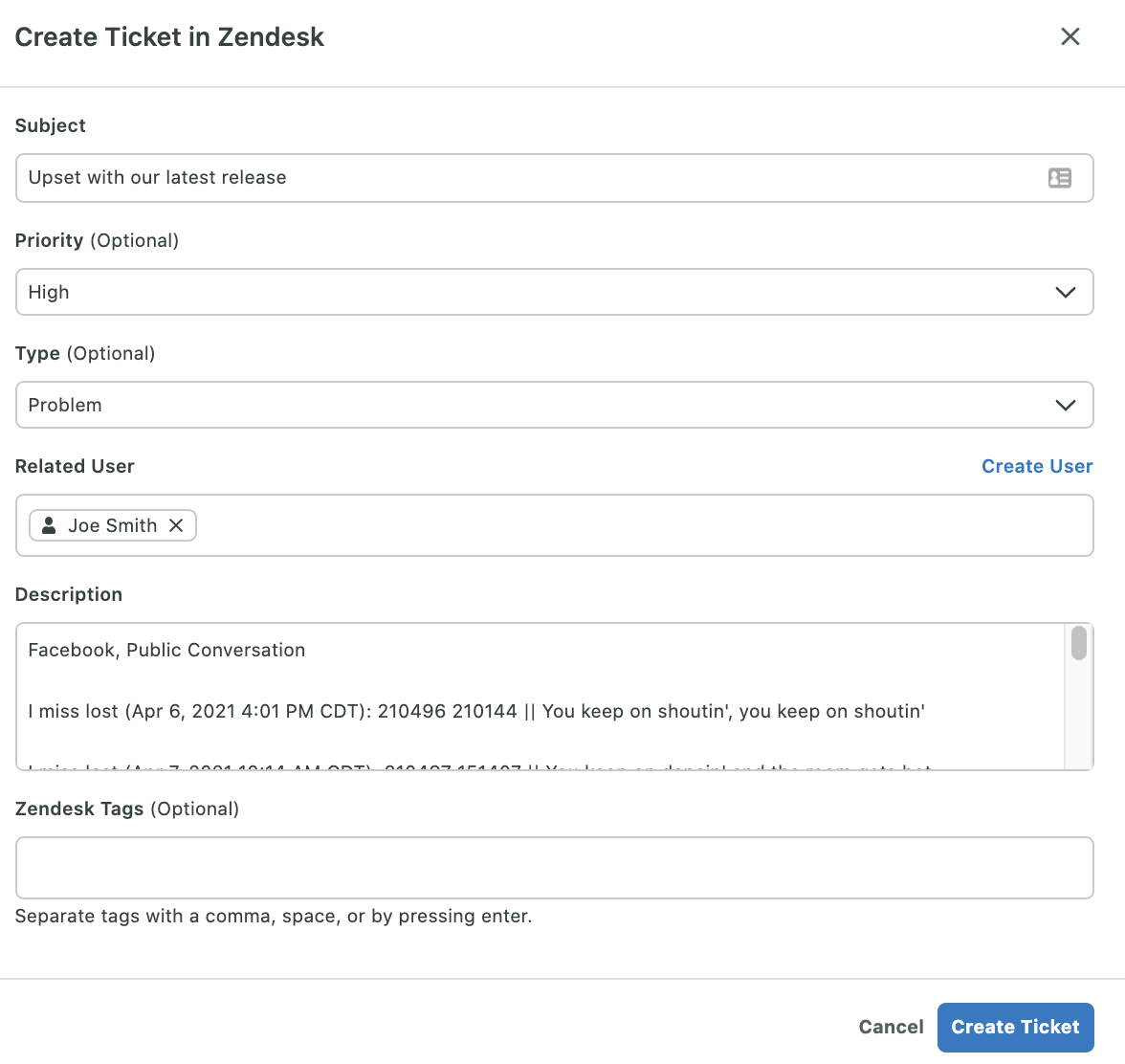
Likewise, Sprout’s Zendesk integration with Facebook allows customer support teams to monitor and respond to support inquiries, ensuring an efficient and smooth customer service experience. Once connected, Sprout automatically identifies users who’ve messaged from your Zendesk instance and matches them with existing profiles. If a profile is unavailable, you can create one.
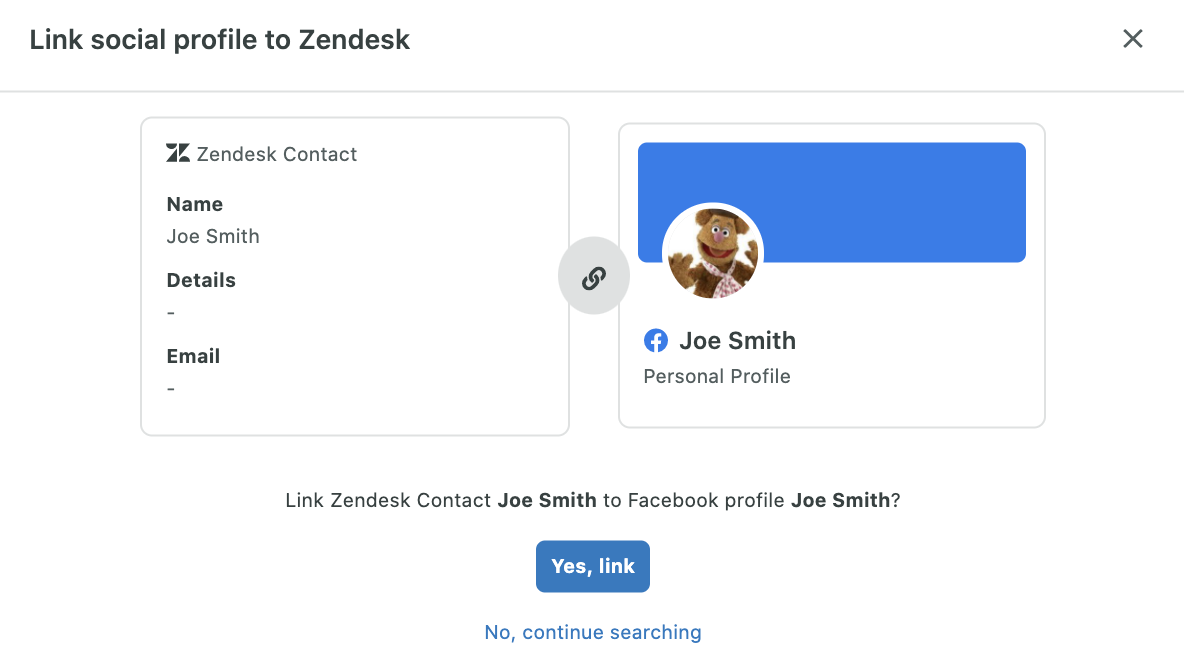
This enables customer care teams to easily create Tickets and assign priority tags to comments. They can also collaborate with other team members more effectively and log ticket statuses.
Another exemplary case is Sprout’s HubSpot integration, which strengthens customer support with intuitive ticket routing and updates. Manage HubSpot contacts and tickets directly from Sprout’s Smart Inbox. Connect relevant social profiles to HubSpot contacts, and view, edit, create, or comment on all HubSpot tickets directly from Sprout.

Craft meaningful customer experiences by customizing your messages to meet customers’ specific needs, and leverage data to identify trends for enhancing your care practices.
Fuse social media data with business intelligence for comprehensive insights
Social data forms the foundation of business intelligence by providing context to company-wide data. It reveals audience insights necessary for interpreting trends, making predictions, and executing informed, data-driven decisions.
With Sprout Social’s Salesforce integration and Tableau Business Intelligence (BI) Connector, you can harness the power of social data to develop a full view of your customers and enhance broader business insights.
For instance, if your brand boasts a sophisticated social presence that includes customer care, you’ll want to analyze agent performance across various data sources. This analysis will guide your marketing strategy, product development, and other organizational priorities. However, if your team depends on Tableau, for example, to aggregate marketing and customer care data without including social data, a significant part of the customer view remains absent.
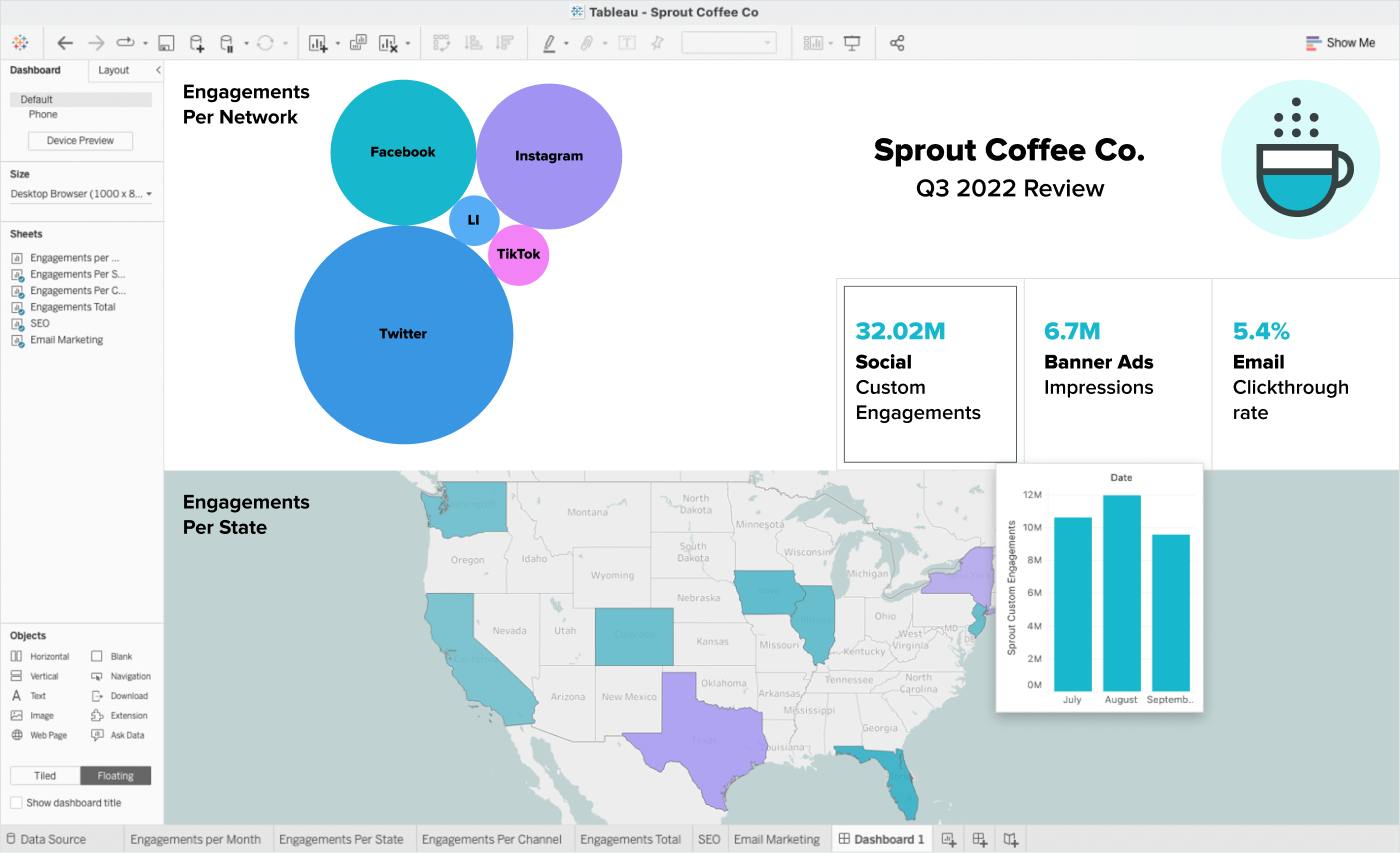
Link your Sprout data to Tableau for an omnichannel perspective on all your social data while benefiting from automated and consolidated reporting and analytics. With customizable visuals and metric definitions, you can analyze data according to your KPIs and business requirements, crafting a compelling data narrative with social media intelligence for actionable insights, all without requiring costly developer resources.
Four real-world brand examples of social media integrations
Here are four brands that effectively utilize social media integrations to fortify their omnichannel marketing strategies. Let’s delve into how they are enhancing the impact of social media on business to their advantage.
1. Amazon
Amazon harnesses social media integrations as part of an omnichannel strategy that encompasses strategic advertising, engaging customers, and directing traffic to its website—all while enhancing the entire shopping journey.
The company merges its product catalog with Facebook and Instagram Ads and employs targeted advertisements based on customer shopping behavior and interests. For instance, if a customer views a product on Amazon without completing the purchase, they may encounter a retargeted ad on Instagram or Facebook offering discounts or free shipping to encourage them to finalize their transaction.
Amazon effectively utilizes influencers to elevate its brand. Its influencer program incentivizes bloggers and influencers to promote Amazon products via links across platforms like Instagram, YouTube, and TikTok. During Prime Day, Amazon collaborates with TikTok influencers to produce viral videos showcasing Prime Day offers. Users interacting with these TikTok videos are directed to Amazon’s app or website, allowing them to browse and purchase during Prime Day events.

Amazon also connects its product listings with Pinterest, allowing users to discover and pin products from Amazon’s extensive catalog. Moreover, social reviews on platforms like Instagram and X (previously Twitter), tagged with #FoundItOnAmazon, assist in incorporating user-generated content into their product listings.
Additionally, Amazon leverages social media for responsive customer service. Its @AmazonHelp account on X enables customers to tweet issues, questions, or concerns and receive prompt assistance from Amazon’s customer service team.
The brandalso showcases live-stream shopping experiences through Amazon Live, allowing viewers to interact and purchase featured products in real time.
All these social media integrations empower Amazon to foster engagement, generate traffic, and boost conversions while providing customers with a coherent shopping journey and memorable brand experience.
2. Sephora
Sephora employs social media integrations to craft a seamless omnichannel marketing experience. By integrating its Instagram and Facebook Shops, the brand guarantees a fluid customer journey from discovery to purchase, allowing customers to browse, review, and obtain products directly from social media.

Through Pinterest’s “Shop the Look” Pins, users can explore beauty tutorials and product suggestions that link directly to Sephora’s e-commerce site, simplifying purchasing.
Sephora also enhances viewer engagement using YouTube by creating shoppable tutorials and product demonstrations where audiences can purchase featured items through linked descriptions.

Their email-social integration connects email marketing with social media platforms, retargeting users with tailored ads based on email interactions, ensuring messaging consistency and driving conversions across channels.
Sephora’s Beauty Insider loyalty program integrates seamlessly across social media, e-commerce platforms like Groupon, and in-store, motivating customers to earn and redeem rewards across various touchpoints. Additionally, their AR integration with Snapchat allows users to virtually try on makeup, linking directly to Sephora’s store for purchases, thus closing the cycle from virtual testing to checkout.
3. H&M
H&M integrates social media within its omnichannel marketing strategy, crafting a seamless shopping experience across various platforms. By utilizing shoppable posts on Instagram and Facebook, the clothing retailer allows customers to browse and buy products directly via social media, correlating these platforms with their website and app for simpler transactions. It also utilizes Pinterest’s “Shop the Look” pins, turningfashion ideas into quick sales by directing users to product pages.

The company further employs email integrations for social retargeting, utilizing individualized ads on Facebook and Instagram to reconnect with customers who engaged with their website or email campaigns but did not complete a purchase. Their mobile app is also integrated with social media, encouraging followers to get exclusive deals and collections. They also afford users the ability to save products from social posts for future purchases.
H&M capitalizes on user-generated content (UGC) via branded hashtags such as #HMxME, showcasing real customer outfits on social media platforms like YouTube and product pages to drive engagement.
The brand collaborates with influencers on TikTok and uses paid advertisements to showcase new collections, thus enabling users to shop directly via the app. This uniform, omnichannel strategy aids H&M in building engagement and driving sales through multiple points of connection.

4. Shopify
Shopify employs social media integrations to reshape e-commerce processes for businesses aiming to merge their social presence with e-commerce functions.
The brand enables users to engage in social selling on platforms like TikTok, Pinterest, Instagram and Facebook, empowering them to connect with their audiences and achieve their full potential.
As Shopify thrives on integrations, it also utilizes them internally, linking with Facebook Ads, Instagram Ads, and other platforms to run targeted advertisements promoting its tools, features, and testimonials aimed at reaching entrepreneurs, attracting businesses, and generating leads.

Moreover, the brand leverages social media integrations for enhancing customer service by collaborating with platforms like Facebook Messenger and WhatsApp, thus ensuring timely customer support and fostering engagement to elevate the brand experience.

Beyond these workflows, the brand promotes many of its social media integrations as partnerships to market itself and garner interest from business owners looking to leverage social media for growth.
Shopify frequently collaborates with TikTok and Instagram to initiate joint marketing campaigns highlighting their integration capabilities. It also utilizes TikTok and YouTube videos to showcase new features and share advice for entrepreneurs, establishing itself as a primary choice for anyone aiming to capitalize on social commerce.
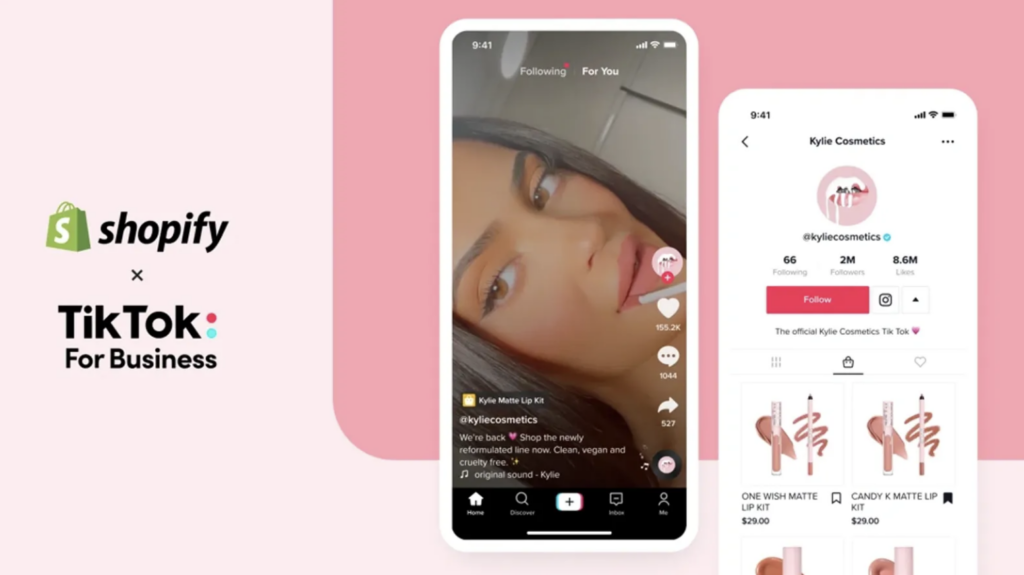
The brand also partners with influencers and content creators to enhance its visibility, as these influencers share tutorials, case studies, and reviews, positioning Shopify as an advanced yet approachable tool for entrepreneurs seeking to build and expand their online businesses. Shopify also harnesses user-generated content to establish trust with its audience while encouraging merchants to share success stories across their social platforms.

Shopify’s journey is unique—they’ve effectively built a business model predicated on social media integrations and how they can enhance a brand’s online presence.
Experience seamless business integrations with Sprout
Sprout is designed to eliminate digital silos, allowing our clients to harness the robust capabilities of social media immediately. While integrating and organizing your ecosystem of tools might seem daunting, it doesn’t have to be. By connecting the tools you rely on most, your team becomes more informed and efficient, and your customer experience strengthens. Moreover, it provides you with all the insights required to cultivate a sustainable brand and stay ahead of the competition.
Experience seamless business integrations through Sprout. Sign up for a demo today.
The post Social media integration strategies your brand needs appeared first on Sprout Social.

Recent Comments