

Social media platforms are where companies and individuals aim to showcase their presence and gain visibility. It’s the place where you build a dedicated following, create a distinctive brand voice, and develop a recognizable brand identity.
At the beginning, you may adopt a more relaxed and exploratory attitude towards your social media activity, but one thing that all successful brands on social media share is the trait of being consistent.
A robust social media style guide is the key to maintaining consistency in your online presence. It serves as the backbone of a successful social media marketing plan. As you expand your digital footprint and establish yourself in your industry, your style guide will dictate the way you:
- show up online
- want people to identify you and
- maintain a unified presence
Continue reading to discover the importance of a style guide for your brand and the essential elements to incorporate.
What is a social media style guide and why do you need one?
Consider a social media style guide to be an additional component of your brand guidelines.
A style guide keeps your team on the same page with distinct guidance and rules for each active platform, saving you from slip-ups and eliminating confusion about your brand’s dos and don’ts. It outlines how your brand should appear and act on social media and informs your approach to multi-channel content, which is much needed as every social media platform has distinct visual approaches and best practices.
A social style guide also shapes what people think when they hear your name, what they tell others about your brand and how you make them feel. For example, maybe you’ve noticed certain brands have a distinct social style. Like Wendy’s, with their sassy, sharp-tongued posts that people enjoy so much, they’ll even request a roast.
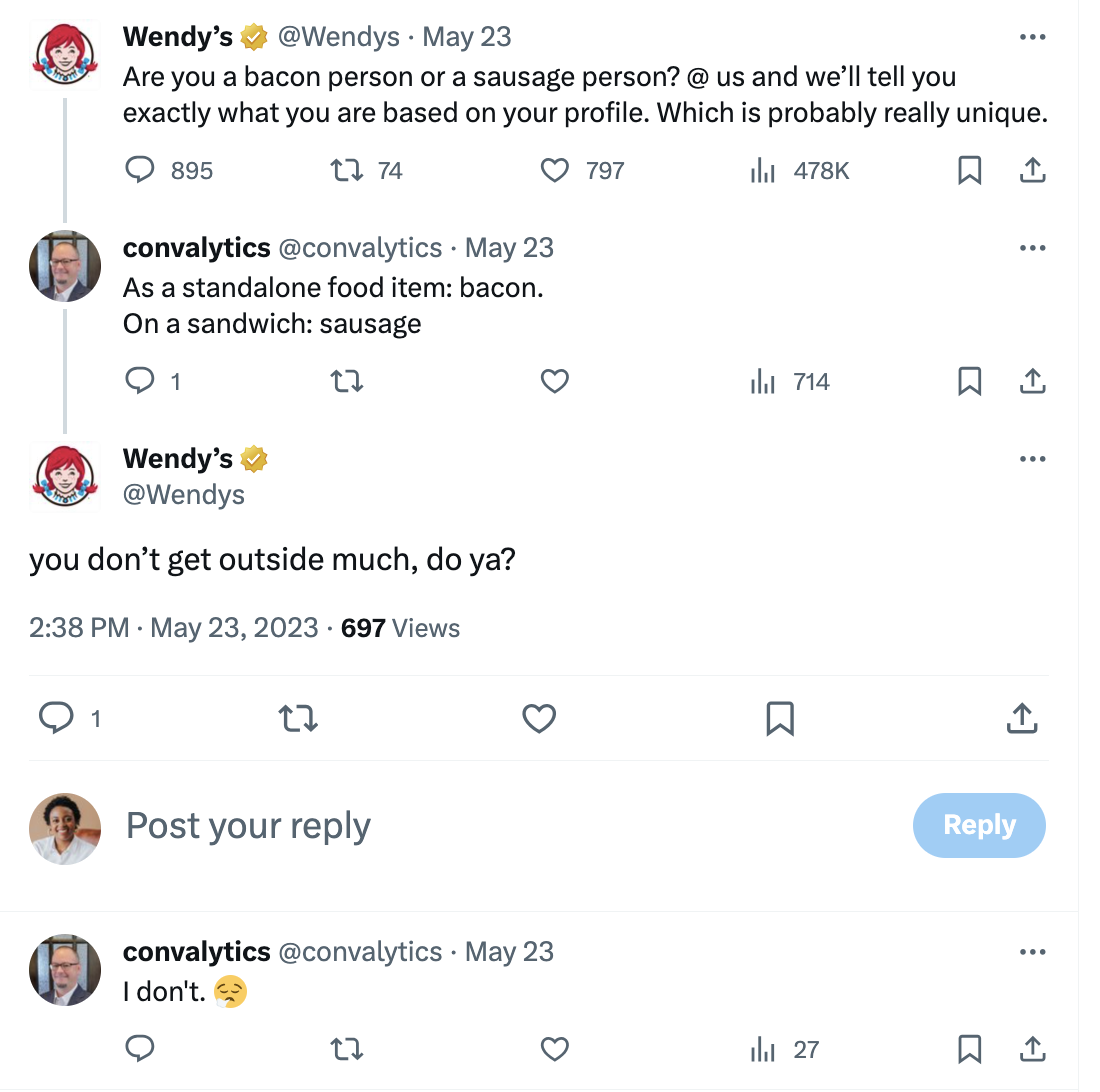
Wendy’s social media presence is distinct from its official website and other marketing efforts.
For example, their website features a straightforward 20% offer to promote its new peppermint Frosty, whereas its Twitter account announced the new beverage with a meme.


A style guide isn’t the same as your social media marketing strategy.
While your marketing strategy outlines how you’ll reach your social media goals to drive revenue and growth, your style guide breaks down how you will represent and convey those actions through your brand voice. For example, your social media strategy might detail the type of content you plan to publish, whereas your style guide would explain how that content should look when you share it.
Similarly, while your brand style guide sets the overall aesthetic and tone for your company, your social style guide demonstrates how to apply that brand image across various social media channels while keeping a uniform appearance.
No matter how many people handle your profiles, the tone and appearance of every post, caption or reply should be consistent.
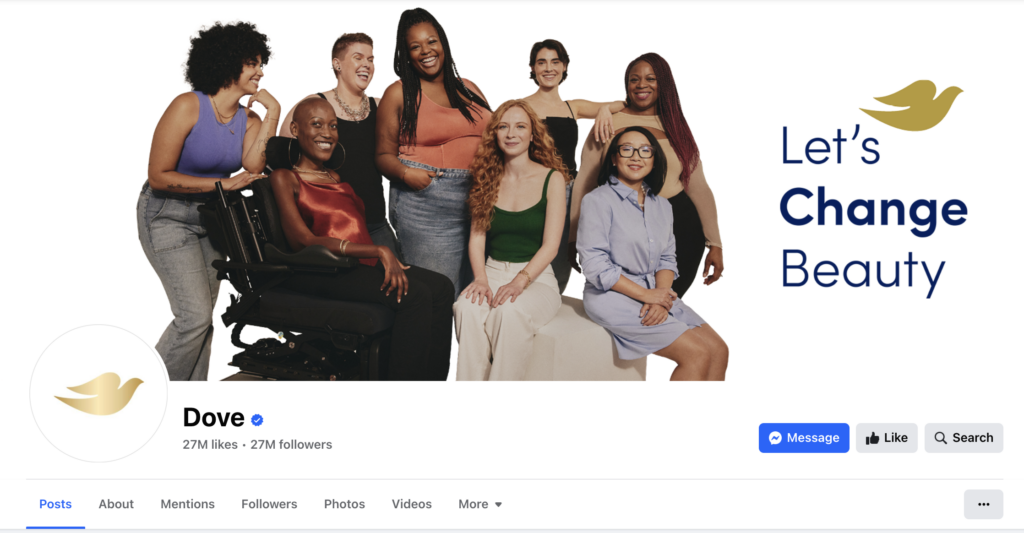
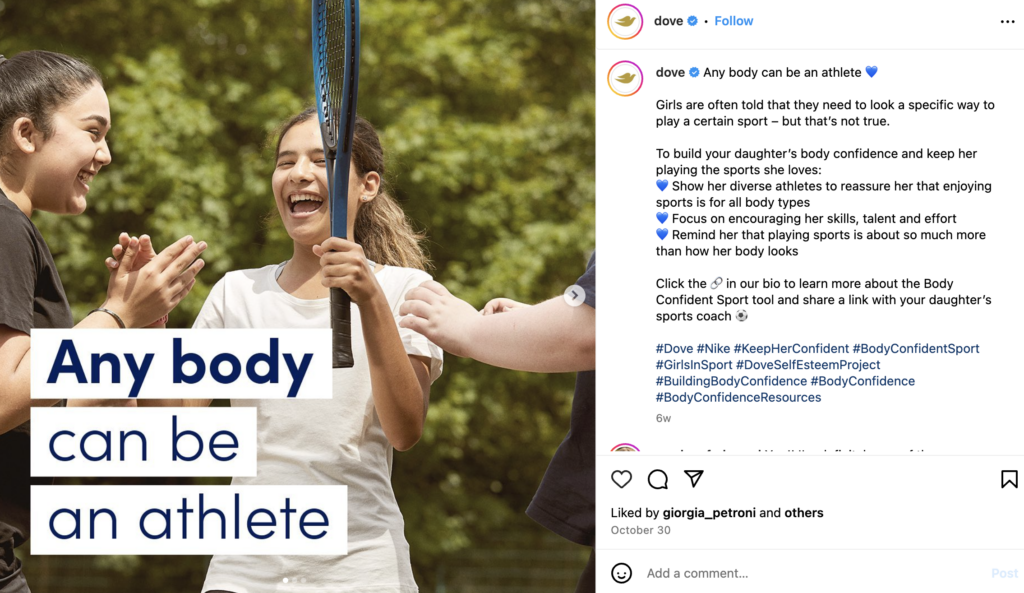
For instance, Dove’s brand identity is about breaking stereotypes and inspiring people to feel comfortable in their skin. From their human-focused visuals to the uplifting tone of their posts and hashtags, the messaging on all their social profiles reflects this belief. Whether its their Facebook banner or Instagram posts, their messaging is consistent.
It’s unlikely that you’ll get a lot of feedback from customers specifically commending the consistency of your social media profiles. However, businesses that fail to maintain a cohesive presence on social media platforms can face swift and significant repercussions.
For example, Burger King Austria’s “Pride Whopper” campaign received so much backlash on social media that the agency behind the promotion issued a public apology on LinkedIn.
As a dynamic compass for your brand, your style guide has a lot of benefits to offer. Here are a few of the most important ones.
It enhances the trustworthiness of your brand.
Even though more brands are using AI-powered tools to speed up content production, The Sprout Social Index ™ shows that audiences want to see more authentic posts from brands on social than any other type of content.
In today’s AI-driven world, having a unique voice and style is essential to differentiate your brand, increase the recognition of your content, and establish a stronger connection with your audience. Consistently presenting your target audience with a unified brand voice will enhance your credibility.
It ensures consistency
When your social team knows how to represent your brand, there’s less room for error. Many brands want to jump on viral trends, as they’re a great way to boost reach and engagement. However, not all trends work for every brand. A style guide can help answer the question of ‘to post or not to post.’
Showing up consistently on social media and across platforms also builds trust with your audience. When you see a brand consistent in its messaging, tone and imagery, you start to feel like you know them, and that sense of familiarity builds trust.
On the other hand, when a brand’s social presence is all over the place, it leads to confusion and looks unprofessional.
A smart tool for managing social media, such as Sprout, can streamline the workflow, allowing teams of any size to work together seamlessly on a user-friendly platform. Give your team the freedom to be inventive and create drafts in Sprout’s composing window, while also establishing an approval process to ensure every message is reviewed before it is sent.

Start your free trial today to try out these features and more.
It helps you onboard new employees
New hires in your social media department should review your brand’s style guide to learn how to accurately portray your company on social platforms. This guide will enable them to quickly become productive and provide a clear, common standard for achieving success.
It can even be helpful for employees outside of your social team. If you have an employee advocacy program, a social media style guide will outline the do’s and don’ts for engaging with brand content and sharing it with their network.
What to include in your social media style guide
Each business has a distinct style guide that reflects its brand and includes various components. However, there are certain aspects that are commonly found in most guides. Ensure that your social media style guide addresses these key areas:
- Your social profiles
- Voice and tone
- Language and grammar
- Formatting
- Hashtags
- Multimedia standards
- How to interact with competitors
- Social customer care policies
- Employee advocacy
- Legal concerns
Your social profiles
Begin with the fundamentals. Your social media branding guidelines must include a list of all your profiles. It’s important to include all profiles, not just the main ones. Therefore, if your brand has a presence on Snapchat, Reddit, or TikTok, make sure to include them in your style guide.
Also, don’t forget about profile naming conventions. There will always be new platforms to join, and as your brand sets its sites on the latest popular channels, these guidelines will come in handy.
Brands with more common names must prepare for scenarios where your company name isn’t available. For instance, if your company’s name is Chipmunk, that username will likely won’t be available on every platform, so outline acceptable backups. That might mean adding “US” to indicate the global region or “HQ” to indicate that it’s your brand’s main account.
Voice and tone
The unique tone and personality of your social media presence sets your brand apart from others and creates a sense of recognition. Maintaining a consistent brand voice across all platforms is crucial. For example, if you have a playful and witty persona on Facebook but your YouTube content is somber and formal, it can create confusion for your audience.
However, there is some room for tailoring your language between social channels.
Just as you might be a bit more reserved in how you present yourself at work than among your closest friends, the same goes for your social media. For example, LinkedIn is more professional and polished, while TikTok is more lo-fi and casual. However, regardless of the platform, your social content should still look and feel like you. The key is finding a balance.
How do you define your voice? Think of it this way. If your brand were a real person, what would they sound like? And how would you want people to perceive you? Some of those descriptors might be a combination of the following:
- Friendly
- Smart
- Compassionate
- Confident
- Helpful
- Casual
- Sarcastic
- Bold
- Energetic
- Cheerful and upbeat
- Formal
- Young and trendy
- Deadpan or dry humor
To find your social media voice, look back at your past content. Pay attention to the tone and emotion, whether it’s a blog post, ad copy or other messaging. What resonated with your audience? Look at what other brands are doing on social media for inspiration, but think about how you’ll put your spin on it.
After determining your brand’s tone, document it in your social media style guide with as much detail as possible. Avoid merely stating:
- Voice: Funny
Instead, you might have something like this:
- Voice: Clean, playful, approachable humor. Responses should be upbeat, optimistic and positive. Puns are encouraged. Avoid being sarcastic or mocking customers, followers or other brands.
At Sprout, we follow the “Goldilocks” approach. For instance, our tone is assertive, but not arrogant. Consider this excerpt from our style guide:
- Too arrogant: “We did it again. Yet another world-class tool for our customers.”
- Too timid/unsure: “We hope you’ll find our latest new feature helpful.”
- “We’ve listened to your feedback and are excited to unveil our newest feature update.”
Including screenshots with post examples from your brand or others will help clarify the tone you want to establish. Remember: Whoever is reading your social media style guide should be able to pick up on your brand’s voice right away.
Language and grammar
Language and grammar style guides aren’t just for your website. Your social media posts should follow the same standards. These expectations go beyond whether or not you use AP Style. It should cover areas like brand terminology, abbreviations, use of exclamation points and other things that help create cohesiveness in your content.
Do you have any internal terminology, acronyms, or abbreviations that should not be used in social media posts? Are there specific words you always capitalize or steer clear of? Make note of these in your guide. Your guide should also address regional language differences and the use of inclusive language. For instance, Sprout employs language that prioritizes individuals and universal expressions to foster inclusivity. We also steer clear of idioms that may not be understood by an international audience.
Be as detailed as you’d like here, depending on your brand’s preferences. If you already have a grammar handbook for your website or blog, you could carry many of the same rules to your social media style guide.
However, social is a great place to loosen the proverbial necktie. For instance, let’s say your brand doesn’t use contractions in press releases or long-form content, you might allow them in your social posts so your brand feels more human.
Your brand account must adhere to these guidelines when crafting captions for social media posts, as well as when responding to or commenting on any interactions.
Formatting
Some brands use a specific format for sharing links, status updates or other types of posts. For instance, X posts might follow a headline, link and hashtag format. Or your brand might list all your hashtags within the first comment of an Instagram post rather than the caption.
Post formatting should also cover emoji use. Do you use them sparingly (e.g., 1-2 max) or prefer to pepper them throughout?
Spotify’s Instagram posts are brief, usually consisting of a single sentence and a hashtag.
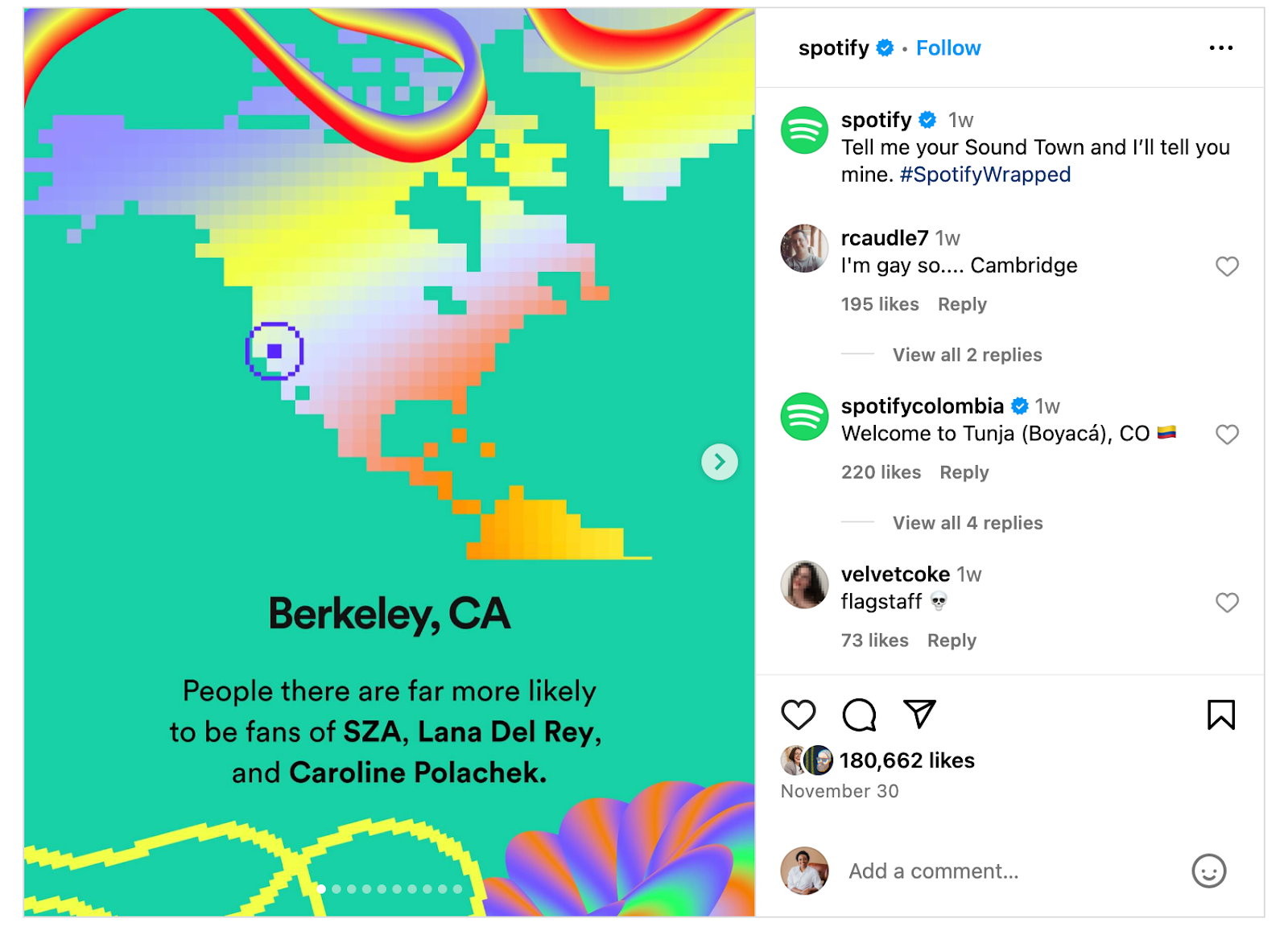
These small nuances help your team share content faster and streamline your process.
You should also define your call-to-action (CTA) placement in captions. For example, some brands opt to put links in the comments on LinkedIn rather than the post itself. Whatever you decide, note it down in your style guide.
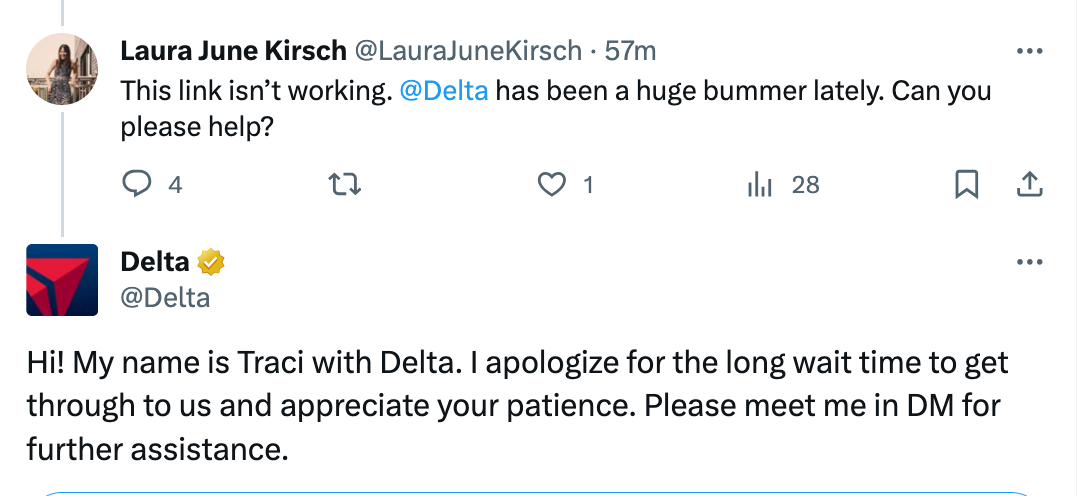
Finally, remember to give credit for the content you share. Some companies post on social media as the brand itself, while others choose to include a signature to indicate who is behind the conversation.
For instance, Delta Airlines’s social support team introduces themselves by name when replying to complaints. This practice makes it easier to identify who responded to each post.
Hashtags
Keep things organized by outlining any campaign or brand-specific hashtags and how your team should use them in social media posts.
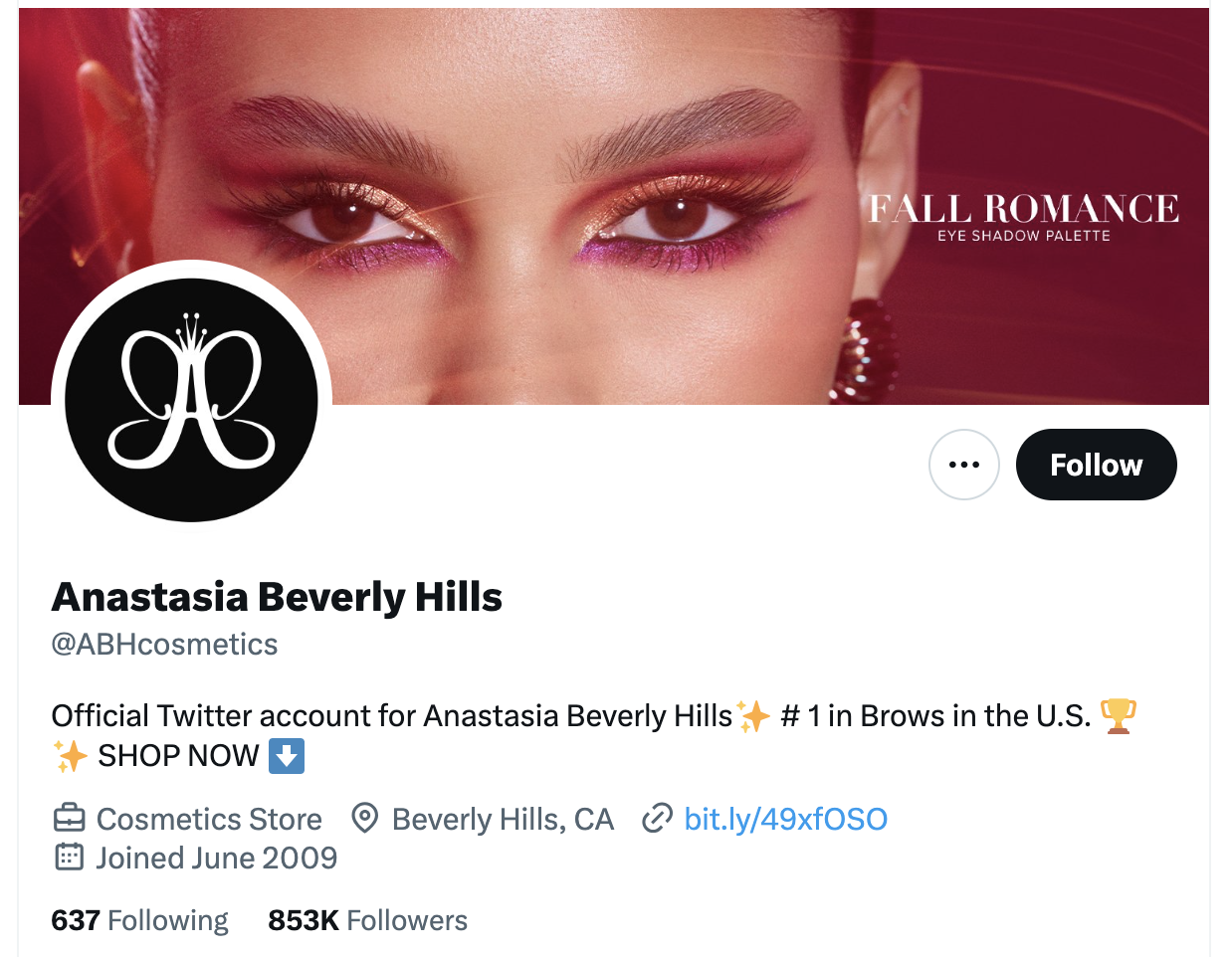
When coming up with branded hashtags, consider the purpose and platform. Consistently use your main branded hashtag to increase recognition among your followers. The home decor brand Serena and Lily incorporates their branded hashtag (#SerenaAndLily) in almost every post on Instagram. It also serves as a community hashtag, accumulating more than 95,000 tagged posts.

Many businesses feature branded hashtags in their social bios, which is helpful if you leverage user-generated content in your social strategy.

Multimedia standards
Since most social networks are highly visual, your social media style guide should set parameters and standards for any images or videos you share.
There are two major types of visuals to cover in your guide:
- Photos, GIFs, graphics or videos shared within posts
- Profile images, cover photos and header graphics
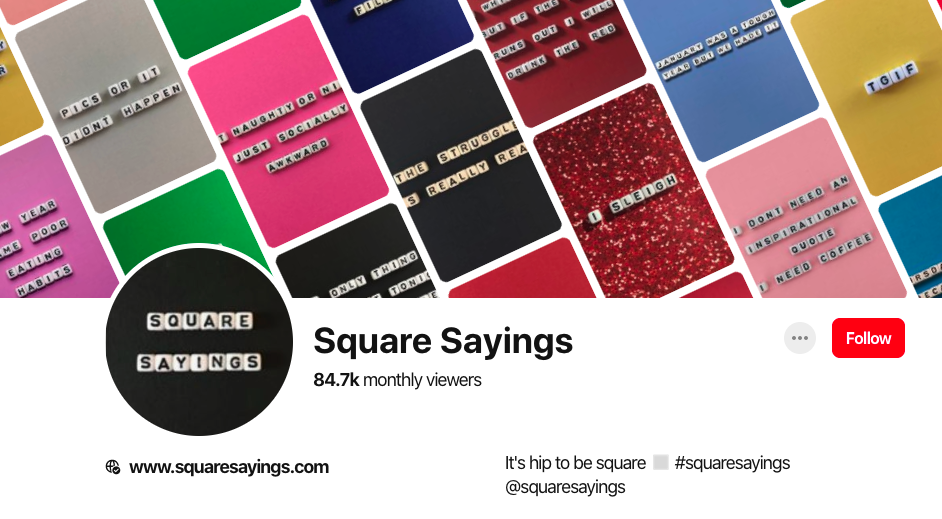
If you’ve ever observed a business’s Instagram page and noticed a consistent or cohesive aesthetic, it’s likely that it was intentionally curated. Take Square Sayings’ Instagram as an example. Their feed is vibrant, minimalistic, and consistent. This design approach extends to their Pinterest, X, and other platforms.

Within your style guide, outline:
- Brand colors
- Fonts for graphics
- Acceptable color combinations per network
- Pictures of your workplace and colleagues.
- Logos
Your brand’s design and creative team, or your agency, may have already outlined these points in your overall brand style. But you may need to bend the rules a bit for specific social campaigns or platforms.
For example, on Instagram, McDonald’s uses professional imagery and more lo-fi content that feels native to the platform.


Storing your social media images and videos in a central location, like an asset library, can help ensure your visuals are cohesive and brand-aligned. Sprout’s Asset Library is a built-in feature catalogs your brand’s inventory of visuals.

This offsite storage solution is ideal for businesses with teams spread out in different locations. Employees can easily access the asset library within Sprout and post content directly from it. Additionally, it speeds up the approval process as the images have already been reviewed and approved.
How to interact with competitors
How does your brand interact with competitors on social media Do you have a friendly rivalry or ignore them altogether? If your company is in a competitive industry, there’s a chance that your audience will mention them to you, or they might even engage directly with your brand.
Refer to your company’s social media style guide for guidance on managing these scenarios. Your brand’s tone will play a significant role in determining your response. For example, if your brand has a humorous and playful tone, you may choose to reply similarly to how Duolingo did when they humorously imitated Spotify’s Wrapped campaign to advertise their own Year in Review feature.

Again, it’s all about creating consistency and establishing your company’s personality and social media style. Whether it’s a cheeky shot at a rival brand or a response to a more serious situation, a style guide helps your team engage and respond in an on-brand way.
Social customer care policies
What is the appropriate way for your team to react when customers inquire, interact with your content, or engage with you? How do you handle negative or positive comments? And what is the response time? Establishing these guidelines in a style guide will ensure consistency and unity among your team.
Even if different team members manage your profiles, responses must be consistent. Consider creating a catalog of custom, on-brand replies for accuracy and, you guessed it, consistency.

With Sprout, you can save replies in your Asset Library. You don’t have to have a predetermined response for every question or comment, but having a few saved replies for different categories can serve as a template for your social team.
Keep in mind that individuals seek authentic interactions on social media. Replying to each user with a generic response can come across as mechanical and distant. Consider utilizing Sprout’s AI-powered agent responses to reply swiftly while still maintaining a personalized touch.
Employee advocacy
Encouraging your employees to engage with your company’s social media content is a cost-effective way to boost its reach. It can also help humanize your brand, giving your audience a face to connect with and trust.
Some team members may have a knack for social media, but others might need more guidance. Including a social media policy in your style guide with specific dos and don’ts for employees will help everybody on your team be on their social A-game.
Your guidelines should include instructions on representing the company on social media, promoting it, and engaging with its social profiles. These guidelines will assist employees in enhancing your brand while also developing their personal brand and safeguarding your company from potential privacy, security, or public relations risks.
Legal questions
The last thing your company needs is to run into legal issues over a social post. If you’re in an industry with regulations and restrictions, add social media compliance guidance in your style guide. For instance, many government agencies have rules for what they can and cannot publish on social.
There are also some general legal considerations to remember, like copyright violations, reposting someone else’s image without permission or using AI. For example, inputting data into AI tools could endanger your company’s intellectual property rights. So consider adding an AI use policy to your style guide.
Examples of guidelines for social media content
Every style guide looks and is published differently. No matter where your style guide lives, make sure it’s easily accessible to employees.
Since these guides contain somewhat sensitive information, they’re rarely made public. However, we’ve compiled a list of some examples we’ve found to give you some ideas.
1. Sprout Social
The style guide for Sprout’s brand is located in a creative platform known as Seeds. This is the place where you can find all the necessary tools to comprehend the Sprout brand, convey it artistically, and foster significant interactions with customers. It is comprehensive and thorough, yet remains user-friendly and simple to understand.
2. New York University
New York University’s social media style guide outlines their active accounts and rules for post attribution, preferred words (e.g., residence halls, not “dorms”), punctuation use, imagery, publishing cadence, platform-specific content and engagement styles for their different active platforms.
3. Society of Women Engineers
The social media style guide for the Society of Women Engineers outlines their approach to different social media channels, general guidelines, appropriate usage of content, visuals and images, referencing the organization’s leaders, utilizing individual accounts, and additional information.
4. City of Waterloo
The City of Waterloo has a relatively robust social media style guide. It includes why the city uses social media, roles and responsibilities, a social media policy and code of conduct for using personal social media accounts, best practices for creating social media content, legal and accessibility requirements and overall guidelines for presenting content from a language and graphic perspective.
How to put your social media style guide into action
Creating a social media style guide can take a lot of effort, so how do you make sure your team actually utilizes it? You didn’t put in all that work to create the guide only for it to go unused on your company’s server. Here are some suggestions to help you get the most out of it.
Weave it into social media trainings
Whether you host quarterly live workshops or offer on-demand learning options like video recordings or a course portal, use social media employee training to present the information in your guide in an engaging, interactive way. Plus, if you offer live trainings, you can quickly answer questions your team might have about the material.
Incorporate other groups into the workflow.
Every department can (and should) have a hand in shaping your social media style guide. Work with your product team to ensure you’re accurately describing your products. Partner with your PR communications team to define how you handle crises on social. Similarly, the HR department can offer tips on employer branding or employee engagement initiatives.
Regularly audit and update your style guide
Your style guide should adapt to the ever-evolving landscape of social media.
To keep pace with social media platform feature updates and best practices, set a regular cadence for reviewing and updating your style that works for your team’s capacity, such as quarterly or annually.
Get your social style in order
Use the tips and examples in this guide to inspire your social media style guide so it’s a living document, constantly growing and evolving. Develop the sections described as your base and customize your guide to fit your needs. And since social media networks increasingly prioritize video and photo content, establish a consistent visual language to create a more cohesive visual identity.
Take a look at our guide on visual content strategy to determine your visual style on social media, which will help increase growth and engagement.
The post How to create a social media style guide: 10 things to include appeared first on Sprout Social.
Creating a social media style guide is an important part of any business’s marketing strategy. A style guide helps to ensure that all social media posts are consistent in terms of tone, content, and visuals. It also helps to ensure that your brand is represented in the best possible light. Here are 10 essential elements to include in your social media style guide:
1. Brand Voice: Establishing a consistent brand voice is key to creating a successful social media presence. Your brand voice should be reflected in all of your posts, from the language used to the visuals chosen.
2. Tone: It’s important to decide on the overall tone of your social media posts. Are you aiming for a more serious or lighthearted approach? This will help to ensure that all of your posts have a consistent feel.
3. Visuals: Visuals are a great way to draw attention to your posts and make them more engaging. Decide on which visuals you will use and how they should be formatted.
4. Hashtags: Hashtags are a great way to increase engagement and reach a wider audience. Decide on which hashtags you will use and how often they should be used.
5. Posting Frequency: Establishing a posting schedule is important for keeping your followers engaged. Decide how often you will post and what type of content you will post.
6. Responses: Decide how you will respond to comments and messages on your social media accounts. Will you respond to all comments or just certain ones?
7. Sharing Content: Establish guidelines for sharing content from other sources. Will you only share content from certain sources or from any source?
8. Language: Decide on the language you will use in your posts. Will you use slang or more formal language?
9. Posting Guidelines: Establish guidelines for what type of content can be posted on your social media accounts. Will you allow political or religious content?
10. Review Process: Establish a review process for all posts before they are published. This will help to ensure that all posts are consistent with your brand’s voice and tone.
Creating a social media style guide is an important part of any business’s marketing strategy. By establishing a style guide, you can ensure that all of your posts are consistent in terms of tone, content, and visuals. This will help to ensure that your brand is represented in the best possible light on social media.
Source: sproutsocial.com

Recent Comments