

Worldwide social media marketing approaches and innovative tools are equipping more brands than ever to connect with a global audience. Establishing an Instagram profile or collaborating with an influencer provides businesses immediate access to millions of users.
To go global successfully, it is crucial to invest in a well-thought-out social media marketing plan. This helps refine your audiences, enhance your content, and secure more consistent outcomes across various regions.
This article lays out eight key steps for thriving in your global social media marketing endeavors. From setting objectives and crafting personas to budgeting and utilizing tools, these strategies offer you and your brand a pathway to amplify your global presence.
What is a global social media marketing strategy?
A global social media marketing strategy is akin to a standard social media strategy, but it emphasizes a marketing approach that transcends domestic markets.
Your existing social media marketing strategy can serve as a guide to capture additional markets abroad.
Advantages of global social media marketing
In today’s digitally driven environment, the significance of effective social media marketing cannot be overstated. A well-structured social marketing strategy can enhance your brand’s reputation, provide valuable insights, and broaden your outreach.
However, what about a global approach? Firstly, a uniform strategy for your social platforms won’t be effective for diverse global audiences and markets. It’s also ineffective domestically, as content must be customized for each audience and platform.
Consumers from various countries have distinct expectations of brands. You’ll likely encounter new competitors and varying cultural dynamics that affect how content is perceived. Additionally, language barriers and varying financial capabilities must be taken into account.
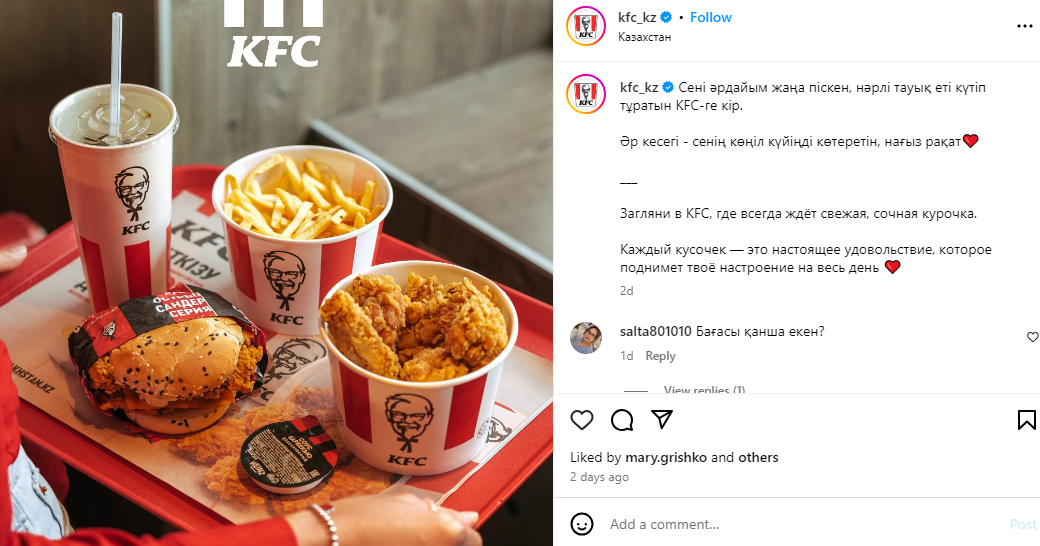
For instance, KFC’s Kazakhstan page utilizes the local language and influencers, while showcasing promotions and products specific to the region. This strategy merges regional distinctions with KFC’s recognizable global brand identity through its color schemes, typography, and design elements.
An effective global social media marketing strategy enables you to clearly identify your new audience. You can then plan how to engage with that audience through your branding to attain your desired outcomes.
Prepare for success by ensuring the appropriate documentation is in place and developing methods to unify your team. This allows for a broader reach while keeping your strategy aligned with local priorities.
8 Guidelines for Excelling in Global Social Media Marketing
Establish your global strategy by adhering to these eight steps. They will guide you through the planning and execution phases while helping you refine your approach over time.
1. Define your social media goals
Having a social media plan without specific objectives is akin to traveling without a destination. You may have momentum, but you’ll be unsure if you’re moving in the right direction.
Clarify what you aim to accomplish with each of your social media profiles and for each regional audience. Some prevalent social media objectives include:
- Enhancing brand visibility
- Increasing sales or leads
- Improving community engagement or PR
- Expanding your audience through follower growth
- Driving traffic to your website
If you’re already active on social media, perform a global social audit. An audit will help assess the current performance of each account and uncover insights that inform your future objectives.
This video provides additional details on conducting a social media audit.
2. Comprehend your global market
After establishing your objectives, grasp the uniqueness of your global market. A core aspect of international marketing is understanding how to effectively promote your brand to people from varied cultures and regions.
Different countries prioritize different platforms; Southeast Asia is a prime example. In 2024, Facebook is the leading social media platform across numerous countries. YouTube enjoys popularity in Indonesia, while X (formerly Twitter) is favored in Thailand and Laos.
The initial stage of your strategy should involve selecting the appropriate platform for your target audience. Consider these factors when making your decision:
- Platform popularity and accessibility: Facebook reigns as the most utilized platform globally in terms of monthly active users. However, in China, where Meta is restricted, Weibo or WeChat are alternatives. While LinkedIn is the largest networking platform, Xing is more prevalent for German job seekers.
- Target audience demographics: Though there’s some overlap, different age groups tend to gravitate towards distinct platforms. If your audience is youthful, platforms like TikTok and Instagram may be your focal point; for older demographics, Facebook is essential.
- Your team’s expertise: Platforms like TikTok demand skills in video editing, visual storytelling, and more. Consider expanding your social media team if needed.
- Your goals: These could create opportunities to leverage different types of applications. For instance, if you’re aiming to boost customer service, consider utilizing WhatsApp to assist global customers.
- Emerging social media platforms: Determine which platforms are gaining traction in different regions. For instance, in Europe, 41% of consumers express intent to use WhatsApp.
Utilize your existing social media following to gain regional insights through social listening.
By leveraging social listening tools, you can gauge audience sentiment towards specific content. Employ a sentiment tracker to assess positive or negative feelings and apply this knowledge to shape your global strategy.
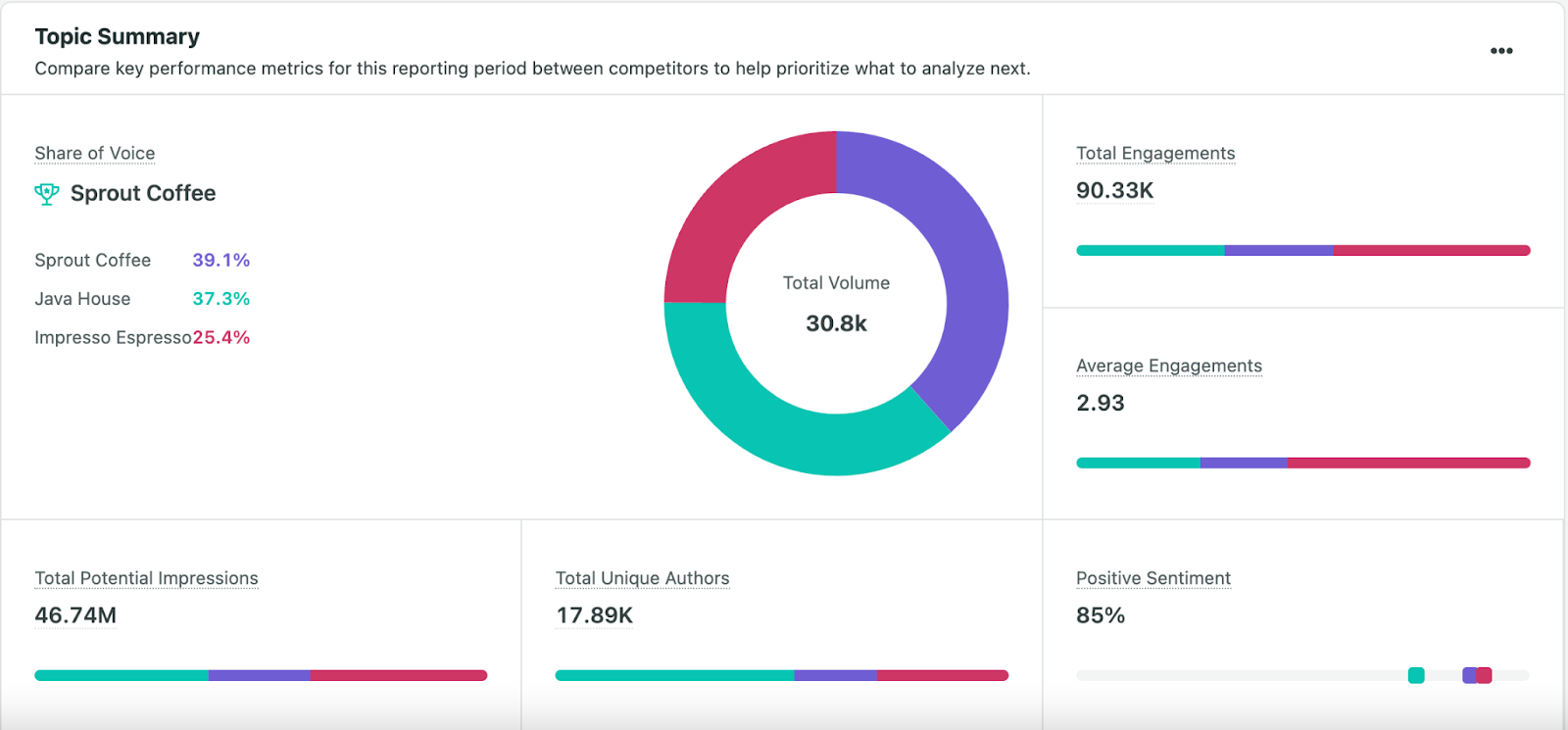
Using a social listening tool like Sprout, you can become an expert on your audience, recognizing conversation patterns and uncovering significant topics. This data is instrumental in understanding your new target market and their expectations from your social media efforts.
3. Develop a global social media marketing team
There are numerous methods to build a social media team. Depending on your company’s structure, determine if your team will manage your social accounts independently or under corporate guidance. Be clear on whether regional product leaders contribute to the overarching global strategy.
Your social media team may also be tasked with engaging with your audience through comments, direct messages, or other outreach methods. If so, adapt your approach to cater to each regional audience.
Using a tool like Sprout’s Customer Care solution can enhance your team’s ability to personalize responses swiftly, thus improving communication across regional boundaries.
4. Create audience personas for more effective targeting
After gaining an understanding of your audience and assembling your team, it’s vital to develop audience personas for your new market.
Collaborate with influencers and marketing team members who have firsthand experience in your selected expansion region, if possible. This collaboration will help you steer clear of cultural appropriation and develop targeted campaigns that resonate with particular markets.
Cultural events regularly occur across social networks. For example, trending TikTok sounds can span multiple regions, and discussions on X often arise based on breaking news. Devise a strategy to respond to cultural moments promptly, and when they resonate most with your target audience. For instance, below is Nando’s Pakistan account celebrating the recent gold medal success of a Pakistani athlete.

You can develop audience personas leveraging your existing social media data. Assess your current audience using social media marketing tools, then consider how to adjust this data based on social variances in your new market.
Social listening technology can refine this data further using comment and post engagement metrics. For deeper insights, utilize competitive intelligence to gain data from your competition.
This information can reveal pain points and common traits, assisting you in creating several distinct personas.
Once your personas are established, incorporate this information into your brand voice. Contemplate how you can adjust your messaging to connect more effectively with these specific regional personas.
5. Utilize influencer partnerships
Strategies for influencer marketing should align with your broader global approach. Collaborating with influencers who possess engaged regional audiences can significantly amplify your reach and connect directly with your target personas.
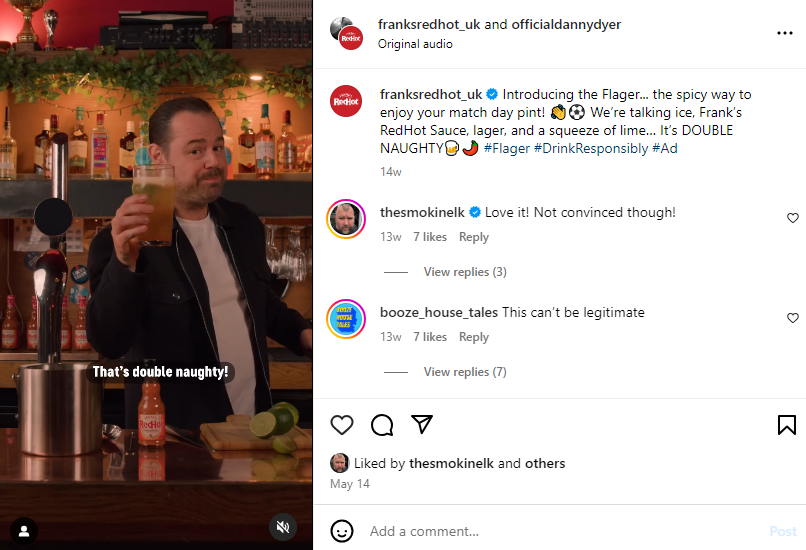
As an example, the US brand Frank’s RedHot Sauce collaborated with UK celebrity influencer Danny Dyer through its regional UK account. This partnership bolstered their brand’s reputation and sales within the UK.
It’s crucial to utilize an influencer marketing tool to identify the right influencers for your campaigns. Tools like Sprout provide access to a wide range of filters, helping you narrow down influencers by their popularity in particular countries. You can also easily manage and track the outcomes of your global influencer campaigns.
6. Allocate budget for your global social media strategy
When expanding your social media initiatives globally, budget considerations come into play. Break down your overall marketing budget to create localized budgets for each region. This helps maintain control over costs associated with each area and account.
When collaborating with influencers, factor in the varying costs associated with individuals from different regions, as their value assessments for their work will differ. Also, familiarize yourself with typical influencer pricing prior to negotiations.
Ensure localized costs are incorporated into all your budgets, including ad expenditure, content creation costs, and content management expenses. These will vary based on the amount handled in-house versus outsourced.
Explore options to optimize your regional budgets with gathered costs from previous results, customer feedback, or team assessments.
Lastly, always earmark a contingency fund for unexpected expenses such as emergency crisis management, currency shifts, or ad experimentation.
7. Implement strategies wisely using a social media management tool
Choosing the appropriate social media platforms is merely the first step. You also need to be strategic and creative in your content creation to effectively engage your audiences and utilize tools to your benefit.
Social media management solutions can help you harness current trends, automate and schedule localized content, and propose sentiment adjustments via AI, among other functions. Utilize these tools to:
Enhance video content (especially short-form)
Short-form video has amassed significant popularity, particularly across social media platforms.
Harnessing the type of content that consumers wish to engage with can elevate your outreach and engagement. Emphasize this format, especially on networks prioritizing it like TikTok, Instagram Reels, and YouTube Shorts. Below, PlayStation Italia collaborated with an influencer to craft an Instagram Reel that resonates with their target demographic.

Utilize social listening to track customer behavior
Social listening can provide essential insights that assist throughout all stages of global social marketing.
Enhance your listening capabilities with AI social listening tools that streamline the collection and measurement of your listening insights.
Refine your brand voice and messaging
Establish a dedicated brand voice for each of your selected target markets. Keep in mind that your English may need adjustments for non-native speakers.
For brand values and taglines, translate these into the local language and consult an expert to ensure they don’t require modifications. Often, even a slight alteration in wording can have a substantial impact.
Below, Netflix Latin America employs a popular meme for its SpongeBob audience in Spanish.

Schedule posts in local time zones and message accordingly
Your most engaged audience may be in the US, but if expanding in Germany, you’ll need to target them accurately. If managing a singular account, incorporate local timings and messaging into your scheduling.
Advance your efforts by planning your content in advance to ensure you reach specific markets at the most appropriate times, without needing to set alarms for odd hours.
Stay informed about local news, trends, and holidays
Local breaking news has the potential to go global. By tracking it as it unfolds, your team can react promptly or even pause scheduled postings.
Holidays also play a crucial role for international brands. For instance, Father’s Day is celebrated on different days globally. Prepare by documenting any market-specific holidays or significant dates to prioritize in your content calendar. Below, Apple’s Shot on iPhone campaign celebrates the Chinese New Year.

8. Evaluate your performance to enhance your strategy
Lastly, refine your global social media strategy continuously through performance measurement.
Examine how each of your accounts is performing against your initial goals and contemplate areas for improvement. This analysis is considerably simplified with a social media analytics tool. For example, you can evaluate how posts on various channels perform to understand audience preferences and the reasons behind them. You can also observe how your competitors engage on social media to benchmark your performance, generate reports on each network, and more.
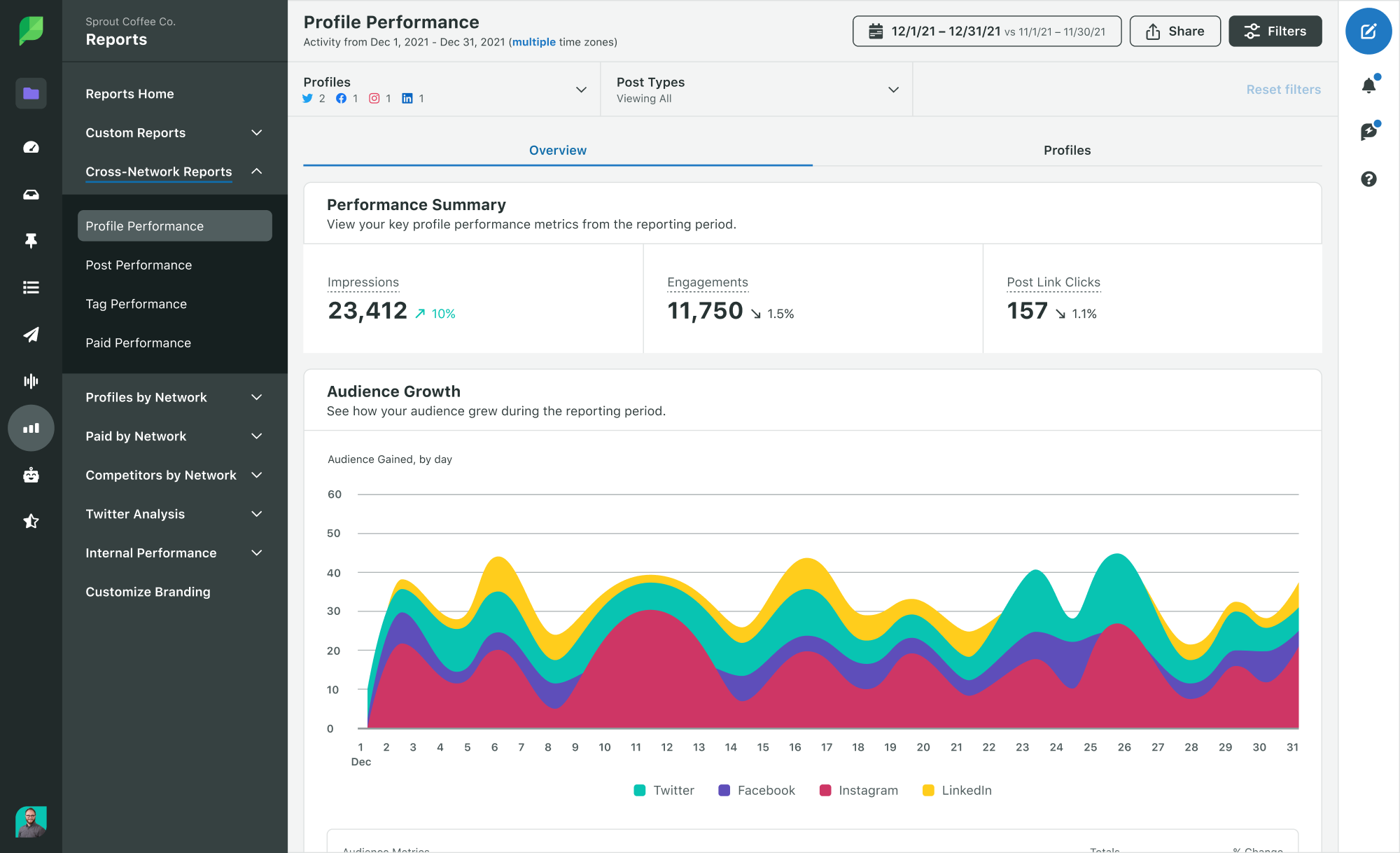
Gather a comprehensive analysis of your social media presence across the various regional accounts and apply data-driven changes to enhance your global strategy.
Initiate marketing to a diverse global audience
Marketing your brand on a global scale is an exhilarating venture, and by following the aforementioned eight stages, you can expand effectively.
An essential aspect of marketing that transcends cultures is that all of them comprise multiple generations, each with distinct expectations.
One crucial area to explore in social media is targeting these different generations through a generational strategy. Discover more about considerations for successful generational marketing across social platforms today.
The article Global social media marketing: 8 strategies for selling worldwide first appeared on Sprout Social.
![[ NEW] Options Siphoning System – TWL – wfpbanker](https://imtoolshq.com/wp-content/themes/Extra/images/post-format-thumb-text.svg)
Recent Comments