

The significance of social media in the realm of sports is undeniably transformative. Regional teams now boast international fanbases, who anticipate immediate updates regardless of the season. When official team profiles don’t meet these expectations, supporters readily step in with their own contributions. This scenario poses a distinct challenge for sports marketers—but like every challenge, it brings immense possibilities.
Look no further than Tim Brogdon, Digital Content Director for the Chicago White Sox. He and his crew revamped the franchise’s method of managing social media, creating opportunities for fans to both rejoice—and lament.

We spoke with Brogdon to gain insight into the team’s tactics and to understand his views on the ups and downs, along with the best practices in sports marketing via social media.
How social media affects sports marketing
Social media has fundamentally modified how teams, athletes, and brands interact with fans. Previously a one-directional communication, it has transitioned into a dialogue with the public. To thrive, teams must first keep pace—which is often easier said than done.
“While fans are keenly focused on the games, sports marketing encapsulates so much more than those singular events,” remarks Brogdon. “We aim to genuinely capture interest and connect with our audience throughout the year.”
Historically, sports enthusiasts primarily witnessed game-day footage filmed by professional broadcasters using advanced equipment. Nowadays, satisfying fans’ increasing demand for content involves a considerable number of contributors. Every role is vital—from digital content teams and fan support to the players themselves—ensuring a continuous flow of exciting content.
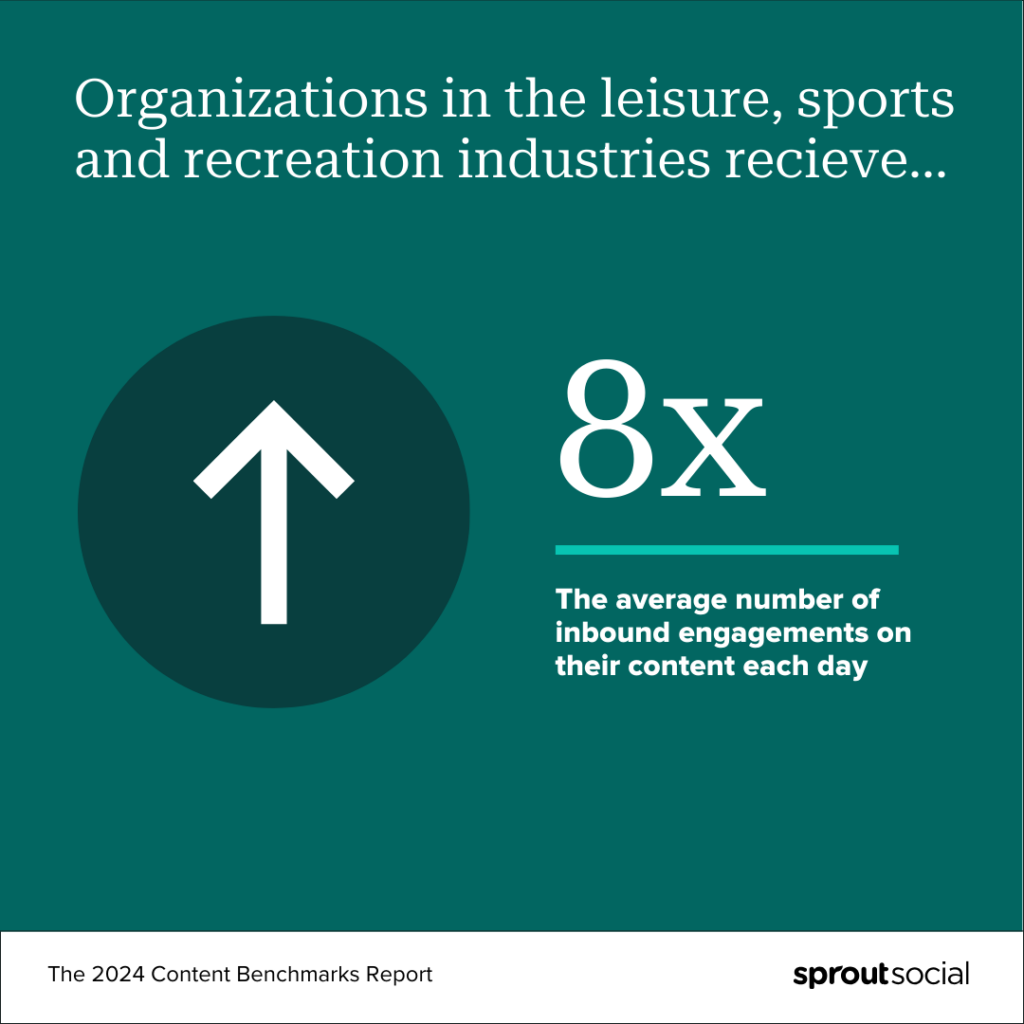
All these initiatives lead to significant achievements in fan engagement. Based on the 2024 Content Benchmarks Report, organizations in leisure, sports, and recreation sectors usually garner eight times the average daily inbound engagement on their content when compared to different industries.
The advantages of social media in sports marketing
Sports marketers who embrace social media can reap substantial benefits for their franchises. Here are three ways social media strategies can enhance the teams they support.
It fosters fan engagement—even in difficult seasons
A social-centric media strategy enables teams to engage with fans in a more relatable, less corporate manner, thus decreasing reliance on victories for positive interactions. The White Sox are not the pioneers of this approach; Brogdon drew inspiration from another major player in the sports marketing field: The Cleveland Browns.
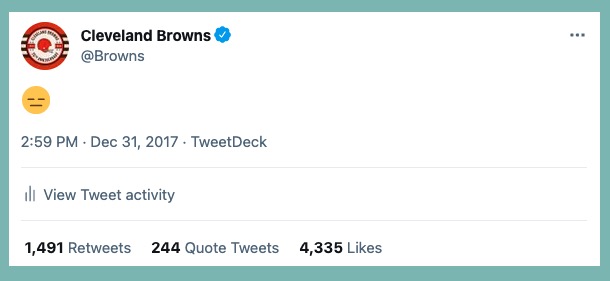
The White Sox social media team found analogous success after breaking the record for the most losses in a single season. “In September, the White Sox ranked third for engagement on X and claimed the top spot in engagement per follower. This was during a period when Shohei Ohtani made history with his 50/50 season, and other franchises were competing for playoff spots. We transformed on-field challenges into off-field victories.”
It broadens outreach to new demographics
With the advent of the algorithmic feed, what was once a stranger is now merely a fan yet to discover your content.
“Our strategy isn’t solely about follower growth,” clarifies Brogdon. “The algorithms deliver content to individuals, regardless of their following the Chicago White Sox accounts. Instead, we focus on creating content that prompts viewers to stop, engage, like, and comment. Shares and direct messages are also crucial, as they play a role in virality.”
The impact of social media on sports marketing extends beyond baseball. An unprecedented 5 billion individuals participated on social media during the 2022 World Cup, with the 2024 Summer Games achieving 12 billion engagements. The platform transforms devoted fans into spectators analyzing the action, while simultaneously introducing the game day experience to fresh audiences, eager for engagement.
It generates new revenue streams
Corporate sponsorships have long been a primary source of revenue for professional sports teams, but previously, promotional prospects were largely restricted to stadium signage and uniforms. Today, with social media, opportunities for lucrative partnerships have significantly broadened.
“Our revised strategy at the season’s end gained substantial visibility on social media and attracted earned media attention, culminating in a partnership with Dude Wipes,” mentions Brogdon. “Thus, besides boosting engagement, impressions, and growth across our social platforms, we managed to generate revenue for the organization even as the season approached its conclusion.”

The narrative behind the Chicago White Sox’s fresh social media approach
Every social media manager knows that behind each brand meme is an array of strategy discussions and layers of internal approvals—and sports is no different. How did the White Sox secure approval for a relatable and self-aware social media approach that dealt with on-field adversities? Simply put, they prioritized teamwork.

“Our team extensively advocated internally to demonstrate the potential advantages of discussing defeats in a friendly manner while shifting focus away from players and the front office,” notes Brogdon. “Given that we witnessed many new players join before the 2024 season, our initial strategy aimed at getting to know them. We sought to make them relatable so fans would regard them with empathy and respect.”
As September approached and the chance to create history loomed large, Brogdon and his team invested time to ensure alignment among all parties. This approach involved managing upward, alongside a solid proof of concept.
At one instance, the social media team even produced memes spontaneously during a meeting with the senior vice president of communications from the front office, showcasing real-time examples of the strategy’s potential.
“We literally entered meetings with printed memes to present as illustrations during discussions,” Brogdon shares. “We had to validate that our concepts were rooted in best practices while stepping outside our usual protocols. We aimed to advance a more relatable interpretation of our existing brand voice, but presenting that effectively to executives necessitates time, effort, and creativity.”
All the internal promotion, meetings, and dedication that underpinned their strategic vision ultimately resulted in a 5% increase in social media sentiment during September. Additionally, it provided fans with another team to rally behind: the social team.

4 essential social media best practices for sports marketers
In the world of professional sports, an effective strategy can’t be developed in isolation. Numerous other teams and individuals will influence and be influenced by your efforts. For a more cohesive social-centric experience, collaboration is key. Here are four best practices for achieving that.
1. Invest time in gaining internal support
Ideally, all your colleagues would completely endorse your strategy after just one presentation. However, this isn’t the reality, but don’t let that discourage you. The time dedicated to securing internal support is vital for your strategy’s success.
“Establishing communication and cultivating relationships with individuals who can enhance your strategy can’t occur instantaneously,” Brogdon explains. “Selling your strategy internally takes time and effort. Numerous stakeholders need to be onboard, including social and video teams, marketing, sponsorship, supervisors, and so on.”
If you aspire to revamp your organization’s social presence creatively, it’s imperative to slow down to expedite the process. Engage with colleagues throughout your organization, articulate the motivations behind your concepts, and consider their feedback. This effort will help solidify a more compelling business case when opportunities arise.
2. Leverage your network
Though social media’s role in sports marketing is substantial, teams tend to be smaller than you would imagine. If you’re a sports marketer seeking creative inspiration, consider looking outside your organization for assistance.
“One of my favorite aspects of sports marketing is the sense of community,” Brogdon states. “It’s far smaller than many think. You can witness many fascinating success stories from colleagues or acquaintances made throughout your career.”
Sharing both successes and setbacks with other social media experts within the sports sector can ignite big ideas. “Everyone creates content aimed at their primary and secondary audiences, all while considering their brand identity and audience demographics. It’s intriguing because we’re all granted access to identical data, yet everyone interprets it differently.”
3. Maximize interactions with players
Players are your most valuable content creators, but their primary focus is on on-field performance. How can you prepare them to produce social content without interrupting their gameplay?
The Chicago White Sox social team optimizes the limited time available with players by weaving content strategy into existing interactions. “We have two main opportunities to provide social media education to our players,” Brogdon elaborates. “We engage with newly acquired players at a social media session in the fall in Glendale and conduct a comprehensive team session during Spring Training.”

These sessions not only familiarize the social team with the White Sox digital brand but also offer players insights into how the social and video teams will collaborate with them throughout the season. Brogdon describes this relationship as ‘symbiotic’—players learn how to aid the social team’s efforts while the social team assists players in boosting their personal brands.
4. Establish a reporting framework to support corporate partnerships
When the Chicago White Sox sought a new social media management tool, Sprout Social’s Tagging feature immediately caught their attention for its convenience and efficiency.

“The ability to generate project reports using custom Tags was an immediate standout for us,” shares Brogdon. “Being capable of delivering precise, channel-specific data to marketing, PR, corporate partners, and senior leadership is invaluable.”
Major League Baseball is not the only organization to acknowledge the advantages of this feature. The Atlanta Hawks social media team also employs Sprout to execute their advanced Tagging strategy.
“We assign a content pillar tag and a content medium tag to every post, at the very least,” explained Katie DuPre’, Social Strategy Manager for the Atlanta Hawks, in a previous discussion. “We also create campaign ID tags for larger marketing initiatives. For instance, during All-Star Weekend, all live content coverage was tagged accordingly. Once the event concluded, we could review and assess the success of our event coverage.”
In the domain of social media and sports, bringing your A-game is essential
Sports marketers around the globe, representing various teams and leagues, are making significant strides on social media. These endeavors don’t just influence marketing metrics; they introduce franchises to the new generation of fans.
To get in the game, it’s crucial to have a social media management and analytics platform that offers real-time insights and engagement opportunities. Download our guide for selecting a social media management tool and discover how to make the most informed decision today.
The article Social media in sports marketing: Insights from the Chicago White Sox’s transformative strategy was initially published on Sprout Social.

Recent Comments