
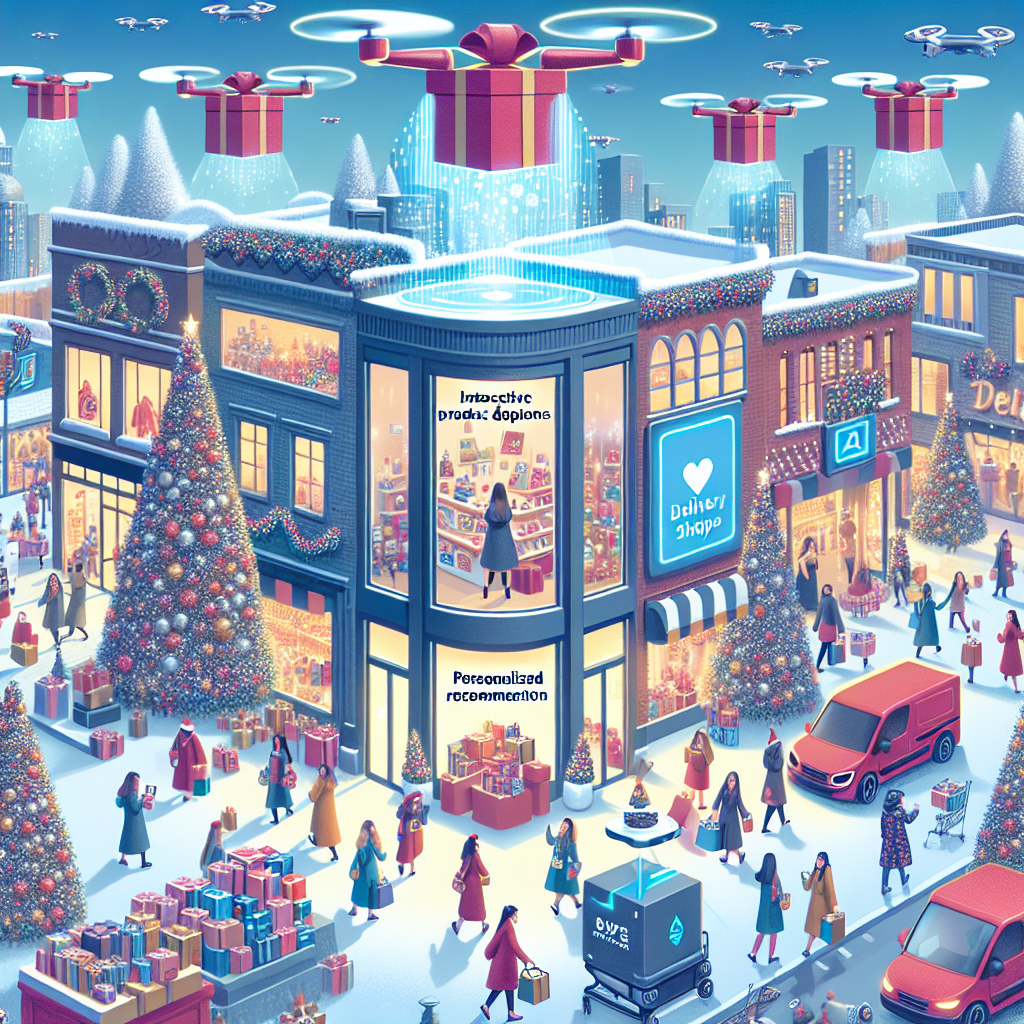

Criteo expects AI to make a significant difference during Cyber Week and the holiday season.
“Criteo has been working on AI for the best part of 20 years,” said Romain Lerallut, VP and head of Criteo’s AI Lab. “We used to call it machine learning. One thing I’ve been amazed by over the last couple of years is the speed — it’s like a hockey stick — so everything I say today might be obsolete by tomorrow. Caveat emptor.”
What AI can bring to the holidays. Lerallut sees two key trends. “One is business as usual — AI for performance and personalization — but it will do it better.” The deployment of genAI in the customer journey means that recommendations or additional items for a shopping list can be generated without feeding the shopping list into a third-party LLM like ChatGPT (Lerallut’s example was AI suggesting a good Burgundy to accompany a boeuf Bourguignon).
“The other area is using generative AI to create content,” he said. Copywriting, generating descriptions for the product page and creating images — these uses are table stakes. “One thing we are testing is taking a product image, usually on a white background, and making it look fancier. What kind of image will resonate with a certain audience?”
Dig deeper: Salesforce – AI will drive $61 billion in online Cyber Week sales
The holidays are different. Of course, product recommendations, whether driven deterministically (manual algorithms) or based on some form of AI have been around for a long time. These are essentially predictive recommendations that assume the future will look like the past. But the holiday season can disrupt that pattern.
“You might want to purchase something a little bit different,” said Lerallut, “maybe you’re not buying for yourself but buying for your family. The new types of AI actually can capture those things, knowing it’s the festive season: ‘That thing that you would buy normally, I am going to push the premium version of it.’ Those models know about context, they know about the world.” Standard recommendation engines are only working with purchase data, sometimes from just the last few months.
But can mid-size retailers take advantage? Some aspects of AI are already becoming commoditized, said Lerallut. “It becomes easier to access the first tier of capabilities. A tiny, single-person enterprise can absolutely accelerate their content creation.”
What is going to be harder to access is the second-tier, personalized AI generation. That means having access to a lot of data on a brand’s customers, on audiences. “That is not going to be available off-the-shelf,” he said. “This is why Criteo has a strong opportunity, enabling all our clients, big and small, to have enough access to those capabilities.”
Seeing interactions with billions of users around the world give Criteo a deep well of consumer data. “We can give our clients access to something they wouldn’t have on their own.” (Lerallut emphasized that this is done in a compliant way.)
Bringing consumers on board. To some extent, the AI will work under the hood, unnoticed by users (Lerallut observes that in Europe, there are requirements for labeling AI activity). “If the AI does its job, it should be transparent and natural,” said Lerallut. “It should feel like something useful and helpful.” In particular, he feels it should be transparent about product recommendations, serving the interests of the retailers. “But if we do our job the best we can, the recommendation of products becomes a service to the users. It’s also a service to our clients.”
It’s about successful match-making, said Lerallut. Done well, it’s not a nuisance.
Why we care. It’s not just hype. That’s the bottom line. Will all this aspirational AI, aimed at providing shopping assistance while upselling and growing baskets, appeal to consumers? Major vendors are betting on it. We’ll soon see.
The post AI is ringing in big holiday shopping changes appeared first on MarTech.
# How AI is Transforming Holiday Shopping Trends and Experiences
The holiday season has always been a critical time for retailers, with consumers flocking to stores and online platforms to purchase gifts, decorations, and festive essentials. In recent years, artificial intelligence (AI) has emerged as a game-changer in the retail industry, revolutionizing how businesses operate and how consumers shop. From personalized recommendations to supply chain optimization, AI is reshaping holiday shopping trends and creating more seamless, efficient, and enjoyable experiences for shoppers.
## 1. Personalized Shopping Experiences
One of the most significant ways AI is transforming holiday shopping is through personalization. Retailers are leveraging AI-powered algorithms to analyze customer data, such as browsing history, purchase behavior, and preferences, to deliver tailored product recommendations. This level of personalization not only enhances the shopping experience but also increases the likelihood of conversions.
For example, e-commerce platforms like Amazon and Shopify use AI to suggest products that align with a shopper’s interests. During the holiday season, this technology becomes even more valuable as consumers search for unique and thoughtful gifts. By offering curated recommendations, AI helps shoppers save time and discover items they might not have found otherwise.
## 2. Virtual Shopping Assistants and Chatbots
AI-driven virtual assistants and chatbots are becoming indispensable tools for holiday shoppers. These digital helpers provide real-time support, answering questions, offering product suggestions, and even assisting with checkout processes. Available 24/7, chatbots ensure that customers receive immediate assistance, reducing frustration and improving satisfaction.
For instance, a shopper looking for a last-minute gift can interact with a chatbot to quickly find the perfect item, check availability, and arrange for expedited shipping. Retailers benefit as well, as chatbots help reduce the burden on customer service teams during the busy holiday season.
## 3. Enhanced Visual Search and Augmented Reality (AR)
AI-powered visual search tools are changing the way consumers discover products. Shoppers can now upload images of items they like, and AI algorithms will identify similar products available for purchase. This feature is particularly useful during the holidays when consumers are inspired by festive decor, fashion trends, or gift ideas they see online or in stores.
Additionally, augmented reality (AR) applications, driven by AI, allow shoppers to visualize products in their homes before making a purchase. For example, furniture retailers like IKEA use AR to let customers see how a piece of furniture will look in their living space. During the holidays, this technology can help shoppers visualize how decorations, such as Christmas trees or lights, will fit into their homes.
## 4. Predictive Analytics for Inventory Management
AI is also transforming the behind-the-scenes aspects of holiday shopping, such as inventory management. Retailers use predictive analytics to forecast demand for specific products, ensuring they stock the right items in the right quantities. This minimizes the risk of overstocking or running out of popular items during peak shopping periods.
For example, AI can analyze historical sales data, current market trends, and even social media chatter to predict which toys, gadgets, or clothing items will be in high demand. By optimizing inventory levels, retailers can avoid disappointing customers and maximize revenue during the holiday rush.
## 5. Dynamic Pricing and Discounts
AI enables retailers to implement dynamic pricing strategies, adjusting prices in real-time based on factors such as demand, competition, and inventory levels. During the holiday season, when shoppers are hunting for the best deals, dynamic pricing ensures that retailers remain competitive while maximizing profits.
AI can also personalize discounts for individual shoppers. For instance, a retailer might offer a loyal customer a special holiday discount on an item they’ve shown interest in. These targeted promotions not only drive sales but also foster customer loyalty.
## 6. Streamlined Supply Chain and Delivery
The holiday season often brings logistical challenges, such as increased shipping volumes and tight delivery deadlines. AI is helping retailers streamline their supply chains and improve delivery efficiency. Machine learning algorithms can optimize routes for delivery drivers, predict potential delays, and suggest alternative solutions to ensure on-time delivery.
For example, companies like FedEx and UPS use AI to manage their logistics networks during the holiday peak. Retailers that partner with these carriers can provide customers with accurate delivery estimates and real-time tracking updates, enhancing the overall shopping experience.
## 7. Fraud Detection and Secure Transactions
With the surge in online shopping during the holidays, the risk of fraud also increases. AI plays a crucial role in detecting and preventing fraudulent activities. Machine learning algorithms can analyze transaction patterns to identify suspicious behavior, such as unusual purchasing activity or unauthorized access to accounts.
By enhancing security measures, AI helps protect both consumers and retailers from financial losses, ensuring a safer shopping environment during the holiday season.
## 8. Sustainability and Ethical Shopping
As consumers become more conscious of sustainability, AI is helping retailers meet these demands. AI-powered tools can analyze the environmental impact of products and suggest eco-friendly alternatives. During the holidays, shoppers can use these tools to make more ethical purchasing

Recent Comments