

Which social media platforms should your brand concentrate on?
Not long ago, the response might have been, “as many as your team can manage.” However, circumstances have shifted. Social media management is rapidly advancing, and consumers are growing more selective about where they engage. They now utilize various platforms for distinct purposes—be it customer service, entertainment, or staying informed. Moreover, they anticipate your brand being present where they typically interact.
The most effective strategies find a middle ground between your business goals and audience behavior. In this article, we’ll delve into how to prioritize social media platforms so your brand appears where it counts the most.
What constitutes a social media platform?
A social media platform is an online space that facilitates communication, interaction, and content sharing among individuals and communities. This definition is broad, and it’s meant to be. As consumer and advertiser preferences evolve, so too do social media platforms.
Consider this: Early social media primarily focused on connecting existing communities through text-based content and personalized profiles—think a custom-coded MySpace page or posting on your friend’s Facebook Wall.
In contrast, today’s social media is dominated by visual content and algorithm-driven feeds, ushering in an age of hyper-personalization. Feeds and timelines have become uniquely tailored to each individual based on their preferences. Interactions are less public and thrive in comment sections, direct messages, and closed communities.
These transformations might seem abrupt, yet they stem from numerous subtle changes occurring consistently over extended periods. Hence, staying informed about your preferred platforms is essential.
The three categories of social media platforms (and their advantages)
The social media platform landscape has expanded significantly in recent years. New platforms are continually emerging; existing ones evolve to stay competitive, and the idea of maintaining a presence on every platform is becoming less practical, even for well-resourced teams.
Before we can assist you in determining where to focus your efforts, let’s align on how consumers are utilizing various types of social media platforms today.
General social media platforms
General social media platforms are what most individuals envision when they think of traditional social spaces. They are primarily designed for communication, connection, and content sharing. These platforms enable a wide variety of interactions—from posting text and images to professional networking and community building. These platforms include:
According to the 2024 Social Media Content StrategyReport, 84% of social media users have an Instagram account, making it the most widely used social media platform across various age groups.
Users primarily scroll through Instagram to connect with friends and family and to combat boredom. However, half of all users also engage with brands on the platform at least once daily.
Two decades after its inception, Facebook continues to be one of the most widely used platforms globally, having transformed how we connect and share online.
Currently, approximately 83% of all social users possess a Facebook profile. Gen X leads in Facebook utilization, closely followed by Boomers and Millennials. It remains the preferred platform for news and current events. Consumers of all ages are also likely to seek customer service on social media through Facebook.
X (previously Twitter)
Nearly half (48%) of all social users from various age groups have an X account, with men showing a notably higher likelihood of having an account than women.
Consumers use X for entertainment, connecting with friends and family, and following influencers and celebrities. When engaging with brands, the purpose on X shifts slightly; while entertainment remains a key factor, consumers are also inclined to interact with educational product content and contests.
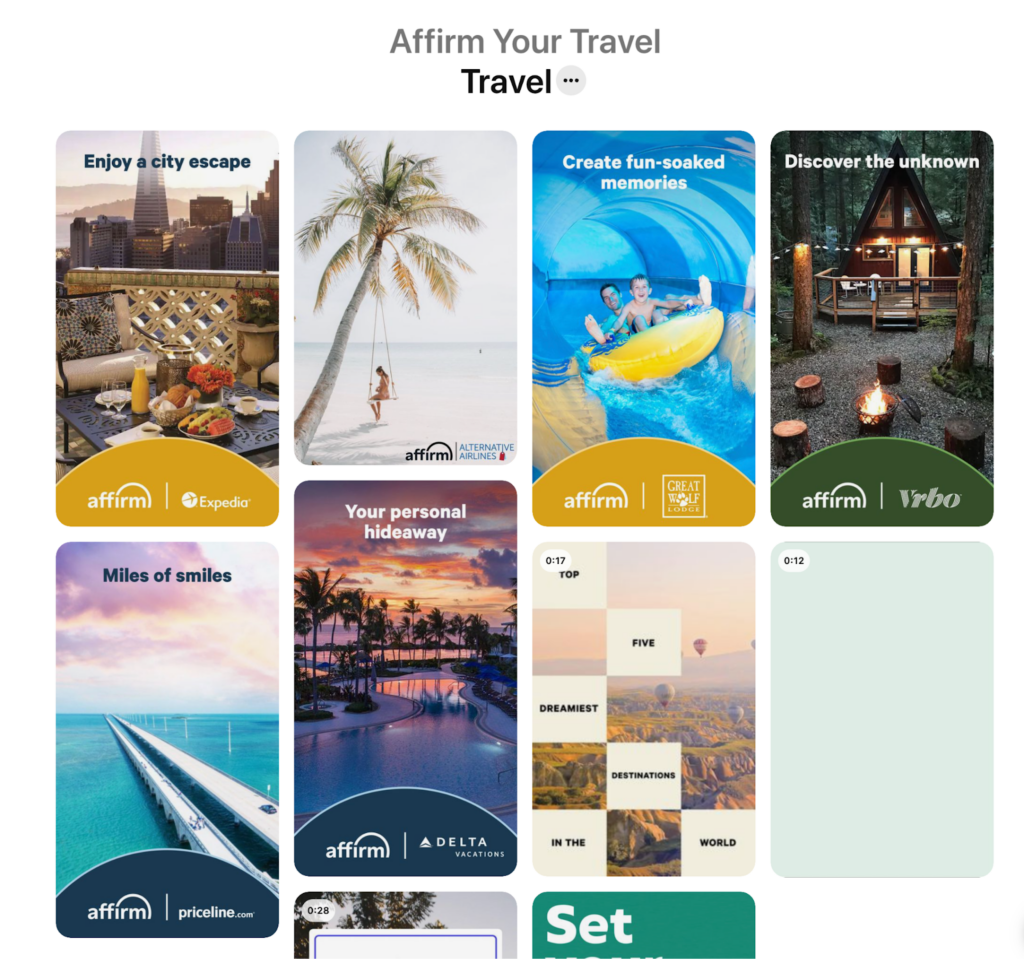
Users regard Pinterest as a positive space. In fact, over half (51%) of surveyed consumers believe Pinterest features more positive content compared to other platforms, with that number rising further among Gen Z.
The best brands on Pinterest utilize the platform to inspire their audiences with aspirational content. For instance, Affirm, a fintech firm offering buy now, pay later services, capitalizes on Pinterest to engage Millennial audiences considering their next significant purchase—be it an adventure trip or furnishing their first house.
LinkedIn caters mainly to Gen X and Millennial corporate professionals, establishing itself as the premier platform for career-related activities—jobs, networking, professional growth, and personal brand development.
As the leading venue for B2B marketing, it’s an ideal space for lead generation. Recent LinkedIn statistics indicate that 62% of B2B marketers obtain leads via LinkedIn. Even more encouraging, it boasts 2x higher conversion rates and a 33% increase in purchase intent compared to alternative platforms.
Threads
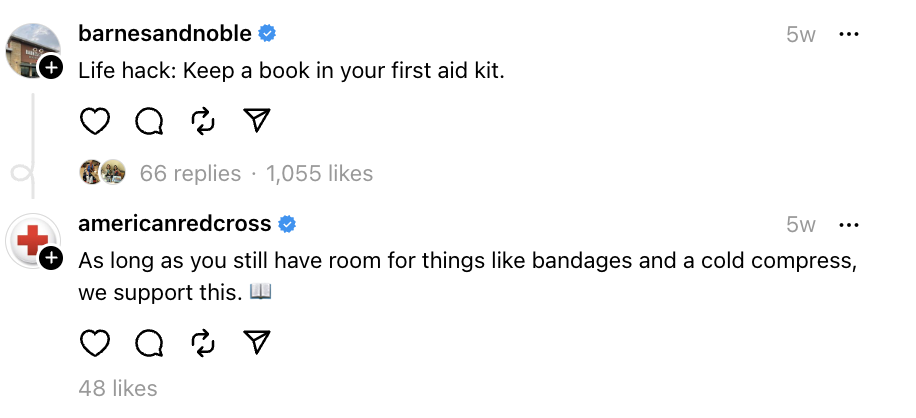
In 2023, Meta introduced Threads, which rapidly became the fastest app to achieve 100 million users. Since then, new features have been introduced, and users are starting to determine how Threads fits into their daily scrolling routines.
Currently, most users engage with Threads to pass time, but many also utilize it for news and real-time event updates. While entertainment and education are significant draws, users enjoy observing brands interact, which has proven an effective strategy for brands on Threads aiming to enhance engagement.
Social entertainment platforms
The emergence of short-form video—coupled with the increased availability of video editing tools like CapCut and Canva—has brought forth what social media consultant Rachel Karten describes as the “social entertainment era.”
Nowadays, consumers favor entertaining content across various platforms, with 66% of social users indicating that “edutainment” is the most engaging form of brand content—surpassing memes, serialized content, and skits. While all platforms are starting to prioritize entertaining material, some networks are inherently designed for entertainment. These include:
YouTube
Over three-quarters (78%) of all social users have a YouTube account, and this figure is even higher among Gen Z and Millennials.
As consumer attention spans shorten, YouTube’s relatively lengthy videos remain appealing—even concerning brand posts. More than half (51%) of YouTube users appreciate brands’ long-form videos. Additionally, the format of YouTube content allows for creating short-form content for other video platforms such as Instagram and TikTok, optimizing reach and ROI.
TikTok
Younger consumers have propelled (and continue to propel) TikTok’s swift rise. Although 68% of social users have a TikTok account, this number skyrockets to 86% for Gen Z and 73% for Millennials.
For Gen Z in particular, TikTok transcends being a mere social network. It functions as a search engine, a news outlet, a cultural hub, and an online marketplace. It’s the leading channel for news and product discovery within this age group.
Community-focused social platforms
Community-focused social platforms offer dedicated venues for groups with shared interests. Unlike more generalized social platforms, these networks emphasize group discussions and direct interactions within specific, interest-centric communities. These platforms consist of:
Reddit is a text-oriented social platform hosting over 100,000 communities, known as subreddits, each with its own unique regulations and culture.
The platform’s audience skews younger, with nearly 70% identifying as male. While Reddit is commonly associated with its major subreddits—such as /r/IAmA or /r/personalfinance—it also boasts active communities covering diverse topics, from fitness to beauty and beyond.
Discord
Discord is a voice, video, and text chat platform utilized by over 300 million users globally. Initially a hub for gamers, it now hosts communities for various interests—from readers and horse riders to botanists. If a subject has enough enthusiasts, a Discord server likely exists for it.
While Discord might not be the optimal platform for audience growth, it presents significant opportunities for brands wanting to invest in establishing a long-term community. For brands with strong advocacy initiatives, a Discord server can facilitate meaningful interactions and dialogues among community members, making it a valuable environment for fostering engagement.
Niche social networks
A range of niche social media networks have surfaced to cater to specific community interests. Examples include Letterboxd for cinema fans, Strava for runners, and Nextdoor for local communities—the list is extensive.
If your target market aligns with an existing niche platform, these venues can offer unmatched access to genuine opinions that can enhance your marketing plan. For instance, a construction firm operating in a particular area might find more value in concentrating its efforts on Nextdoor rather than heavily investing in larger networks.
A guide for selecting the ideal social media platforms for your strategy
So, which platforms are most crucial for your brand?
Take a moment to gather a piece of paper and a pen—or launch your preferred note-taking app—and spend some time responding to the following questions. Some responses may come quickly, while others might call for a bit of exploration. Remember, this isn’t a hurried decision. Utilize this time to align all stakeholders on your social approach, ensuring that everyone shares a unified vision. This way, you can confidently narrow your focus.
What are your primary business goals?
Social media holds value beyond just marketing, making it essential to consider both marketing and overall organizational objectives. Limiting your focus solely to your larger marketing team might cause you to overlook opportunities to create a larger impact.
For example, let’s assume you work with a B2B brand focused primarily on marketing conversions. If you select priority platforms solely based on that objective, you might end up dedicating all your efforts to networks that produce a high volume of clicks. Meanwhile, your product team could be concentrating on boosting customer satisfaction (CSAT) scores.
Without considering the product team’s goals, you might end up overlooking platforms that offer valuable customer insights through support queries or community discussions. By paying attention to this feedback, you can collaborate with your team to amplify social influence within your organization.
Social media can impact numerous aspects of a business. Therefore, it’s vital to comprehend priorities at different organizational levels before deciding which platforms to prioritize.
Where does your audience currently engage online?
Keep in mind that effective strategies find equilibrium between business objectives and audience behavior. Overemphasizing one at the expense of the other can result in a strategy that fails to hit the target.
To identify where your audience spends their time currently, merge consumer research—such as the statistics mentioned in this article—with your historical performance data. Utilize a social media management tool to pinpoint which profiles yield the highest impressions and engagement. If you’re leveraging Sprout Social, you can locate this data in the Profile Performance Report.
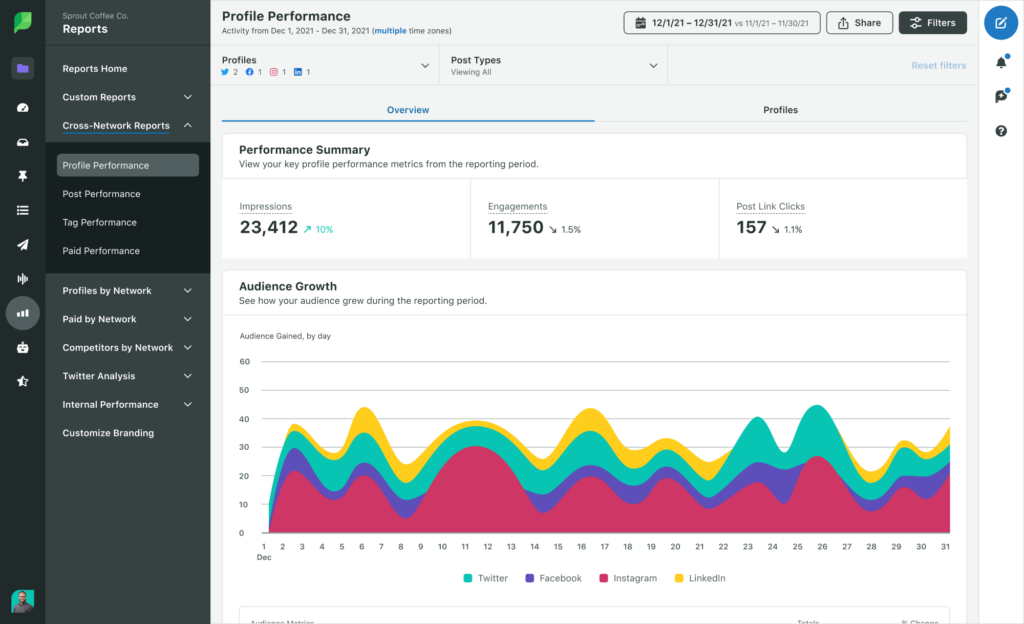
This report will provide a beneficial overview of analytics, allowing you to gauge the performance of your social profiles. If certain profiles consistently outperform others, now is the moment to investigate why.
Where are your competitors most active?
Your final step in the research process involves conducting a competitive analysis. By examining the social media strategies of your top competitors, you can uncover valuable insights that you may have overlooked when concentrating solely on your strategies.
Social media serves as a remarkable resource for competitive intelligence. Marketers frequently tap into social data to evaluate customer loyalty and identify their competitors’ strengths and weaknesses. If you observe your competitors thriving on a specific channel, it’s a solid indication that exploring your presence there would be worthwhile.
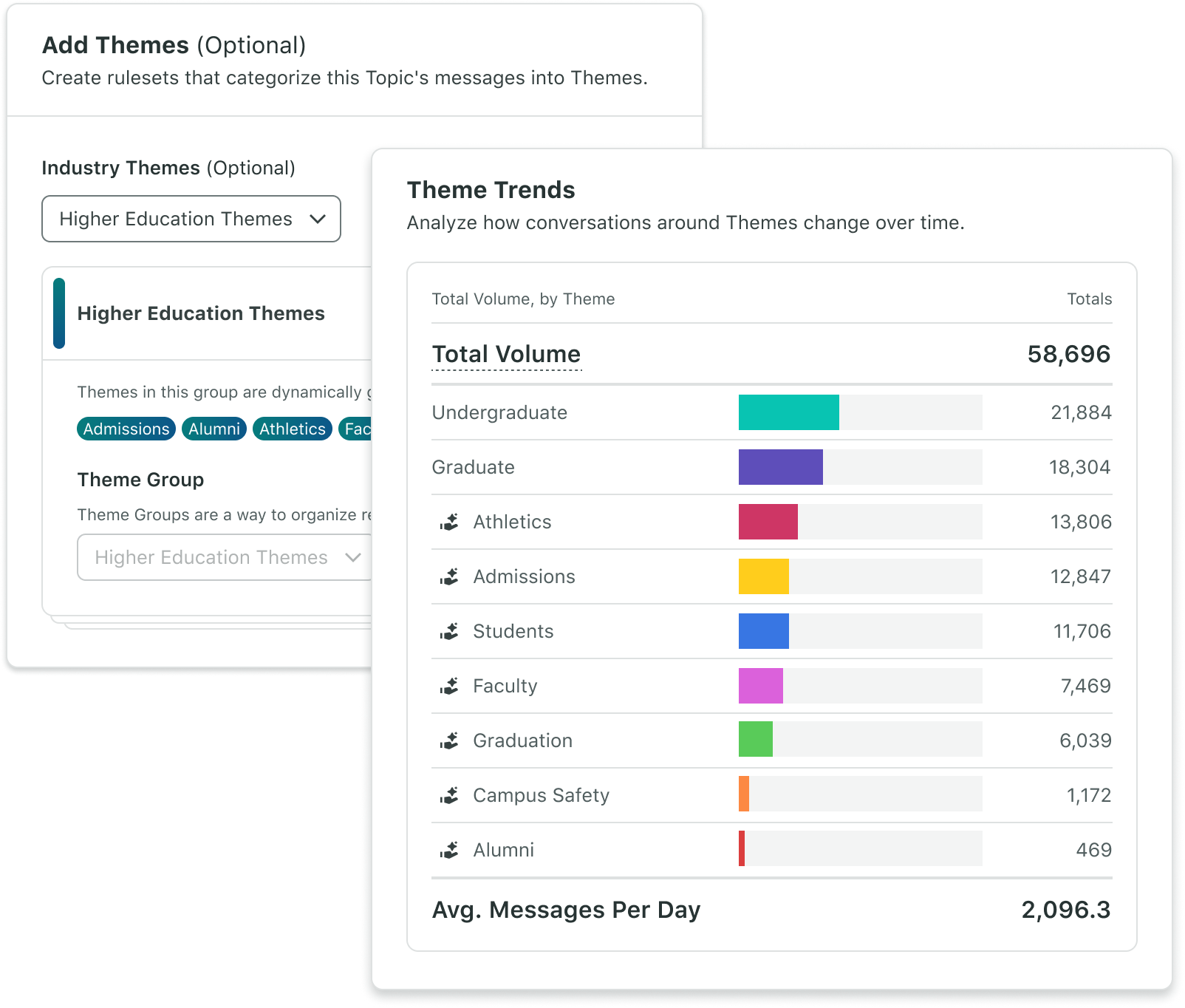
For a deeper analysis, consider employing a social listening tool. With Sprout’s social listening capabilities, you can set up Competitive Analysis Topics and break down the information according to specific Themes. This way, you can uncover which messages from your competitors resonate most with their audiences and where they’re making the most significant impact.
Prioritize the suitable social media platforms for your brand
There is no universal solution for which social media platforms your brand should prioritize. The key lies in merging consumer insights, data, and your marketer’s intuition to arrive at the best choices.
Fortunately, regarding consumer insights, we’re here to help. Our survey of over 4,500 consumers reveals what audiences truly expect from brands on social media—and how those expectations differ across varied platforms. Explore the 2024 Social Media Content Strategy Report to uncover which content types your team should prioritize and where to focus your energy for maximum ROI.
The post A guide to selecting the most effective social media platforms for your brand appeared first on Sprout Social.

Recent Comments