


Marketing technology budgets have declined by 18% over the past six years, with Gartner reporting a radical reprioritization of resources this year. Martech budgets experienced the steepest cuts, reflecting a shift in control from CMOs to other enterprise leaders like IT and CFOs.
This highlights a deeper issue: a lack of trust in martech’s value. While IT and marketing departments have long implemented martech solutions with high expectations, proving their transformative impact remains challenging. This ongoing struggle affects MOps, marketing teams and the broader organization.
The dangerous cost-cutting race
CEOs, CFOs and CIOs have long asked the million-dollar question: “Are we getting value from our martech?” With IT’s support, CFOs may choose to consolidate systems, often neglecting the unique capabilities some marketing systems offer. That type of consolidation can be similar to replacing company trucks and cars with bicycles simply because they all have wheels, and bikes are the cheaper option.
With a similar mindset, some CFOs choose to consolidate various email systems, such as newsletter platforms (e.g., MailChimp), transactional systems (e.g., SendGrid) and marketing automation platforms (e.g., Marketo), into a single solution. However, while all systems use email, their core capabilities do not overlap.
- Newsletter platforms: Deliverability, IP reputation management, bounce rate optimization and blacklist prevention.
- MAPs (marketing automation platforms): Automation sequences, drip campaigns, audience segmentation.
- Transactional systems: Scalability, managing large volumes of time-sensitive emails.
Consolidating these platforms might seem cost-effective, but it leads to expensive fixes since the other email systems cannot replace the other capabilities.
On the other hand, CFOs may not realize that some martech tools do not contribute to company value because most martech metrics are centered on cost rather than value. This can create a perilous downward spiral for the entire company. As Rory Sutherland, Vice Chairman of Ogilvy UK, puts it:
“A cost is quantifiable. If you cut it, it delivers predictable results almost instantaneously. A missed opportunity does not appear on a balance sheet. But serving your existing customer base, ever more cheaply until a weird crunch point where customers get pissed off and go elsewhere.”
This relentless drive to cut costs can lead companies into a trap, sacrificing long-term value and customer satisfaction for short-term gains. Without clear metrics to show martech’s true contribution, it’s challenging for marketing teams to defend their budgets and demonstrate value.
To break this cycle, companies must rethink how they measure martech’s impact, align team objectives and build internal support for martech investments. The following three steps offer a path to achieving this shift and securing martech’s role in driving business growth.
Step 1: Use martech metrics that show value
Most current martech metrics focus on efficiency, not value. The table below highlights how these metrics often emphasize operational efficiency only.
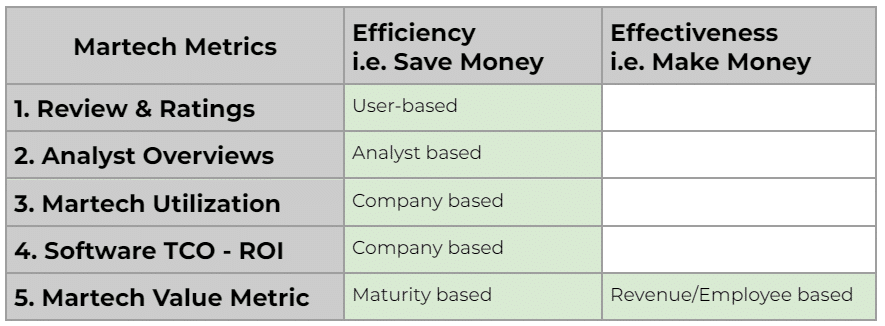
Companies need to strike a balance between opportunity and cost. The martech value metric connects martech maturity with company value by correlating internal performance with external outcomes. Time and time again, companies that can demonstrate the value of martech see their budgets increase.
Dig deeper: The CMO’s guide to aligning martech and business strategy
Step 2: Identify martech agendas
There are two primary agendas within companies.
- Some departments focus on what benefits the company — current revenue, efficiency and doing things right.
- Others focus on customer needs — future revenue, effectiveness and doing the right things.
The matrix below can help identify these agendas before heading into meetings.
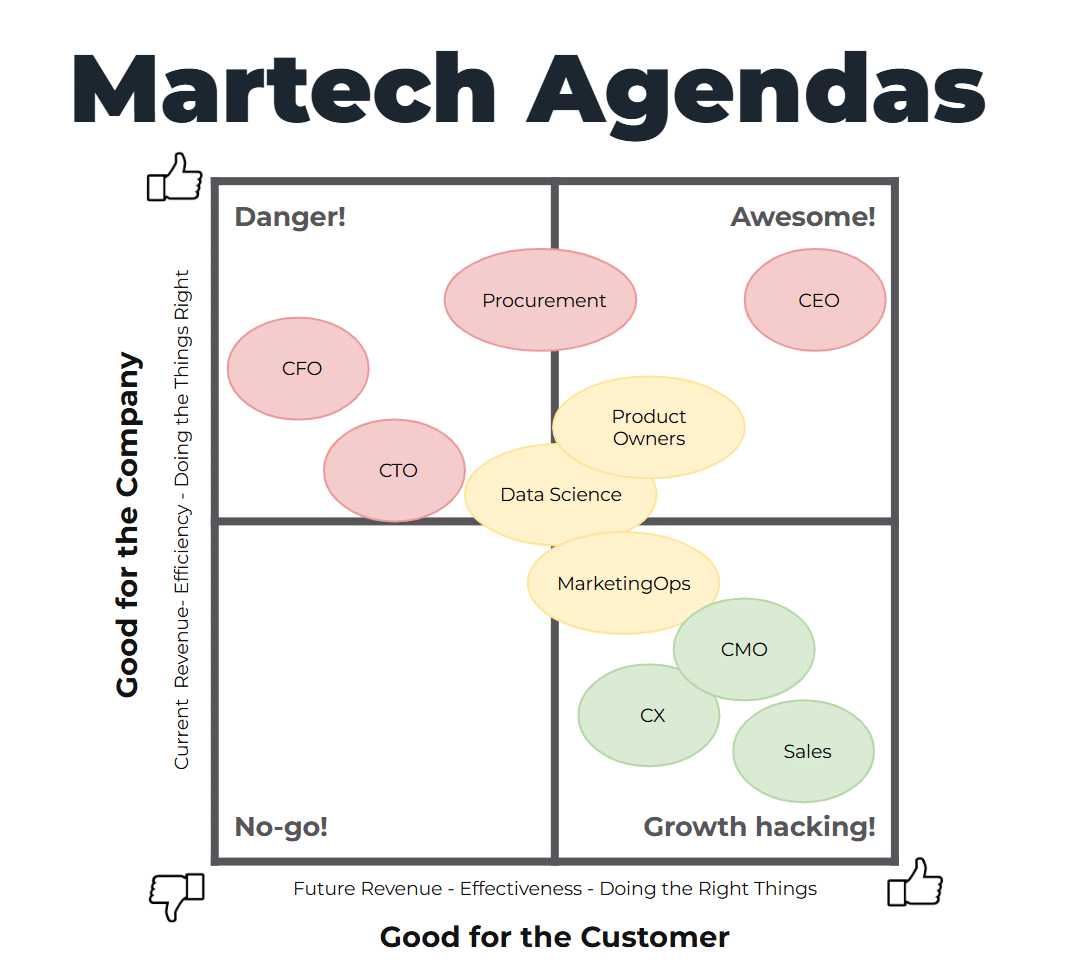
Companies must balance these agendas, recognizing that both are essential. Unfortunately, many fail to do so, leading to ongoing internal conflicts. IT accuses marketing of creating Shadow IT and using point solutions, while marketing accuses IT of deprioritizing their needs, preventing innovative campaigns that maintain brand relevance.
Both sides have valid points. Both need each other. Each approach is necessary for a company’s current and future success. As Dr. Phil once said, “You can’t change what you don’t acknowledge,” and he’s an expert on resolving trust issues.
Step 3: Identify your martech stakeholders
The core issue is that no single department owns the customer experience, so every department thinks they do. This fragmentation results in suboptimal martech utilization and customer experiences. To align and share martech ownership, identifying internal stakeholders (or “buying centers,” as vendors call them) is crucial. There are generally three stakeholder groups.
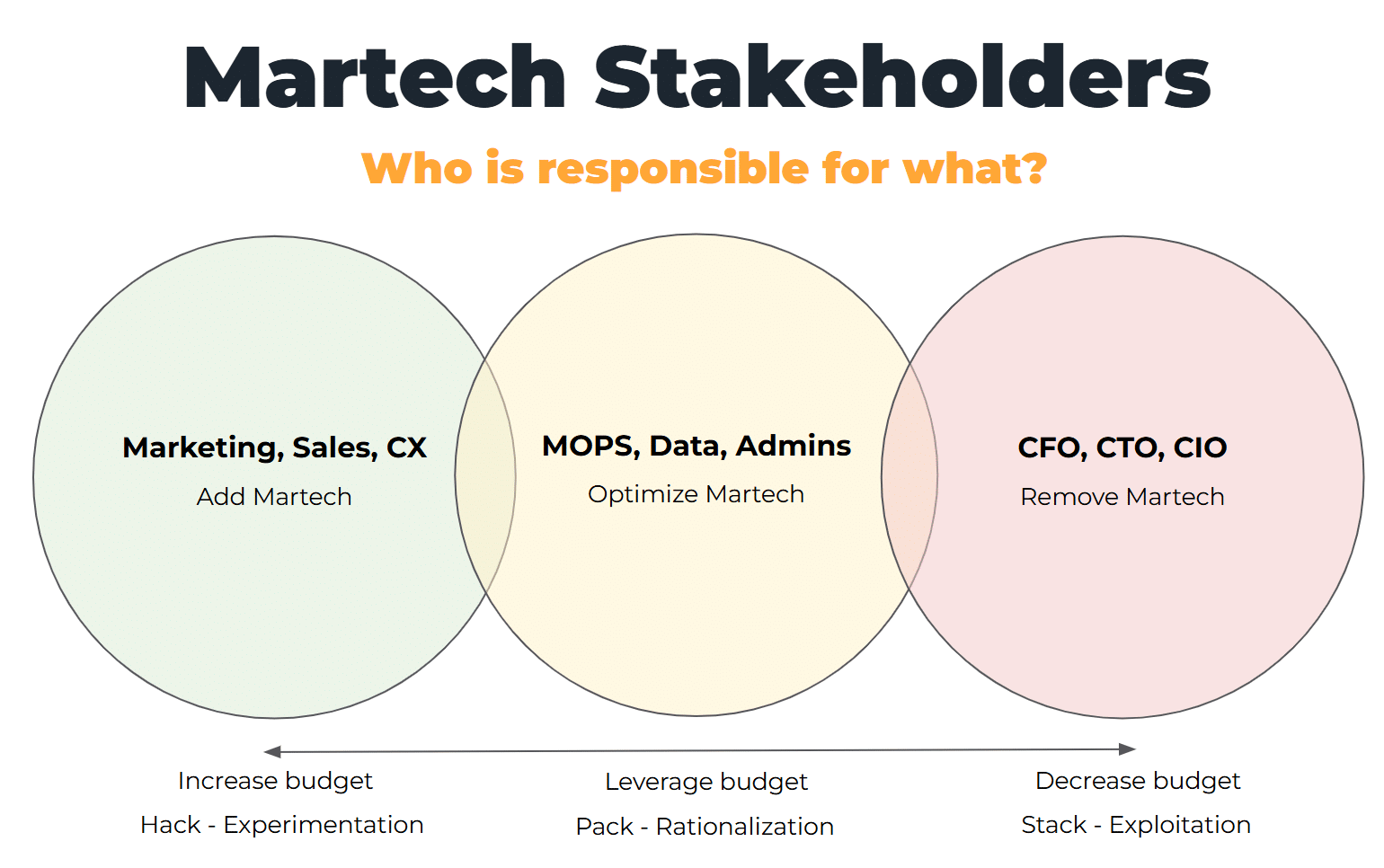
CIO-CTO-CFO group
- Focuses on cost and control management.
- Emphasizes simplifying architecture, deduplication and maintaining cost efficiency.
- Aims for scalability and performance, leveraging proven revenue streams and practices.
MarketingOps-Admin-Data group
- Prioritizes internal martech management, addressing technical issues, service quality and managing backlogs.
- Works on automating processes, expanding capabilities and centralizing platforms to reduce workload and enhance operations.
CMO-Marketing-CX group
- Focuses on finding new martech use cases to drive future revenue.
- Implements experimentation and growth tactics to discover innovative business strategies.
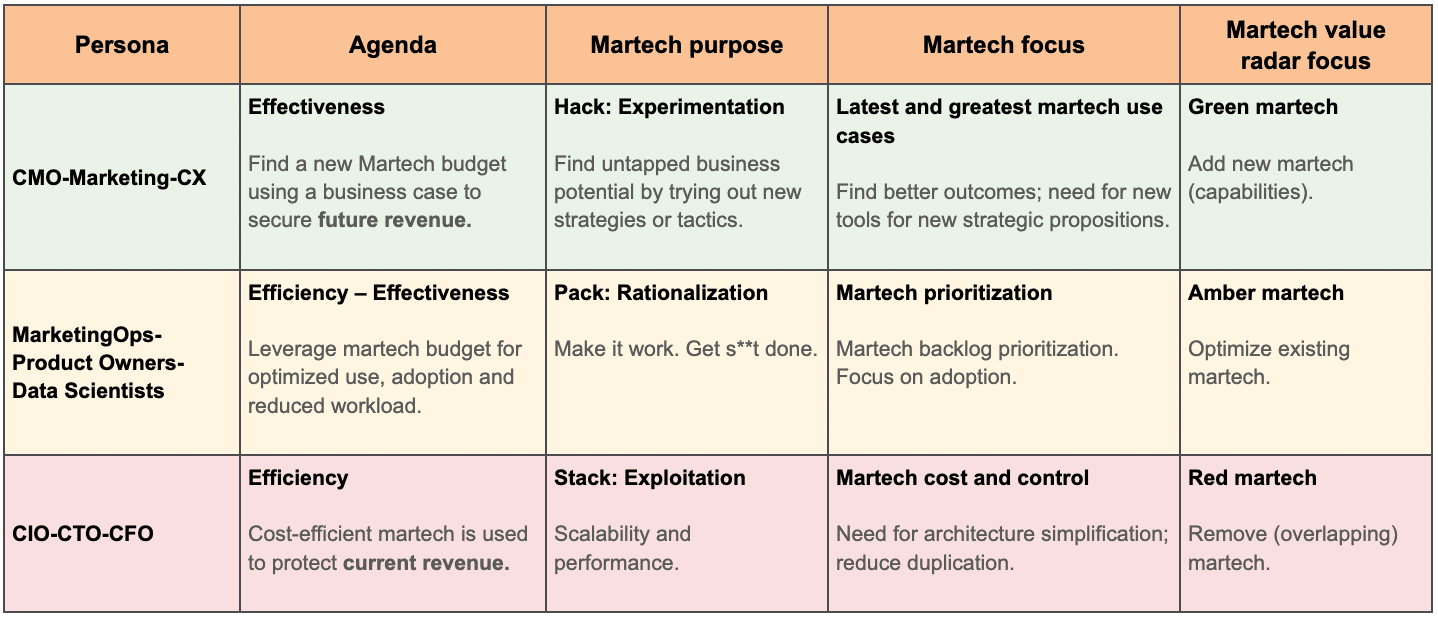
The martech stakeholder matrix
The martech stakeholder matrix offers a structured approach to clarifying martech responsibilities across diverse agendas and stakeholder groups. By aligning objectives, this matrix helps teams manage martech ownership and investment priorities more effectively. It also serves as a practical tool for facilitating internal discussions, ensuring each stakeholder’s role and goals are clear.
Below, the matrix outlines three martech stakeholder roles, helping to build a shared understanding that supports collaborative decisions.
Dig deeper: 3 tips to tackle the annual marketing budget challenge
The post 3 steps to increase your martech budget appeared first on MarTech.
**How to Secure a Larger Martech Budget in 3 Strategic Steps**
In today’s fast-paced, data-driven marketing landscape, having the right marketing technology (Martech) stack is no longer a luxury—it’s a necessity. Martech tools enable businesses to streamline operations, personalize customer experiences, and measure campaign effectiveness with precision. However, securing a larger Martech budget can be a daunting task, especially when competing with other departments for limited resources.
To convince decision-makers to invest in your Martech initiatives, you need a strategic approach that aligns your goals with the broader business objectives. Below, we outline three key steps to help you secure a larger Martech budget and drive your marketing efforts to new heights.
—
### **Step 1: Build a Data-Driven Business Case**
The first and most critical step in securing a larger Martech budget is to present a compelling, data-driven business case. Decision-makers, especially those in finance and executive leadership, are more likely to approve budget increases when they see clear evidence of ROI and alignment with organizational goals.
#### **Key Actions:**
1. **Audit Your Current Martech Stack:** Start by evaluating the tools you already have. Identify gaps, redundancies, and inefficiencies. For example, are you paying for tools with overlapping functionalities? Are there manual processes that could be automated with new technology? Highlighting inefficiencies can justify the need for additional investment.
2. **Quantify the Impact of Martech:** Use metrics to demonstrate how your current Martech tools have contributed to business outcomes. For example:
– Increased lead generation by X%
– Improved campaign ROI by Y%
– Reduced customer churn by Z%
If you’re requesting new tools, estimate their potential impact using industry benchmarks or case studies from similar companies.
3. **Align with Business Goals:** Tie your Martech needs directly to the company’s strategic objectives. For instance, if the company aims to improve customer retention, propose tools that enhance personalization or customer engagement. If the goal is to expand into new markets, highlight Martech solutions that support scalable campaigns or multilingual content.
4. **Create a Cost-Benefit Analysis:** Break down the costs of the proposed tools and compare them to the expected benefits. Use clear, concise visuals like ROI projections, charts, and graphs to make your case more compelling.
—
### **Step 2: Collaborate with Cross-Functional Teams**
Martech doesn’t just benefit the marketing department—it has the potential to create value across the entire organization. By collaborating with other teams, you can build a coalition of support for your budget request and demonstrate the broader impact of your proposed investments.
#### **Key Actions:**
1. **Engage Sales and Customer Success Teams:** Show how Martech tools can improve lead quality, shorten sales cycles, or enhance customer satisfaction. For example, a CRM integration could provide sales teams with better insights into customer behavior, leading to more effective follow-ups.
2. **Partner with IT and Data Teams:** Work with IT to ensure that your proposed tools are compatible with existing systems and comply with security protocols. Collaborating with data teams can also help you demonstrate how Martech will improve data collection, analysis, and reporting.
3. **Involve Finance Early:** Finance teams are often the gatekeepers of budget approvals. By involving them early in the process, you can address their concerns about costs and ROI upfront, making it easier to secure their support.
4. **Leverage Internal Advocates:** Identify colleagues who have benefited from your current Martech stack and ask them to share their success stories. Testimonials from other departments can add credibility to your proposal.
—
### **Step 3: Present a Phased Implementation Plan**
One of the biggest objections to increasing a Martech budget is the perception of high upfront costs and risks. To address these concerns, present a phased implementation plan that spreads out costs and demonstrates incremental value over time.
#### **Key Actions:**
1. **Prioritize High-Impact Tools:** Start with the tools that will deliver the most immediate and measurable benefits. For example, if your company struggles with lead nurturing, prioritize investing in a marketing automation platform before exploring advanced analytics tools.
2. **Set Milestones and KPIs:** Define clear milestones and key performance indicators (KPIs) for each phase of implementation. For example:
– Phase 1: Implement a new email marketing platform and increase open rates by 15% within six months.
– Phase 2: Integrate the platform with your CRM and improve lead conversion rates by 20% within the next year.
By showing progress at each stage, you can build confidence in your ability to deliver results.
3. **Propose a Scalable Budget:** Instead of asking for a lump sum, propose a scalable budget that grows as you achieve milestones. This approach reduces perceived risk and makes it easier for decision-makers to approve your request.
4. **Highlight Long-Term Savings:** Emphasize how the investment will reduce costs in the long run. For example, autom

Recent Comments