

IAB, in collaboration with IAB Europe and leading retail media networks (RMNs), released finalized definitions and standards for proving the impact of RMN campaigns.
The standards were originally introduced and opened up for public comment in September at the IAB Connected Commerce Summit.
“These standards lay the groundwork for transparency and consistency in in-store retail media by focusing on what matters — clear definitions and measurement methodologies,” said IAB VP, measurement addressability Jeffrey Bustos in a blog post. “It’s about understanding the true impact of campaigns and driving better outcomes for brands and retailers.”
In-store retail media. One of the most important clarifications is how IAB defines in-store retail media. Here’s what it comes down to, according to IAB: “advertising inventory that leverages retail data for planning, execution, and measurement within a store’s physical environment.”
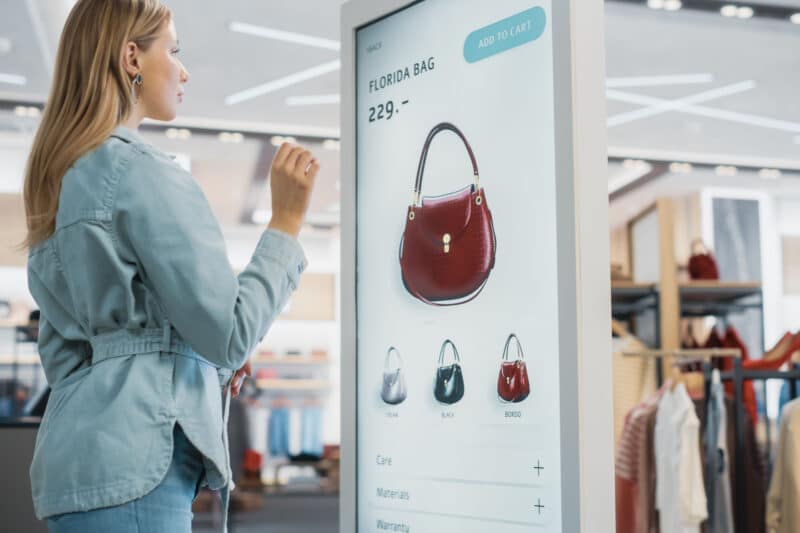
Retailers’ customer data is the key value for RMN advertisers. In many RMNs, brands can leverage this data, in a privacy-compliant way, to deliver ads to customers on a retailer’s owned digital properties (website search or mobile app), or through “offsite” channels the retailer doesn’t own, like CTV. A third option is in-store, a form of advertising that’s been around for decades. But now with the evolution of RMNs, retailers can power these in-store campaigns with customer data and use dynamic media like video screens and kiosks.
Why we care. Reaching customers in-store through RMN campaigns can give advertisers an advantage in influencing shoppers when they’re close to purchase. But now more than ever, marketers need to prove this effectiveness. And a major challenge to measuring RMNs is that each retailer is a walled garden, so standardization is key. The ad formats recognized by these IAB standards also take into account how shopping is changing in the mixed or “phygital” world, where many customers shop in-store with phone in hand.
Dig deeper: Retail media networks: What you need to know
Store zones. To measure the effectiveness of an in-store campaign, RMNs must first agree on what counts as in-store. The IAB standards break up the store geography into five main regions or zones. These include:
- Exterior.
- Entrance.
- Checkout.
- Aisle.
- Other.
Following these definitions, exterior ad locations in parking lots or at fueling stations still count as in-store retail media. They reach customers who are on premises and likely to buy. Advertisers might also combine exterior ads with aisle or checkout ads to cover more of the in-store customer journey.
Ad formats. Another helpful group of definitions is the types of ads that brands can serve to customers in-store. Here are the main categories included in the report (IAB plans to add more formats in future editions):
- Digital screens: Digital end caps and other screens throughout the store, including POP displays, hanging signs, interactive displays, kiosks, smart fridges and checkout screens.
- Audio: In-store radio and in-store announcements.
- Printed/static: Printed ads that are hanging signs, end caps, POP displays, banners, on shelves (“shelf blades”), floor graphics or on shopping carts or featured tables.
- Connected shopping: Hand scanners and app-assisted shopping.
- Experiential: In-store demos, workshops, product sampling and events.
Metrics. The new IAB standards include important definitions for ad metrics like loop duration, ad segments, ad units and ad unit length. It also defines impression metrics to establish how many customers are likely to see each ad.
Critically, sales measurement metrics are also defined. The IAB issued recommendations for the timeline when sales and ad campaign success are reported. IAB recommends three windows: 30 days pre-exposure; campaign duration; 30 days post-exposure. It also defines different sales measurement approaches like sales lift and incremental sales and brand lift.
New customers. The IAB standards also provide metrics to help measure how new customers are to a brand based on their purchase histories.
IAB’s In-Store Retail Media: Definitions and Measure Standards is found here.
The post IAB finalizes retail media networks standards for in-store appeared first on MarTech.
**IAB Establishes Final Standards for Retail Media Networks in Physical Stores**
The Interactive Advertising Bureau (IAB), a leading global organization dedicated to the development of digital advertising standards, has taken a significant step forward in the retail media landscape by establishing final standards for Retail Media Networks (RMNs) in physical stores. This move is expected to bring clarity, consistency, and efficiency to a rapidly growing sector that bridges the gap between digital advertising and in-store shopping experiences.
### The Rise of Retail Media Networks
Retail Media Networks have emerged as a powerful tool for brands and retailers to connect with consumers at the point of purchase. Traditionally focused on e-commerce platforms, RMNs allow retailers to monetize their digital properties—websites, apps, and email newsletters—by offering advertising opportunities to brands. However, as the retail industry evolves, the focus has expanded to include in-store environments, creating new opportunities for advertisers to engage with shoppers in physical spaces.
The integration of RMNs into brick-and-mortar stores has been driven by advancements in technology, such as digital screens, in-store Wi-Fi, and mobile apps. These tools enable retailers to deliver targeted, data-driven advertising messages to shoppers in real time, enhancing the customer experience while driving incremental revenue.
### Challenges in the In-Store RMN Ecosystem
Despite their potential, Retail Media Networks in physical stores have faced several challenges, including:
1. **Lack of Standardization**: The absence of industry-wide standards has led to inconsistencies in how RMNs operate across different retailers. This has made it difficult for brands to scale their campaigns effectively.
2. **Measurement and Attribution**: Measuring the effectiveness of in-store advertising and attributing sales to specific campaigns remains a complex task. Unlike digital advertising, where clicks and impressions can be easily tracked, in-store environments require more sophisticated methods to gauge impact.
3. **Data Privacy and Security**: The use of shopper data for targeted advertising raises concerns about privacy and compliance with regulations like GDPR and CCPA.
4. **Fragmentation**: The retail media landscape is highly fragmented, with each retailer developing its own approach to in-store advertising. This lack of uniformity has created inefficiencies for both advertisers and retailers.
### IAB’s Final Standards: A Game-Changer for In-Store RMNs
To address these challenges, the IAB has introduced a comprehensive set of standards designed to streamline the operation of Retail Media Networks in physical stores. These standards, developed in collaboration with retailers, brands, and technology providers, aim to create a unified framework that benefits all stakeholders.
#### Key Components of the Standards
1. **Unified Measurement Framework**: The IAB standards establish guidelines for measuring the performance of in-store advertising campaigns. This includes metrics such as impressions, engagement rates, and sales lift, enabling advertisers to evaluate the ROI of their campaigns with greater accuracy.
2. **Interoperability**: The standards promote interoperability between different RMN platforms, allowing advertisers to scale their campaigns across multiple retailers without the need for extensive customization.
3. **Data Privacy and Compliance**: The IAB has incorporated robust data privacy guidelines into the standards, ensuring that in-store advertising complies with relevant regulations. This includes clear protocols for data collection, storage, and usage.
4. **Creative Specifications**: To simplify the creative process, the standards provide detailed specifications for in-store ad formats, such as digital screens, shelf displays, and mobile app integrations. This ensures consistency and reduces production costs for advertisers.
5. **Attribution Models**: The standards introduce advanced attribution models that leverage technologies like geofencing, point-of-sale (POS) data, and loyalty programs to link in-store advertising to actual purchases.
6. **Transparency and Reporting**: The guidelines emphasize transparency in reporting, requiring RMNs to provide advertisers with detailed insights into campaign performance. This fosters trust and encourages greater investment in in-store advertising.
### Benefits for Stakeholders
The adoption of IAB’s final standards is expected to deliver significant benefits for all parties involved in the in-store RMN ecosystem:
– **For Retailers**: The standards provide a clear roadmap for building and scaling RMNs, enabling retailers to unlock new revenue streams while enhancing the shopping experience.
– **For Advertisers**: Brands can now execute in-store campaigns with greater confidence, knowing that their efforts will be measured and optimized according to industry standards.
– **For Consumers**: Shoppers stand to benefit from more relevant and engaging in-store experiences, as retailers leverage data to deliver personalized advertising messages.
– **For Technology Providers**: The standards create opportunities for innovation, as tech companies develop solutions that align with the IAB’s guidelines.
### The Future of In-Store Retail Media
The establishment of final standards by the IAB marks a turning point for Retail Media Networks in physical stores. By addressing key challenges and fostering collaboration across the industry, these standards pave the way for a more efficient and effective in-store advertising ecosystem.
As retailers continue to

Recent Comments