


Last week, Adam Robinson, the CEO of Retention.com, published a LinkedIn post that’s become all too familiar over the last couple of years. You know the one. Retention.com had to let go of staff. In this case, it was 15 people, which is about 40% of the headcount.
These posts are met with a wide range of emotions, which is understandable. I’m not bringing it up to judge Robinson on his turn at this unfortunate ritual. Robinson, like many before him, used the opportunity to talk about the mistake he made at the helm of Retention.com.
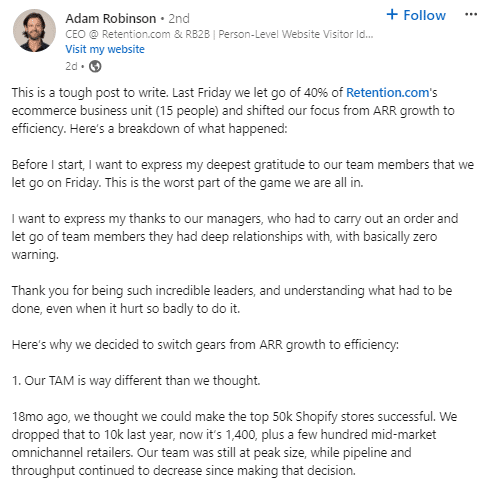
He said the layoffs were because the company needed to switch focus from annual recurring revenue (ARR) to efficiency.
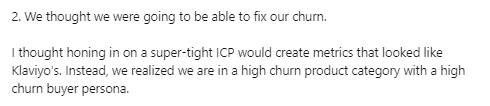
The company’s churn rate was a primary cause. Retention.com helps online retailers using Shopify re-engage lapsed audiences and abandoned shopping carts. Robinson described the churn problem as a result of being “in a high churn product category with a high churn buyer persona.”
I knew about high-churn products. They tend to be relatively inexpensive and easy to deploy, usually project-based tools or products that are relatively easy for competitors to replicate.
But I didn’t know as much about high-churn personas. So I looked into what they are and how marketers can mitigate their impact.
Dig deeper: 22 must-have reports for measuring CRM health
The 6 high-churn personas marketers need to watch closely
There are at least six high-churn personas marketers and sales teams need to watch closely.
The short-term project manager or consultant
Project-based work isn’t supposed to last forever. Consultants and project managers brought in to help guide a project to completion often need to buy tools to see the project through, but once it’s complete, they often disappear. That means there’s an increased likelihood of terminating the contract because the tool is no longer needed and/or its champion is gone.
You can mitigate this risk by ensuring the product offers ongoing value beyond the scope of the original product. You can also work to identify new champions. When a consultant or project manager moves on, someone is usually left with the project. Identifying and building a relationship with that person is key.
The cost-conscious decision-maker
As with many other types of selling, some areas of tech appear to be a race to the bottom. There are always leaders who prioritize low prices over the value products provide. The churn for this persona is high because they are likely to switch to lower-priced providers.
Robinson talked about competitors moving into Retention.com’s space. When businesses are trying to build a customer base, they often undercut the existing players in price. It’s not always a sustainable strategy, but if you’re the incumbent, that doesn’t really matter.
The antidote for cost-conscious decision-makers is emphasizing value and ROI. Tiered pricing structures will help accommodate cost-conscious buyers. It also provides a path for them to spend more when their business situation improves or a new decision-maker enters the organization.
Early adopters with high expectations
Think back to the early days of the martech market. There were thousands of applications, and marketers had cash to spend. The possibilities seemed limitless. Everyone was eager to adopt new technology and had high expectations for what that technology would do. This is what Gartner’s Hype Cycle is all about. At some point, reality sets in.
Early adopters with high expectations get disappointed when a product falls short and thus become more likely to churn.
You can mitigate this risk by managing expectations and communicating clearly with clients about product capabilities, the roadmap, and, of course, by offering exceptional customer support for those with high expectations.
Dig deeper: How to measure what matters in account-based marketing
The free trial user
There are certain categories of technology where many vendors use a product-led growth (PLG) strategy. Project management tools come to mind. If you’re like me, you’ve probably used many of the project management tools out there because marketing departments seem to cycle through the free trials from vendor after vendor until they expire.
Free trial users fail to convert to paying customers for several reasons, including:
- The free trial features are good enough.
- They don’t have the budget to move to a paid subscription.
- They don’t see enough differentiation between similar products in the category.
You can mitigate the high churn of free-trial users by optimizing the free-trial experience. Provide clear value propositions for an upgrade to paid versions. You can even incentivize conversions for free-trial users.
The company going through a significant change
Mergers, acquisitions, re-organizations and re-structures all lead to change. People, priorities and budgets change, as do the need and preferences for technology tools.
You can mitigate the risk with companies going through this by building strong relationships with key stakeholders. Flexible contract terms and proactive support can help too.
The dissatisfied customer
Perhaps the most familiar of the high-churn personas is the one who just isn’t happy with the product. It could be an issue with the product itself. It could be the support they received (or didn’t). In many cases, it’s both.
The frustration that builds from these experiences often leads to attrition.
Mitigation, in this case, falls mostly on customer success and support. The reps here need to be on their game, being proactive and seeking active feedback from the customer along the way.
The bottom line
If these high-churn customers are familiar to your organization, handle them with care. This isn’t a job for marketing alone. It involves the entire revenue organization, including sales and customer success.
The post How to identify high-churn personas in B2B and mitigate their risk appeared first on MarTech.
**Identifying High-Churn Personas in B2B and Strategies to Mitigate Their Risk**
In the competitive landscape of Business-to-Business (B2B) markets, customer retention is a critical factor that directly impacts a company’s bottom line. High churn rates can be detrimental, leading to lost revenue, increased acquisition costs, and a negative impact on brand reputation. Identifying high-churn personas—those customer segments that are most likely to discontinue their relationship with your company—is essential for developing targeted strategies to mitigate churn risk. This article explores how to identify high-churn personas in B2B markets and outlines effective strategies to reduce their risk.
### Understanding Churn in B2B Context
Churn, in the B2B context, refers to the loss of customers who stop purchasing your products or services, cancel subscriptions, or fail to renew contracts. Unlike B2C markets, where churn can be more transactional and impulsive, B2B churn is often driven by deeper factors such as misalignment of value, poor customer support, or changes in the customer’s business environment.
### Identifying High-Churn Personas
To effectively identify high-churn personas, it’s important to analyze customer data and segment your customer base according to specific characteristics that correlate with churn. Here are some key factors to consider:
1. **Industry and Company Size:**
– Certain industries may have higher churn rates due to economic volatility, regulatory changes, or market saturation. For example, startups in the tech industry may have a higher churn rate due to rapid changes in technology and competition.
– Smaller companies may churn more frequently due to limited budgets, resource constraints, or a lack of long-term strategic planning.
2. **Customer Engagement Levels:**
– Customers who exhibit low engagement with your products or services, such as infrequent logins, minimal usage, or lack of interaction with customer support, are more likely to churn. Monitoring engagement metrics can help identify these at-risk customers.
3. **Contract and Renewal History:**
– Customers who have a history of short-term contracts, frequent downgrades, or delayed renewals may be more prone to churn. These behaviors can indicate dissatisfaction or a lack of commitment to your offerings.
4. **Customer Feedback and Satisfaction Scores:**
– Negative feedback, low Net Promoter Scores (NPS), or declining customer satisfaction scores are strong indicators of potential churn. Regularly gathering and analyzing customer feedback can help identify at-risk personas.
5. **Competitive Landscape:**
– Customers who are exposed to aggressive competition or who have recently switched from a competitor may be more likely to churn. Understanding the competitive landscape and monitoring competitor activities can provide insights into potential churn risks.
6. **Financial Health and Payment Behavior:**
– Customers experiencing financial difficulties, such as late payments or requests for extended payment terms, may be at higher risk of churn. Monitoring payment behavior and financial health can help identify these high-risk personas.
### Strategies to Mitigate Churn Risk
Once high-churn personas have been identified, it’s essential to implement targeted strategies to mitigate their risk. Here are some effective approaches:
1. **Personalized Onboarding and Training:**
– Provide personalized onboarding experiences tailored to the specific needs and pain points of high-churn personas. Offering customized training sessions, resources, and support can help ensure that customers fully understand and derive value from your products or services.
2. **Proactive Customer Support:**
– Implement a proactive customer support strategy that anticipates potential issues before they escalate. Regular check-ins, health checks, and personalized outreach can help address concerns early and prevent churn.
3. **Value-Driven Communication:**
– Regularly communicate the value and ROI of your products or services to high-churn personas. Use case studies, success stories, and data-driven insights to demonstrate how your offerings are helping them achieve their business goals.
4. **Flexible Contract and Pricing Options:**
– Offer flexible contract terms and pricing options that cater to the specific needs of high-churn personas. For example, providing short-term contracts, usage-based pricing, or tiered service levels can help retain customers who may be hesitant to commit to long-term agreements.
5. **Customer Success Programs:**
– Develop customer success programs that focus on helping high-churn personas achieve their desired outcomes. Assign dedicated customer success managers (CSMs) who can work closely with these customers to ensure they are getting the most out of your products or services.
6. **Incentives for Loyalty:**
– Offer incentives for loyalty, such as discounts, rewards, or exclusive access to new features or services. These incentives can help reinforce the value of your relationship and encourage long-term commitment.
7. **Gather and Act on Feedback:**
– Continuously gather feedback from high-churn personas and take action to address their concerns. Implementing changes based on customer feedback not only improves satisfaction but also demonstrates that you value

Recent Comments