

We’ve all encountered content regarding achieving virality. However, not all brands prioritize virality as their primary objective. Instead of devising strategies aimed at producing viral social media campaigns, they often focus on other aspirations, such as narrating their brand story or launching a new product range. For Miami Beach, the goal was to finally part ways with the notorious spring break chaos.

We interviewed Madison Brown, Digital Media Manager, and Melissa Berthier, Director of Marketing and Communications for the City of Miami Beach to gain insights into the “Breaking Up With Spring Break” initiative. They provided guidance for brands on what steps to take after garnering significant attention for content that’s highly shareable. In this piece, we will narrate the tale behind the Miami Beach spring break separation and highlight some of Sprout’s preferred viral social media initiatives to spark your own strategic thinking.
Factors that contribute to viral social media campaigns
There isn’t a magic formula for grabbing widespread attention online, but at its essence, virality is propelled by emotion—our innate desire to connect with others, the yearning to be part of a larger movement, and our incessant craving for shareable content that evokes feelings.
When campaigns elicit strong emotional reactions—whether humor, empathy, intrigue, or outrage—they hit a nerve that motivates sharing. Such campaigns turn audiences from passive observers into active contributors in a brand’s narrative. These posts evolve into cultural touchstones that people discuss and circulate among friends and family.
While emotion is a key driver of virality, it isn’t solely reliant on feelings. Marketers have specific aims when developing social campaigns. For “Breaking Up with Spring Break,” enhancing public safety was the primary focus. Berthier noted that previous spring break seasons witnessed widespread violence, including several fatalities from shootings.
Following a directive from Miami Beach elected officials, the City of Miami Beach collaborated with the Greater Miami Convention and Visitors Bureau and their agency VML to brainstorm a campaign.
“Setting virality as your main goal is challenging since audience reactions are unpredictable. In [our campaign video], initially, it’s unclear what you’re viewing. It’s not the dialogue you’d typically expect from a city government. Normally, the message is to visit, but here, we’re stating that we only want visitors who will adhere to our guidelines,” Brown explains.
Brown mentioned that she initiated a social listening query in Sprout the Monday after the campaign gained traction. She observed a significant surge of messages and media mentions from local, national, and international outlets. The “Breaking Up with Spring Break” initiative achieved 20 billion earned media and social impressions and was subsequently shortlisted in three categories for Cannes Lions.
“The virality was somewhat unexpected. I don’t believe we anticipated receiving such a high volume of impressions and visibility. We were pleased that the message was conveyed and that people received it. Fortunately, we experienced a safe spring break, marking a stark contrast to previous years. The message resonated, fulfilling the campaign’s objective,” she says.

Common traits of successful viral campaigns on social media
Be it a singular viral video or a collection of static posts, effective viral campaigns share several key characteristics. Here are four essential elements present in outstanding viral social media campaigns.
1. Captivating wordplay and deliberate shock value
According to Brown, a compelling headline that’s both shareable and enticing is crucial for crafting viral social media campaigns.
“I believe that shock value is a critical aspect to consider when aiming for creativity,” she states.
For instance, the phrase “breaking up with spring break” prompted contemplation about its implications for Miami Beach. The campaign’s message cleverly contrasts “break up” with “spring break,” ensuring it leaves a memorable impact.
Campaigns that defy expectations, challenge norms, or stimulate curiosity are typically those that get circulated.

2. Awareness of trends and audience demographics
Identifying trends and understanding your core audience are foundational aspects of social media marketing. This is equally true for viral marketing, as noted by Brown.
“Staying attuned to current trends and audience behaviors is essential. For example, we adapted elements from dating apps and text messaging because they reflect contemporary practices. People primarily use their phones for communication and connection, so meeting them in their space is vital,” she explains.
“We aimed for an approach that was loud and clear while not alienating anyone. Our goal was playful and cheeky, hence the ‘break up’ angle,” she adds.
Following the success of “Breaking Up with Spring Break,” Miami Beach introduced another initiative, #FindYourMatch. This campaign is inspired by the period post-breakup when individuals are ready to resume dating.

Brown elaborated that the team wanted to act swiftly and capitalize on the viral momentum from the spring break campaign to position Miami Beach as a cultural hotspot, transcending its image as merely a spring break venue. They aimed to maintain the relationship theme by invoking “finding a match,” acknowledging that one of the initial steps after a breakup is often signing up on a dating app. Brown suggests brands analyze their overall campaigns and determine what worked well to guide future endeavors.
“It’s challenging to understand why something goes viral due to the myriad factors involved: timing, engagement, comments. Some marketers chase virality by opting for the most outrageous ideas. However, you should avoid that approach as it appears disingenuous. By creating a list of reasons behind a campaign’s success, you can leverage that without replicating the same formula or becoming overly extravagant. It’s essential that it remains coherent,” Brown asserts.

3. Encouraging diverse perspectives and teamwork
According to Brown, incorporating diverse viewpoints during the brainstorming phase of a campaign is crucial. Engaging with individuals from various backgrounds, demographics, and cultures can enrich the content creation process.
Berthier noted that VML, the agency involved in the campaign, utilized their diversity, equity, and inclusion team to review content and creative direction.
“Everyone interprets things through their unique lens. Gathering these diverse perspectives and fostering open discussions on improving content is vital. Within our team, we had members from different generations, cultures, and backgrounds involved in the campaign ideation. Collaboration and openness to feedback are paramount,” Brown emphasizes.

4. Strategic collaborations with influencers
Influencers play a vital role in viral campaigns by utilizing their engaged audience to help amplify messages or promote new products or services. Whether they are micro-influencers or have a massive following, influencers create excitement and interest around a campaign, resulting in heightened visibility and chances for it to become viral.
By partnering with suitable influencers who align with the target audience and campaign objectives, brands can broaden their reach. Influencers also provide authentic, relatable content that resonates with their followers, enhancing the campaign’s significance.
The impact of Charli XCX’s “Brat Summer,” exemplifies the power of influencers in marketing. Retailers like Target and notable figures like Vice President Kamala Harris have utilized the brat summer trend to engage Gen Z and Millennial audiences, filling their social feeds with slime green backgrounds and Arial font.
Three brand illustrations of viral social media campaigns
1. Australian Lamb
The meat supplier Australian Lamb produced a YouTube video that humorously critiques the generation gap, a term denoting the differences in perception and understanding between age groups. In the video, Australians from various generations are kept apart by a divide, with the aroma of delicious lamb barbecue being the only thing that bridges the gap.

Australian Lamb appeals to audiences of all ages by humorously portraying generational stereotypes. The title references a familiar phrase not typically associated with lamb, generating curiosity. The video also incorporates influencer marketing with a brief appearance by John Allen.
2. Marc Jacobs
Marc Jacobs’ TikTok account serves as an exemplary model of viral social media campaigns. The brand adeptly taps into niche trends, memes, and communities on the platform. For instance, they collaborated with Sylvanian Drama, a nameless account famous for its soap-opera-like series featuring Calico Critters.

Alongside featuring celebrities with strong ties to internet fashion trends, like Lil Uzi and Alex Cosani, the brand collaborates with various influencers. In the following video, they spotlight Raymonte, an influencer recognized for his videos complimenting strangers publicly. This partnership marked one of Raymonte’s initial brand collaborations, garnering over six million views.

They produced several videos collaborating with Nara Smith, with the most popular video showcasing her homemade lifestyle. In this clip, she is portrayed as crafting the iconic Marc Jacobs Tote Bag “from the ground up.” This video alone attracted over 16.1 million views and numerous positive remarks.

3. Swehl
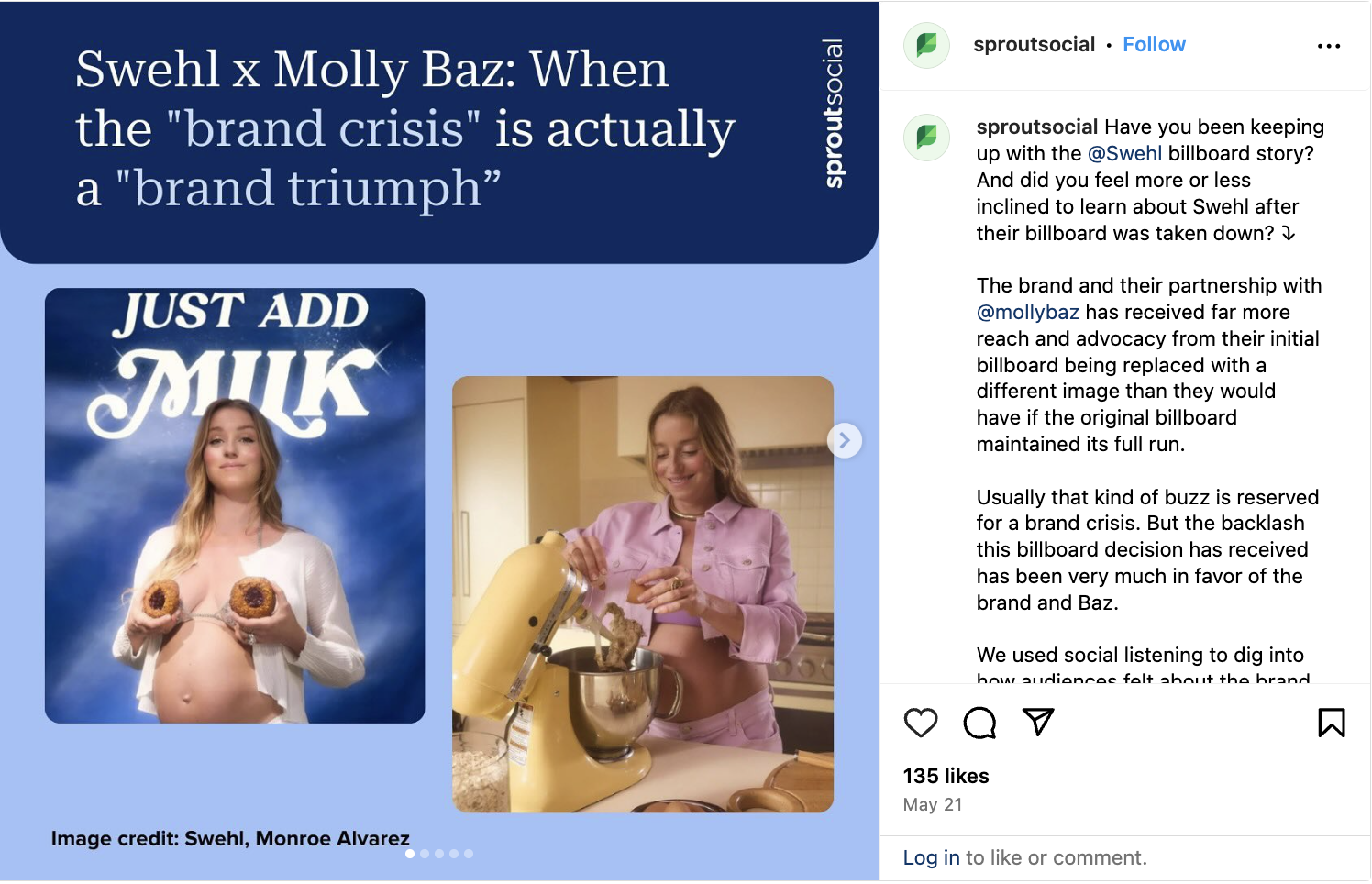
The breastfeeding brand Swehl sparked debate with their Times Square billboard featuring celebrity cookbook author Molly Baz. In the advertisement, she is depicted as pregnant and partially unclothed, holding cookies over her breasts with the tagline, “Just add milk.” Although the ad was taken down after three days, it generated both outrage and support on social media. This initiative highlights the effects of shock value and influencer partnerships.
Overseeing your viral social media campaigns
The reality of viral social media campaigns? The most triumphant campaigns don’t explicitly aim for virality. Instead of seeking a foolproof formula for widespread reach, marketers should focus on their objectives and brand narrative while recognizing the elements that contribute to viral content! With the meticulous planning involved in social media initiatives, a strategic roadmap is essential to guide your efforts. Our social media campaign brief template provides a detailed outline of everything required from content distribution strategies to comprehensive activation plans.
The article Miami Beach’s Breakup with Spring Break: A Deep Dive into the Viral Campaign and Their New Matchmaking Initiative was first published on Sprout Social.

Recent Comments