
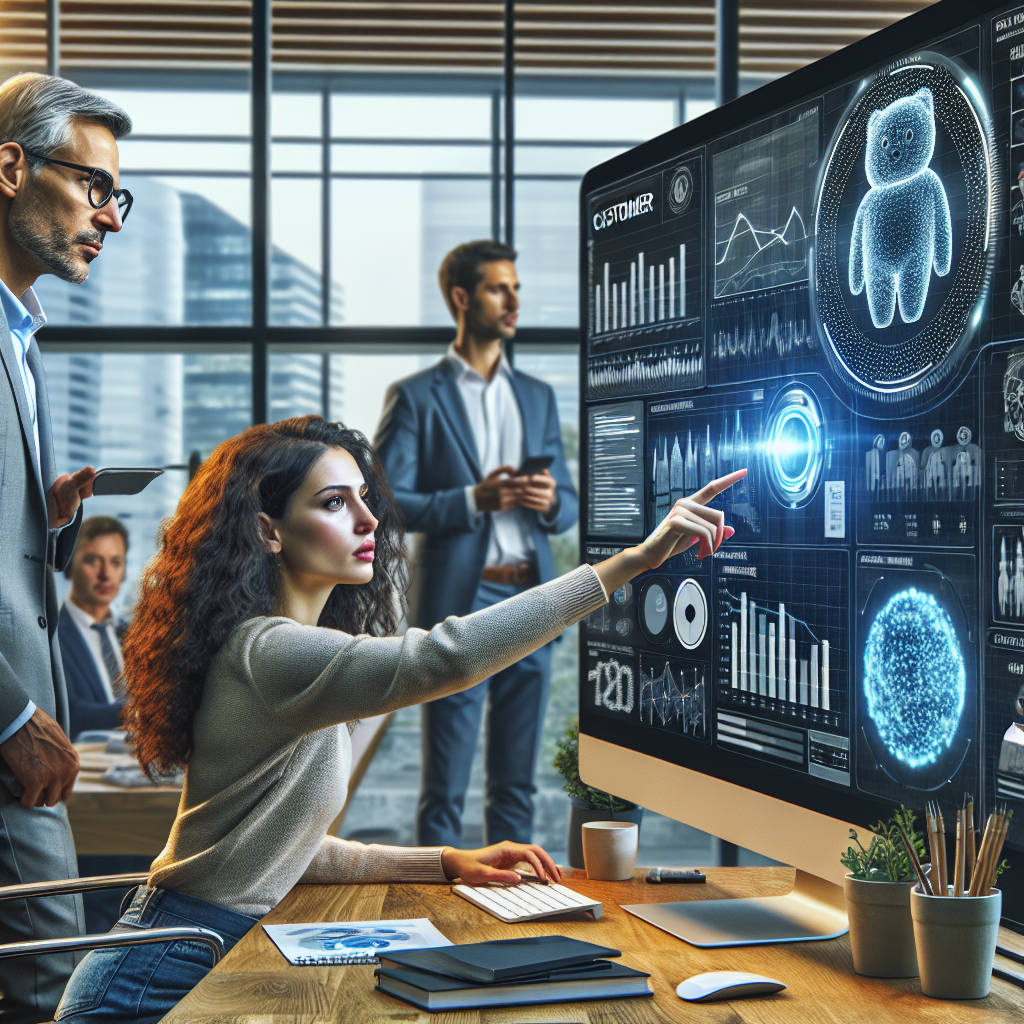

If your social feeds and inbox look like mine, you can’t avoid the AI hype. I recently read a paper, “In 2025, AI won’t just assist salespeople – it will replace them.” Its focus is on AI-led growth (AiLG) and it mostly deals with sales in relation to go-to-market (GTM) motions.
This excerpt from the paper made me think about how an AiLG approach to GTM, as related to B2B marketing, might take shape:
“The main thing to realize is that AI will create a new kind of buying experience and that new experience will complement the existing experience, the same way we today have Airbnb and hotels side-by-side and use them for different approaches.”
But the more I thought about it, the more I questioned whether the existing experiences marketing provides to B2B buyers should stay in place. Instead, by applying the insights shared by Jacco van der Kooij in the paper, there’s a path to solving the frustration buyers have in their experiences with vendors.
If those experiences — now mostly buyer-driven — were relevant and compelling, would our buyers have wrested control of the process away from vendors?
Perhaps the focus should be on finding the right balance between AI and humans.
The AiLG conundrum in B2B marketing
Delivering buyer-driven experiences your customers prefer is key to GTM motions that drive growth. Limited budgets and resources challenge marketers to do more with less, but the corporate mandate is to do more with less, better. The premise of AiLG is that the combination of systems and processes with AI will result in doing better.
The paper notes that today, we use AI almost exclusively to do more.
“AI is used to write spam emails, send more impersonal LinkedIn invitations, engage in superficial conversations, and flood the industry with clickbait content.”
This approach doesn’t generate growth.
The paper states:
“AiLG is about elevating the quality of every customer interaction, setting a new standard in customer engagement and causing sustainable growth.”
But it also points out that:
“AI excels in knowledge work that involves standardized, high-volume tasks where creativity relies on pattern matching. In comparison, processes requiring creativity, emotional intelligence or out-of-context problem solving — essentially, non-pattern-based tasks — will still require human involvement. AI will achieve a much lower efficiency in these areas.”
You can see the conflict. AI has a role in marketing, but humans remain critical. AI may be making marketing cheaper to execute, but it’s also challenging the delivery of genuine value to customers.
Dig deeper: Where AI falls short in high-stakes B2B industries
The criticality of humans in B2B marketing
I think we’d all agree customers are the lifeblood of companies. Without them, there is no company. Now that B2B buyers conduct up to 70% of their buying process before engaging with sales reps, the relevance and value of the experiences they initiate when they come in-market determine your chances of making it onto their Day 1 shortlist.
Even more importantly, if their experiences with your company when they’re out-of-market don’t build a memory structure, your brand isn’t even in their thought process. You’re invisible to their consideration set when they move in-market.
Building a memory structure with buyers depends on how your brand shows up in channels your target market frequents. Given that mediocre content raises the noise level and overwhelms buyers, content created with buyer insights, empathy, emotional intelligence, creativity and meaning is what’s called for. Thought leadership content is something AI cannot produce well. But it’s what will set your company apart and earn the memory structures required to come to mind when a trigger event happens.
LLMs excel at pattern matching. Humans excel at complex reasoning, problem solving and assuming the role of empathy architects.
Buyers are a bundle of emotions wrapped in rational human packaging. Just look at the research.
From The Jolt Effect’s FOMU (fear of messing up) to SBI research that shows “how the buying experience makes me feel” outweighs the importance of the product selected, that’s all emotion and nuance. Add the importance ascribed to confidence, value-adjusted risk determinations and trust in a vendor and you have a lopsided recipe that won’t cook properly with only logic in the mix.
Dig deeper: Unlocking AI’s potential in B2B marketing
How to put AI to work in B2B marketing to support humans
This article may have you think I’m rooting against AI, but I’m not. I’m putting a stake in the ground for how to get the best from both AI and humans to drive growth.
AI has valid applications in marketing to help us do more and do it better – at the same time. Here are a few ways to apply AI usefully in marketing:
- Mining data to extract buyer and customer insights that inform content strategy and programs continuously over time.
- Identifying segments of “like” accounts for improved targeting and relevance.
- Automating workflows that delay the launch of GTM programs.
- Reporting on program outcomes with depth beyond opens and clicks.
- Identifying customer journeys across campaign and channel touchpoints.
- Researching and brainstorming to develop better content — not for writing it.
Applying AI to processes and systems that address foundational and executional needs allows marketers to gain the efficiency needed to do better — and more — with less. Using AI to extract usable insights from data brings precision and elevates relevance. And you’ll do better without cutting the thoughtfulness, expertise, creativity and emotion that buyers demand.
Efficiency can’t just be about cutting costs; it must also thoughtfully optimize effectiveness in the process.
Dig deeper: 5 ways to harness AI in B2B content creation
Better buyer-driven experiences require a balance
“While AI can enhance efficiency, human creativity and delivery leads to stronger memory, which can influence decision-making.”
This is the conclusion Carmen Simon, a cognitive neuroscientist, made after a recent experiment she conducted testing humans against AI. Subjects received a presentation on a software application in three different ways.
- One group saw a presentation designed and presented by a human.
- Another group saw a presentation designed by an AI and presented by a human.
- The third group saw a presentation fully designed and given by AI.
All groups saw the same information in the presentations, but the human design and presentation had the best aha moment, translating into better long-term memory for the sales message.
Think carefully about how you apply AI to marketing. Achieving balance is the key to creating and delivering buyer-driven experiences that contribute to the memory structures with buyers and drive growth.
Dig deeper: Cutting through the hype: Generative AI adoption in B2B
The post Balancing the human-to-AI mix in B2B marketing appeared first on MarTech.
# Optimizing the Integration of Human and AI Efforts in B2B Marketing
The rapid advancement of artificial intelligence (AI) has transformed the landscape of B2B marketing, enabling businesses to streamline processes, enhance customer experiences, and drive revenue growth. However, while AI offers powerful automation and data-driven insights, human expertise remains essential for creativity, strategic thinking, and relationship-building. The key to success lies in optimizing the integration of human and AI efforts to maximize efficiency and effectiveness.
## The Role of AI in B2B Marketing
AI plays a crucial role in modern B2B marketing by automating repetitive tasks, analyzing vast amounts of data, and delivering personalized experiences. Some of the key applications of AI in B2B marketing include:
### 1. **Data Analysis and Predictive Analytics**
AI-powered tools can process large datasets to identify patterns, trends, and customer behaviors. Predictive analytics helps marketers anticipate customer needs, optimize lead scoring, and improve decision-making.
### 2. **Personalization and Customer Segmentation**
AI enables hyper-personalization by analyzing customer interactions and preferences. Machine learning algorithms can segment audiences based on behavior, demographics, and engagement history, allowing marketers to deliver tailored content and offers.
### 3. **Chatbots and Conversational AI**
AI-driven chatbots enhance customer engagement by providing instant responses, answering FAQs, and guiding prospects through the sales funnel. These tools improve customer support and free up human agents for more complex interactions.
### 4. **Content Generation and Optimization**
AI-powered tools such as natural language processing (NLP) can assist in content creation, from generating blog posts to optimizing email subject lines. AI can also analyze content performance and suggest improvements for better engagement.
### 5. **Marketing Automation**
AI-driven automation tools streamline email marketing, social media scheduling, and campaign management. Automated workflows ensure timely follow-ups, lead nurturing, and consistent messaging across multiple channels.
## The Role of Human Expertise in B2B Marketing
While AI enhances efficiency, human marketers bring creativity, emotional intelligence, and strategic thinking to the table. Some areas where human expertise is irreplaceable include:
### 1. **Creative Strategy and Brand Storytelling**
AI can generate content, but human marketers craft compelling narratives that resonate with audiences. Storytelling builds emotional connections, strengthens brand identity, and fosters trust.
### 2. **Relationship Building and Trust Development**
B2B marketing relies heavily on relationships. Human marketers excel at building rapport, understanding client pain points, and providing personalized solutions that AI alone cannot achieve.
### 3. **Ethical Decision-Making and Brand Reputation Management**
AI operates based on data, but human oversight is necessary to ensure ethical marketing practices. Marketers must navigate sensitive issues, maintain brand integrity, and prevent AI biases from affecting decision-making.
### 4. **Strategic Thinking and Campaign Innovation**
AI can analyze data and suggest optimizations, but human marketers drive innovation by developing creative campaigns, experimenting with new strategies, and adapting to market changes.
## Best Practices for Integrating Human and AI Efforts
To optimize the integration of human and AI efforts in B2B marketing, businesses should adopt a balanced approach that leverages the strengths of both. Here are some best practices:
### 1. **Define Clear Roles for AI and Human Marketers**
Establish clear guidelines on which tasks should be automated and which require human intervention. AI should handle data-driven tasks, while humans focus on strategy, creativity, and relationship management.
### 2. **Use AI to Enhance, Not Replace, Human Efforts**
AI should be seen as an enabler rather than a replacement for human marketers. For example, AI can analyze customer data to provide insights, but human marketers should interpret these insights and develop actionable strategies.
### 3. **Ensure Human Oversight in AI-Driven Processes**
AI algorithms can sometimes produce biased or inaccurate results. Human oversight is essential to validate AI-generated insights, refine messaging, and ensure ethical marketing practices.
### 4. **Invest in AI Training for Marketing Teams**
To maximize AI’s potential, marketing teams should be trained on how to use AI tools effectively. Understanding AI capabilities and limitations allows marketers to make informed decisions and optimize workflows.
### 5. **Leverage AI for Data-Driven Decision-Making**
AI can process vast amounts of data quickly, providing valuable insights into customer behavior, campaign performance, and market trends. Marketers should use these insights to refine strategies and improve targeting.
### 6. **Maintain a Human Touch in Customer Interactions**
While AI-powered chatbots and automation improve efficiency, human interactions remain crucial for building trust and credibility. Businesses should ensure that customers have access to human support when needed.
### 7. **Continuously Monitor and Optimize AI Performance

Recent Comments