

Social media posts and industry news might lead you to think that organic social media has met its demise. It’s taking its final breath and being replaced by pay-to-play models.
However, organic social media endures. It necessitates a more strategic approach, along with additional time and resources, but completely sidelining it in favor of paid advertising is myopic. There remains significant value in prioritizing organic growth.
As per The Sprout Social Index™ 2025, 54% of marketing leaders plan to measure social media success by overall engagement in 2025. Paid ads can introduce your brand to new audiences, but genuine engagement depends on organic content that fosters community among both existing and new followers. Once someone follows your account, they’ll desire more than just promotional content cluttering their feeds daily.
Below is our guide on organic social media growth strategies for 2025, along with a few examples of brands producing exceptional organic content for inspiration.
What constitutes organic social media growth?
Organic social media growth refers to expanding your audience on social platforms through organic content. Organic content includes any social media post made without financial investment in promotion or boosting aimed at increasing conversions or reach.
Paid social posts are typically crafted for particular campaigns and elevated through paid advertising. While the two methodologies differ, it’s not necessary to frame it as organic social vs. paid social. Both strategies have their place.
Organic content fosters community and nurtures genuine relationships with audiences, while ads and paid social media primarily aim to boost awareness or drive sales.
Organic content emphasizes long-term stability and trust-building over immediate results. An organic post might not prompt a purchase on the spot, yet it can encourage the audience to return to your content in the future.
Is organic social media growth still viable?
Many marketers are concerned that organic social media is nearing extinction, mainly due to ever-evolving algorithms that favor paid content.
On Reddit, marketing-centric subreddits are rife with complaints about low interaction and impressions, even for accounts boasting 10,000+ followers. Some are apprehensive that purchasing followers or engaging with bots is corrupting success in organic growth.
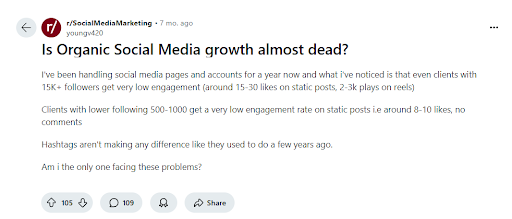
Yet, numerous experienced social marketers assert that organic growth is still within reach, though it may be a tough journey.
The secret? Consistency. Building a social media account organically demands patience and commitment. Those who keep pushing forward and adapting are reaping the benefits in community development.
Brand loyalty builds over time—it originates from excellent products, reliable customer service, authentic values, and ongoing engagement. Organic social media plays a crucial role in uniting all these elements.
8 organic social media growth strategies to explore in 2025
Let’s dissect the key strategies for organic growth so you can optimize your social media marketing tactics this year.
1. Emphasize the quality of your content
While the volume of posts deserves attention, nothing can replace quality content. Consistently posting mediocre content solely to have something up will not benefit your brand.
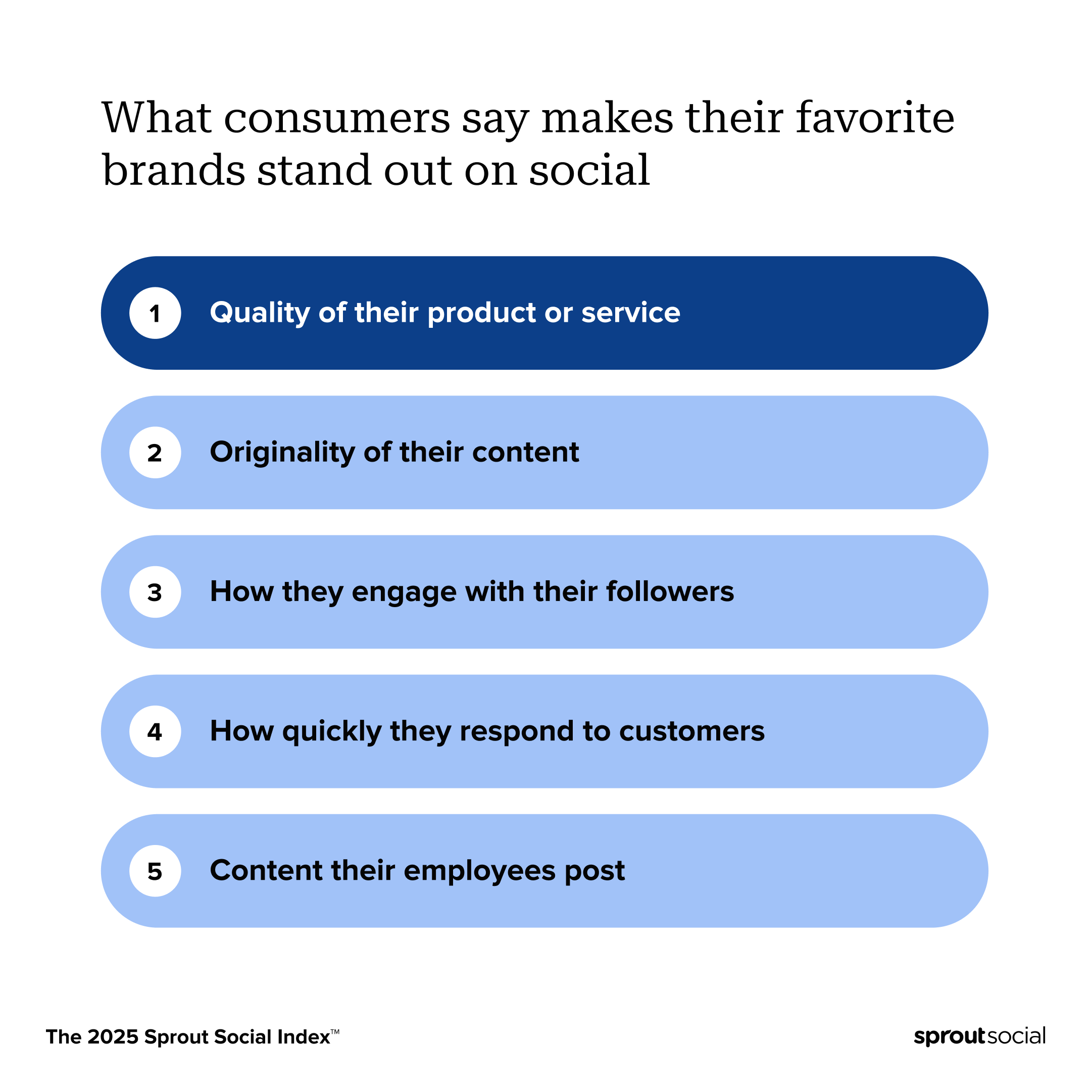
Creating quality content begins with tuning into your audience. As reported in the 2025 Sprout Social Index, 46% of consumers believe that originality in content is what differentiates their favorite brands on social media.
Instead of churning out social media listings several months ahead and posting ten times daily, prioritize crafting timely, relevant content that distinguishes your brand from competitors. While leveraging trends is valuable, your strategy should fundamentally be built on original content.
Kendall Dickieson, Social Media and Influencer Consultant for brands such as Graza and Zab’s, and a member of the Sprout Social Index Council, warns against fixating on arbitrary posting targets.
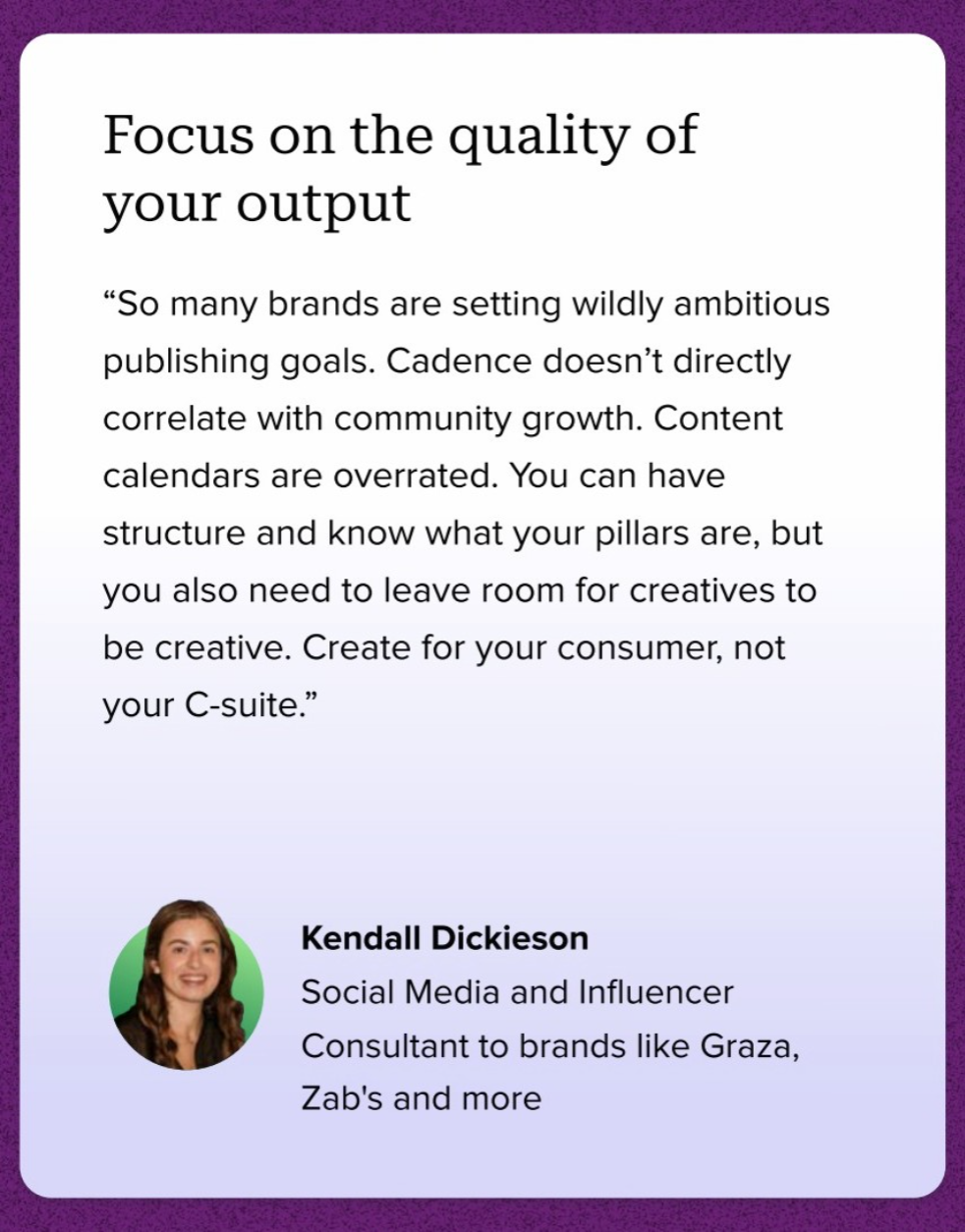
“Numerous brands are setting excessively ambitious publishing metrics,” Dickieson remarked. “Frequency does not directly correlate with community growth.”
2. Invest in the networks your audience favors
Carefully listening to your audience’s desires for organic content will guide you towards their preferred networks. The era of a few dominant social media platforms is over due to social media fragmentation. While audiences are active on more apps than ever before, your brand doesn’t need a presence on all of them. User engagement varies across networks in terms of content consumption and sharing, so hone in on the platforms your audience uses most, whether they are established players or new entrants.
Briana Doe, founder of the Verbatim Agency and Index Council member, notes that brands may feel compelled to reach audiences on numerous platforms, yet trying to be all things to all people is a futile exercise.
“With so many platforms available for brands to shine, it’s alluring to think you need to be everywhere,” Doe stated. “Offer what your current and potential audience wishes for—be deliberate instead of striving to please everyone. Resist chasing every new trend. Building community and trust on prioritized platforms is far more important.”
Monitoring and comparing the performance of various networks can direct you to the most effective platforms for your audience. Tools like Sprout Social’s Cross-Network Profile Performance Report provide comparative graphs to easily identify which of your social profiles yields the greatest engagement and growth.
3. Engage with trends—thoughtfully
Trends are constantly evolving, so being attuned to online culture and recognizing what resonates with your audience is crucial for selecting appropriate ones. The Sprout Social Index 2025 revealed an intriguing contrast between how social media professionals and consumers perceive trends. A striking 98% of professionals believe that social content must align with online trends and culture. While consumers largely concur, about half cite original content as the defining factor that makes their favorite brands memorable. Nonetheless, nearly all participants expressed that they wish brands would grasp online culture, even if they aren’t actively engaging with it.
What does this imply? Essentially, brands need to strike the perfect balance between relevance and resonance.
This requires pinpointing the trending topics and formats your audience enjoys the most. Social media listening is vital to discover that ideal blend of trends and original content. It enables you to identify trends that may suit your brand, regardless of whether they are directly linked to your products or industry. For instance, we tapped into the “holding space” trend that emerged during Wicked’s press tour to present social listening data related to the film and the associated meme.
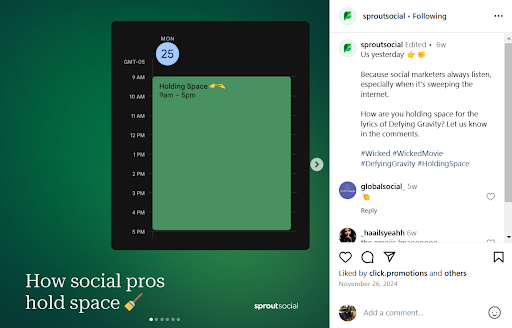
For this post, we utilized Sprout Social’s AI-enabled social listening, which processes 50,000 social posts every second. With Sprout listening, you can set tailored social listening queries related to your brand, competitors, and key trends to gain real-time insights into what aspects of online culture resonate most with your audience.
4. Showcase your product or service prominently
Organic content serves as an excellent platform for featuring your products or services. The Index indicates that 63% of consumers attribute their favorite brands’ visibility on social media to the quality of a brand’s product or service.
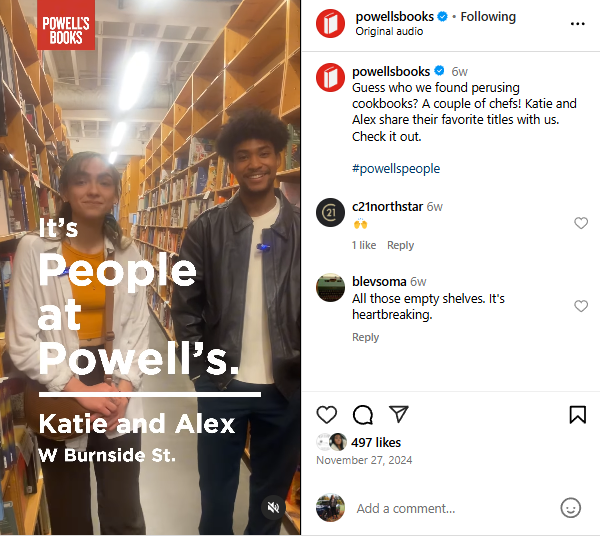
Your content can add value while emphasizing what makes your brand unique. Use organic content to nurture interest and community around a product line, demonstrate how your product integrates into daily life for consumers, and create spaces for your audience to share their experiences with your products. Powell’s Books gives their readers a voice through their #PowellsPeople video series, showcasing customers in the store who highlight where to find some of their favorite titles on the shelves.
5. Interact with your followers
One significant advantage of organic social media growth is the opportunity to converse with your audience and build a community of brand enthusiasts.
According to the Index, 36% of consumers believe their favorite brands excel on social media through meaningful engagement. Engagement transcends merely replying to comments on your social posts. Brands aiming to cultivate a community on their social media channels should adopt social media community management.
Community management encompasses engaging audiences across various networks and conversations to enhance brand loyalty and develop authentic connections. Clothing rental brand Nuuly utilizes community management techniques alongside social media trends. For instance, when a customer shared an unfortunate subway incident while wearing one of their items, Nuuly responded with a mix of humor and honesty that drew attention.

6. Refine your approach to social customer service
Consumers have deemed personalized customer service from brands to be their top priority in 2025, per The Sprout Social Index. Quick responsiveness is essential—73% of social users assert that if a brand fails to respond on social, they’ll turn to a competitor. Customers expect brands to not only resolve issues but also provide a tailored experience that anticipates their needs.
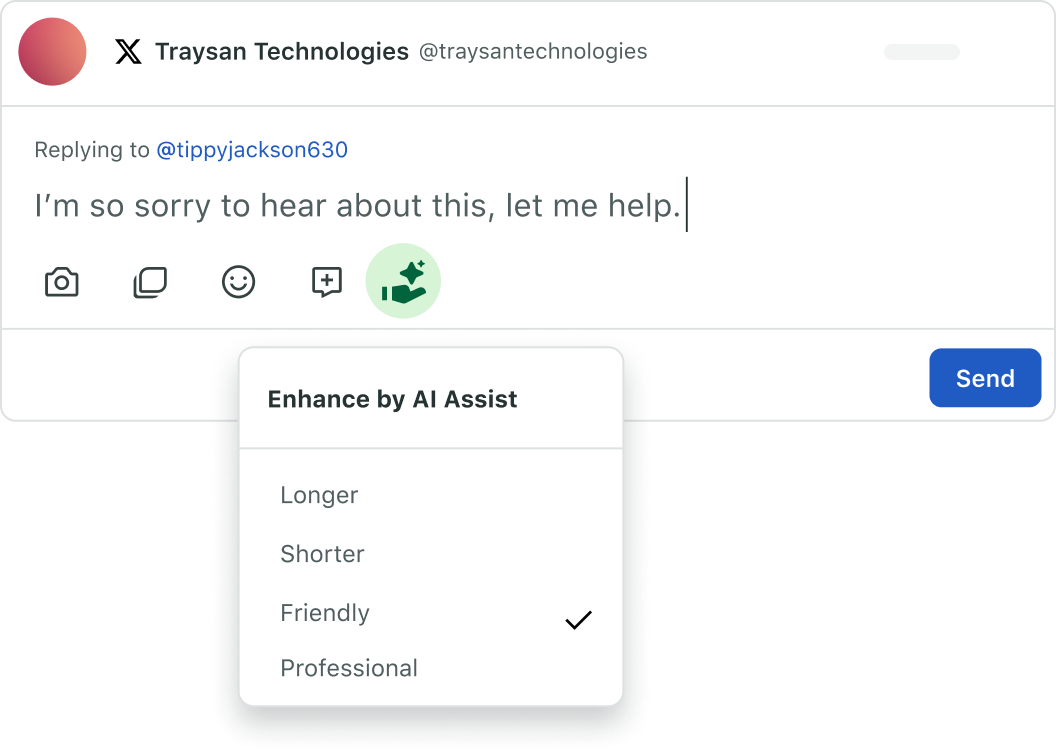
Investing in AI tools can streamline your social media customer service initiatives and balance speed with quality service. For example, Sprout Social’s Enhance by AI Assist generates varied post and response options based on the tone suitable for specific situations, allowing you to minimize time spent refining your wording while ensuring your customer feels valued.
7. Target specialized communities
Online culture, even the quirkiest trends, revolves around belonging and emotional ties. Popular dances, memes, sounds, and trends serve as ways for individuals worldwide to connect, even if just momentarily. Trends frequently go viral within specific subcultures, and brands can participate in these ongoing conversations with their audiences.
Focus on discerning the subcultures present in your audience and adopt a niche marketing strategy. Niche marketing tends to feel more personalized and is frequently more effective than broader marketing strategies. Approach individual communities within your audience, carefully selecting trends pertinent to them to incorporate in your organic content—demonstrate your understanding of their subtleties.
For instance, Australian-based Genkstasy does not aim to compete with every other streetwear brand. Their products are all gender-neutral, catering to a specific segment of fashion-conscious consumers who refuse to be confined by traditional gender norms.

8. Establish an employee advocacy program
Word of mouth continues to be among the most potent marketing strategies. People regard the opinions of trusted individuals highly.
Employee advocacy programs leverage your team’s networks by equipping them with organic content to share on their profiles.
Employee advocacy expands brand visibility, attracts more qualified leads, and enhances brand awareness. You can prepare fundamental messages for employees to share on their networks while allowing room for personalization.
Integrating internal team members as advocates brings authenticity to your social campaigns. This strategy can give organic social content a valuable boost without incurring additional promotion costs, while also highlighting key posts.
3 Real-world instances of organic growth on social media
As you formulate your organic social media growth plan, studying brands that have achieved success can generate fresh ideas and strategies to experiment with. Here are three brands excelling in their organic social strategies.
1. Glossier
Initially, Glossier’s organic social media strategy featured polished, aspirational images and videos. However, upon observing the rising popularity of “get ready with me” videos among influencers, the brand recognized an opportunity to pivot towards more relatable organic content that aligned seamlessly with a cultural trend.
To stand out from existing content, Glossier enlisted a diverse array of individuals to share videos of their morning routines. These videos, posted as organic content, provided a genuine glimpse into real people’s lives, practical beauty tips, and featured products beyond just Glossier, creating an authentic and approachable vibe that resonated with audiences. The videos garnered millions of views, leading to Glossier’s more relaxed, everyday style of organic social content.
2. Nutrisense
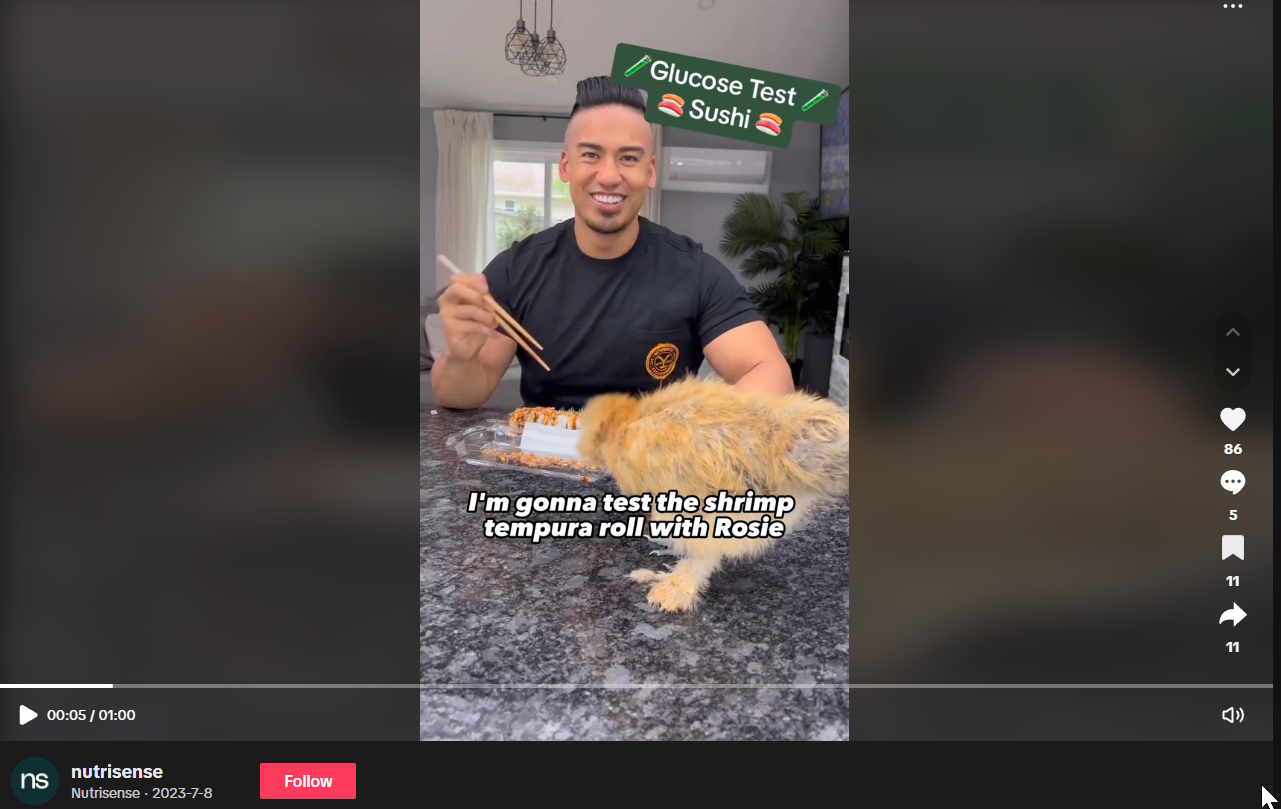
The health and wellness brand Nutrisense recognized that user-generated content (UGC) is an effective marketing asset but had not integrated it into their organic social media approach before 2022. In an effort to boost their social following from 25,000, Nutrisense utilized Sprout Social to evaluate the influence of UGC on their social media channels and incorporate it into a continuous campaign.
Nutrisense relied on Sprout’s analytics to monitor which content, particularly UGC, performed best across various platforms, enabling them to replicate successful styles across additional networks. Video emerged as one of the most effective content types.
Nutrisense subsequently revised its collaboration methods with influencers and partners to harness the power of UGC effectively. An influencer participating in a Nutrisense program collaborated with the brand to produce “explainer” videos featuring registered dietitians, complementing the “food experiment” videos the influencer was already creating. These videos rapidly gained traction on TikTok, aiding Nutrisense in growing their following to 130,000 in just one year.
3. City of Miami Beach
Miami Beach has long been a favorite spring break locale, a status that unfortunately leads to increased crime and violence annually. In 2024, the City of Miami Beach launched a social media initiative aimed at promoting public safety and encouraging spring breakers to rethink their behavior.

The campaign, titled “Breaking Up with Spring Break,” featured POV style videos depicting Miami Beach locals “breaking up” with spring breakers, warning that this year would see curfews, police checkpoints, and fines. The campaign garnered over 20 billion views across earned media and organic social media, ultimately achieving its goal; Miami Beach enjoyed a notably calmer spring break season. The attention-grabbing and straightforward videos showcased a profound understanding of the intended audience.
Long live organic social media
Despite the transformations organic social media has undergone, don’t dismiss it. With consistency, creativity, and a commitment to understanding your audience, you can reap significant rewards from organic content.
Organic social media growth remains achievable and accessible. To grasp what resonates most with consumers on organic social media, download The 2025 Sprout Social Index.
The post How to drive organic social media growth in 2025 first appeared on Sprout Social.

Recent Comments