

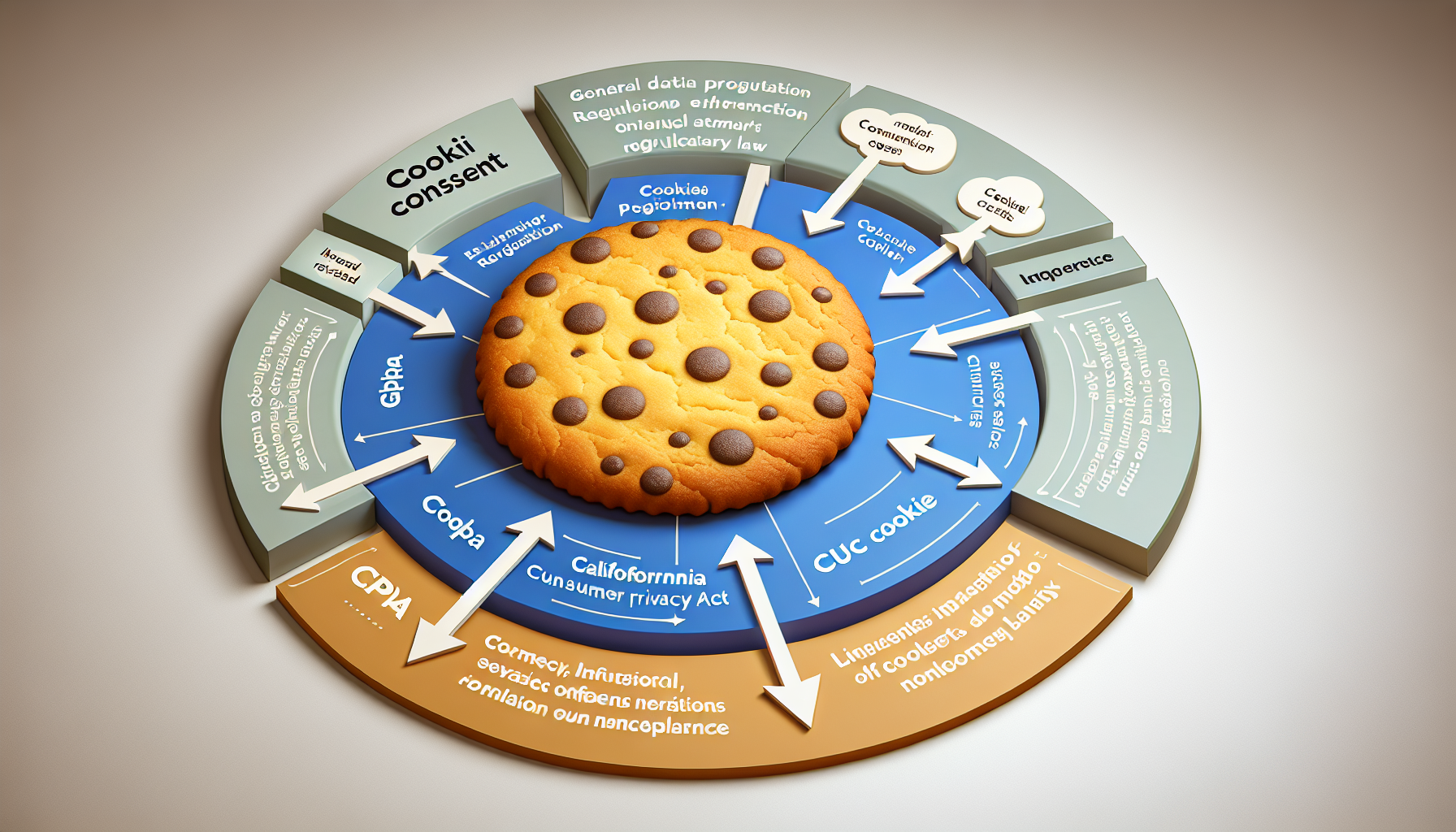
GDPR/CCPA/EU Cookie Law – Importance of Cookie Consent appeared first on WPeka.
Have you ever visited a website that asked for cookie consent? If yes, you must have wondered what these cookies mean. Putting it in simple words, cookies or a cookie is a small text file that covers your data, such …
GDPR/CCPA/EU Cookie Law – Importance of Cookie Consent Read More »
GDPR/CCPA/EU Cookie Law – Importance of Cookie Consent appeared first on WPeka.
# Understanding the Importance of Cookie Consent in GDPR, CCPA, and EU Cookie Law Compliance
In today’s digital landscape, data privacy has become a paramount concern for both consumers and businesses. With the introduction of various regulations such as the General Data Protection Regulation (GDPR) in the European Union, the California Consumer Privacy Act (CCPA) in the United States, and the EU Cookie Law, organizations are required to prioritize user consent, particularly regarding the use of cookies. This article explores the importance of cookie consent in ensuring compliance with these regulations and the implications for businesses and consumers alike.
## What Are Cookies?
Cookies are small text files that websites store on a user’s device when they visit a site. They serve various purposes, including:
– **Session Management**: Keeping users logged in as they navigate a website.
– **Personalization**: Remembering user preferences and settings.
– **Tracking and Analytics**: Collecting data on user behavior to improve website performance and marketing strategies.
While cookies can enhance user experience, they also raise significant privacy concerns, particularly when they are used to track users across different websites.
## The Legal Framework
### GDPR
The GDPR, which came into effect in May 2018, governs data protection and privacy for individuals within the EU. Under GDPR, cookies that process personal data require explicit consent from users before they can be placed on their devices. This means that businesses must inform users about the types of cookies being used, their purpose, and how long they will be stored.
### CCPA
The CCPA, enacted in January 2020, enhances privacy rights for California residents. While it does not specifically address cookies, it mandates that businesses disclose the categories of personal information collected and the purposes for which it is used. This includes information collected through cookies. The CCPA also grants consumers the right to opt-out of the sale of their personal information, which can include data collected via cookies.
### EU Cookie Law
The EU Cookie Law, part of the ePrivacy Directive, requires websites to obtain user consent before storing or accessing cookies on a user’s device. This law emphasizes transparency and user control over personal data, mandating that users are informed about the types of cookies used and their purposes.
## The Importance of Cookie Consent
### 1. **User Trust and Transparency**
Obtaining cookie consent fosters a culture of transparency and trust between businesses and consumers. By clearly communicating how cookies are used and what data is collected, organizations can build credibility and strengthen their relationship with users. This transparency is crucial in an era where consumers are increasingly concerned about their privacy and data security.
### 2. **Legal Compliance**
Non-compliance with GDPR, CCPA, or the EU Cookie Law can result in significant penalties and fines. For instance, GDPR violations can lead to fines of up to 4% of a company’s annual global turnover or €20 million, whichever is greater. Similarly, the CCPA allows for fines of up to $7,500 per violation. Ensuring proper cookie consent mechanisms are in place is essential for businesses to avoid these legal repercussions.
### 3. **Enhanced User Experience**
When users are informed about cookies and have the option to manage their preferences, they are more likely to have a positive experience on a website. Providing users with control over their cookie settings can lead to increased engagement and satisfaction, as they feel empowered to make choices about their data.
### 4. **Data Minimization and Purpose Limitation**
Both GDPR and CCPA emphasize the principles of data minimization and purpose limitation. By obtaining explicit consent for cookies, businesses can ensure that they only collect data that is necessary for specific purposes. This not only helps in compliance but also aligns with ethical data practices.
### 5. **Competitive Advantage**
In a market where data privacy is becoming a key differentiator, businesses that prioritize cookie consent and data protection can gain a competitive edge. Consumers are more likely to choose brands that respect their privacy and provide clear information about data usage.
## Implementing Cookie Consent Mechanisms
To comply with cookie consent regulations, businesses should consider the following steps:
1. **Audit Cookies**: Identify and categorize all cookies used on the website, including their purpose and duration.
2. **Create a Cookie Policy**: Develop a clear and comprehensive cookie policy that outlines the types of cookies used, their purposes, and how users can manage their preferences.
3. **Implement a Consent Banner**: Use a cookie consent banner that appears when users first visit the website. The banner should provide options for users to accept, reject, or customize their cookie preferences.
4. **Regularly Review and Update**: Continuously monitor and update cookie practices and policies to ensure ongoing compliance with evolving regulations.
5. **Educate Users**: Provide users with accessible information about cookies and data privacy to empower them to make informed decisions.
## Conclusion
In an increasingly data-driven world, understanding the importance of cookie consent is crucial for businesses





Recent Comments