

What occurs when you merge the trust-enhancing capabilities of influencer marketing with the results-focused nature of affiliate marketing? The answer is affiliate influencer marketing: a potent approach for elevating brand recognition and boosting sales.
There are numerous subtleties to contemplate with influencer affiliate marketing, such as tracking and attribution, selecting the right partners, and managing compliance. This guide will uncover the intricacies of affiliate influencer marketing and guide you through everything essential, including its distinct advantages and detailed advice for establishing your affiliate influencer program.
What is affiliate influencer marketing?
Affiliate influencer marketing, often referred to as influencer affiliate marketing, involves a brand collaboration where influencers earn commissions by generating product or service sales through their content.
Here’s a standard outline of how it operates:
- A brand collaborates with influencers to endorse their product or service via social media content.
- The influencer receives a unique affiliate link or discount code to share with their followers.
- Whenever someone uses the link or code for a purchase, the influencer earns a percentage from the sale.
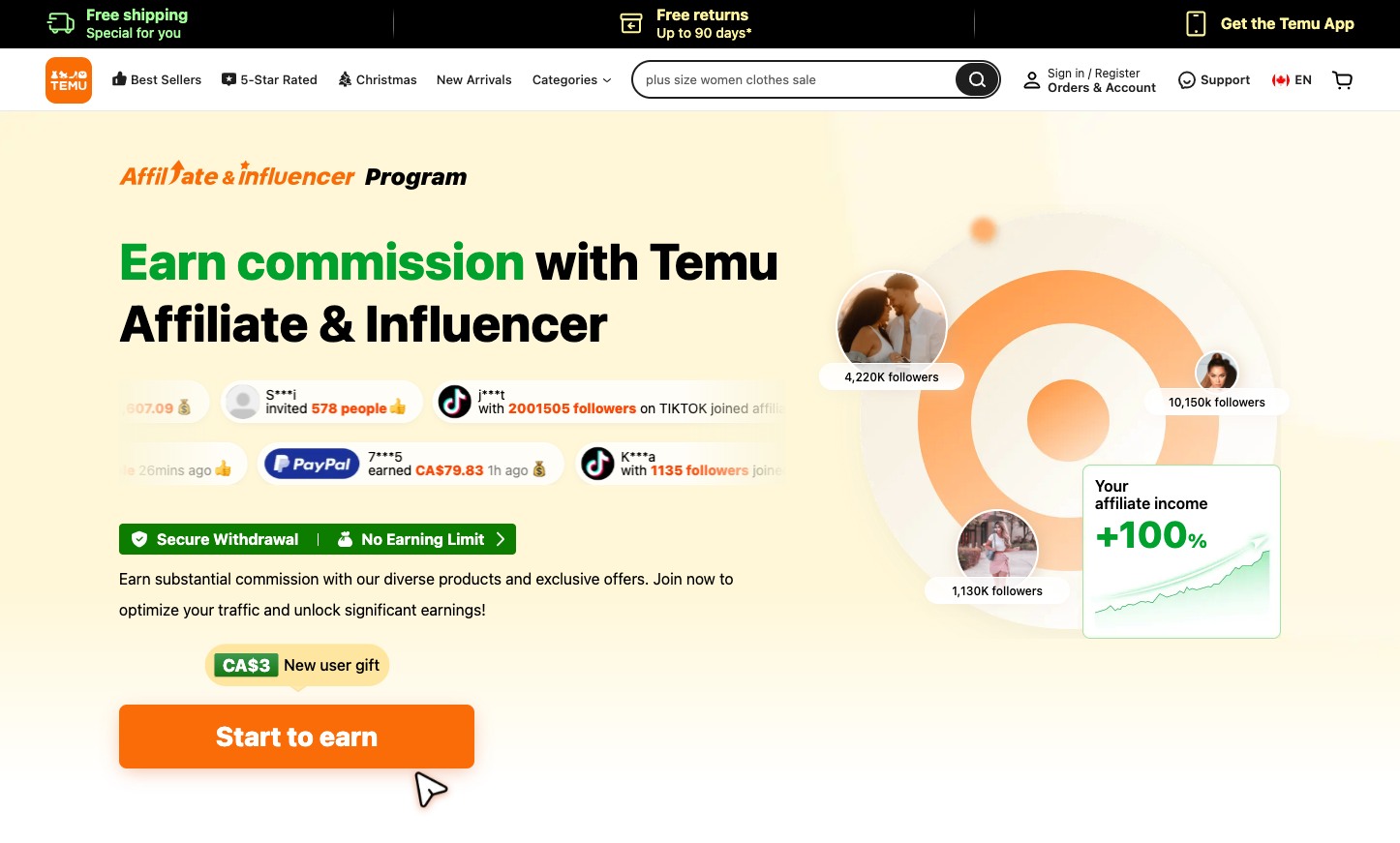
Recently, retailer Temu launched an affiliate influencer program. Approved creators receive a unique affiliate link, a code to share, and free products for selected campaigns.
Influencers who meet Temu’s posting criteria can earn cash, Temu credits, a $5 reward for each referral download, and up to 20% in commission. Moreover, the more dedicated their audience, the greater the rewards, as there’s no cap on potential affiliate earnings.
Companies like Amazon and Walmart also provide affiliate influencer marketing programs equipped with tools to monitor sales and commissions via custom links and landing pages.
TikTok Shop, with its integrated affiliate platform, assists brands in connecting with influencers and incentivizing them. Creators can also discover products and brands to promote swiftly.
The fusion of influencer marketing with affiliate marketing enables brands to utilize the authenticity and trust that influencers carry. Influencers maintain a more personal engagement with their audience; therefore, when they recommend a product or service, it resembles a friend offering a useful suggestion rather than just an advertisement.
This connection translates into sales, as individuals are more inclined to buy from someone they are already acquainted with, appreciate, and trust. Furthermore, observing how the product or service integrates into the influencer’s lifestyle aids followers in envisioning its relevance to their lives.
Incorporating affiliate marketing into the equation also stimulates sales by further motivating and rewarding influencers who achieve the highest conversion rates. This encourages them to produce unique and engaging content for your brand, maximizing their earning potential.
Benefits of influencer affiliate marketing
While influencer marketing fosters trust and visibility, quantifying its overall value can be challenging (especially lacking the appropriate tools). On the other hand, affiliate marketing excels in sales tracking but may lack the personal touch that engenders customer loyalty. Influencer affiliate marketing brings together the strengths of both methods while offering benefits you may not have considered.
Performance-focused strategy
Thanks to its commission-driven payment system, affiliate influencer marketing presents a cost-effective approach to collaborating with influencers and creators. Brands can choose to cover only product sample costs and sales commissions rather than paying flat fees upfront.
This approach allows brands to venture into affiliate marketing with minimal risk. If a select few of your affiliates consistently generate substantial sales, you might reward them with additional incentives or elevated commission rates. This ensures your budget is allocated to individuals delivering measurable value, which is essential for nurturing long-term influencer-brand partnerships.
Repurpose content to extend reach
Developing advertising creatives can be labor-intensive. Well-produced ads may appear overly promotional and thus easily overlooked. Conversely, affiliate influencers’ user-generated content (UGC) feels more genuine and relatable, which is precisely why audiences tend to trust and engage with it more.

When you secure usage rights for affiliate influencer content, it can become a valuable asset. Feature the top-performing creative on your social media channels or leverage it for paid ad campaigns. Short-form videos, in particular, are highly versatile and can be shared across multiple platforms such as TikTok, Instagram Reels, and YouTube Shorts.
Boost brand visibility
Having more affiliate influencers means broader opportunities for individuals to discover your brand. Providing your affiliates with free samples allows you to gather reviews, enhancing trust and reinforcing your brand’s reputation.
Additionally, your outreach isn’t limited to social media. If an affiliate influencer has a newsletter, blog, or podcast, they can also introduce your brand to those platforms and their audiences. Utilizing a more comprehensive approach to marketing may open up more conversion opportunities than anticipated.
Even if not all followers convert to customers, a network of affiliate influencers consistently promoting your brand cultivates a sense of community among your clientele. Over time, these influencers can even evolve into genuine brand ambassadors. They will advocate for your products not just for compensation but out of sincere appreciation for your brand, wishing to share it with the wider world.
How to establish an affiliate influencer marketing program
Launching an effective affiliate influencer marketing initiative involves more than simply distributing discount codes and wishing for favorable outcomes. You require a strategy to attract the right influencers, offer them fair compensation, and assist them in creating compelling content.
Here’s a step-by-step approach to building a program from scratch.
Establish your compensation model
There are four common compensation structures for affiliate influencers:
- Flat fee: Affiliates receive a predetermined amount beforehand for their efforts. This model appeals to influencers and creators seeking guaranteed compensation, while providing brands with predictable expenses, although sales aren’t always assured.
- Commission-only: Influencers earn a percentage from each sale generated through their unique affiliate links or discount codes. This low-risk arrangement for brands may be less appealing to experienced creators who carry all the risk.
- Hybrid (flat fee + commission): Influencers receive an upfront payment for their content creation and earn commissions on sales they generate. This balanced approach offers creators guaranteed income while still motivating them to produce results.
- Product exchange and commission: In exchange for content, influencers receive complimentary products or services along with a commission on sales made. This model mitigates risk for influencers as they obtain samples regardless of content performance.
Each model presents its own advantages, depending on your brand’s objectives, budget, or the influencer’s reach and performance. Nonetheless, being generous with compensation and commission rates is always a prudent strategy. Clear and prompt payment terms combined with open communication are vital to keeping influencers engaged with your brand by demonstrating that you appreciate their contributions.
The more you reward your affiliates, the more dedicated and motivated they will be. Higher commissions will encourage them to mention your brand more often, yielding increased organic impressions, reviews, and sales. Furthermore, the more content they produce, the more high-quality creative assets you will possess to repost and amplify via paid media, enhancing your brand’s reach.
Select appropriate marketing platforms and ad formats
Any digital marketing platform that permits affiliate links or discount codes can support affiliate influencer marketing. This can include podcasts, blog posts, email newsletters, or online marketplaces like Etsy. The choice of platform and format will depend on both the influencer’s expertise and how they can most effectively connect with their audience.
However, social media often serves as the core of any unified affiliate marketing strategy due to its role as the primary connection point for influencers and their audiences. Moreover, these networks tend to integrate well with influencer marketing platforms, simplifying the tracking of engagement, sales, and commissions.
Here are several prevalent options:
- TikTok: Influencers can share short-form video content incorporating affiliate links in their captions or profiles. TikTok Shop’s native affiliate platform offers a direct collaboration opportunity between influencers and brands within the app. While the platform’s future in the US remains uncertain, it continues to be a strong choice internationally.
- Instagram: Influencers can embed affiliate links and discount codes in Posts, Stories, Reels, and Highlights. Shoppable tags in Posts or Stories can track product purchases effectively.
- YouTube: Affiliate links can be inserted in video descriptions and utilized as product placements.
- Facebook: Influencers can add affiliate links or stories to Posts, Stories, and Facebook Groups. They can also share third-party links during Facebook Live events.
- X (formerly Twitter): Influencers can disseminate affiliate links or promotional codes through their posts.
- Pinterest: This platform enables the use of affiliate links in Pins or the creation of visual guides and collections featuring affiliate products.
Regarding ad formats, consider the following options:
- Short-form videos: Platforms such as TikTok, Instagram Reels, and YouTube Shorts excel at generating engaging and easily shareable content.
- Story ads: Employ swipe-up links or stickers on Instagram and Facebook Stories to track affiliate links effectively.
- Shoppable posts/ads: TikTok, Instagram, Facebook, and Pinterest facilitate direct purchases via shoppable tags and ads.
- Live shopping streams: TikTok, Instagram, and Facebook give influencers the opportunity to showcase affiliate products while sharing links in real-time during live sessions.
The ideal platform and ad format depend on your brand and its objectives. Targeting Gen Z? TikTok or Instagram Reels are excellent for quick, compelling videos. For in-depth product reviews or tutorials, YouTube is more suitable. Pinterest is particularly effective for lifestyle or home decor brands.
Selecting the right combination enables you to engage with your audience and maximize your affiliate marketing campaigns.
Compile a shortlist of potential influencers
Your next step involves identifying the right affiliate influencers—those that resonate with your brand, possess an active following, and communicate effectively with your target audience.
Certain social networks facilitate this process through built-in tools. TikTok’s Creator Search Insights assists brands in discovering trending influencers boasting strong followings and high engagement rates. If you’re using TikTok Shop, the “open collaborations” feature allows creators to explore and promote your products, while “target collaborations” enable brands to reach out directly to specific creators.
For a more strategic approach, platforms like Sprout Social Influencer Marketing (previously Tagger) are invaluable. The Creator Discovery feature employs over 50 filters to help you pinpoint the perfect influencers. The Content Health tool enables comparison of influencer marketing key performance indicators (KPIs), while the Affinity Engine utilizes machine learning to automatically identify suitable creators for your brand.
Create ‘getting started’ materials for your influencers
Equip your influencers for success with clear and informative onboarding materials. These resources will simplify their task of promoting your products while ensuring brand consistency and compliance.
Such materials should outline the basics, including how affiliate links function and how to monitor performance and payments. Additionally, provide them with a creative brief containing key talking points, product information, and unique selling propositions to highlight. Ensure instructions on how to tag your brand and properly label content as sponsored to adhere to FTC influencer guidelines are included.
Finally, offer tips on creating platform-specific content, suggesting popular hashtags, trending music, or intriguing hooks and editing techniques.
Monitor performance
Before launching, generate tracking links or UTMs to assess each influencer’s conversion metrics. Tools like Sprout can produce these links for your campaigns. Instruct your influencers to incorporate their unique links into their posts for straightforward monitoring.
In addition to conversions, focus on key metrics, including:
- Clicks: The count of individuals engaging with affiliate links.
- Engagement: Metrics like likes, comments, shares, and views that reflect how well the content resonates with the audience.
- Generated revenue: Total sales attributed to specific influencers.
Clicks and engagement illustrate your influencers’ impact on brand awareness, while revenue helps pinpoint your top and bottom performers. Utilize this information to fine-tune your strategy. Recognize and incentivize top influencers with enhanced commissions, and for those underperforming, share successful content examples to facilitate improvement and better results.
How to entice and recruit the right influencers
Having compiled a shortlist of suitable influencers, the next step is finalizing the engagement.
To secure and hire influencers who truly drive results for your brand, consider: what’s in it for them? Influencers, particularly experienced ones with highly engaged audiences, invest considerable effort and care in their content. To attract the most suitable influencers, you must present an offer they find irresistible.
Here are some strategies to help you win them over.
Craft a compelling offer
Begin by proposing competitive commission rates or hybrid models that feature upfront payments. For instance, offering a 20% commission significantly surpasses a typical 5-10%. Moreover, upfront payments tend to attract more seasoned influencers and instill confidence, providing them with guaranteed compensation.
Additionally, contemplate providing supplementary compensation for content usage rights. This would enable you to repurpose their posts for your social media channels or paid media campaigns.
Provide coupon codes
Coupon codes benefit both parties. Influencers can share an exclusive deal with their audience, enhancing the likelihood of purchase. Additionally, unique discount codes make their content more actionable and traceable.
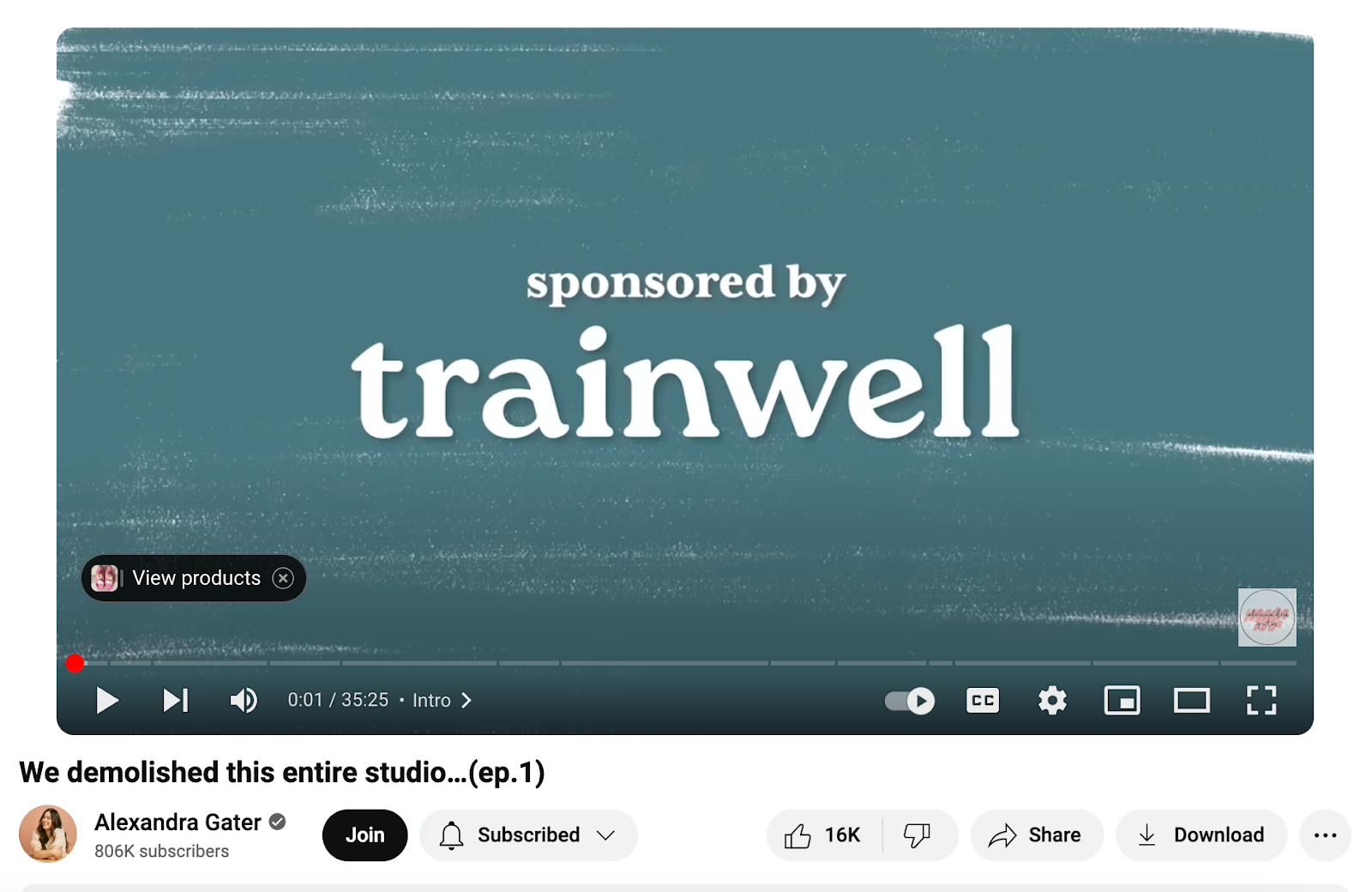
To achieve optimal results, present an appealing time-limited discount or promotion. For instance, in their collaboration with interior design YouTuber Alexandra Gater, the remote personal training app Trainwell offered her followers a free 14-day trial along with $25 off their first month for the first 100 sign-ups via her unique link.
Target micro or nano-influencers in specific niches
Don’t overlook the potential of micro or nano-influencers. With followings between under 10,000 to 100,000, they may have smaller audiences, yet these audiences are often highly focused and dedicated. Embracing a niche marketing strategy by collaborating with these creators or influencers can effectively place your brand in front of individuals who are genuinely interested in your offerings.
For example, if you represent a beauty brand launching a clean makeup line, you could seek out skincare creators focusing on clean beauty.
Micro and nano-influencers frequently demonstrate higher engagement rates compared to mega-influencers. They are generally more affordable and amenable to flexible payment terms. Remember, follower count does not limit reach—content can become viral regardless of audience size.
Provide free samples or services
Who doesn’t appreciate freebies? Supplying your influencers with product samples or services can excite them about your brand and allow them to naturally showcase the products. Just make sure they disclose the gifted product to comply with FTC guidelines.
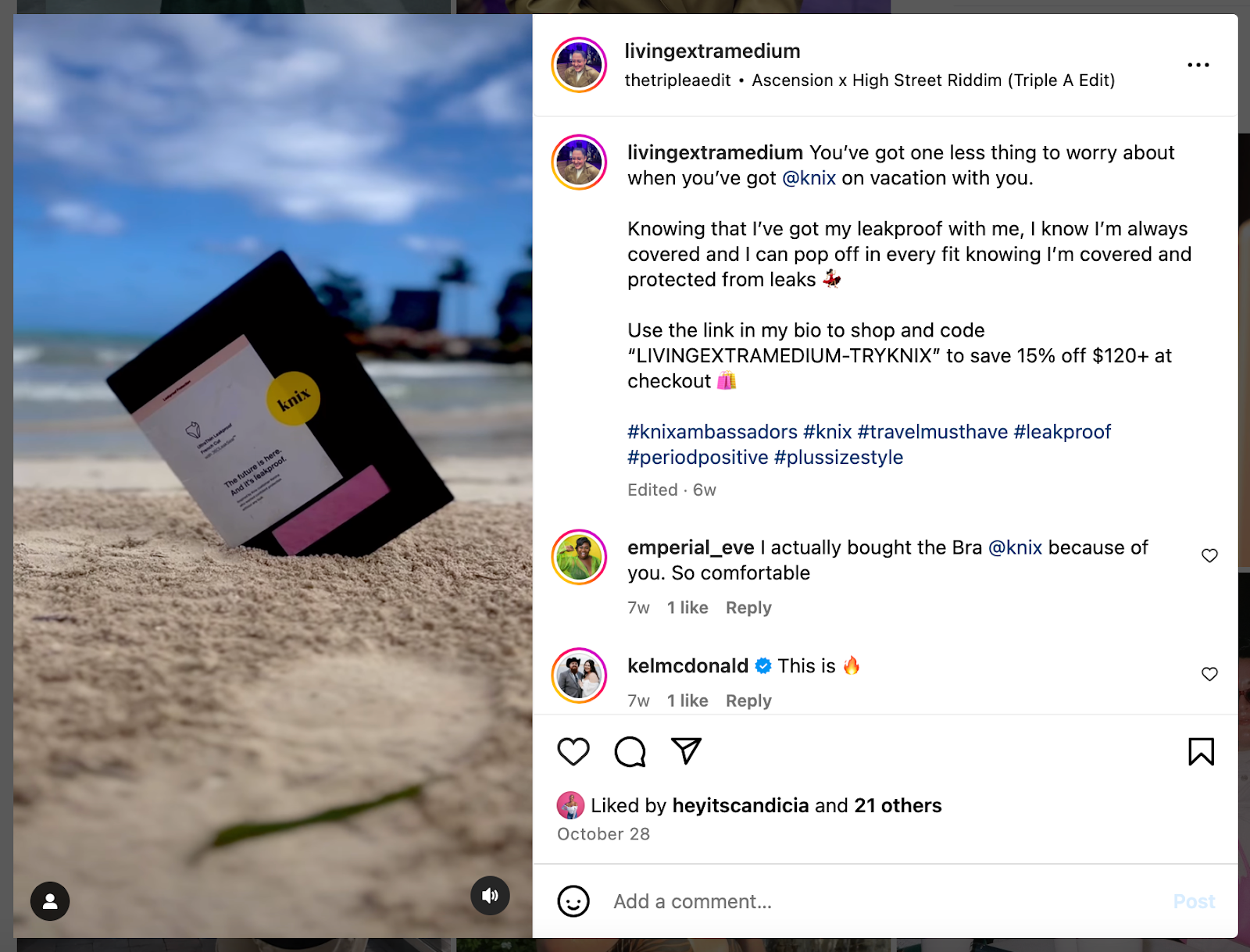
Clothing retailer Knix has an ambassador program where affiliate influencers receive complimentary products, VIP access to exclusive events, and a 10% commission on all sales made through affiliate links.
Collaborate with influencers on content creation
Partner with influencers to generate content that aligns with your brand’s vision and unique style. Since influencers know their audiences best, allow them the creative freedom to highlight your product or service authentically.
Encourage them to produce a “how-to” tutorial, a “day-in-the-life” video featuring your product, or an unboxing with their genuine first impressions. For example, a fitness influencer might include your protein powder in a “what I eat in a day” TikTok, while a fashion creator could showcase your clothing line in an “X ways to wear it” Reel. To maintain brand safety, inform the influencers beforehand that you will review the posts prior to publication. Clearly communicating review expectations upfront will ensure there are no unexpected surprises for either party.
Why investing in affiliate influencers is beneficial
While sales are a clear advantage, affiliate influencers provide much more than that. They amplify your brand’s message and generate valuable UGC content, which can be repurposed for organic posts, advertisements, social proof—you name it.
To optimize your investment, match their energy level. Offer competitive compensation, engaging perks, and resources that support content creation, fostering robust partnerships.
If you’re in the early stages and need to demonstrate a return on investment, begin with one or two micro-influencers and creators that resonate with your brand’s values and track their impact. These individuals often exhibit higher engagement and stronger connections capable of yielding promising results. Furthermore, the more you incorporate, the broader your reach (and the greater your chances of going viral).
Ready to embark on this journey? Utilize our Influencer Marketing Brief Template to commence your upcoming campaign.
Frequently Asked Questions
The post Guide to affiliate influencer marketing: Boost your brand and bottom line appeared first on Sprout Social.

Recent Comments