


Yesterday’s ruling by a federal U.S. judge that Google illegally held a monopoly in search and text advertising is a staggering defeat for one of the world’s biggest tech companies.
“After having carefully considered and weighed the witness testimony and evidence, the court reaches the following conclusion: Google is a monopolist, and it has acted as one to maintain its monopoly,” US District Judge Amit Mehta wrote in his ruling. “It has violated Section 2 of the Sherman Act.”
While it will be several months before Judge Mehta hands down the penalties, this decision goes to the heart of Google’s business. Whatever the judge decides could upend everything about search and search advertising. Google said it will appeal the ruling, so it will likely be years before we know the outcome.
If you’re wondering why the judge ruled as he did, here is the Department of Justice’s case against the tech giant in 11 slides it used for the closing argument.
Market share
The Federal Trade Commission defines a monopoly as “conduct by a single firm that unreasonably restrains competition by creating or maintaining monopoly power.”
Market share is the first thing courts consider when determining if a monopoly exists. While having a 50% market share can mean there is a monopoly, judges generally require at least a 60% to 65% market share.
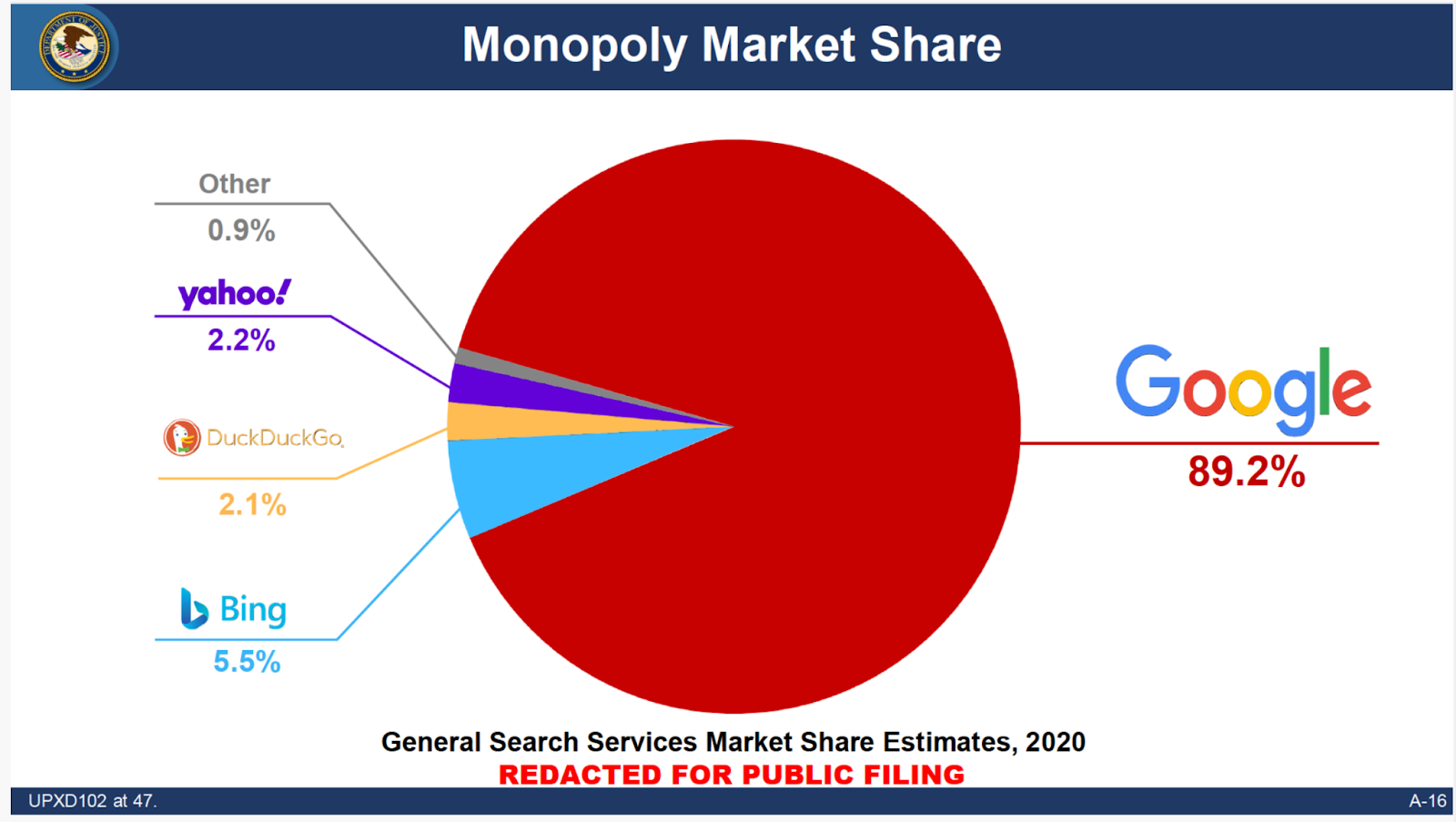
That 89.2% is the average of desktop and mobile search. While that is very lopsided, it is even more so when you look at the two separately.
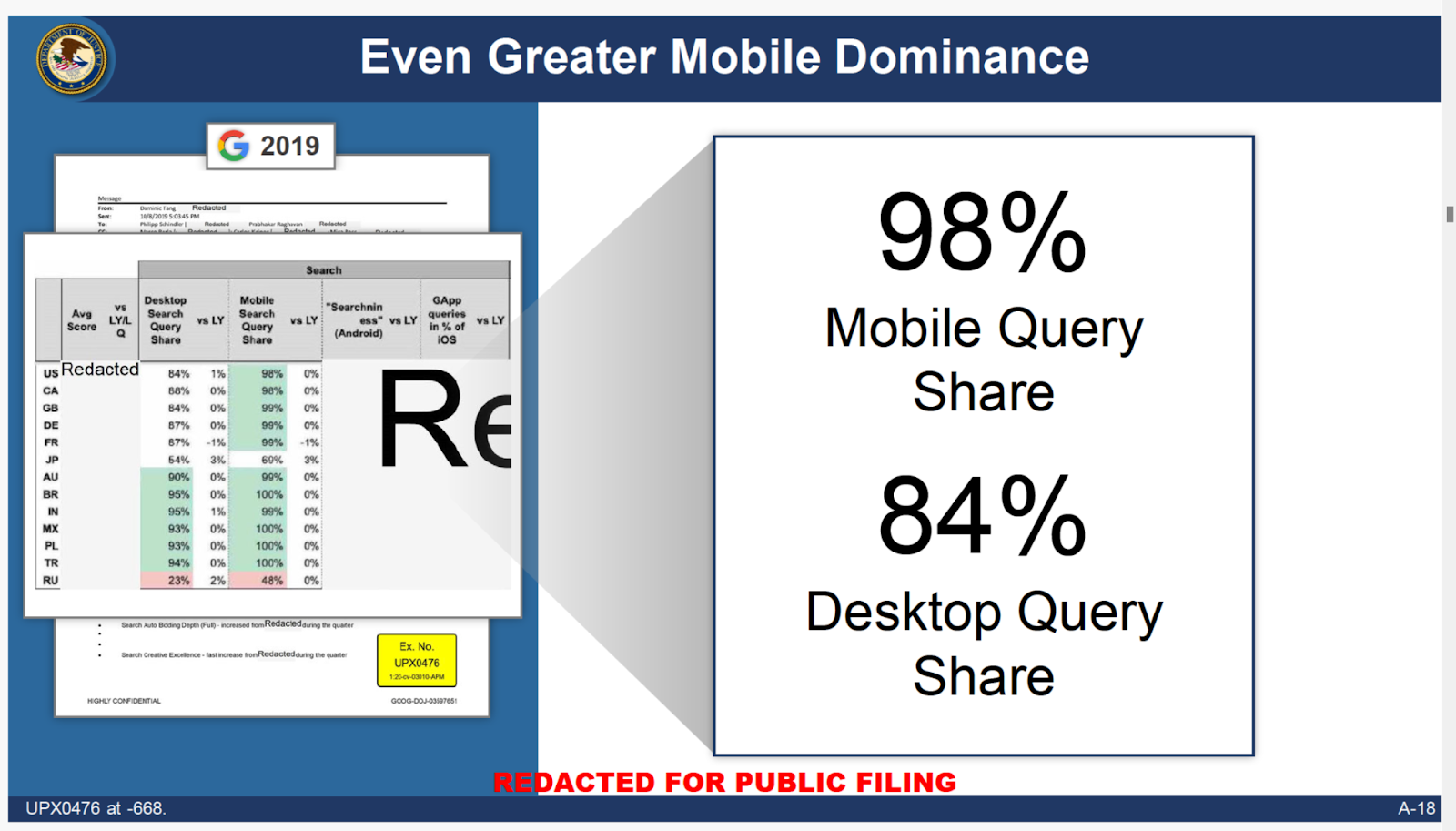
How was that market share gained?
The next criterion for determining monopoly is how the company achieved/maintained its dominant position. There would be no problem if this came by legitimate business practices — “a better product, superior management or historic accident,” to quote the FTC. As someone around when Google launched in 1998, I can attest that it was a gigantic improvement over other search engines. This is why, by 2002, the company had an 80% search market share.
But, is that how it maintained that position?
The Justice Department said it was because Google paid other companies to make its search engine the default setting.
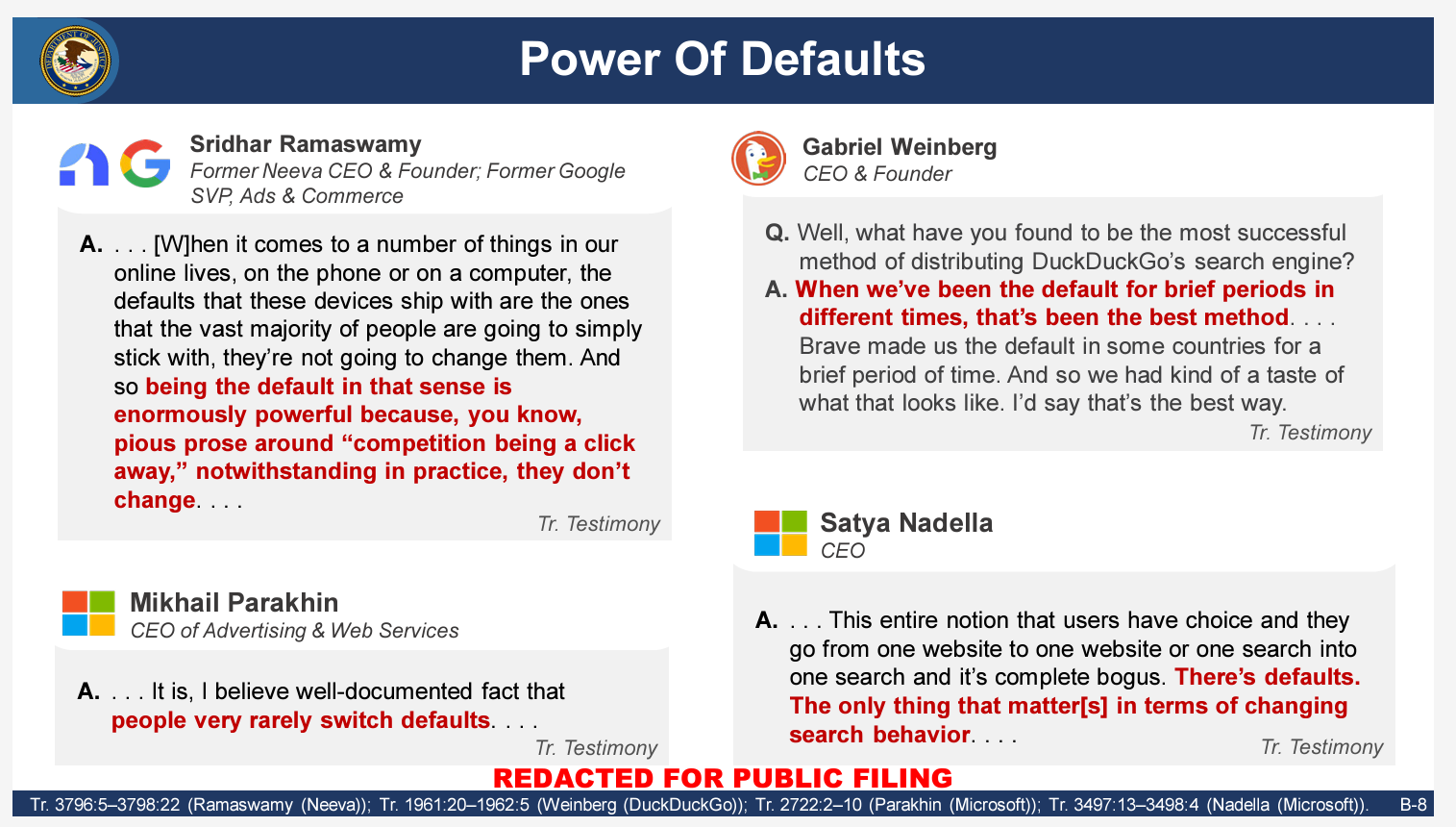
Or, as Google itself put it:
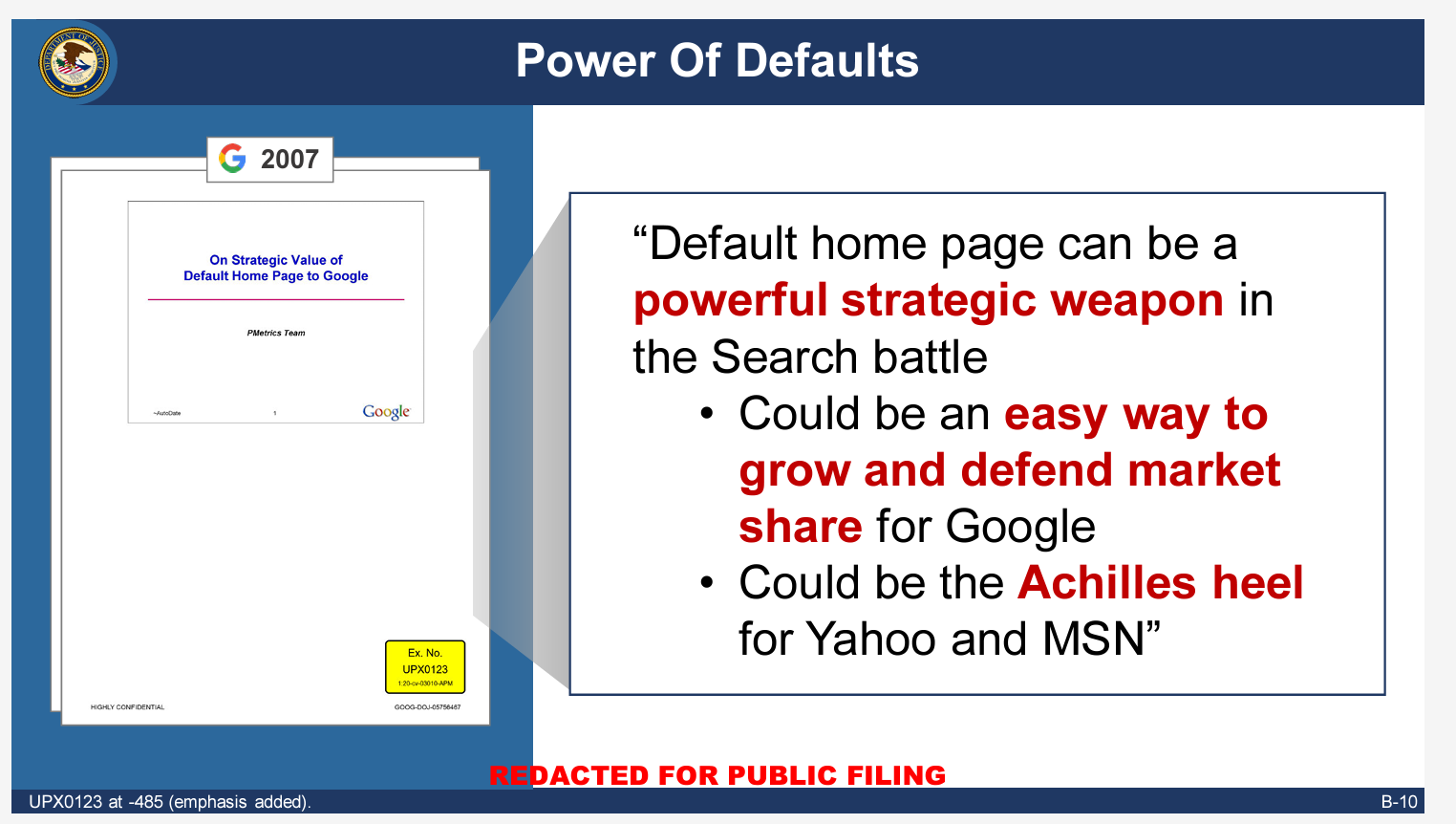
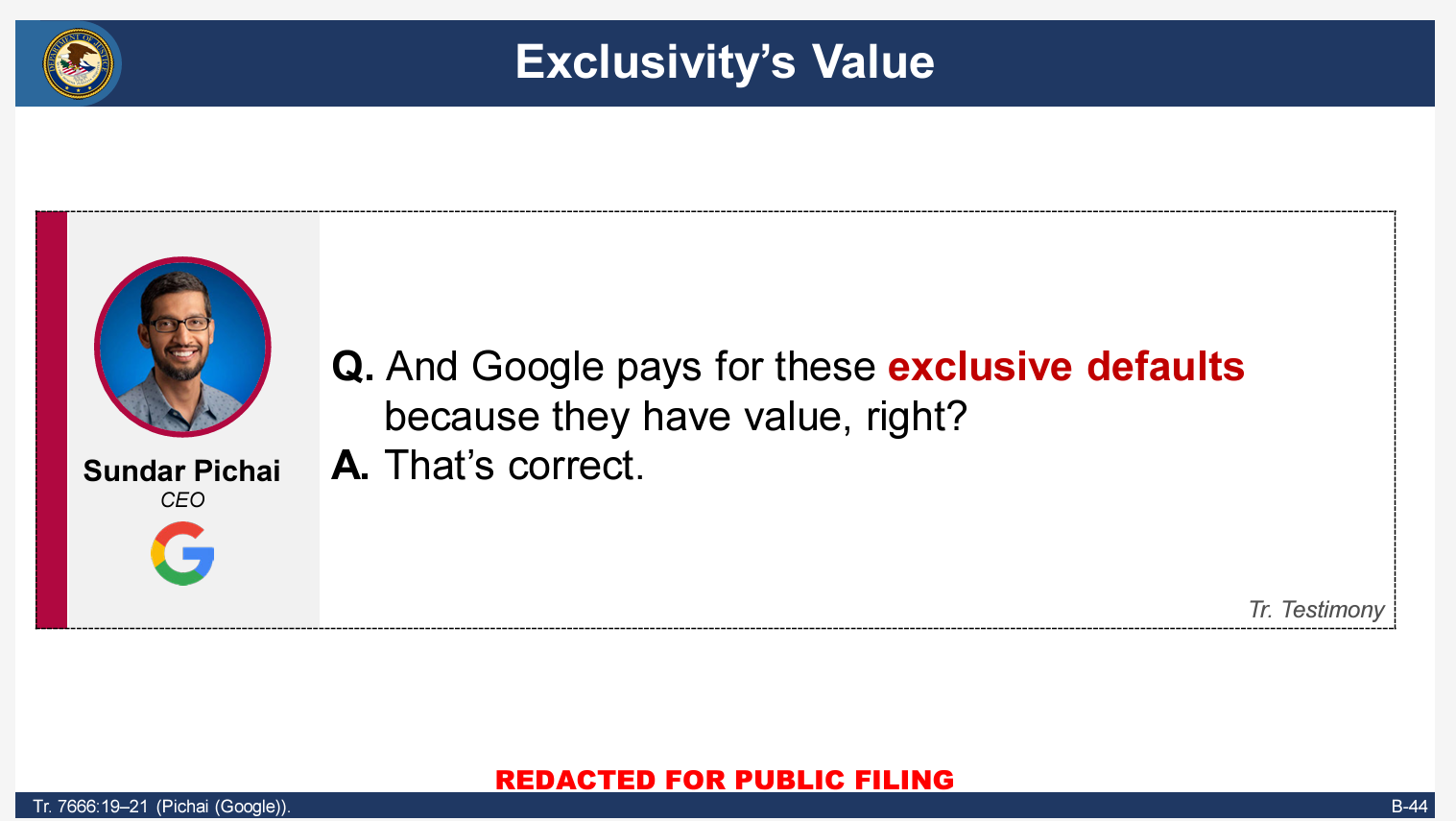
In 2022 the company paid Apple $20 billion to be the default on iPhones — the chief competitor of Android, Google’s mobile phone operating system.
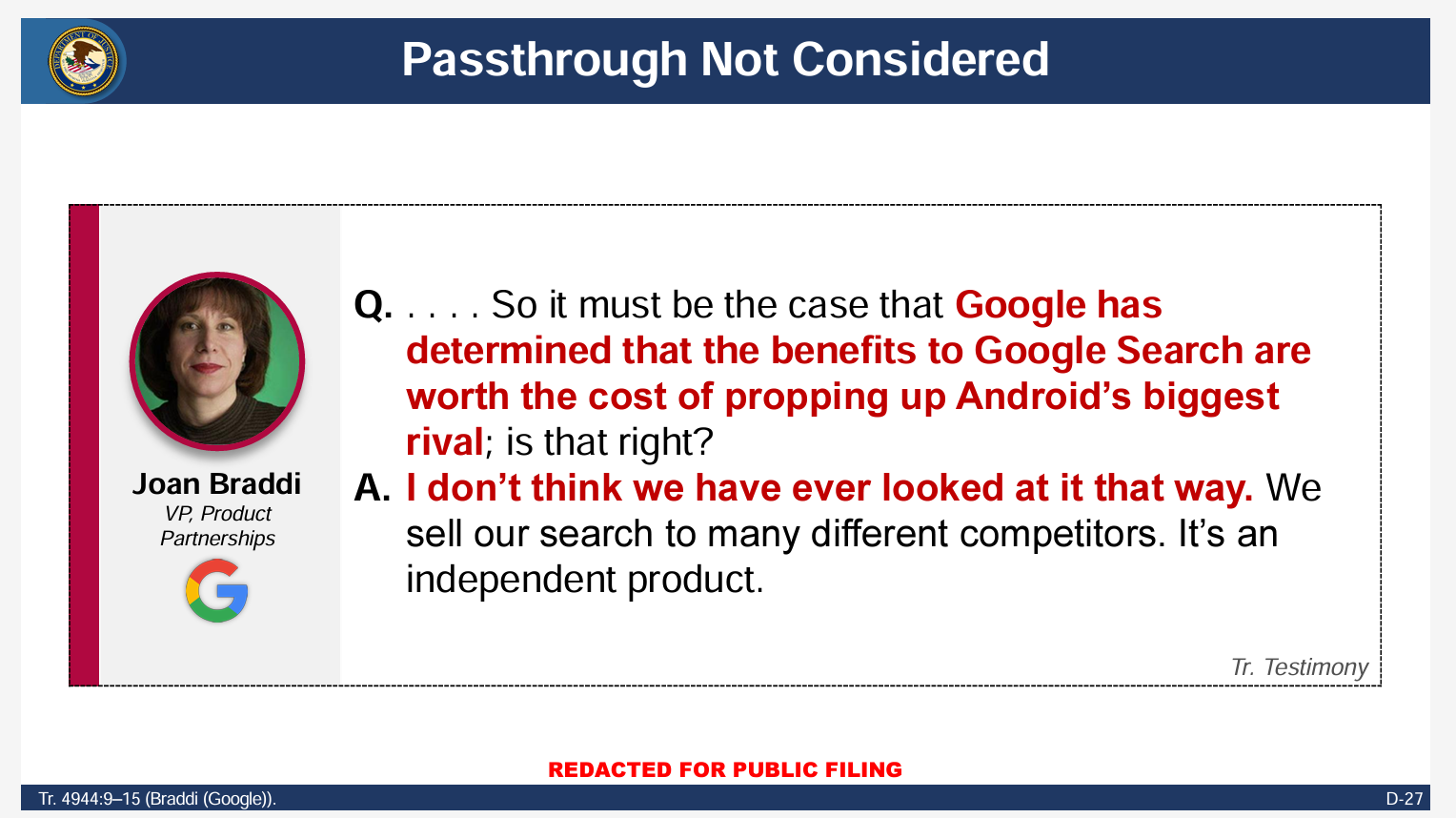
The DoJ said this not only preserved market share, it also prevented others from getting the data needed to create competitive search engines.
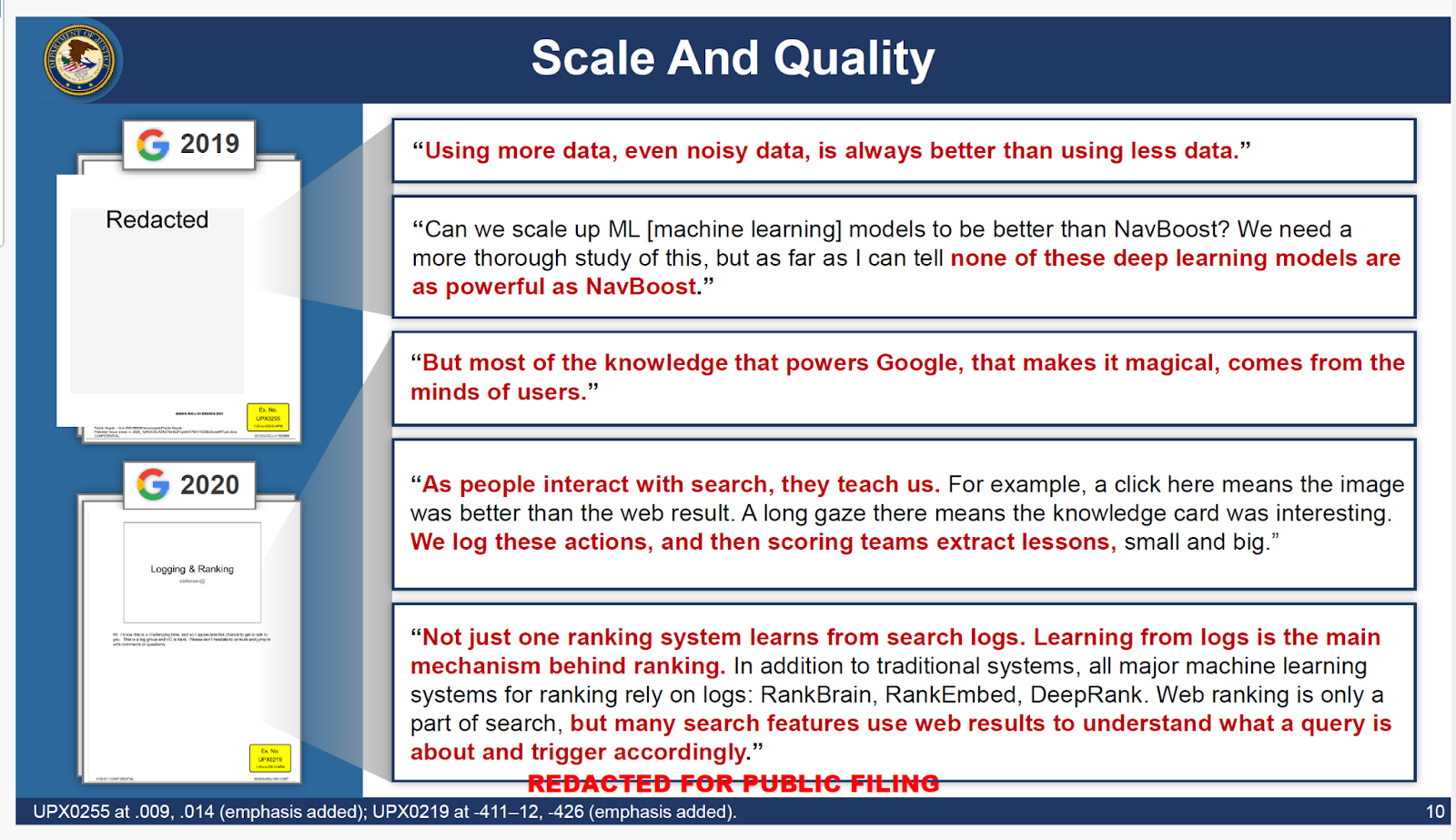
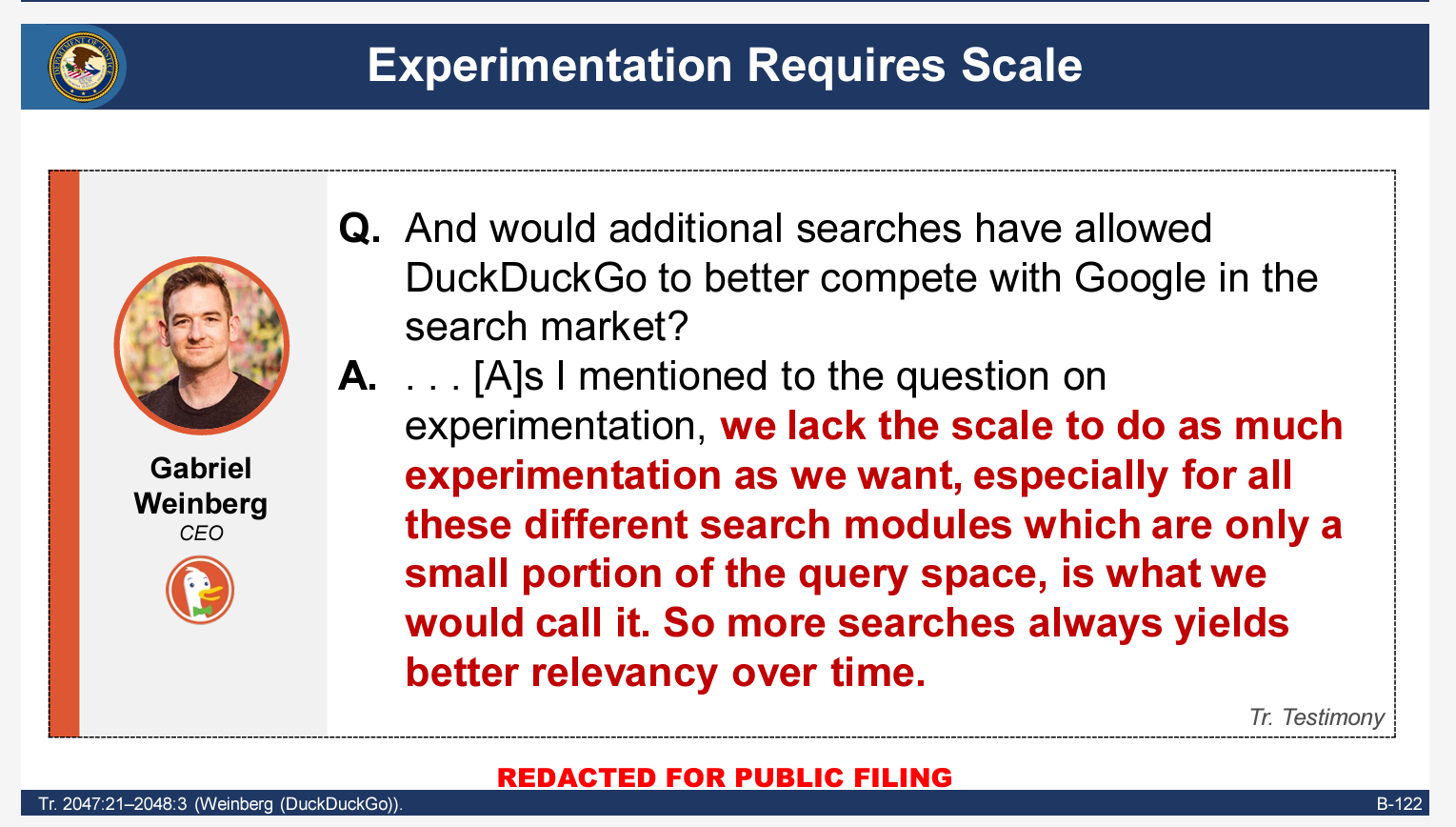
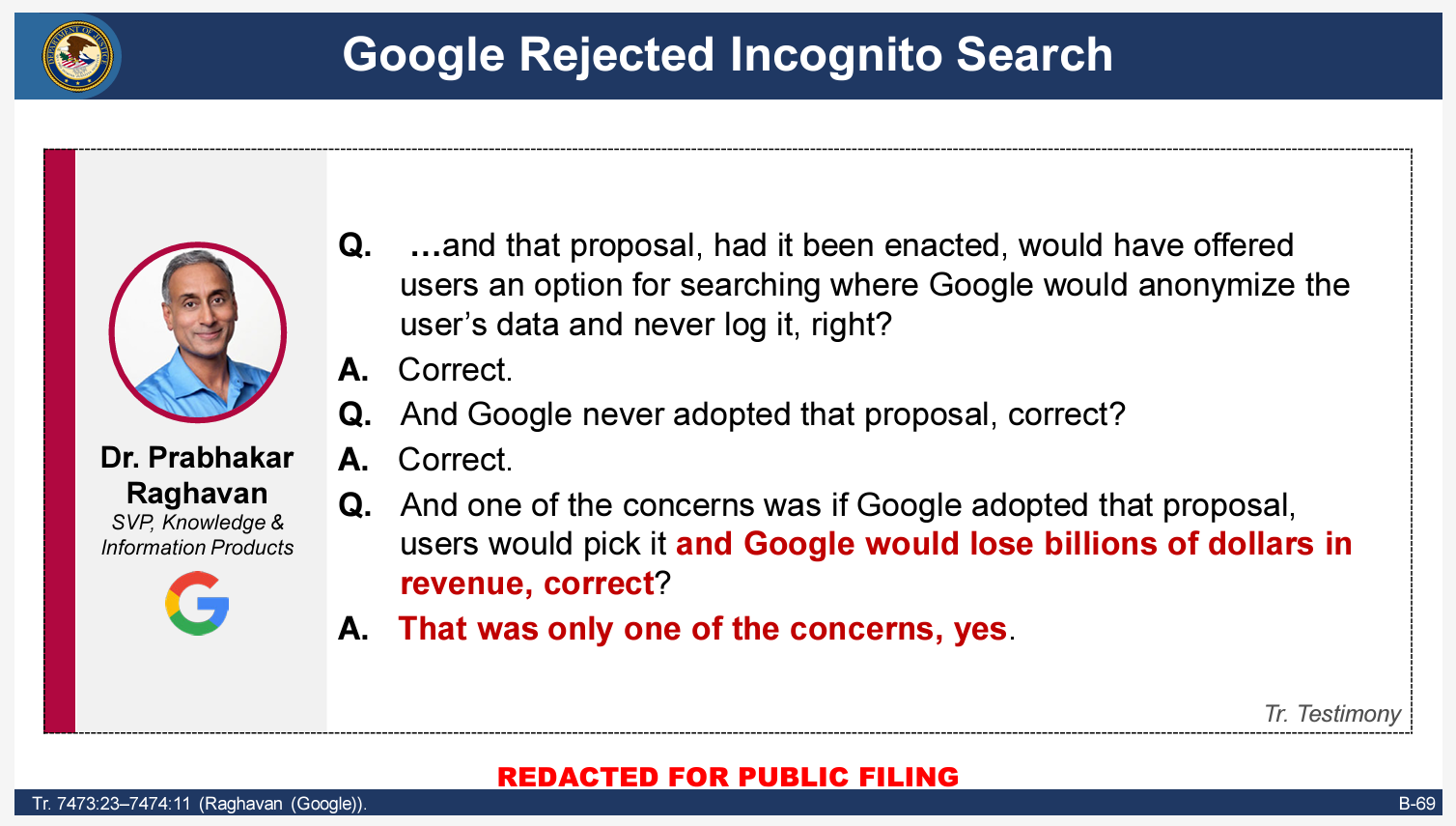
This data is so important to Google that it designed its Chrome browser to collect it even in the supposedly private Incognito setting.
The benefits
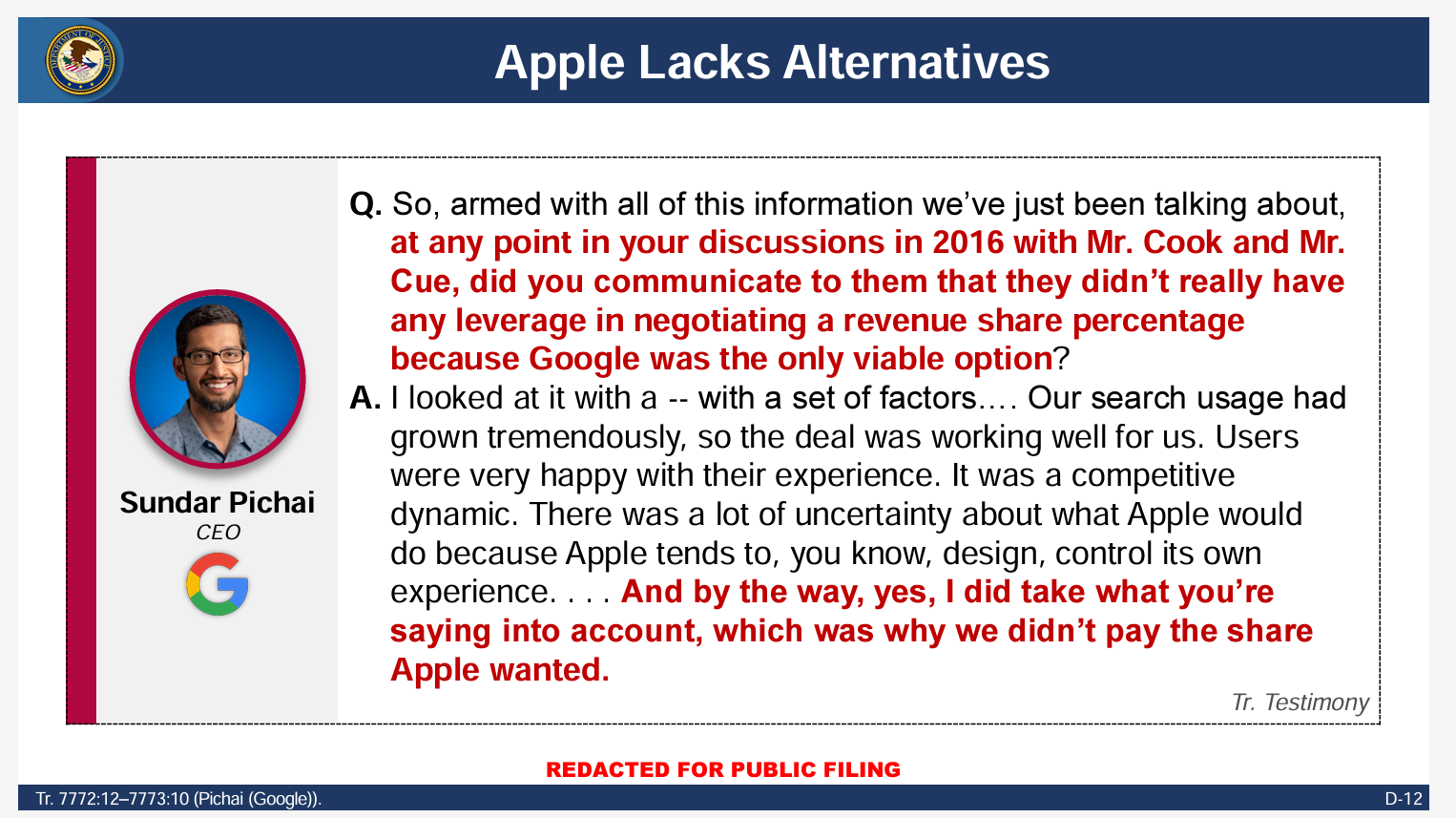
The DOJ said Google exploited its dominance to strong-arm other companies and set prices without having to worry about what competitors might do.
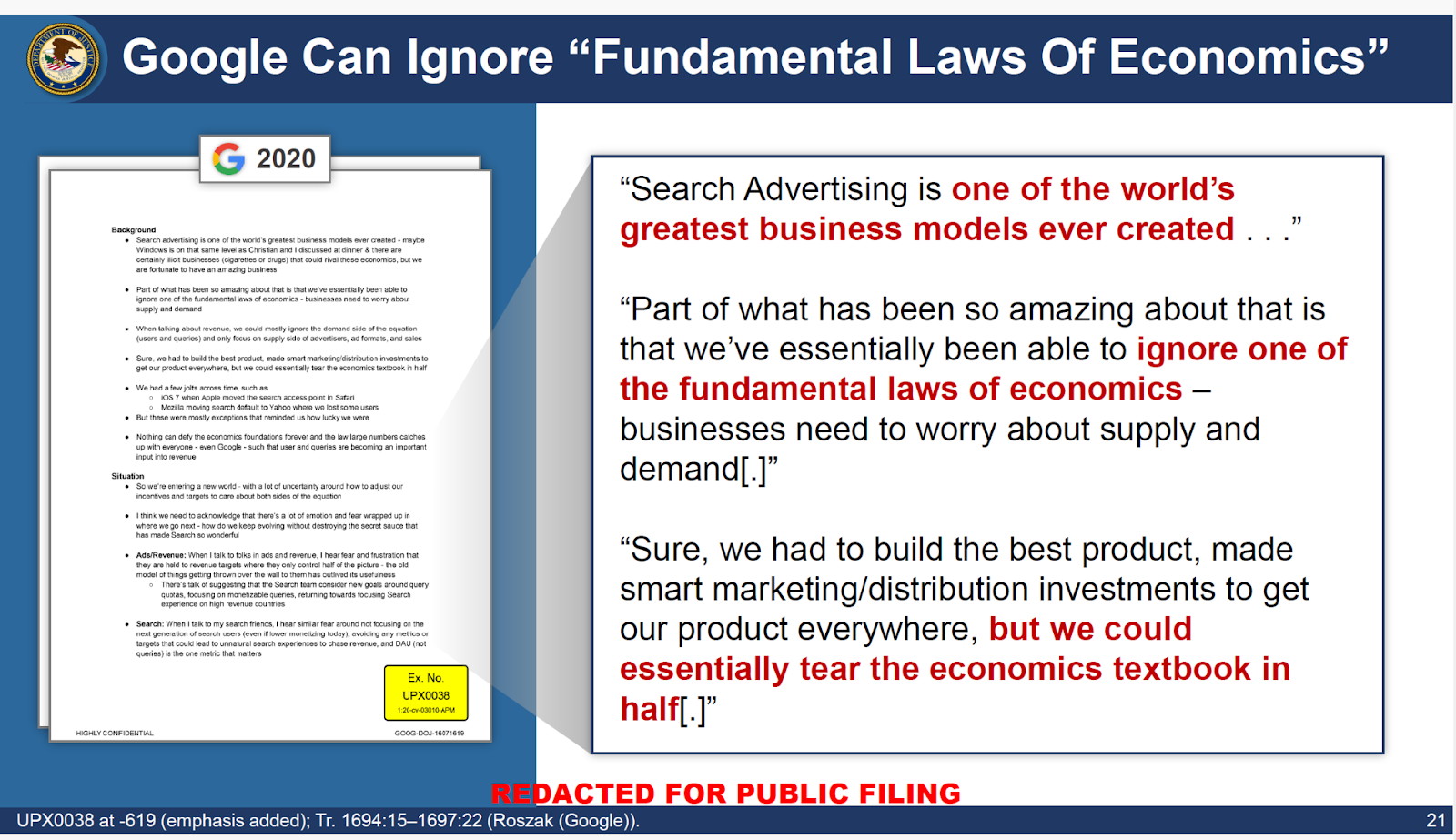
Search engine dominance made Google a prime location for digital advertising. Our colleague Danny Goodwin takes a deep look at that in his article “How Google harms search advertisers in 20 slides.” Google’s own documents showed the company was fully aware of what it had done.
Only Judge Mehta knows what the penalties will be. The most extreme possibility would be to force Google to sell its Chrome browser and/or Android mobile software businesses, preventing the company from directly integrating search into both. Also, important to note, there is another federal antitrust suit pending against Google. This one focuses on the company’s adtech business and is scheduled to start in September.
The post Why Google lost: The DoJ’s case in 11 slides appeared first on MarTech.
# An Analysis of Google’s Defeat: The Department of Justice’s Case Summarized in 11 Slides
In a landmark legal battle, the United States Department of Justice (DOJ) has taken on Google, alleging the tech giant’s practices violate antitrust laws. This case, which has captured global attention, delves into the intricacies of market dominance, consumer choice, and competitive fairness. This article provides a comprehensive analysis of the DOJ’s case against Google, summarized in 11 key slides.
## Slide 1: Introduction to the Case
The DOJ filed a lawsuit against Google, accusing the company of maintaining monopolistic control over search and search advertising markets. The case centers on whether Google’s business practices stifle competition and harm consumers.
## Slide 2: Market Dominance
Google controls approximately 90% of the search engine market in the United States. This slide highlights the extent of Google’s dominance, showcasing market share data and comparing it to competitors like Bing and Yahoo.
## Slide 3: Exclusive Agreements
The DOJ argues that Google has secured its dominance through exclusive agreements with device manufacturers and browser developers. These contracts ensure Google is the default search engine on most devices, limiting consumer choice.
## Slide 4: Advertising Practices
Google’s advertising practices are under scrutiny for potentially disadvantaging competitors. The DOJ claims that Google’s control over search advertising tools and data creates barriers for other companies trying to compete in the ad space.
## Slide 5: Consumer Harm
The DOJ contends that Google’s monopolistic practices harm consumers by reducing the quality of search services and limiting innovation. This slide explores how decreased competition can lead to stagnation in technological advancements and higher costs for advertisers, which may trickle down to consumers.
## Slide 6: Competitive Barriers
Google’s use of its market position to create barriers for entry for new competitors is a focal point of the DOJ’s case. This slide examines how Google’s vast resources and data access create insurmountable challenges for startups and smaller companies.
## Slide 7: Legal Precedents
The case draws on historical antitrust cases, such as the United States v. Microsoft Corp. This slide provides a brief overview of relevant legal precedents and how they relate to the current case against Google.
## Slide 8: Google’s Defense
Google argues that its practices are legal and benefit consumers by providing high-quality, free services. This slide outlines Google’s main defense points, including the argument that competition is just a click away.
## Slide 9: Potential Outcomes
The possible outcomes of the case range from Google being required to alter its business practices to more severe penalties, such as breaking up parts of the company. This slide explores the potential ramifications for Google and the tech industry.
## Slide 10: Broader Implications
The case against Google has broader implications for the tech industry and antitrust enforcement. This slide discusses how the outcome could set a precedent for future cases involving other tech giants like Amazon, Apple, and Facebook.
## Slide 11: Conclusion
The DOJ’s case against Google is a pivotal moment in the ongoing debate over antitrust laws and market fairness in the digital age. The outcome will likely shape the future of competition and consumer protection in the tech industry for years to come.
## Final Thoughts
The legal battle between the DOJ and Google is more than just a fight between a government agency and a tech giant; it is a test of how modern antitrust laws can be applied in an era dominated by digital monopolies. As the case unfolds, it will provide valuable insights into the balance between fostering innovation and ensuring competitive markets.

Recent Comments