

The way you facilitate discussions on the internet can significantly impact your brand’s reputation. Whether you’re a public relations professional or a social media coordinator, mastering online engagement is essential. This encompasses recognizing the implications your brand faces during crises and noteworthy cultural events.
Overseeing social media moderation is vital as news cycles become increasingly rapid and immediate. With fast-moving social feeds transitioning from one incident to another, the online landscape can resemble the Wild West. In this guide, we’ll explore the concept of social media moderation and how to utilize it effectively during global initiatives.
What is social media moderation?
Social media moderation refers to the act of managing both favorable and unfavorable interactions on your brand’s social profiles. This process involves overseeing discussions and debates while eliminating violent or harmful content. A successful social media monitoring strategy necessitates a careful balance between promoting free expression and addressing the risks posed by offensive remarks.
Major incidents can lead to a surge in social media reactions and content that invites controversial viewpoints. Even if your brand refrains from making a public declaration, you might still find yourself engaged in dialogues regarding those topics through your followers.
Creating an environment that encourages constructive, respectful discussions can enhance your brand image and provide your audience with meaningful engagement beyond merely your goods and services. As a brand or organization, how do you ensure that the interactions you are part of or facilitate are suitable? This is where social media moderation comes into play.
Why is social media content moderation crucial?
Brands on social media contribute to the safety and integrity of these platforms. Social media plays a pivotal role in marketing, sales, and audience engagement. However, the way brands handle social campaigns and the communities around them can have lasting effects on the broader internet—and the conversations that occur there.
It fosters a secure environment
Offering assistance during critical times enhances customer loyalty. Audiences recognize when there’s a disparity between a brand’s values and its promotional tactics. While the [Sprout Social Index™ 2023](https://sproutsocial.com/insights/index/) indicates that only 21% of consumers primarily follow brands for shared values, one never knows when a crisis might arise and affect customer sentiment, security, and allegiance.

When the Jamie Lloyd Company in London’s West End revealed a new staging of Romeo and Juliet in April 2024, racist backlash emerged on social media directed at the actress Francesca Amewudah-Rivers, who was cast in the role of Juliet. The production’s director promptly took a public stance, sharing a declaration on the production’s social media channels.
This declaration denounced the online harassment as “deplorable,” clearly stating that the theater and production company would not condone such behavior. They restricted comments on their posts to prevent further instances of bullying and distressing content. This response exemplifies a commitment to the safety of both the cast and the social media audience.

When crafting your moderation strategy, consider: What is the equilibrium between authenticity and remaining faithful to your brand identity? Addressing sensitive issues that resonate with your beliefs might lead to diverse perspectives and comments. By filtering out negative or offensive remarks, you can create a secure space for your audience to engage in discussions.
It offers a trustworthy platform for your audience
Social and global events influence your brand’s digital presence and community dynamics. Some individuals exploit such moments to propagate hateful messages for personal gain or to enhance their profile visibility. During these high-engagement periods, it is essential to control the information shared across your social platforms, including eliminating spam comments when feasible.
Moderating misleading user-generated content helps ensure that your audience has access to credible sources of information.
It safeguards your brand identity
Your aim is often to boost engagement or awareness of your products through social initiatives. Unfortunately, user-generated content can diverge from your objectives; it might even ignite an unforeseen controversy that tarnishes your brand’s image.
Implementing moderation protocols diminishes the likelihood of undesirable content harming your brand’s identity. While not every negative comment signals a crisis, how you manage controversies can be instrumental in preventing one.
It combats misinformation
Misinformation and “fake news” proliferate on social media. Conspiracy theories and distortions of real-world events spread more readily on social platforms than in traditional media outlets with safeguards aimed at counteracting myths.
Though your brand can’t—and shouldn’t—attempt to rectify every wild theory out there, it can play a key role in curbing the distribution of nefarious and divisive misinformation on its profiles.
It ensures regulatory adherence
Specific sectors are governed by strict regulations aimed at safeguarding privacy and preventing legal complications. For instance, organizations operating in the US healthcare domain must comply with HIPAA guidelines and refrain from disclosing patients’ confidential health information. If your business must align with HIPAA on social media, establish a process for monitoring posts that might contain personal health details for swift removal.
In certain nations, there are laws surrounding online content, and your brand’s output must comply with those regulations to operate effectively in those locales.
It deters cyberbullying
Unfortunately, cyberbullying and harassment can originate on and escalate through social media. For instance, influencers frequently encounter bullying online. Brands collaborating with influencers should take responsibility for moderating and deleting harmful comments directed at the influencer on their social media channels.
Social media moderation allows you to identify and dismantle harassment before it spirals out of control, whether it impacts your audience or your social media team.
How to devise a social media content moderation strategy for your brand
To effectively moderate content on your social profiles, it’s crucial to craft a moderation strategy. The following guidelines will aid you in formulating a plan that protects your brand and community.
1. Set measurable objectives
The first step in creating a social media monitoring strategy is to clarify your desired outcomes. Establish sensible, quantifiable goals that will enable you to assess and enhance your efforts.
Your aims could involve implementing a social media crisis response framework by the second half of the year or achieving a customer feedback survey response rate of at least 90%.
2. Grasp your audience
Understanding the nuances of your audience is key to informing the rules you create for community engagement.
Begin by identifying the primary demographics of your audience, encompassing age, geographical location, and interests. Next, delve into how customers engage with your brand, including user behaviors and common interaction patterns. These may differ by platform, so ensure your research encompasses multiple brand profiles.
3. Conduct a communication audit
Reviewing your current strategic communication efforts can highlight strengths and identify areas needing improvement.
Conduct an audit of your communications to better comprehend your audience’s needs and priorities. A simple SWOT analysis of your audience’s engagement habits will inform your strategy and prepare you to be proactive rather than reactive during peak engagement periods.
4. Define explicit moderation standards
Setting clear guidelines from the outset will benefit both your brand and your audience.
Utilize your company values and any legal obligations to establish your moderation framework. Specify what types of content will be permitted in your comment sections and closed communities, and outline the consequences for breaches. Different consequences might apply depending on the channel or situation, and clarify what behaviors are absolutely intolerable.
5. Develop response strategies
Negative comments can vary significantly in severity, so it’s essential not to respond uniformly to every situation. Instead, create a response strategy tailored to different types of occurrences and how you’ll handle them.
Begin by setting a service level agreement (SLA) to establish expectations around social media response times. This provides clarity about the time frames within which your team will address pressing issues.
Then, form a customer response matrix for social media that equips your customer support team with on-brand replies for praise, criticism, and everything in between. A generative AI tool can assist you in developing a range of responses, enabling you to avoid sounding repetitive. If you use Sprout Social, you can save response templates and utilize our Enhance by AI Assist feature to customize responses and improve your tone.

If you oversee a private community (like a Facebook Group or Discord community), you should create templates for guideline violations. For instance, the r/legaladvice community has specific stipulations about acceptable responses. When a comment violates these rules, a moderator will delete it and respond with a template explaining the reason.

6. Assess which moments warrant brand participation
As previously noted, your fundamental values should steer your social marketing initiatives. If a response is called for, they can guide your interaction while safeguarding your brand.
For example, in 2020, Peloton introduced the Peloton Pledge—a formal commitment to becoming an anti-racist organization. In 2021, following an increase in hate crimes targeting Asian Americans, the brand leveraged this pledge as a basis for taking action.
The fitness company turned to social media to announce a $100,000 donation to the Asian American Federation. Peloton fans took to their social platforms to commend the brand for its actions, acknowledging that the company remained true to its values amid the tragic occurrences.
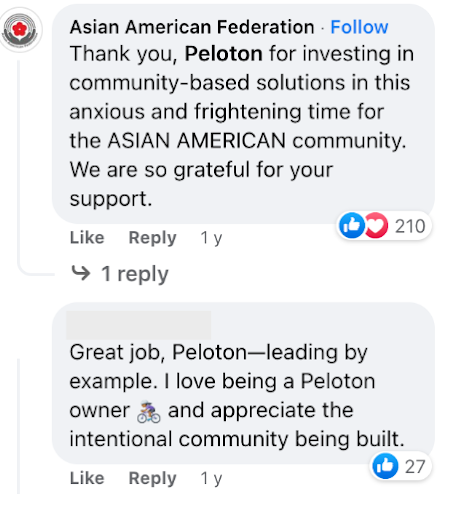
This example also illustrates the significance of understanding the ongoing discourse before posting. Social listening can assist in evaluating the connections between your audience and larger events. If it doesn’t pertain to your audience or brand, it’s often wiser to remain silent than to appear disingenuous.
7. Formulate a proactive action plan
Anticipate potentially sensitive situations that may arise with your audience. With strategic guidelines established, you’ll be better equipped to respond quickly during challenging times. Having a strategy in place will facilitate crisis management when issues arise.
Your plan should bolster brand loyalty and generate support for your brand among your audience while adhering to brand values. In addition to examining when and how your brand should activate its moderation approach, consider the following:
- Compile a list of brand do’s and don’ts that guide your team during uncertain times.
- Create a flowchart to determine if the situation aligns with your brand or values. If yes, continue by mapping out responses. If not, consider pausing action.
- Organize response templates to help inform your messaging, ensuring you’re prepared to address comments deemed worthy of response.
- Designate a dedicated individual or team to oversee conversations on your social posts.
8. Prepare a crisis communication plan
Your initial step in managing a crisis is to develop a process for its prevention. Your brand might face insensitive comments, product mistakes, employee missteps, or website outages, all of which can quickly escalate into a social media crisis.
Draft a crisis communication plan that facilitates early detection of content that could lead to significant issues. Next, define the steps necessary for prompt responses, escalation, and collaboration with PR or legal teams if needed.
9. Tailor special considerations for owned communities
Investing time into nurturing a community can yield dividends in engagement and loyalty to your brand. Moderation is essential for a vibrant, secure community. Encourage positive interactions through proactive engagement methods such as polls, Q&A sessions, or contests. Highlight favorable user-generated content to promote adherence to community standards, and maintain consistency in your moderation practices.

In Sprout’s user community The Arboretum, we prioritize a positivity-driven moderation strategy. Sprout’s Senior Community Strategist, Jonathan Zuluaga, provided these best practices to keep in mind:
- Define rules and guidelines upfront and apply them fairly and evenly. “Creating a fair and equitable space enables all members to engage and participate,” Zuluaga advised.
- Capitalize on your star members. In any community, certain members will emerge as standout supporters. Zuluaga recommends prioritizing engagement with these individuals and seeking their suggestions for community enhancement and interaction.
- Solicit feedback. “At the Arboretum, our feedback surveys have proven invaluable in shaping discussions and helping us create the programming and environment our members need,” Zuluaga noted. Incorporate ongoing feedback requests as part of your moderation strategy.

10. Record and report on your strategy
Thorough documentation can prevent many future issues. Be mindful that having one individual carry all the knowledge regarding your social moderation practices can lead to complications if they’re unavailable during a sensitive event. Documentation provides the necessary tools to bring other team members up to speed. Maintain detailed records of moderation actions and results, such as removed posts, the frequency of removals, who acted, and any follow-up required.
Regularly reporting key metrics is essential for keeping management and leadership informed about the challenges and successes of your moderation approach.
Best practices and advice for social media content moderation
While you can devise a strategy to prepare your brand for most circumstances, the unpredictable nature of real-world events will still require a nuanced execution. Here are some best practices for social media moderation.
When should my brand remain silent on sensitive topics?
If you’re uncertain about when to speak up or remain quiet, consider whether it’s appropriate to contribute to a difficult cultural moment. Do you have data or insights from your community that would warrant taking a break for a while?
Remember, silence isn’t equivalent to going dark. To clarify, strategic silence is a calculated pause on content that’s either irrelevant to the current scenario or fails to provide crucial information for your audience at that time.
During the 2023 wildfires in Maui, Hawaii, Hawaiian Electric Industries halted all content not related to the wildfires or disaster response. Their typically diverse and active Instagram account shifted to sharing only updates on outages, restoration efforts, and fire-related news for several weeks to ensure residents had access to the most pertinent information without distraction.

When should my brand consider pausing publishing?
In addition to refraining from commenting, you might need to pause all social content. Before taking a break, ask yourself if the world needs to hear from your brand right now.

How should I respond to public criticism?
Your approach to public criticism plays a crucial role in maintaining your reputation. The most essential strategy: Do not ignore negative remarks. Aim to respond to the majority of comments—positive, neutral, or unfavorable.
When confronted with criticism, your goal should be to remedy the situation, not intensify it. Addressing criticism requires careful thought and patience. Educate your team on the advantages of applying effective customer service practices. You should also have guidelines for managing escalations and a crisis communication plan in place to navigate challenging scenarios.
How do I handle comments that cannot be resolved?
Individually addressing comments or posts can strengthen your brand’s relationship with consumers. However, comments that contain hate speech (racist, sexist, derogatory) may be beyond resolution or not merit individual responses.
Consider implementing an exclusion list on your pages to automatically filter out undesirable comments. Additionally, you could pin your brand’s community engagement guidelines so users understand which comments will not be tolerated. Often, the most effective action is to delete inappropriate comments.
Moderation + consistency = a robust brand reputation
Engaging with your audience during crises or significant global events may feel daunting. Through effective social media moderation, you can manage and alleviate any sensitive discussions that may emerge. Consistently applying your social media moderation strategy will help cultivate a strong, positive reputation among your audience.
Now that you’re equipped to moderate challenging conversations online, consider establishing a social media crisis communication strategy. The capacity to prepare for potential challenges and adapt swiftly is crucial for effective social media management. With these resources at your disposal, you’ll be equipped to navigate sensitive situations or emergencies that may arise.
The post How to craft an effective social media moderation plan in 2024 appeared first on Sprout Social.

Recent Comments