

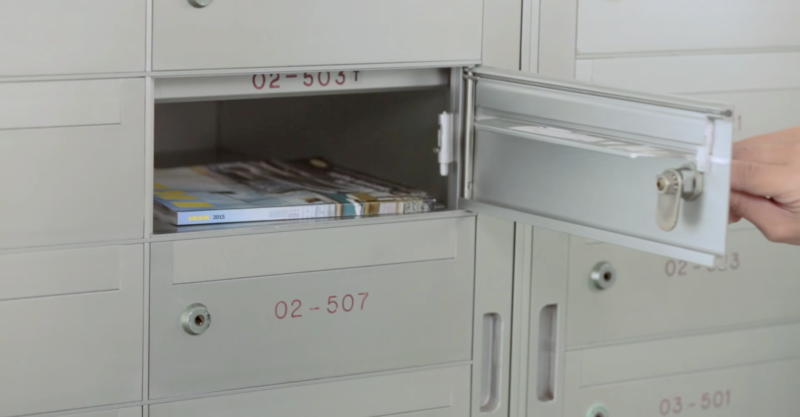
People may not need to actually lick stamps any more but they are still sending and receiving mail. Often they receive mail with joy. Consider how things have changed.
“Thirty years ago, when you received an email you got excited. Your mailbox was just full of junk mail at the time.” That would be your physical mailbox, of course. “Now it’s kind of the opposite. The mailbox feels pretty empty these days, for the most part, and your email is chock-full.” Remarks from Jacob Ross, CEO of programmatic direct mail vendor PebblePost.
Ross admits he’s a proponent of direct mail marketing but tells us: “If what shows up in your mailbox is relevant and respectful, then you’re likely to engage with it. We’ve seen that across the board, no matter what the demographic is. People are responsive to direct mail, orders of magnitude more than they are with email.”
S/he wrote me a letter
Of course, nobody wants to receive postcards or catalogues, let alone packages, that are irrelevant. Nor do they want to receive mail from the same brand every day. But getting meaningful mail (and sending personal mail) are fun again. Who doesn’t keep an eye on USPS Informed Delivery to see what’s coming?
It’s not just the older generation either. Recent research from Stamp.com shows 65% of U.S. consumers still send letters and packages with nearly half (48%) of Gen Z, teens and twenties, sending mail one to two times per month. That’s an audience that might well be susceptible to receiving mail from brands as long as it meets the right criteria. “Relevant and respectful,” as Ross said.
Which leads us to one of the enduring merits of direct mail. Unlike an ad seen online or in a mobile app (or in a game), it’s persistent. “On average, a piece of mail that is brought into a house sits there for up to two weeks,” said Ross. That’s if it’s relevant; if not it goes straight from the mailbox to the recycling bin. “But if you get something relevant you take it into your house,” he went on. “That’s the beauty of direct mail. It’s one of the only channels where consumers choose to engage with the offer, bring it into their house and take advantage of it.”
Dave Fink, co-founder and CEO of Postie, underlined the breadth of the channel. “It is a really effective channel across the widest ranges of demographics and product verticals,” he said. “This is a channel that has been around for 100 years.”
When Postie started out almost eight years ago, young audiences were all over mobile apps and Instagram — and TikTok was just getting started, he said. The Postie team investigated whether there was a specific set of demographics that direct mail worked best for. “When we got to a certain level of scale,” he said, “we looked at conversion level by age. Guess what we found? Highest conversion rate by decade: 20s. If anything, we were biased against that being the likely outcome, but the data spoke for itself.”
It’s not just for young people, of course. Fink recalls, some years ago, reading a top 10 tips about selling to important people. One of them: “Important people love getting FedExes,” said Fink. “The important thing there is addressability, which plays into the hands of channels like direct mail. How do I get attention from this individual, or this series of individuals who hold these roles at this company and could be influential? They’re humans.”
That’s essentially the theory behind Sendoso’s offering: a personalized gifting automation platform, primarily for B2B marketers.
Humans like getting (relevant) packages. They also, increasingly, like the experience gamified. What the United States Postal Service is doing with Informed Delivery really builds on what Amazon and other marketplaces have been doing for a while. “Eight dollar book, a pair of socks. And I get that notification that Amazon just dropped it off — it makes me a little giddy. There’s just something magical about a package showing up.”
Direct mail marketing in 2024
The state of direct mail marketing in 2024 is healthy, according to a report (registration required) from direct mail marketing automation company Lob. Based on a survey of 250 marketing professionals at large North American companies, Lob reported that:
- 84% of marketers say direct mail has the highest ROI of any marketing channel.
- It has the best conversion rate (85%) and response rate (84%).
- 82% are increasing their investment in the channel (a striking increase from 58% in 2023).
Additionally, it’s a channel that works across “just about any product or vertical,” said Fink, naming apparel, financial services, insurance, automotive, home goods and services as examples. “Is it scalable?” he asked. “It reaches every household, every individual in the United States.” The channel, that is, not every mailpiece.
The rise of data-driven direct mail marketing
There’s still direct mail marketing out there that isn’t data-driven and you can usually tell when you receive it. Are you a veteran? Are you a Medicaid recipient? No and no. PebblePost and Postie, founded in 2014 and 2017 respectively, were early proponents of putting data at the heart of their direct mail operations; indeed, PebblePost has always called its offering “programmatic direct mail.”
It began, said Ross, with retargeting. “We got really good at that,” he said. It tied digital and direct mail together. As PebblePost founder Lewis Gersh told me almost 10 years ago, a customer can go to a retailer website, look at some shirts and blazers, and then leave without purchasing — and a 4×6 postcard with an offer on an apparel purchase could be sent out within 24 hours of her visit.
But it became clear to PebblePost and the adtech space generally that, while retargeting is critical for lower funnel activity, marketers are also really looking to drive acquisition and retention. “Expanding our product line became really important,” Ross said.
PebblePost launched the first version of its Lookalikes product in 2020. “We said to brands, go find us your best customers and we’ll find more folks that look like them. We had to do it really well because direct mail is expensive in terms of media, a thousand times more expensive than a banner ad. You have to really perform.”
Lookalikes has been fine-tuned over the last few years, said Ross. PebblePost recently launched an enhanced version of the product that is “always on” and provides continuous audience optimization. “We try to find prospects that will perform almost as well as retargeting does, that’s the goal,” Ross explained.
Underlying Lookalikes is the PebblePost Graph which now covers some 99% of U.S. households and includes browsing and transactional data. All PebblePost clients participate. They add their first-party data to the Graph (where it is disaggregated and anonymized). Models built from the graph do not have more than 5% of data from any one brand — “We have the scale that we can do that,” Ross said.
There are parallels with the way digital approaches lookalikes, but some important differences too. “We use real customer data from brands,” said Ross. “They’ll send us like 50,000 records as a segment of their best customers — highest frequency, biggest purchasers. What we do is use the Graph and four connected models to identify who the best prospects are from the entire U.S. population.” The models are based in intent, offline transaction data, mail response data, demographics and psychographics. Lookalikes are those prospects that score high across all four criteria.
Dig deeper: Postie launches CRM Optimization for direct mail
Direct mail aligns well with retail media networks
One main focus of Postie right now is to show how well direct mail marketing performs in alignment with the booming retail media network space. The aim is to make direct mail a core component of what retail media networks can provide to their brand client.
“As we thought about the value proposition of direct mail,” said Fink, “much of it falls into two different components.” First, data and audiences. “The retailer does not typically share transaction-level data, PII, directly with brands. But brands have the opportunity to target those consumers in a very direct way through retail media networks.”
Direct mail is an addressable channel, of course, targeted at the household level and individual-in-the-household level. “Direct mail gives these retailers a really powerful, highly targeted ad unit that brands can’t access outside them because they need that retail data,” Fink explained. “They need to know who in the retail consumer base is actually buying in the category that they’re selling.”
The second component is the brand story. “If you have the opportunity to share your creative, you have credibility and authenticity.”
Of course it’s possible to add branding to digital experiences too; indeed, it’s the norm. “It’s a yes…and,” said Fink. “We’re giving brands an alternative to the ten thousand pound gorillas Meta and Google, but we’re not saying don’t spend on Meta and Google. Co-branded media and digital is great, you should be doing that, but the weightiness of direct mail, the historic proven return on ad spend that direct mail consistently provides — it becomes an additional channel.” See the Lob data above. “It requires good, precision targeting built on interesting data sets and what’s more interesting than transaction-level data owned by a retailer that you can only access in partnership with that retailer?”
It’s not your grandparents’ direct mail marketing
For Ross, direct mail is not just an old channel that still offers value. It can be seen as cutting edge: “Programmatic direct mail takes the best of digital and direct mail and combines them, just as CTV has taken the best of digital and linear television; streaming has done that with radio,” he said.
It’s also a space ideally suited to larger brands. Smaller businesses built on Facebook and Google Search may not have the scale for this channel. “We want brands that have already demonstrated a stable business model and can really scale what they’re doing,” said Ross. “So today our biggest brands are Hilton, Gap, WeightWatchers — these guys are spending millions of dollars in this channel every year because it moves the needle.”
At the same time, Fink acknowledges that it’s a channel that necessarily relies on some factors it can’t entirely control. “One is the U.S. Postal Service’s ability to efficiently deliver our ads. There’s sometimes been a little bit of pain and it’s put more pressure on the optimization on the data side to offset some of the cost increases. More recently I think they acknowledged that they pushed a little too far which is really welcome feedback.”
He’s optimistic about logistics for the foreseeable future. Please, deliver the letter, the sooner the better.
The post New horizons for data-driven direct mail marketing appeared first on MarTech.
# Exploring Innovative Approaches in Data-Driven Direct Mail Marketing
In an era dominated by digital marketing, direct mail might seem like an outdated or less effective channel. However, with the rise of data-driven strategies, direct mail marketing has experienced a resurgence, offering businesses a unique opportunity to engage with customers in a highly personalized and impactful way. By leveraging data analytics, machine learning, and automation, companies can now create hyper-targeted, relevant, and measurable direct mail campaigns that rival the precision of digital marketing. This article explores innovative approaches in data-driven direct mail marketing and how businesses can harness its potential to drive customer engagement and ROI.
## The Evolution of Direct Mail Marketing
Traditional direct mail marketing involved sending out mass mailers to a broad audience, often with little regard for personalization or targeting. While this approach worked in the past, it has become increasingly ineffective in today’s world, where consumers expect personalized and relevant content. The rise of digital marketing channels, such as email and social media, has further shifted attention away from direct mail.
However, the landscape has changed. Today, direct mail marketing is no longer a “spray and pray” tactic. Thanks to advancements in data collection, analytics, and automation, businesses can now create highly targeted and personalized direct mail campaigns that are more likely to resonate with recipients. This evolution has made direct mail a powerful complement to digital marketing efforts, offering a tangible and memorable experience that stands out in a crowded digital world.
## The Power of Data in Direct Mail Marketing
Data is at the heart of modern direct mail marketing. By collecting and analyzing customer data, businesses can gain valuable insights into their audience’s preferences, behaviors, and demographics. This information allows marketers to create personalized messages that are more likely to capture the recipient’s attention and drive action.
### 1. **Customer Segmentation**
One of the most effective ways to leverage data in direct mail marketing is through customer segmentation. By dividing your audience into distinct groups based on factors such as demographics, purchase history, and behavior, you can tailor your messaging to each segment’s unique needs and preferences. For example, a retailer might send different offers to high-value customers versus first-time buyers, or a nonprofit might target different donation appeals to various donor segments.
Segmentation allows businesses to send more relevant and personalized content, which increases the likelihood of engagement and conversion. Moreover, it helps reduce waste by ensuring that only the most relevant recipients receive the mailer.
### 2. **Predictive Analytics**
Predictive analytics is another powerful tool in data-driven direct mail marketing. By analyzing historical data, businesses can predict future behaviors and trends, allowing them to anticipate customer needs and send targeted offers at the right time. For example, a subscription service might use predictive analytics to identify customers who are likely to churn and send them a personalized retention offer via direct mail.
Predictive analytics can also be used to identify cross-sell and upsell opportunities. By analyzing a customer’s purchase history, businesses can recommend complementary products or services, increasing the chances of repeat business and higher average order values.
### 3. **Personalization at Scale**
Personalization is key to the success of any marketing campaign, and direct mail is no exception. With data-driven direct mail marketing, businesses can personalize every aspect of the mailer, from the recipient’s name and address to the content and offer. This level of personalization makes the mailer feel more relevant and engaging, increasing the likelihood of a positive response.
Thanks to advancements in printing technology, businesses can now personalize direct mail at scale. Variable data printing (VDP) allows for the customization of individual pieces within a larger print run, enabling businesses to create unique mailers for each recipient without sacrificing efficiency or cost-effectiveness.
## Innovative Approaches in Data-Driven Direct Mail Marketing
As data-driven direct mail marketing continues to evolve, businesses are adopting innovative approaches to enhance their campaigns and drive better results. Here are some of the most exciting trends and strategies in this space:
### 1. **Omnichannel Integration**
One of the most significant innovations in direct mail marketing is its integration with digital channels. By combining direct mail with digital marketing efforts, businesses can create a seamless omnichannel experience that engages customers across multiple touchpoints. For example, a business might send a direct mail piece with a personalized URL (PURL) or QR code that leads the recipient to a personalized landing page or online offer.
This integration allows businesses to track the effectiveness of their direct mail campaigns and gain insights into customer behavior across channels. It also provides customers with a more cohesive and engaging experience, increasing the likelihood of conversion.
### 2. **Triggered Direct Mail**
Triggered direct mail is an innovative approach that combines real-time data with automation to send personalized mailers based on specific customer actions or events. For example, a retailer might send a direct mail piece to a customer who abandons their online shopping cart, offering a discount or incentive to complete the purchase. Similarly, a subscription service might

Recent Comments