

The agreement stage of an influencer marketing collaboration may not be the most thrilling element, but it’s vital for establishing expectations and safeguarding both parties.
If executed properly, it’s a straightforward procedure. However, legal obstacles—such as numerous revisions and prolonged approvals—can rapidly transform it into a hassle.
A well-designed and adaptable influencer contract template can alleviate the friction, promoting smoother discussions without interminable legal back-and-forth. Obtain your free influencer marketing toolkit for a copy of the template, and utilize this article for customizing it to suit your campaign’s specific needs.
Free Resource: Simplify your influencer marketing approach with our comprehensive toolkit. Access a ready-to-use brief template, a flexible contract template, and exclusive insights into what fosters successful influencer partnerships—all in one resource.
Note: The information contained in this article is not and is not intended to be construed as formal legal advice. Please review our full disclaimer prior to reading further.
What constitutes an influencer marketing contract?
An influencer marketing contract is a formal arrangement that delineates the terms of cooperation between a brand and an influencer. It clarifies essential aspects such as content deliverables, compensation, usage rights, disclosure obligations, and exclusivity.
A well-prepared contract template, vetted by your legal team, lays the groundwork for a seamless partnership—avoiding miscommunication, mitigating legal risk, and keeping campaigns on target.
Essential elements of an influencer contract
While each influencer marketing contract may differ, there are critical sections that are mandatory. Here are the components you should consistently include:
Scope of work
The scope of work specifies the particulars of the partnership, ensuring both parties are aligned on expectations from the outset. This includes:
- Content deliverables: The quantity of posts, format (video, carousel, Stories, Reels, etc.) and any platform-specific variations.
- Posting requirements: Where and when the content should be published, including timing windows and engagement expectations.
- Deadlines: An overview of content approval and publication timelines.
Compensation and payment structure
According to Sprout Social’s 2024 Influencer Marketing Report, 59% of influencers indicate that budget and payment structure are the most critical factors when selecting a brand partner.
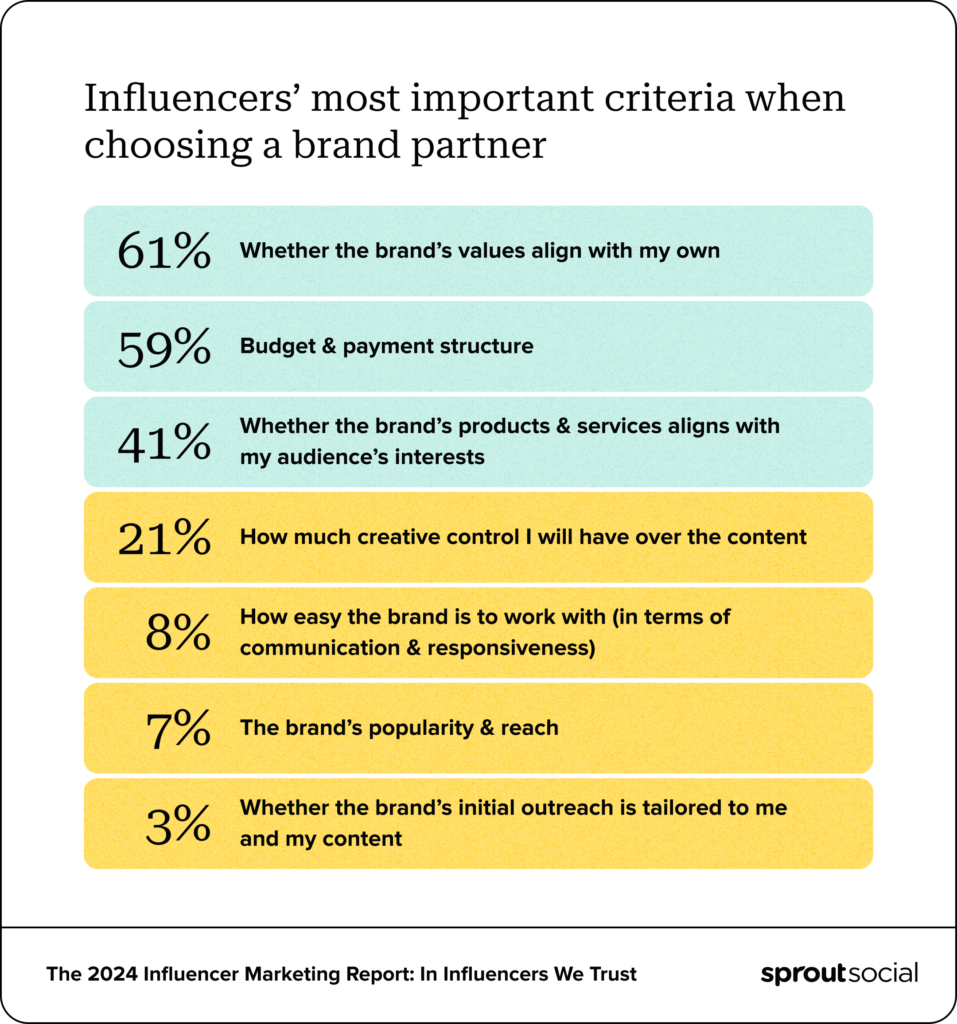
While net 30+ payment terms are standard for brands—particularly larger firms processing payments in batches—they can be a dealbreaker for influencers. Many influencers and content creators operate like small enterprises, depending on timely payments to manage production costs, software, and subcontractors (e.g., photographers, video editors). Lengthy payment cycles can create cash flow difficulties, rendering partnerships less attractive.
If your company typically adheres to net 30+, contemplate whether modifications are possible. Discuss with your legal team about offering partial upfront payments (e.g., 50% before, 50% after) or shorter payment terms (e.g., net 15 for influencers). Minor changes can significantly strengthen long-lasting influencer relationships.
Usage rights and ownership
Defining content ownership and usage rights upfront is vital to avoiding disputes later on. If your contract does not clearly specify who owns the content and how it can be utilized, misunderstandings regarding modifications, repurposing, or long-term usage may arise.
For instance, most influencers permit brands to reshare their content organically but anticipate separate compensation if their image is used in paid advertising or performance marketing campaigns—including boosting organic content with paid spending. Failing to clearly define these rights can result in tension—or even legal issues.
Usage rights frequently generate back-and-forth discussions between legal and marketing teams. While marketing seeks flexibility to maximize content value, legal aims at risk management and securing long-term protection for the brand. Establishing clear, influencer-friendly terms from the get-go ensures smoother collaborations and reduces last-minute obstacles.
Compliance and disclosure
An effective influencer contract safeguards both the brand and the influencer by stipulating clear disclosure expectations, platform regulations, and repercussions for non-compliance—ensuring all parties remain compliant with regulations.
This segment of your contract can reference FTC guidelines, brand-specific disclosure compliance, and/or adherence to platform policies.
Confidentiality clause
A confidentiality clause safeguards any proprietary information shared during the partnership—including campaign specifics, unreleased products, internal strategies, and other sensitive brand data.
Depending on the nature of the collaboration, this section may also incorporate a non-disclosure agreement (NDA), detailing specific restrictions on what the influencer may or may not disclose publicly.
Performance metrics and reporting
If the campaign has performance-based objectives, your contract should distinctly outline the metrics and KPIs the influencer is expected to achieve—whether it be reach, engagement, conversions, or other success indicators.
According to the 2024 Influencer Marketing Report, influencers prioritize social media engagement (69%), audience growth (58%), and link traffic (54%) when assessing their own performance. Clearly aligning these expectations from the outset helps ensure both parties aim for shared success.
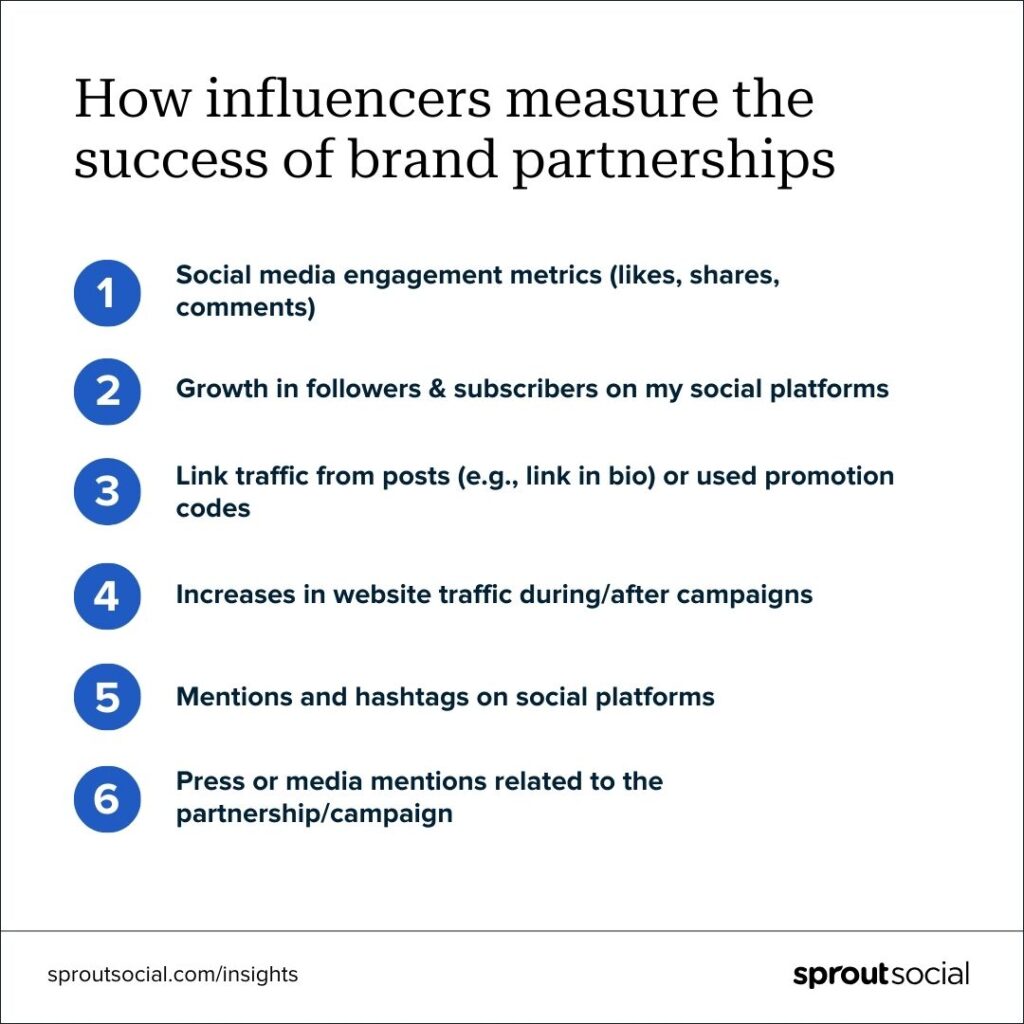
This section should also define how performance data will be shared—whether through a brand-provided dashboard, influencer-generated spreadsheets, or third-party tracking tools.
Terms and termination
The terms and termination section of an influencer marketing contract specifies how and when the partnership can commence, proceed, and conclude. It facilitates a seamless exit strategy and elucidates how events should unfold if the relationship needs to dissolve before the full term.
Along with a start and end date, the terms and termination section of your influencer marketing contract should detail the following termination conditions:
- Breach of contract: Includes clauses regarding non-compliance with terms (such as failure to disclose paid content, deadlines missed, etc.) which could result in immediate termination.
- Legal violations: Addresses scenarios where either party contravenes relevant laws (such as FTC rules) or engages in conduct that could damage the brand’s reputation.
- Termination by force majeure: Commonly known as a disaster clause in contracts. It permits both parties to be excused from obligations if unforeseen incidents—like natural calamities, pandemics, or controversies—prevent them from fulfilling the contract.
How to utilize an influencer contract template
An effective influencer contract template is a launching point, not a conclusive document. It should provide a solid foundation for consistency while allowing the flexibility necessary to accommodate the specific details of each campaign, relationship, and platform.
Here are several distinct influencer activations and how they can influence your influencer marketing contracts.
Collaborating with affiliate marketers
Affiliate influencer marketing is a type of brand collaboration where influencers earn a commission for driving sales of products or services through their content.
The contract structure for these collaborations adheres to similar general guidelines as conventional influencer marketing contracts. However, due to the performance-based nature of affiliate marketing, you will need to make the following adjustments:
- Add an affiliate commission section: The contract should clearly specify the commission rate or revenue share the influencer will earn from sales generated through their affiliate link or code.
- Identify metrics under the performance metrics and reporting section: Define how sales will be monitored—whether via cookies, affiliate link clicks, or promotional codes.
- Include minimum payout thresholds under compensation and payment terms: Encourage performance by establishing a payout threshold that the influencer must meet before they receive payment.
- Update terms on commission handling: Explain how payment will be managed should the partnership be terminated prematurely or in the event of refunds or returns by customers who made purchases through affiliate promotions.
Working with brand ambassadors
If affiliate marketers are driven by performance measures, brand ambassadors emphasize relationship-building. Acting as the face of your brand, ambassadors foster more authentic and effective engagement.
This strategy can also be cost-efficient over time. According to the 2024 Influencer Marketing Report, 71% of influencers offer discounts for multi-post partnerships, while another 25% would consider this in the future.
If you’re seeking a new brand ambassador, here are some modifications you’ll want to implement in their contract:
- Utilize the scope of work section to delineate long-term deliverables: Unlike one-off campaigns, you’ll need to specify ongoing content and engagement expectations throughout the ambassadorship.
- Consider a non-compete or exclusivity clause: If relevant, include an exclusivity agreement preventing the influencer from collaborating with competing brands for the duration of their ambassadorship.
- Incorporate partnership benefits under the compensation and payment section: Since brand ambassadorships are often longitudinal, the payment structure would likely consist of a fixed retainer or monthly fee. Many ambassadorships provide ambassadors with complimentary products or additional perks (like event tickets, exclusive access, etc.). Clearly define these in the contract as well.
- Add renewal terms to the terms and termination section: Brand ambassador contracts typically range from six months to a year (or longer), with provisions for renewal or extension based on performance and mutual satisfaction.
Giveaway or contest partnerships
Who doesn’t love a giveaway? Contest collaborations can elevate brand visibility and promote user-generated content, but they come with strict, jurisdiction-specific legal stipulations.
In certain areas, giveaways may even be deemed gambling if chance is involved without a purchase requirement. Additionally, issues related to prize fulfillment may result in complaints, reputational damage, or even lawsuits.
In short, if you intend to collaborate with influencers on a giveaway or contest, involve your legal team from the beginning. They’ll offer the most up-to-date, region-specific guidance to safeguard your brand.
Event collaborations
At Sprout, we’re enthusiastic about event-based influencer engagements. We recently collaborated with Jayde Powell to host a dinner at Creator Economy Live—an excellent method for leaving a lasting impression at industry events.

If you want to implement this strategy at your company, here’s how it can influence your contract setup:
- Specify on-site deliverables in the scope of work section: As the influencer will generate content in real-time, outline your expectations clearly. Types of content, minimum content volume, and posting deadlines should all be detailed in the scope of work section.
- Address travel-related expenses in the compensation and payment section: Clarify who will bear costs for travel, lodging, meals, and other expenses. If you want to avoid managing reimbursements with your finance team post-event, consider offering a flat rate for meals and miscellaneous expenses.
- Add appearance and conduct expectations: Event-based partnerships resemble brand ambassadorships, but in real life. Since the influencer represents your brand at a live event, set standards around dress code, on-site behavior, and interactions with media.
The most effective influencer contract templates…
…are supported by your legal team. The insights provided above will enable you to have more productive discussions with legal, minimizing bottlenecks and fostering smoother partnerships.
Begin with our influencer contract template—a solid framework designed for influencer marketing. Download it, collaborate with your legal team, and adapt it to meet your brand’s specific requirements.
Disclaimer
The content and contract template provided in this article do not, and are not intended to, constitute formal legal advice; all information, content, templates, and materials are intended for general informational purposes and are subject to change. Information on this site is based on broad principles and may not represent the most current legal or other information or reflect specific jurisdictional mandates. The inclusion of any guidelines or the use of any contract templates presented in this article do not ensure compliance or diminish your legal risk. The contract template provided is a sample document and may not fit all situations. It is your responsibility to review and adjust the template to confirm it meets your specific needs and adheres to applicable laws. You should consult your legal team or attorney for advice on any particular issue, including contracting with influencers, and should refrain from acting based on the information in this article without first seeking independent legal advice. Accessing this article or any of the links, templates or resources on this site does not create an attorney-client relationship between you and Sprout Social or any contributors to www.sproutsocial.com. Sprout Social disclaims all warranties or representations, expressed or implied, regarding the accuracy, completeness, or suitability of the information or the template provided. Links to any third-party websites are for general informational purposes only. Such external sites are beyond our control, and we are not responsible for any content or links found therein. Sprout Social does not endorse or opine on the compliance or legality of any content, examples, or templates in this article. All liability pertaining to actions taken or not taken based on the contents of this article or usage of the contract template is expressly disclaimed.
The post How to create an influencer contract (plus template) appeared first on Sprout Social.

Recent Comments