

Marketers’ fast adoption of AI is letting them try different strategies and focus more on authenticity, according to HubSpot’s new State of Marketing 2025 report.
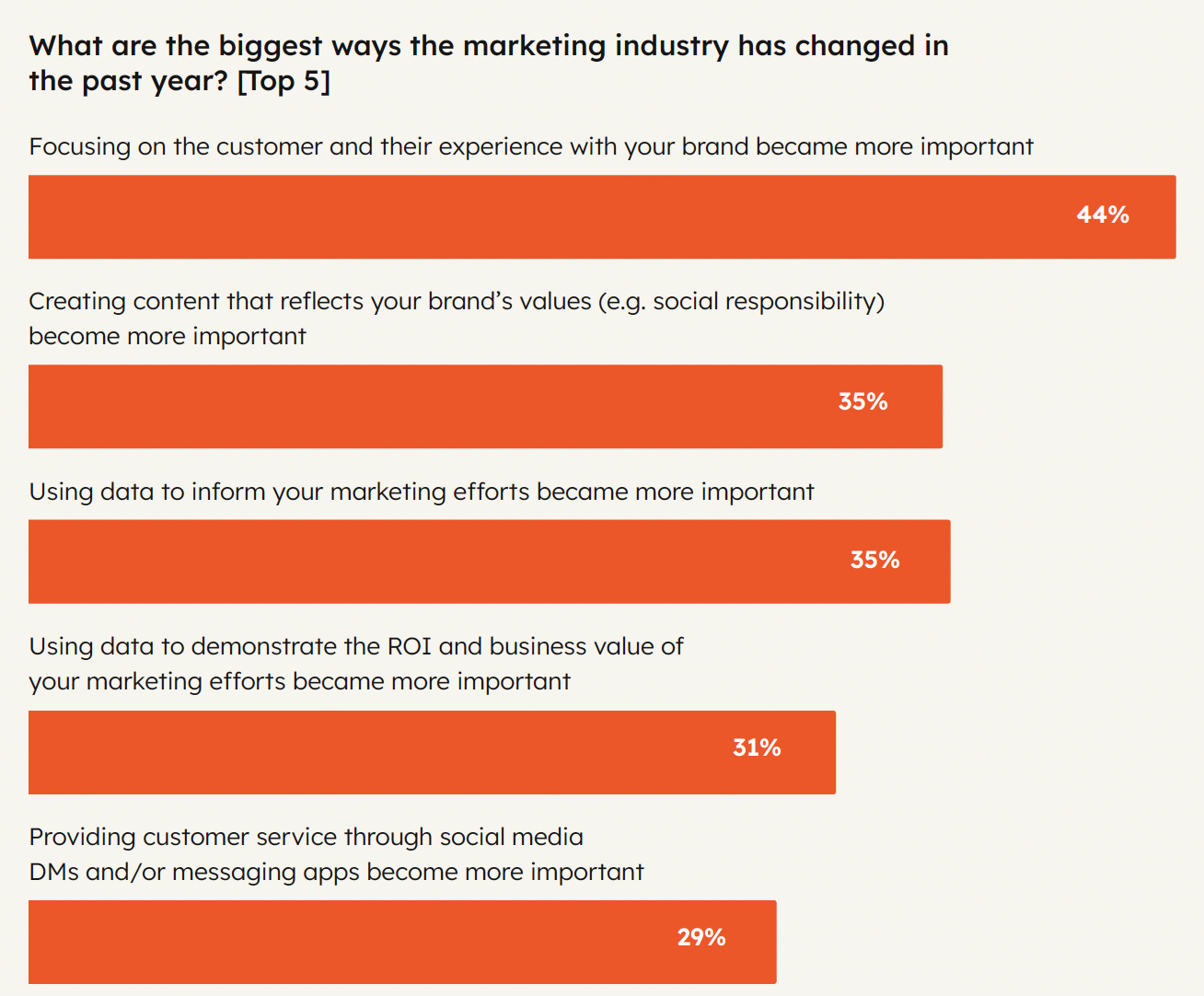
The report, based on a survey of 1,200 marketing leaders, predicts this will be a year of refining existing marketing trends. In addition to the increased integration of AI into workflows, 2025 will see B2B and B2C focusing more on Millenials and Gen Z, and brand-led marketing.
While it’s no surprise, as the report says, “AI-powered marketing is leading to easier, breezier growth and highlights the growing integration of AI into workflows. Marketers are using AI for data analysis and content repurposing, giving them time to engage audiences more personally with rich content.” However, this reinforces that “data-driven marketing strategy is no longer a nice-to-have, but data privacy is a concern.”
Dig deeper: Data, AI and advertising: 2025 predictions
The report emphasizes the need to target Millennials and Gen Z, stating that “Marketers are ramping up their focus on Millennial and Gen Z audiences.” Again, this isn’t breaking news. These generations have been driving consumer trends for years, and their digital fluency demands sophisticated strategies that prioritize authenticity and brand values.
Millennials, Gen Z and the quest for “authenticity”
This focus on authenticity extends beyond generational demographics. However, as the report notes, “Businesses are increasing investments in brand-led marketing, and authenticity resonates.” This matches the rising importance of the creator economy. It is important to work with influencers who truly connect with their audience.
This will also put brands in an interesting position if their authentic values conflict with the incoming administration’s. While Mr. Trump doesn’t hesitate to call out businesses he disagrees with, he only won the election by 1.5%. Meaning brands will have to steer between the president’s views and those of the sizable opposition.
Visual storytelling: An ongoing evolution
The report also highlights the rise of visual storytelling, stating, “We’ve entered the era of visual brand storytelling and the creator economy is thriving.” Again, this isn’t a sudden disruption but a continuation of a trend we’ve witnessed for years.
The dominance of platforms like YouTube, Instagram, and TikTok underscores the need for compelling visuals and engaging narratives. The report also notes “The content formats that marketers say deliver the highest ROI are short-form video (21%), images (19%) and live-streamed videos (16%), and marketers plan to invest more in them.
While the report doesn’t reveal groundbreaking news, it is a valuable reminder of how the digital landscape is evolving. The key takeaway? The biggest marketing winners will be those who can use AI to blend human creativity and strategic thinking, to make authentic brand experiences.
The full report can be found here. (Registration required)
The post AI continues to aid marketers’ quest for authenticity: Report appeared first on MarTech.
**Report Highlights AI’s Role in Enhancing Marketing Authenticity**
In an era where consumers are increasingly skeptical of traditional advertising, authenticity has become the cornerstone of successful marketing strategies. A recent report sheds light on how artificial intelligence (AI) is playing a pivotal role in helping brands achieve greater authenticity in their marketing efforts. By leveraging AI-driven tools and techniques, companies are not only building trust with their audiences but also creating more personalized, meaningful, and transparent customer experiences.
### The Growing Demand for Authentic Marketing
Modern consumers are inundated with advertisements across multiple platforms, from social media to streaming services. However, this saturation has led to a shift in consumer behavior. According to the report, 86% of consumers prioritize authenticity when deciding which brands to support. People are no longer drawn to generic, one-size-fits-all campaigns; instead, they seek genuine connections with brands that align with their values and understand their needs.
This shift has posed a challenge for marketers: how can they scale authenticity in a world that demands both personalization and efficiency? Enter artificial intelligence.
### AI as a Catalyst for Authenticity
AI has traditionally been associated with automation and efficiency, but its potential to enhance authenticity in marketing is now coming to the forefront. The report identifies several key areas where AI is making a significant impact:
#### 1. **Personalization at Scale**
AI-powered algorithms analyze vast amounts of consumer data to deliver hyper-personalized content, recommendations, and experiences. By understanding individual preferences, purchase histories, and online behaviors, AI enables brands to craft messages that resonate on a personal level. For example, Netflix’s recommendation engine or Spotify’s personalized playlists are prime examples of AI creating authentic, tailored experiences for users.
In marketing, this means that instead of bombarding audiences with generic ads, brands can deliver content that feels relevant and meaningful. Personalized email campaigns, dynamic website content, and AI-driven chatbots are just a few examples of how AI is fostering deeper connections with consumers.
#### 2. **Enhanced Customer Insights**
AI tools like natural language processing (NLP) and sentiment analysis allow marketers to gain a deeper understanding of their audience. By analyzing social media conversations, reviews, and feedback, AI can identify consumer sentiments, preferences, and pain points in real time. This enables brands to address customer concerns proactively and authentically, demonstrating that they are listening and responding to their audience.
For instance, AI can detect when a product launch is receiving negative feedback on social media and help brands pivot their messaging or address issues transparently. Such responsiveness builds trust and reinforces a brand’s commitment to its customers.
#### 3. **Content Creation and Curation**
AI is also revolutionizing content creation, making it easier for brands to produce authentic, high-quality materials. Tools like ChatGPT, DALL·E, and other generative AI models can assist in creating compelling copy, visuals, and videos that align with a brand’s voice and values. While AI-generated content still requires human oversight to ensure authenticity, it significantly reduces the time and effort needed to produce engaging marketing materials.
Moreover, AI can curate user-generated content (UGC) to highlight real customer experiences. By showcasing genuine testimonials, reviews, or social media posts, brands can amplify their authenticity and build stronger connections with their audience.
#### 4. **Transparency and Ethical Marketing**
The report emphasizes that AI can also promote transparency, a key component of authentic marketing. AI-powered tools can track and verify the origins of materials used in marketing campaigns, ensuring that claims about sustainability, ethical sourcing, or product quality are accurate. Blockchain technology, when integrated with AI, can further enhance transparency by providing verifiable records of a product’s journey from production to purchase.
Additionally, AI can help brands avoid ethical pitfalls by identifying potentially misleading or insensitive content before it goes live. This proactive approach ensures that marketing campaigns align with a brand’s values and resonate positively with its audience.
### Challenges and Ethical Considerations
While AI offers immense potential for enhancing marketing authenticity, the report also highlights some challenges and ethical considerations. For instance, the use of AI in personalization raises concerns about data privacy and security. Brands must ensure that they are collecting and using consumer data responsibly and transparently to avoid eroding trust.
Another challenge is the risk of over-reliance on AI-generated content. While AI can assist in creating authentic materials, it cannot replace the human touch entirely. Authenticity requires empathy, creativity, and cultural awareness—qualities that AI, despite its advancements, cannot fully replicate.
### The Future of AI-Driven Authentic Marketing
As AI technology continues to evolve, its role in marketing will only grow more significant. The report predicts that by 2030, AI will be an integral part of nearly every aspect of marketing, from strategy development to execution. However, the key to success will lie in striking the right balance between automation and human creativity.
Brands that use AI to enhance, rather than replace, human efforts will be best positioned to build authentic, lasting

Recent Comments