

Although user demographics are evolving, Facebook persists as the third most accessed website worldwide and continues to lead as the top social media platform.
Given its extensive user base, Facebook analytics tools are tailored to assist you in minimizing ineffective ad expenditure and muddled messaging to wide-ranging audiences. These tools illuminate your most engaged audience segments, enabling you to enhance your campaigns through targeted audience testing.
Continue reading for a summary on how to utilize Facebook’s audience insights tool, ensuring your brand fully capitalizes on Meta’s largest platform.
Why is grasping your Facebook audience vital?
Knowing precisely who your target audience is not only conserves resources but also shapes your social presence and aids in creating influential content, laying the groundwork for greater engagement and enhanced return on investment (ROI).
Curious about how your audience engages with Facebook? Begin by examining the latest demographic statistics. Discover who utilizes Facebook, how frequently they log in, what they use it for, and whether those users align with your target demographic.
As of July 2024, 53.8% of users are women and 24.2% fall within the 25-34 age range, with many of them under 44. Nevertheless, the platform remains favored by older demographics. A Sprout Social Pulse Survey in Q2 revealed that Facebook is the most utilized network for Gen X and Baby Boomers.
Facebook audience insights deliver crucial data about your existing audience, allowing you to concentrate on your target consumers. With this information, your decision-making will be more informed and customer-focused, resulting in more effective campaigns, advertising initiatives, and collaborations with creators.
To implement these insights and foster stronger connections with your audience, download our complimentary worksheet—a guide to refining your strategy.
How to access Facebook audience insights
Within Facebook, you can uncover audience insights from your business profile in two ways. Firstly, you can view organic audience data including:
- Individuals who like your Page categorized by gender and location
- Total number of Followers
- Reach and engagement statistics
To explore your business profile’s analytics, begin with the ‘Insights’ tab in the Meta Business Suite for an overview of your performance across accounts, then select ‘Audience.’

Here, you’ll find data regarding your Facebook and Instagram followers, their demographics, and the leading cities and countries in which your audience resides.
You can navigate the audience tab in two formats:
- Current audience: This includes individuals already linked to your business in some manner, such as followers of your Facebook Page or Instagram account, or users who have interacted with your content or ads.
- Potential audience: This consists of individuals who are not yet linked to your business but may harbor an interest in your products or services. These insights assist in identifying and targeting new customer segments based on shared traits with your existing audience or specific criteria you set.
Secondly, running an advertising campaign allows you to access all data from your organic view in addition to more comprehensive audience information, such as:
- Age
- Content preferences (top-performing posts and videos)
- Device usage
Visit Meta Ads Manager and access the information via the Ads Reporting and Audience tabs in the main navigation menu.
You can also analyze how your Facebook ad campaign performed among various audience types, which we will clarify in the following section.
What types of Facebook audiences exist?
When executing a Facebook ad campaign, there are four audience targeting choices available to ensure you connect with your ideal audience. Each audience type on Facebook provides a distinct approach to engage potential customers. Understanding how to leverage these can significantly enhance your campaign performance by targeting the appropriate individuals at the right moments.
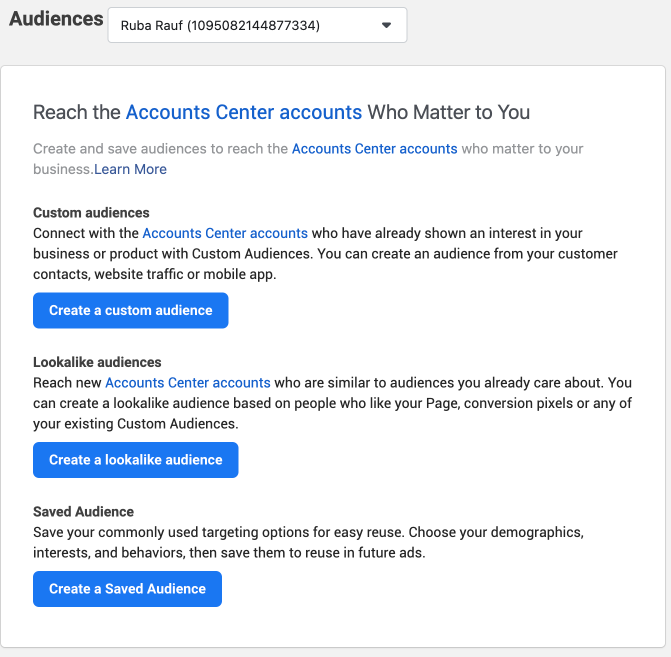
1. New audiences
The new audiences option is the default setting, encompassing new customers who have not interacted with your brand previously. You can narrow this audience by selecting categories such as:
- Location (e.g., city, country)
- Demographics (e.g., education, financial and life events)
- Interests (e.g., family and relationships, fitness and leisure)
- Behaviors (e.g., mobile device user)
2. Custom audiences
Custom audiences allow you to connect with those who already exhibit interest in your business. This audience consists of data—referred to as “identifiers”—you’ve gathered about your customers (like email, phone number, and address) and shared with Meta. They may have engaged with your content, visited your website, used your app, completed a recent purchase, or might even be on your customer list.
3. Lookalike audiences
Lookalike audiences comprise individuals who share interests with your custom audiences but have not yet engaged with your business. Create a Lookalike Audience by selecting a source to automatically generate a new audience segment reflective of your best customers.
During the creation of your lookalike audience, you may use a percentage range to dictate how closely you wish your new audience to align with your source audience.
These audiences save time because, instead of building a new audience from scratch, you can replicate the success of your most effective content and campaigns.
4. Saved audiences
Whenever you establish a new custom audience, save it for future referencing, but ensure you reselect your ideal location each time.
How to utilize Facebook audience insights
As Facebook generates the highest ROI among social networks, it is essential to customize and preserve your highest-performing audiences to continuously optimize your ad expenditures for maximum effectiveness. To begin with the Facebook audience insights tool, adhere to these steps.
1. Upload a custom audience source
Begin by selecting Create a Custom Audience from the Audiences tab within your Ads Manager. From there, choose a custom audience source, including owned data from your website, app activity, CRM customer list, and more.
You may also leverage Meta sources, like video engagement, Instagram account Followers, lead forms, event participants, and shopping users.
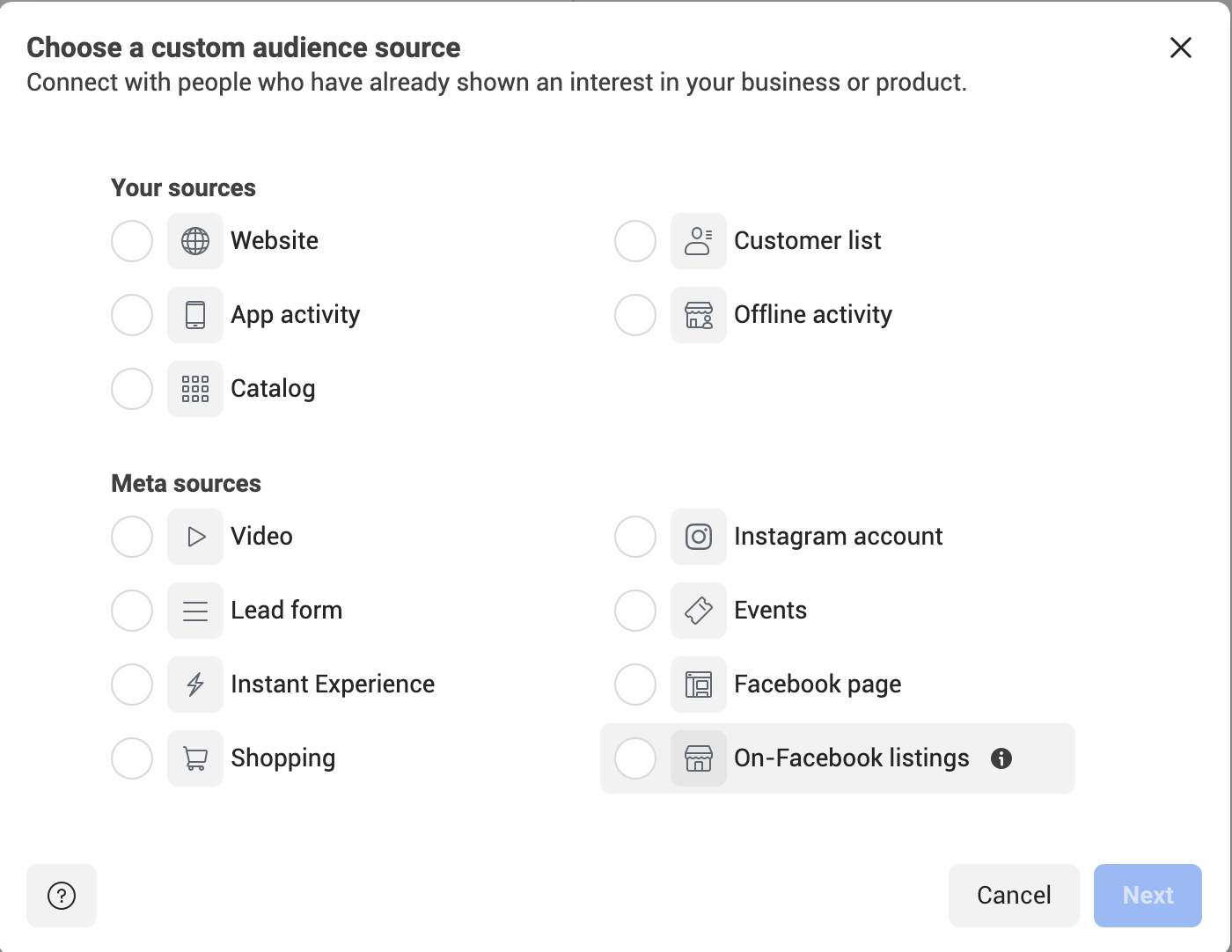
2. Tailor your audience with filters
After selecting your source, indicate additional rule inclusions or exclusions to enhance the precision of your audience.
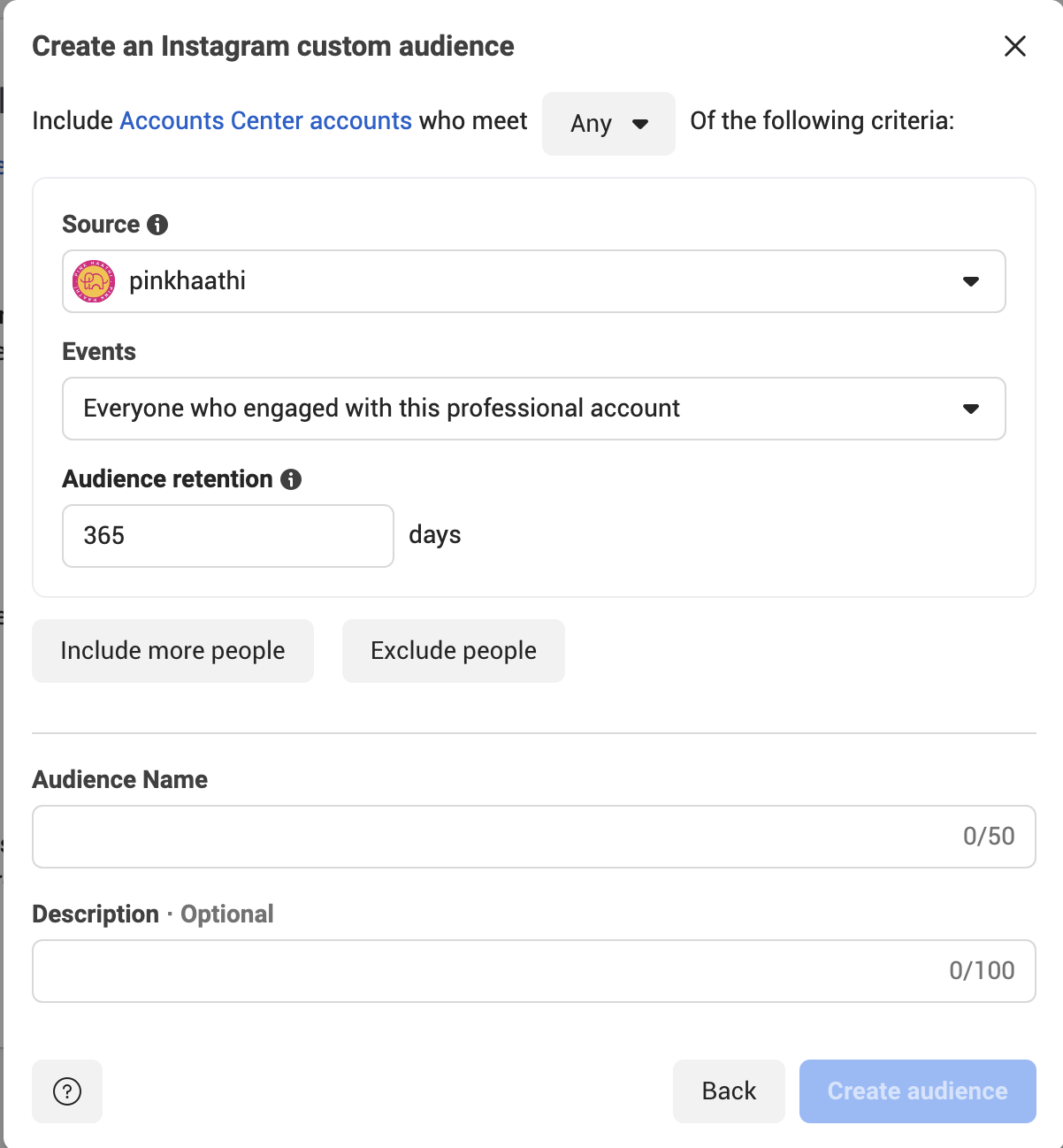
You have various criteria to select from:

The Facebook audience meter will inform you if your audience is overly specific or too broad. Continue to adjust until your reach is optimal (the ideal audience size ranges from 2 to 10 million people). Further customize your audience based on age, location, language, and gender.
Ensure to finalize your audience at least a week before campaign launch, as it may take Meta up to three days to match your audience to profiles on Meta technologies.
3. Focus on interest-based audiences
If you possess a sizable audience (ideally over 2 million), utilize additional interest-based targeting to narrow down to a precise audience using the preceding categories. Then, label your audience list alongside its description and retention duration. Now you’re set to click Create New List.
4. Evaluate your audience metrics
After launching your ad campaign, check how your audience list is performing. Are you achieving your campaign objectives? If not, implement necessary changes to your list. Experiment with restricting or widening your audience and redefining your inclusions and exclusions.
5. Preserve and replicate your top-performing audiences
If your audience performs well, save it for future utilization. To reach and connect with new consumers exhibiting similar demographics and behavior patterns, create a lookalike audience.

How Sprout Social aids in defining your Facebook audience
Sprout Social’s AI-powered insights can uncover trends that may not be immediately visible in Facebook’s native tools, assisting you in optimizing your campaigns more effectively and enhancing your Facebook strategy.
It serves as a robust alternative to boost your audience size and engagement, pivotal for increasing demand.
Here are several platform features that provide a deeper understanding of your target audience.
Social listening
Using Sprout’s Social Listening solution, AI and automation sift through vast amounts of data points to uncover key trends, insights, and audience learnings in seconds.
Engage with discussions surrounding your brand, competitors, campaigns, and other relevant events to you.
As shown in the Profile Overview, the tool enables you to compare followers, volume, potential impressions, likes, and engagement across different Facebook profiles, helping you gauge your strategy and demonstrate your campaign’s impact visually.
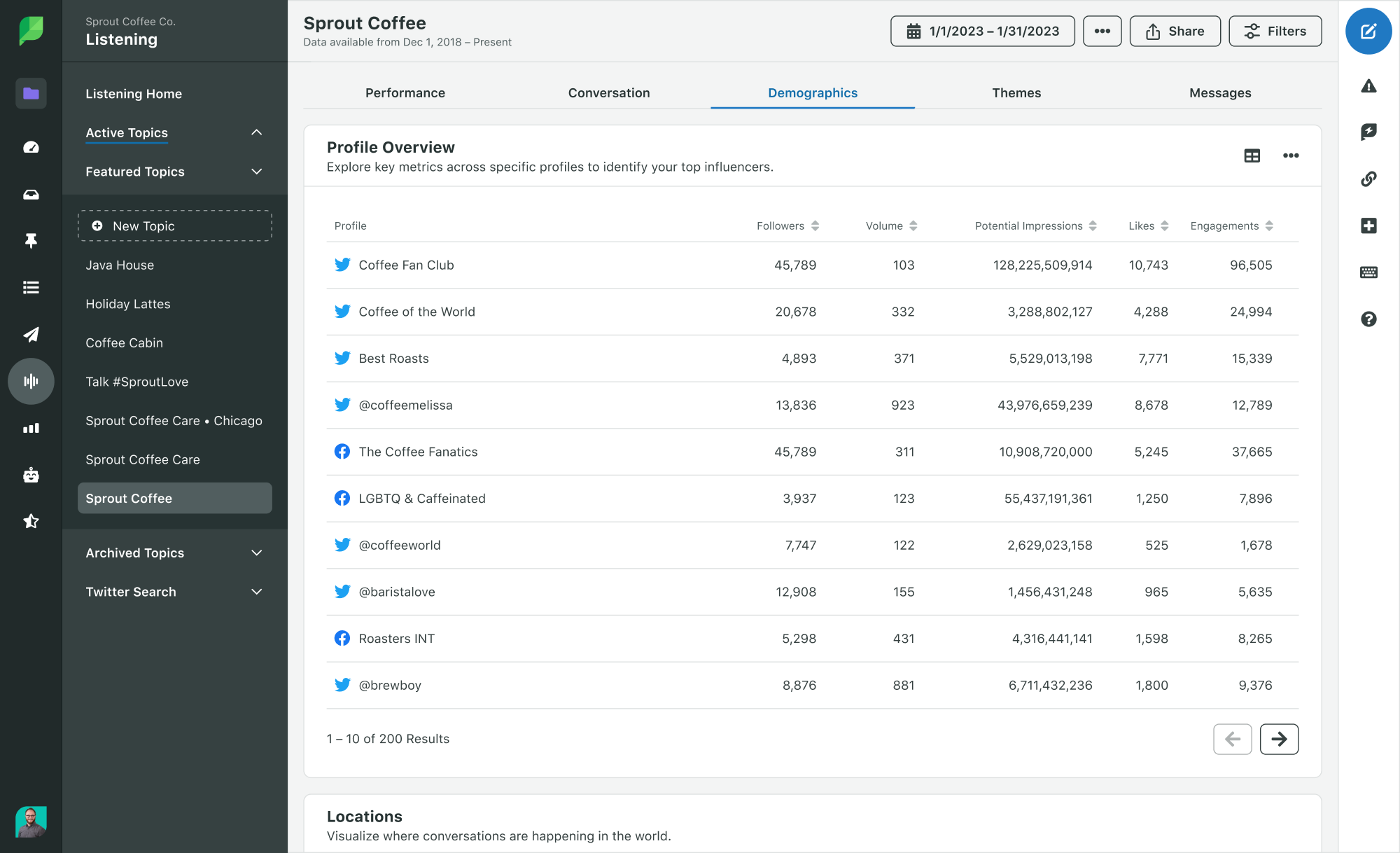
Utilizing the Performance Summary tool, you can probe which topics resonate most with your audience. Discover which keywords are fueling discussions and employ them to enhance your interest-based filters when creating Facebook custom audiences.

The Device Demographics dashboard further enriches your capability to delineate Facebook audiences by offering essential insights into user behavior. Forge more precise custom audiences, optimizing ad expenditure and boosting engagement by concentrating on the devices and platforms where your audience is most active and responsive.
Additionally, leverage the Conversation Breakdown widget for a visual representation of leading smart categories, keywords, hashtags, mentions, and emojis within your Topic. Analyze sentiment, monitor engagement, and detect emerging trends in discussions about your brand on Facebook.
Network-specific and aggregate metrics
Sprout’s analytics tools expedite data collection and dissemination, allowing you to concentrate on the key performance indicators (KPIs) that matter, shape strategy, and verify ROI. The tools offer comprehensive oversight of all associated social profiles from a single location.
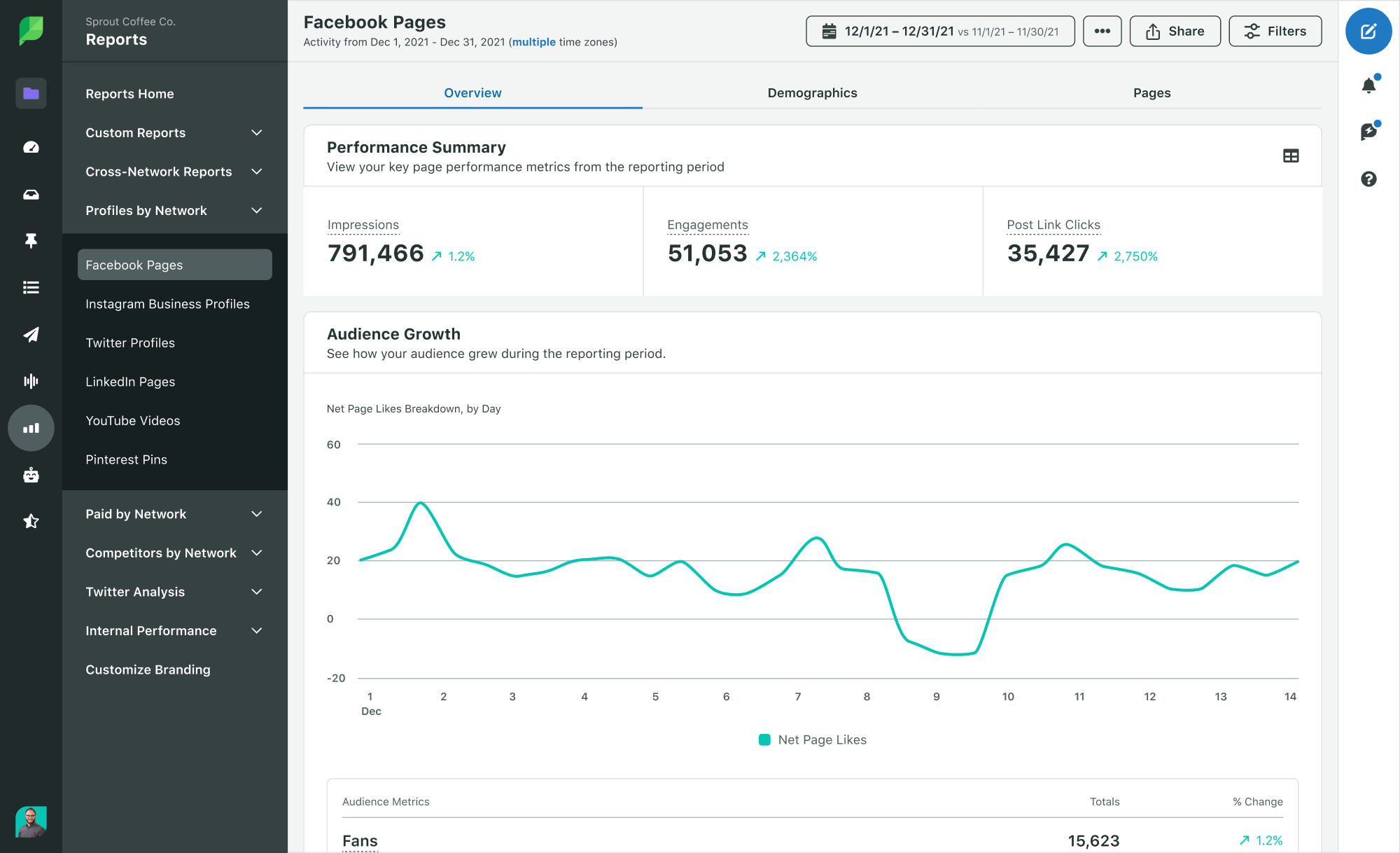
Utilize reports such as the Facebook Pages report to examine trends in audience growth, impressions, engagements, and post link clicks. Compare these insights with other network outcomes to ascertain audience growth trends, peak engagement times, and shifts in content preferences.
Sprout’s My Reports is a customizable reporting tool enabling you to merge data from various sources, including Facebook Pages, to create a thorough perspective of your audience’s behaviors and preferences.
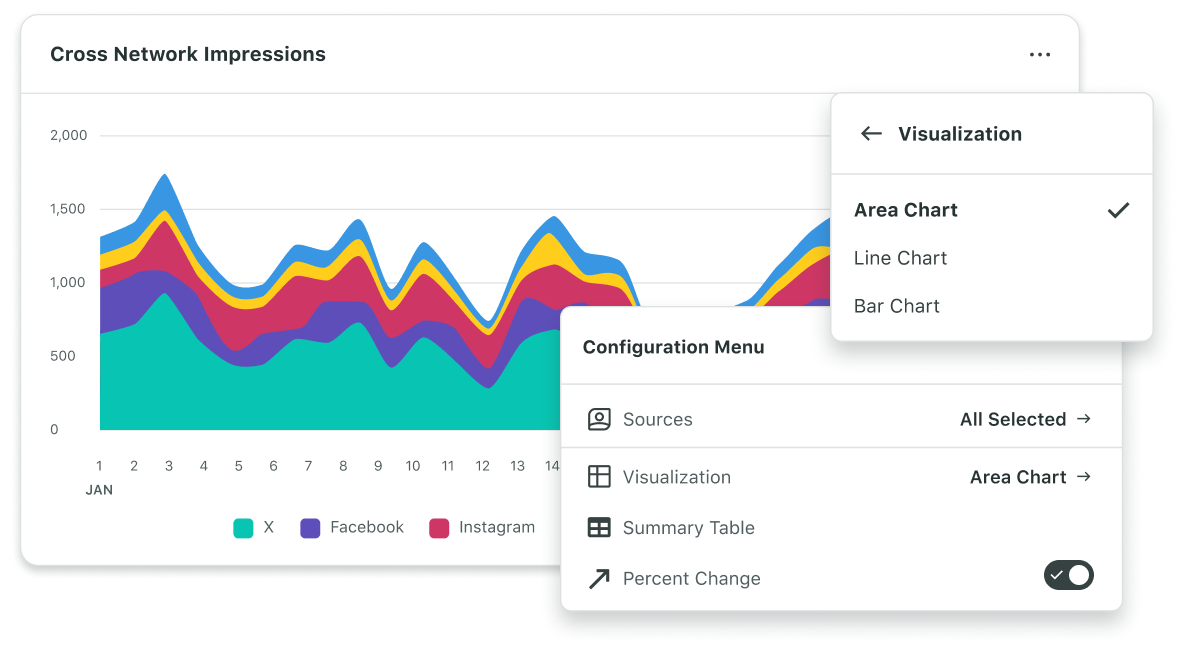
For example, a global coffee chain could generate an audience analysis report that combines Facebook post engagement data with Instagram Story views.
Correlating these metrics with in-store sales data and seasonal trends reveals interesting insights. For instance, millennials, seem to engage most with sustainability content on Facebook during the autumn season. Conversely, Gen Z is more inclined to share limited-time offers on Instagram Stories throughout the summer.
This detailed, cross-platform analysis sharpens campaign strategies across various channels while also guiding content creation and budget allocation. It could even inspire new product development for seasonal offerings, ensuring every dollar spent maximizes impact.
Paid reporting
To evaluate the effectiveness of your Facebook ad audiences, utilize Sprout’s Paid Performance reports. The Facebook and Instagram report illuminates campaign-level data for ad campaigns spanning Meta platforms. Trends align with your key performance indicators (KPIs), aiding you to pinpoint high-performing channels and campaigns.
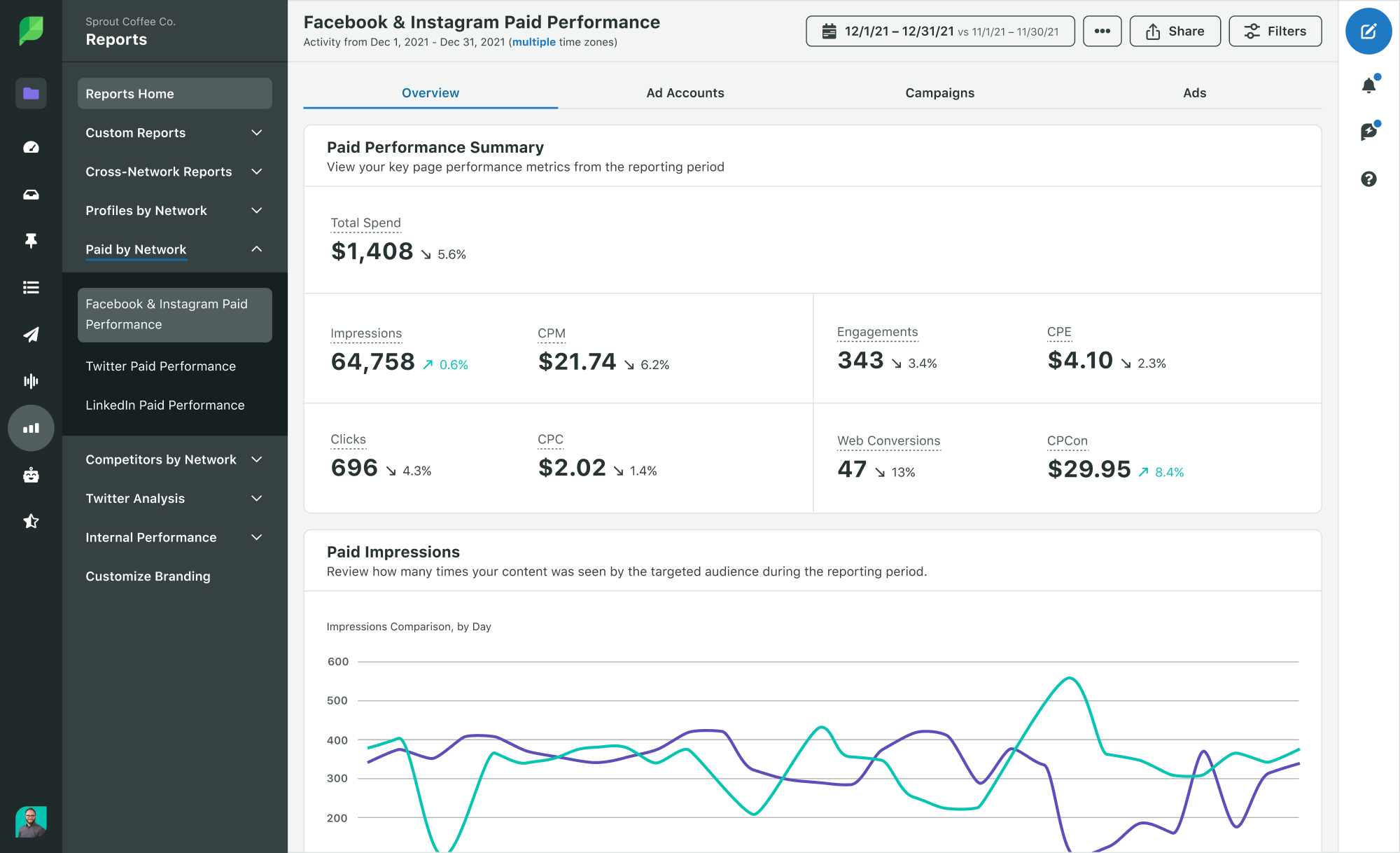
A multi-location fitness franchise might apply Sprout’s Paid Performance reports to assess the effectiveness of their localized Facebook ad strategies across various markets.
Analyzing metrics like cost per acquisition, engagement rates, and conversion data alongside demographics may reveal that their high-intensity workout ads resonate strongly with millennials in urban areas on Instagram. In contrast, their family-friendly gym membership promotions could be more effective with Gen X users on Facebook in suburban regions.
By honing in on these insights, the franchise can effectively adjust their advertising strategies—maximizing both reach and relevance across their diverse market segments.
Maximize Facebook audience insights to elevate your strategy
Optimize your Facebook strategy by beginning with the intelligence necessary to target your ideal audience. To elevate your strategy, integrate these insights into your daily practices—be it refining your audience targeting or employing AI-driven tools like Sprout for deeper analysis.
By combining Facebook’s insights with Sprout’s AI capabilities, you’ll unveil emerging trends, providing you with an advantage in audience targeting.
Ready to reshape your Facebook strategy through enhanced audience insights? Initiate your free 30-day Sprout Social trial today.
The post How to utilize Facebook audience insights for better targeting first appeared on Sprout Social.

Recent Comments