

Creators and influencers have revolutionized the ways in which we engage with brands and make purchases. These digital pioneers assist brands in building trust with their desired audiences while broadening their reach. The 2024 Influencer Marketing Report revealed that almost 50% of consumers trust influencers to the same extent as they did six months prior, with about 30% showing increased trust.
However, launching influencer campaigns is not merely about selecting individuals with a significant follower count to share sponsored content—even prominent influencers may experience low engagement if a partner brand’s values do not resonate with their audience. As the landscape of the creator economy evolves, marketers must demonstrate the value of these collaborations. In this piece, we will explore how leaders can gauge and enhance their influencer marketing return on investment (ROI) throughout all stages of the customer journey, as well as how to quantify influencer marketing ROI.
What constitutes influencer marketing ROI?
Influencer marketing ROI measures the impact of business activities resulting from influencer campaigns. It assesses performance by juxtaposing the revenue or profit generated against the cost of the investment. This metric sheds light on the success of the collaboration by offering insights into the influencer partnership’s overall profitability and effectiveness.
The significance of influencer marketing ROI
The 2024 Influencer Marketing Report indicated that around 49% of consumers make purchases at least monthly due to influencer posts.
The relevance of influencer marketing ROI extends beyond mere purchase metrics; it spans the entirety of the buyer journey and empowers both brand awareness and performance marketing efforts.
1. Influencer marketing spans the entire customer journey
Many tend to consider ROI strictly in terms of sales, limiting it to bottom-funnel metrics such as conversions or downloads. However, influencer marketing contributes to returns throughout the customer journey. Influencers can facilitate purchases, encourage customer retention, and serve as brand advocates while also fostering awareness and consideration.
Content from influencers frequently leads to greater engagement levels than branded content, yet consumers also expect brands to engage with influencers beyond just sponsored posts. The influencer report discovered that 80% of consumers are more inclined to purchase from brands that collaborate with influencers beyond social media.
2. Influencers bridge the gap between brand and performance marketing
The dynamic between brand and performance marketing is a common experience for marketing professionals. Many leaders see performance marketing as a more reliable option due to its measurable nature and accountability regarding business outcomes, making it easier to connect marketing expenditures to revenue.
Today’s consumers are discerning and can identify when brands view them merely as revenue sources—which makes balancing brand and demand strategies even more crucial. For instance, through A/B testing, both brand and performance marketers can ascertain which influencer-created content resonates more effectively with specific goals. While brand marketing may target creating awareness among new audiences, performance campaigns will focus on conversion metrics. This A/B testing could involve releasing complementary yet distinct messaging or imagery and selecting the most aligned creative for each marketing objective.
Brands can also align brand and performance marketing by crafting an ecosystem that reuses sponsored content in performance campaigns, such as repurposing sponsored posts in Spark Ads on platforms like TikTok or Instagram Ads.
Why assess influencer marketing ROI?
ROI serves as a vital indicator for evaluating influencer effectiveness and a foundation for future budget requests. By measuring ROI, marketers can achieve their targets, demonstrate impact, and justify a larger influencer marketing budget for upcoming initiatives.
How to determine the ROI of influencer marketing (with a formula)
Calculating influencer marketing ROI can be complex. It’s not as straightforward as stating, “We invested X amount in influencer marketing and earned Y in sales, so our ROI is Z,” and concluding the discussion there. Numerous variables must be considered.
Engagement metrics (likes, comments, shares, etc.) play a pivotal role, contributing to awareness and exposure while nurturing relationships, trust, and social proof. High engagement can also help pinpoint effective calls-to-action and signal algorithms that your content resonates with viewers. To gauge the influence of your engagement on your financial outcomes, you’ll need to move beyond merely tracking engagement KPIs and include metrics such as click-through rates, conversion rates, and sales through attribution.
While we advise against depending solely on a fixed equation for capturing the full scope of influencer ROI, it is a useful guideline for understanding costs and returns in the budgeting process. Recognizing that ROI calculation is a common hurdle for marketers, we suggest this formula:
(Total Revenue – Total Costs) / Total Costs) x 100= ROI (expressed as a percentage)
Although the formula (Total Revenue – Total Costs) / Total Costs) x 100= ROI provides a straightforward calculation, measuring the success of influencer marketing campaigns is more intricate. Other approaches exist to quantify the influence of influencer campaigns.
Here are ways to obtain the data needed to apply your ROI formula based on attribution throughout various stages of the purchasing journey.
1. Compile data
Collect data related to engagement metrics, conversions, sales revenue, and costs tied to your specific campaign or initiative.
2. Establish attribution for your campaigns
Select and deploy attribution tactics that accurately reflect how various touchpoints contribute to conversions. Attribution entails tracing the path from engagement to sales by examining a diverse range of data points to identify how distinct engagement efforts prompt purchases.
Consider these different approaches for setting up attribution for your campaigns:
- Leverage analytics platforms: Tools like Google Analytics, social media utilities, and e-commerce platforms help track user behavior and conversion statistics. Establish conversion objectives and funnels to comprehend a user’s journey from engagement to purchase.
- Create UTM parameters: Incorporate Urchin Tracking Module (UTM) parameters in your URLs for various marketing campaigns to ascertain the origins of traffic leading to conversions, enabling you to track sales to specific activities or channels.
- Develop unique promo codes and affiliate links: Generate individualized promo codes or affiliate links for targeted influencer engagement campaigns. When customers utilize these during their purchase, it allows for direct attribution of sales to a specific code or link.
- Collect feedback with customer surveys: During purchase surveys, pose questions to customers regarding factors influencing their purchase decisions to gather qualitative and quantitative insights about engagement’s effect on buying behavior.
Here’s how to use attribution to analyze campaign costs and returns over time:
- Integrate your CRM: Combine your customer relationship management (CRM) system with your engagement and sales data to gain insights into how customers interact with your brand and how engagement drives purchases. For example, Sprout’s integration with Salesforce provides a complete view of customer touchpoints.
- Implement multi-touch attribution models: Employ multi-touch attribution models that distribute credit for sales across multiple touchpoints for a comprehensive understanding of the impact of various engagement activities.
- Understand your cost per lead: Calculate the cumulative cost per lead (CPL) resulting from influencer campaigns or posts to compare the overall expense of your campaign with other marketing methods. If your focus is primarily on awareness, take cost per mille (CPM) into account. These costs will factor into your final ROI calculation.
- Segment and analyze audience behaviors: Group your audience based on their interactions with your product. Monitor the sales outcomes for each cohort to determine if highly engaged users are more inclined to buy.
- Conduct a cross-channel analysis: Observe how engagement on one channel affects behavior on another to discover how actions in one domain contribute to the overall sales figures. For instance, compare social media engagements with website visits and email interactions.
- Track customer lifetime value: Use customer lifetime value (LTV) metrics to analyze the long-term worth of customers who engaged with your influencer content prior to purchasing. This helps clarify how engagement influences first-time purchases, repeat transactions, and customer loyalty.
Note: You don’t need to utilize every attribution method and analytical approach; merely choose those that align best with your campaign objectives. Consider leveraging software tools like Sprout Social Influencer Marketing (previously Tagger) to automate attribution and provide more advanced analyses and insights within a consolidated platform.
3. Calculate total revenue and total costs
Aggregate the total revenue generated from the attributed conversions. Then, determine the overall expenditures related to the campaign, encompassing advertising costs, content creation, campaign management expenses, and other pertinent fees.
4. Calculate ROI and evaluate additional factors
Apply the formula (Total Revenue – Total Costs) / Total Costs) x 100= ROI to derive ROI as a percentage. Utilize this figure to assess campaign performance, either manually or by means of influencer analytics tools. A higher ROI indicates a more successful campaign, but keep in mind this simplified formula does not encompass all dimensions of the campaign’s impact. Consider other elements like brand awareness, customer lifetime value, and long-term effects on consumer behavior when reporting results to your management.
5. Evolve and enhance your strategies
Utilize the insights obtained from your ROI calculations to fine-tune your marketing strategies. Modify tactics, channels, messaging, and more based on the results of your attribution analysis to improve and inform future campaigns.
What is the typical ROI for influencer marketing?
A Tomoson influencer marketing study indicates that businesses can expect an average return of $6.50 for every $1 invested in influencer marketing. The study also highlighted that the top 13% of businesses achieve an ROI of $20 or more. These statistics illustrate the lucrative possibilities of influencer marketing ROI, but they do not convey the full scope. ROI averages can vary considerably by industry and other factors which will be discussed in the upcoming section.
How to enhance influencer marketing ROI
Having examined how to calculate influencer ROI, let’s look at ways to optimize it based on various business objectives, cost efficiency, influencer selection, social networks, content types, and campaign timing. It is essential to take each of these areas into account to grasp audience interests, behaviors, and preferences—these insights will guide your subsequent influencer choices and campaign execution.
Align influencer campaigns with business objectives for increased ROI
Consider the underlying “why” of your influencer campaign—what are the objectives aligned with your business goals? To accurately quantify the ROI of influencer campaigns, ensure a balance between engagement metrics (likes, shares, comments) and attribution data (sales, signups, downloads) to achieve a holistic understanding of campaign efficiency.
For instance, if your goal is to raise brand awareness concerning pickup trucks, you may want to delve into influencer content discussing this subject in the U.S. You might find that towing capabilities are a frequently discussed theme, but another brand is dominating the conversation. Even if your product excels in functionality, it’s not presently being discussed. Recognizing this gap enables you to launch an influencer campaign to amplify your brand’s presence in this dialogue. As well as tracking engagement metrics, you decide to monitor website traffic and brand mentions to ensure your new influencer campaign resonates effectively.
As you outline your campaign objectives, utilize industry benchmarks and past performance analytics as tangible tools for setting expectations and optimizing campaigns. The 2024 Influencer Marketing Benchmarks Report provides sector-specific benchmarks by industry and social network.
Prioritize cost efficiency for improved influencer ROI
Assess influencer-related overhead, as managing influencers encompasses a wide range of activities, from contracting to creative collaboration and deliverables. Without a transparent influencer management system, it can become quite a costly endeavor. Elements influencing costs include influencer fees, travel and lodging, and production expenses.
Higher expenses can diminish overall profit margins. However, with astute expense management, you can improve ROI through effective budget allocation to maximize engagement and conversion efforts. For example, you might choose to only collaborate with local influencers to limit travel costs while optimizing your budget.
Consistent tracking and analysis of expenses from the outset will aid in maximizing the campaign’s financial performance. Some influencer marketing metrics useful for quantifying influencer ROI based on cost-effectiveness include:
- Cost per engagement
- Return on ad spend
- Conversion rate
- Repeat purchases
- Customer Lifetime Value
- Retention rate
- Referrals
Select appropriate influencers capable of driving ROI with your audience
When seeking to identify suitable influencers who are likely to yield higher ROI, recruit based on how well their audience demographics, interests, and affinities align with your target audience and their past performance.
Before you commence the influencer search, analyze your channel strategy. Reflect on your product category or sector to pinpoint the most effective channel(s) and which influencers to target based on their social media presence. It is prudent to seek influencers who discuss your industry, particularly those whose content excels when referencing your product or sector, then refine your search based on demographic targeting and geography.
For instance, if your fitness audience is predominantly in the UK, it may be advantageous to select a UK fitness influencer who reviews comparable products, as their audience will expect this style of content.
The influencer selection process is manual and can demand significant time and energy. However, employing a database like Sprout Influencer Marketing allows you to search based on audience demographics, locations, topics, and performance metrics.
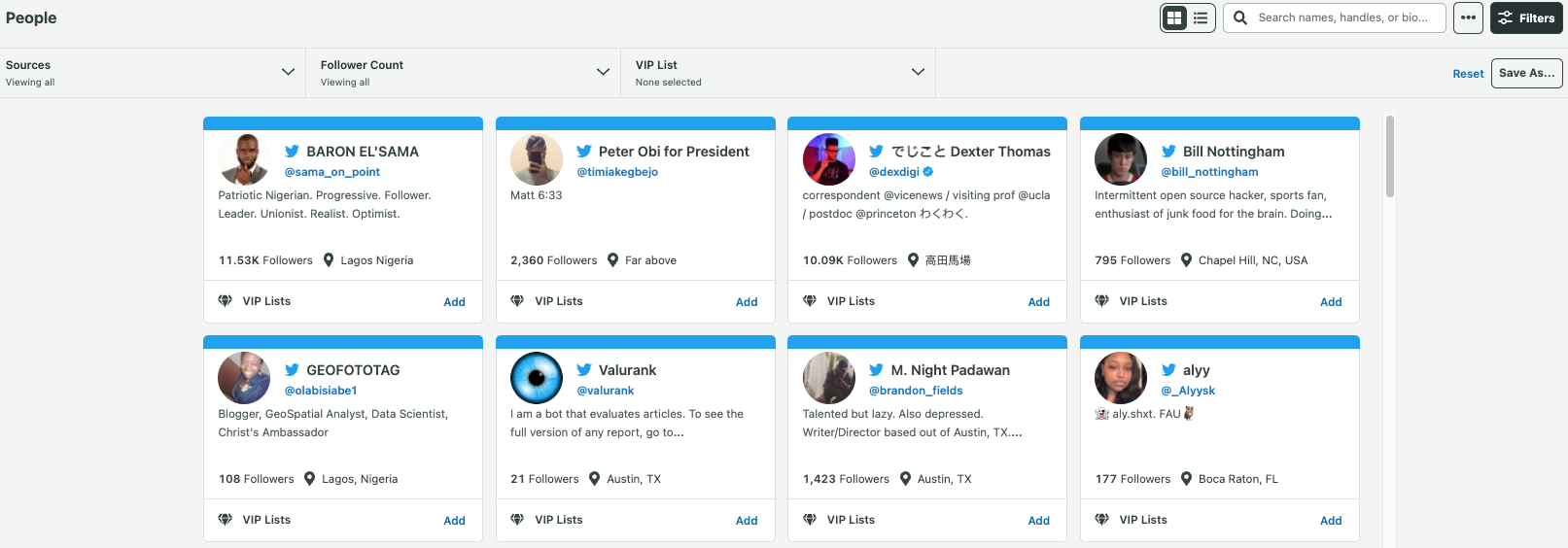
Utilize the People View feature to uncover and organize profiles that interact with your brand. This ensures authentic engagement with those who are most engaged with your brand. People View can assist in developing connections with influencers, managing your VIP lists, and tracking conversation history, thereby expediting the influencer identification process as you gain insights into your most engaged audience members.
Evaluate which social platforms will yield influencer ROI
The platforms you choose for activating influencer campaigns carry equal weight to the content itself. If your brand’s community is more active on certain networks, this will guide the selection of influencers for capturing share of voice.
Avoid the common error of assuming a platform inherently suits your brand. Base your strategy on data—pay attention to which networks your industry and audience engage with most. Additionally, take into account platform-specific metrics that may differ across channels, such as reach and impressions.
Identify content types likely to generate returns
Evaluate the various content types that resonate with your target demographic. For example, a brief makeup tutorial on TikTok might attract higher engagement from individuals under 25, whereas older audiences may favor longer-format videos. The content type should reflect your brand’s audience, though options such as giveaways, product collaborations, and influencer-led promotions are prevalent.
When considering influencer marketing, many envision content linked closely to purchasing, like product reviews, tutorials, and Live shopping events aimed at achieving sales goals. However, there are possibilities across all stages of the journey. To optimize influencer marketing ROI, ensure to incorporate influencer content throughout the buying journey while aligning your metrics accordingly. Each segment of the customer journey presents different goals and KPIs.
For instance, in awareness initiatives, the objective is to elevate brand or product visibility. KPIs might include impressions, reach, and views. During this time, it is beneficial to utilize influencer posts and repurpose their content for paid advertising. In the retention phase, you can aim for repeat purchases while increasing KPIs like retention rates and customer lifetime value through exclusive memberships or customer appreciation content. For advocacy, influencers can back referral initiatives.
Choose the right timing for your influencer campaigns
Timing your influencer marketing efforts effectively can significantly impact results. Timing can be analyzed in terms of year, day of the week, or even hour of the day for optimal engagement. Grasping seasonal trends related to your industry is equally crucial, as certain periods may yield higher engagement when individuals are more attentive.
As an example, a yoga brand may find that launching a campaign during the holiday season is suboptimal since potential customers are focusing on familial engagements or travel. Post-holiday, there tends to be a resurgence in interest as individuals frequently pivot towards health and wellness goals in the new year, making spring an opportune time as well. Relevant metrics to assess for campaign timing may include Customer Lifetime Value, retention rates, and average video view duration.
Allocate appropriate resources
Given that influencer marketing can be expensive, ensure sufficient investment in your influencer program. Besides budgeting for content creation and payment to influencers, account for the time and personnel needed to manage campaigns accurately. Adequate resources are imperative for quantitative ROI analysis, as well as assuring effective influencer oversight, which fosters smooth collaborations. We often highlight the significance of compensating influencers and creators fairly and promptly. Proper resource allocation facilitates this aspect.
Incorporate an influencer marketing solution into your technology stack
Implement data collecting, performance evaluation, and ROI tracking automation through influencer marketing solutions. Ensure your tech stack can adequately measure the influence of these campaigns on revenue by monitoring engagement metrics, link traffic, and website visits during influencer activities.
Rather than relying on manual calculations, tools such as Sprout Influencer Marketing can integrate into your martech framework, enhancing your brand’s social strategy through nuanced data and analytics. You can effectively manage social campaigns and content, streamline influencer workflows, collaborate with talent, and facilitate influencer compensation via a dedicated platform.
Enhance your customer care approach
Establish a customer care strategy inclusive of addressing product feedback received through influencers. Valuable perspectives can be garnered not just from the influencers but also from their followers who may comment or communicate about their sponsored material. Integrating influencers into your customer care strategy paves the way for addressing issues and improving customer satisfaction and loyalty.
How to monitor influencer marketing ROI: Demonstrating partnership impact
The post Use this framework for maximizing influencer marketing ROI appeared first on Sprout Social.

Recent Comments